Blog

Archive for the ‘sustainability’ category

Mar 7, 2009

The ‘Sustainability Solution’ to the Fermi Paradox

Posted by in categories: human trajectories, space, sustainability

Jacob Haqq-Misra and Seth D. Baum (2009). The Sustainability Solution to the Fermi Paradox. Journal of the British Interplanetary Society 62: 47 – 51.

Background: The Fermi Paradox
According to a simple but powerful inference introduced by physicist Enrico Fermi in 1950, we should expect to observe numerous extraterrestrial civilizations throughout our galaxy. Given the old age of our galaxy, Fermi postulated that if the evolution of life and subsequent development of intelligence is common, then extraterrestrial intelligence (ETI) could have colonized the Milky Way several times over by now. Thus, the paradox is: if ETI should be so widespread, where are they? Many solutions have been proposed to account for our absence of ETI observation. Perhaps the occurrence of life or intelligence is rare in the galaxy. Perhaps ETI inevitably destroy themselves soon after developing advanced technology. Perhaps ETI are keeping Earth as a zoo!

The ‘Sustainability Solution’
The Haqq-Misra & Baum paper presents a definitive statement on a plausible but often overlooked solution to the Fermi paradox, which the authors name the “Sustainability Solution”. The Sustainability Solution states: the absence of ETI observation can be explained by the possibility that exponential or other faster-growth is not a sustainable development pattern for intelligent civilizations. Exponential growth is implicit in Fermi’s claim that ETI could quickly expand through the galaxy, an assumption based on observations of human expansion on Earth. However, as we are now learning all too well, our exponential expansion frequently proves unsustainable as we reach the limits of available resources. Likewise, because all civilizations throughout the universe may have limited resources, it is possible that all civilizations face similar issues of sustainability. In other words, unsustainably growing civilizations may inevitably collapse. This possibility is the essence of the Sustainability Solution.

Implications for the Search for Extraterrestrial Intelligence (SETI)
If the Sustainability Solution is true, then we may never observe a galactic-scale ETI civilization, for such an empire would have grown and collapsed too quickly for us to notice. SETI efforts should therefore focus on ETI that grow within the limits of their carrying capacity and thereby avoid collapse. These slower-growth ETI may possess the technological capacity for both radio broadcasts and remote interstellar exploration. Thus, SETI may be more successful if it is expanded to include a search of our Solar System for small, unmanned ETI satellites.

Implications for Human Civilization Management
Does the Sustainability Solution mean that humanity must live sustainably in order to avoid collapse? Not necessarily. Humanity could collapse even if it lives sustainably — for example, if it collides with a large asteroid. Alternatively, humanity may be able to grow rapidly for much longer — for example, until we have colonized the entire Solar System. Finally, the Sustainability Solution is only one of several possible solutions to the Fermi paradox, so it is not necessarily the case that all civilizations must grow sustainably or else face collapse. However, the possibility of the Sustainability Solution makes it more likely that humanity must live more sustainably if it is to avoid collapse.

Feb 8, 2009

The Turbulence of Short-Term Thinking

Posted by in categories: existential risks, futurism, geopolitics, sustainability

“Two steps forward and one step back.” “It is hard to get ahead when all you do is fight fires.” “Urgent stimuli require urgent responses — no time to wonder where the journey ends.” Life can be hard. Or not… “Summertime, and the livin’ is easy”. No dolphin thinking here, Aesop is clear: ants have no fun, but the grasshopper is a party animal.

The common theme of these iconic images is an enduring cultural understanding that short-term thinking has risks. Risks run the gamut from personal to global, with time spans from seconds to the distant future. What else can we say about these risks?

Let’s begin with personal risks of short-term thinking with possible consequences on the seconds time scale. Did you run a yellow light today? Go through a green without checking cross traffic? Turn in front of an oncoming vehicle? (How close, how fast, and with how much general congestion would you do it again? Such turns assume they can be completed without something unanticipated happening ahead to prevent it. That’s predicting the future, and has risk.)

Moving up the time scale, how about hanging out instead of studying an important topic in a college class? Sure, many assignments really are unimportant! And grades alone say little about future success. However for the right topic, an hour of learning is probably statistically worth cash in terms of starting salary and lifetime earnings. Writing, technical skill development (depending on major), and so on are among possibly valuable topics. Similarly, if you smoke, every cigarette shortens life by an average 11 minutes, at least for men. If you don’t smoke, starting risks continuing. Short-term thinking, long-term risks.

As a final example, saving for your retirement years makes sense. But all too often, short-term thinking wins out and money is spent unnecessarily that would have been smarter to put into a retirement account. It is to compensate for this that the US and many other industrialized countries have systems in place to encourage retirement saving, imperfect though they often are.

Moving from individuals to groups, companies are groups within which many people spend much of their waking hours. Companies are notorious for short-term thinking. Most are much more interested in maximizing performance over the next year than they are in maximizing it over the next 10 years — but which actually makes more sense?

The same tendencies are found at the national government level as well. British Prime Minister Neville Chamberlain proclaimed “peace in our time” on Sept. 30, 1938. Yet on Sept. 3, 1939, he declared war on Germany. Similarly, politicians in democratic societies regularly manage their country’s affairs with their eyes glued to the next election. Longer-term national interests are thus de-emphasized, hardly a desirable tendency. Politicians in non-democratic countries are subject to similar forces.

The ultimate result is suboptimal leadership, which can only hurt countries in their competitions with other nations as history ebbs and flows. Short-term thinking must, therefore, explain in part an important historical phenomenon that humanity has been condemned to repeat with annoying regularity: the parade of nations that achieve world superpower status only to lose it. From Genghis Khan to the Roman Empire, Portugal to Spain to the twelve years of Germany’s 1000-year reich, Great Britain to Mother Russia.… If the cycle continues, who will be next?

Humans now live in a global village; events in one location can affect other locations thousands of miles away. For example, climatologists have determined that CO2 emissions here contributes to global warming here, there, and everywhere. Risks from potential pandemics like bird flu, as well as existential risks like asteroid impact, nuclear war, and nuclear or supervolcanic winter are of concern to everyone everywhere — or should be. Short-term thinking about such issues increases long-term risks and costs. Thus the real cost to future generations of CO2 emission now may be high, but the current cost is very low: just squirt it out the smokestack.

True cost is, logically, some composite of current and future costs. Thus the rational approach is to understand the true cost, then determine how to save on true costs by prophylactic spending now. As long as (true costs)  — (prophylactic spending now) > 0, the world is better off with the prophylactic spending now, as expensive as it might be. If spending is painful, then less pain now is better than much more later. Yet short-term thinkers naturally focus like a screaming laser beam on the “pain now” part of the very different concept, “less pain now.” Long-term thinking means understanding that difference.

Why do people risk short-term thinking? Given the negatives of short-term thinking, one might well ask why it is ever done. Even if thinking short-term leads to the wisest course of action, thinking long-term would lead to the same result. That’s why we call it wise. Yet people still do insist on thinking short term. The following table gives some reasons why.

Reason Example Comment
Unwillingness to delay gratification Procrastinating, while unpleasant, seems better than tackling something anxiety-producing head-on. Leading to the next row…
Slippery slope obscures longer term effect Any one procrastination event may be harmless but, added up, they risk missed deadlines and poorer results. Another example: every nuclear weapon made deters enemy attack (good), but leads toward threat of MAD (mutually assured destruction, bad). People know about slippery slopes and still procrastinate, leading to the next row…
Urges and impulses of non-rational origin You want to not procrastinate, but procrastinate anyway. Adolescents can act on impulse as though they think they are immortal. Even adults often think they really are immortal, perhaps because it is logically impossible to imagine what not existing feels like.
Poor incentive structuring In the 2008 financial meltdown, US bank boss bonuses were disbursed from Bush bailout billions. The bailout was pushed through by claiming an emergency, showing the manipulative value and chaotic results of shouting “fire!” as an incentive in a crowded theater.
Failure to understand long term consequences The former Easter Island civilization cut down all palms, leaving no way to build watertight boats. What could the person who was cutting down the last palm tree have possibly been thinking? Does modern civilization face analogous situations?
short term fluctuation obscures long term trends Long term global warming is harder to take seriously because the vast majority of years do not set a heat record. Even without fluctuations, slow change can be hard to both see and care about (also called ‘creeping normalcy’)
urgent fire fighting requires ignoring longer term risks In a famine, people will eat the seed grain. If there is no seed left to plant, there is no next harvest, and the famine worsens.

Table. Some cases of short term thinking.

What can we do?

Go ahead and think short term, when appropriate. For example, a salesperson in the midst of working on the next sale should focus on the sale (and its commission) without being distracted by concerns that the company might go under along with the position. Such concerns are for later. But even the short term goal of making a commission on a sale is a useful step in the long term goal of earning a living. Ergo, both short and long term thinking sometimes produce the same result. Put more strongly, short term thinking, justified by long term thinking is long term thinking.

Know when to think long term. Let’s suppose you wish to drive to someone’s house located 5 miles to the northwest. Thinking short term, you soon find a road going due northwest and take it, only to discover that the road curves around in a circle and leaves you going back southeast on the same stretch on which you were going northwest a couple of minutes ago. Luckily you soon find another road going approximately northwest. Taking it, you soon reach a T intersection and are forced to turn right or left, both directions that do not get you any closer to your destination. Going right because, direction-wise, it is a little better than going left, you travel miles out of your way before finally getting to a bridge over the river, after which you make your way to your destination without too much further trouble. Having learned your lesson, next time you consult a map or go on-line for directions, avoid the two previous wild goose chases, and end up taking another bridge that you missed the first time but is a much better choice.

Whether you are traveling, picking next semester’s college classes, taking the next step in your career, engaged in shuttle diplomacy in the middle east, or doing selective breeding for crop improvement, the principle is the same: compared to short range planning, longer range planning tends to zig-zag less, leading to better results. That’s why it makes sense to save for retirement, vote for politicians with vision instead of a talent for manipulating the emotions, and have your own personal strategic plan. As Covey puts it, “Begin with the end in mind.”

Choosing time horizons. Would you prefer a free dinner coupon at your favorite restaurant good for the next seven days, or good for a week starting next year? How about this one: would you prefer to spend your retirement savings now, or save it to spend after retirement? (Assume for the sake of argument that the money in it now keeps exact pace with inflation.) Thus a long term view requires considering different horizons various distances into the future, and not looking only a single long term horizon (and besides, how long would it be?). When people increasingly account for longer term horizons not only in their own thinking but that of people with more influence in society, then long term social goals will have a greater role in public discourse. Then, the future of nations as well as humanity will be safer and wealthier.

As the free dinner coupon example suggests, distant time horizons can affect valuation. People care about their and their childrens’ futures. Do they care less about their grandchildrens’ futures? Great-grandchildrens’ futures? What about 10, 100, or 100,000 generations hence? How much do we (and should we) care about our descendants 10 million years from now when, if they exist, they will likely resemble us less than we resemble the chimpanzees from whom we split with 95% probability a mere 5 – 7 million years ago?

How to think and act long term. This may be trickier than it seems. The farther into the future one wishes to consider, the more uncertainty applies. Peoples’ careers take unexpected turns. The best-laid plans can go awry. Next-day weather forecasts are usually not bad, jokes aside, but 10-day forecasts are pretty iffy; 20-day forecasts can be little more than statements of historical averages. Uncertainty expands the farther ahead the horizon; “Eat dessert first.” The classical approach (and you can do it yourself with pencil and paper) is to list the possible futures, the probability and net value of each, and calculate a future’s true value as its net value x probability. A 10% chance of ending up with $1 million thus has a true value of $100,000. Decision theory experts call the $100,000 the “expected value” even though with the only possible values being $1 million or nothing, $100,000 can hardly be expected! Experts also sometimes realize that not everything is directly financially measurable and so use ‘utility’ instead of money in the calculations.

Mathematics aside, not surprisingly, the ability to delay short term gratification for longer term rewards has been shown to result in higher achievement, even among young children. Teaching this skill would thus be a worthwhile goal. Another approach is to advance the reward (i.e. the gratification) ahead of the thing that it is supposed to reward. Paying for a service before it is performed does that for the provider, but risks poor performance, while paying after does it for the payer, but risks extra demands and nonpayment. When feasible, avoid buying goods on credit (“buy now, pay later”), which provides gratification now for delayed payments at the cost of extra payments (interest); a cost to the lender it is the risk of inability to pay back the loans, which caused the recession of 2008-10.

Upgrading ‘the system.’ Even times far in the future will eventually become now. It will be good if things are as good as possible when they do arrive. Short of optimizing the integral of the expected utility of the density function of the predicted goodness of each time point from now to eternity assuming hyperbolic discounting of future valuations to be not only an ethnocentric psychological law but a cultural universal and law of nature as well (I know you might not want to do that!), why not ask your country and the world to at least be in as good a shape as possible in a generation or two instead of just next year? Even hyperbolic discounting doesn’t explain why being in good shape when today’s children come of age is not only intrinsically desirable, it is also likely to be a good foundation for their children to do well too.

Let us shift our attention briefly from the overall good to competitive goodness: if your country does better than other countries over the 20 years or so, then other coutries will be less able to mess with the well-being of your children. In the current (and historical) environment of amoral, cutthroat international competition, that’s worth thinking about. (Also worth thinking about: the human race and the people in it would be better off if said cutthroat environment were improved.)

A world run by long term thinking is made of countries governed that way; such countries are based on organizations that work that way, organizations made of ordinary people with the habit of long term thinking. To construct such organizations, countries (and if you think big, maybe a new world order), hire people who think long term. Electing is a kind of hiring, and education can be tuned to help people learn to both perform and recognize successful long term thinking. But mainly, someone who thinks that way likes to do so, has references and successors from previous jobs who say they did it, and whose previous actions show long term benefits.

To help people think long term, organizations can use scenario simulation, which involves investigating the implications of possible alternative futures. This approach is already much used in military planning. Taking the natural next step, why not legally require publically owned corporations to createa and maintain long term strategic plans, and to use decision making processes that explicitly refer to them? Types of goals that run counter to the national interest could be disallowed, which is helpful because then desirable goals will tend to have a bit of extra influence, at least, by virtue of being written down.

A brand new system. One might easily argue that a new and better system beats patching up the same old system with scotch tape and baling wire. The current system encourages risk. Only a small percentage of athletes who give years of mental and physical energy to their sports will make it professionally, but the percentage of those who don’t take that risk who make it is close to zero. The situation is similar for pop musicians. Moving from the individual to the national and global levels, the goal of economic growth in and of itself is often given precedence over other useful goals that can be conceived (e.g. employment, safety, happiness, fairness, health, etc.). This leads to society giving second class consideration at best to risks to individuals as well as to more widespread risks like global warming, famines, and global pandemics. (At least this is better than governmental authoritarianism, which is another serious problem.)

Radically new systems based on goals other than those present-day countries currently use provide new alternatives. Most countries heavily weight criteria like economic activity, persistence of (an authoritarian) government or, as in the case of China, both. Yet history shows that new systems can be designed and tested. Some are failures; the challenge is to find one that actually works better than the current inefficient, inequitable, and risk-naive systems.

Further Reading

“Summertime”: name of an aria composed by George Gershwin for the 1935 opera Porgy and Bess. The lyrics are by DuBose and Dorothy Heyward and Ira Gershwin.

“…dolphin thinking…”: Strategy of the Dolphin, D. Lynch and P. L. Kordis, Ballantine Books, 1990.

Aesop, Aesop’s Fables, many editions and arrangements exist.

“…every cigarette shortens life by an average 11 minutes”: a Web search such as:
“11 minutes” cigarette life returns many links to relevant information.

“Adolescents can act on impulse as though they think they are immortal.” V. F. Reyna and F. Farley, Risk and Rationality in Adolescent Decision Making: Implications for Theory, Practice, and Public Policy, Psychological Science in the Public Interest, vol. 7, no. 1, Sept. 2006, http://www.psychologicalscience.org/pdf/pspi/pspi7_1.pdf.

“Even adults often think they really are immortal…”: Billions of adherents of various major religions believe that their sentient essences are, indeed, immortal. See also J. Bering, Never say die: why we can’t imagine death…why so many of us think our minds continue on after we die, Scientific American, October, 2008, http://www.sciam.com/article.cfm?id=never-say-die.

“The former Easter Island civilization cut down all palms…”: J. Diamond, p. 419 and chapter 2 of Collapse: How Civilizations Choose to Fail or Succeed, Penguin Group, 2005.

“As Covey puts it…”: S. R. Covey, The 7 Habits of Highly Effective People, various editions and publishers.

“…time horizons can affect valuation…”: L. Borghans, A.L. Duckworth, J. J. Heckman, and B. ter Weel, The economics and psychology of personality traits, Journal of Human Resources, 2008, vol. 43, no. 4, pages 972‑1059. http://www.sas.upenn.edu/~duckwort/images/Borghans_Duckworth.….v43_n4.pdf.

“…the chimpanzees from whom we split …”: S. Kumar, A. Filipski, V. Swarna, A. Walker and S. B. Hedges, Placing confidence limits on the molecular age of the human – chimpanzee divergence, Proceedings of the National Academy of Sciences (PNAS), Dec. 27, 2005 vol. 102 no. 52, pages 18842 – 18847, http://www.pnas.org/content/102/52/18842.full.

“Eat dessert first.” Part of the quote “Life is uncertain. Eat dessert first.” Attributed to US writer E. Ulmer, http://thinkexist.com/quotation/life-is-uncertain&#4.….47441.html.

“…time horizons can affect valuation…”: L. Borghans, A.L. Duckworth, J. J. Heckman, and B. ter Weel, The economics and psychology of personality traits, Journal of Human Resources, 2008, vol. 43, no. 4, pages 972‑1059. http://www.sas.upenn.edu/~duckwort/images/Borghans_Duckworth.….v43_n4.pdf.

“Teaching this skill would thus be a worthwhile goal.” W. Mischel, Y. Shoda, and M.L. Rodriguez, Delay of gratification in children, chapter 15 of Social Psychology: A General Reader, edited by A. W. Kruglanski and E. T. Higgins, Psychology Press, 2003, pages 202 – 211.

Jan 15, 2009

What should be at the center of the U.S. stimulus package

Posted by in categories: existential risks, geopolitics, habitats, lifeboat, space, sustainability

The projected size of Barack Obama’s “stimulus package” is heading north, from hundreds of billions of dollars into the trillions. And the Obama program comes, of course, on top of the various Bush administration bailouts and commitments, estimated to run as high as $8.5 trillion.

Will this money be put to good use? That’s an important question for the new President, and an even more important question for America. The metric for all government spending ultimately comes down to a single query: What did you get for it?

If such spending was worth it, that’s great. If the country gets victory in war, or victory over economic catastrophe, well, obviously, it was worthwhile. The national interest should never be sacrificed on the altar of a balanced budget.

So let’s hope we get the most value possible for all that money – and all that red ink. Let’s hope we get a more prosperous nation and a cleaner earth. Let’s also hope we get a more secure population and a clear, strategic margin of safety for the United States. Yet how do we do all that?

There’s only one best way: Put space exploration at the center of the new stimulus package. That is, make space the spearhead rationale for the myriad technologies that will provide us with jobs, wealth, and vital knowhow in the future. By boldly going where no (hu)man has gone before, we will change life here on earth for the better.

To put it mildly, space was not high on the national agenda during 2008. But space and rocketry, broadly defined, are as important as ever. As Cold War arms-control theology fades, the practical value of missile defense – against superpowers, also against rogue states, such as Iran, and high-tech terrorist groups, such as Hezbollah and Hamas – becomes increasingly obvious. Clearly Obama agrees; it’s the new President, after all, who will be keeping pro-missile defense Robert Gates on the job at the Pentagon.

The bipartisan reality is that if missile offense is on the rise, then missile defense is surely a good idea. That’s why increasing funding for missile defense engages the attention of leading military powers around the world. And more signs appear, too, that the new administration is in that same strategic defense groove. A January 2 story from Bloomberg News, headlined “Obama Moves to Counter China With Pentagon-NASA Link,” points the way. As reported by Demian McLean, the incoming Obama administration is looking to better coordinate DOD and NASA; that only makes sense: After all, the Pentagon’s space expenditures, $22 billion in fiscal year 2008, are almost a third more than NASA’s. So it’s logical, as well as economical, to streamline the national space effort.

That’s good news, but Obama has the opportunity to do more. Much more.

Throughout history, exploration has been a powerful strategic tool. Both Spain and Portugal turned themselves into superpowers in the 15th and 16th century through overseas expansion. By contrast, China, which at the time had a technological edge over the Iberian states, chose not to explore and was put on the defensive. Ultimately, as we all know, China’s retrograde policies pushed the Middle Kingdom into a half-millennium-long tailspin.

Further, we might consider the enormous advantages that England reaped by colonizing a large portion of the world. Not only did Britain’s empire generate wealth for the homeland, albeit often cruelly, but it also inspired technological development at home. And in the world wars of the 20th century, Britain’s colonies, past and present, gave the mother country the “strategic depth” it needed for victory.

For their part, the Chinese seem to have absorbed these geostrategic lessons. They are determined now to be big players in space, as a matter of national grand strategy, independent of economic cycles. In 2003, the People’s Republic of China powered its first man into space, becoming only the third country to do so. And then, more ominously, in 2007, China shot down one of their own weather satellites, just to prove that they had robust satellite-killing capacity.

Thus the US and all the other space powers are on notice: In any possible war, the Chinese have the capacity to “blind” our satellites. And now they plan to put a man on the moon in the next decade. “The moon landing is an extremely challenging and sophisticated task,” declared Wang Zhaoyao, a spokesman for China’s space program, in September, “and it is also a strategically important technological field.”

India, the other emerging Asian superpower, is paying close attention to its rival across the Himalayas. Back in June, The Washington Times ran this thought-provoking headline: “China, India hasten arms race in space/U.S. dominance challenged.” According to the Times report, India, possessor of an extensive civilian satellite program, means to keep up with emerging space threats from China, by any means necessary. Army Chief of Staff Gen. Deepak Kapoor said that his country must “optimize space applications for military purposes,” adding, “the Chinese space program is expanding at an exponentially rapid pace in both offensive and defensive content.” In other words, India, like every other country, must compete – because the dangerous competition is there, like it or not.

India and China have fought wars in the past; they obviously see “milspace” as another potential theater of operations. And of course, Japan, Russia, Brazil, and the European Union all have their own space programs.

Space exploration, despite all the bonhomie about scientific and economic benefit for the common good, has always been driven by strategic competition. Beyond mere macho “bragging rights” about being first, countries have understood that controlling the high ground, or the high frontier, is a vital military imperative. So we, as a nation, might further consider the value of space surveillance and missile defense. It’s hard to imagine any permanent peace deal in the Middle East, for example, that does not include, as an additional safeguard, a significant commitment to missile and rocket defense, overseen by impervious space satellites. So if the U.S. and Israel, for example, aren’t there yet, well, they need to get there.

Americans, who have often hoped that space would be a demilitarized preserve for peaceful cooperation, need to understand that space, populated by humans and their machines, will be no different from earth, populated by humans and their machines. That is, every virtue, and every evil, that is evident down here will also be evident up there. If there have been, and will continue to be, arms races on earth, then there will be arms races in space. As we have seen, other countries are moving into space in a big way – and they will continue to do so, whether or not the U.S. participates.

Meanwhile, in the nearer term, if the Bush administration’s “forward strategy of freedom” – the neoconservative idea that we would make America safe by transforming the rest of the world – is no longer an operative policy, then we will, inevitably, fall back on “defense” as the key idea for making America safe.

But in the short run, of course, the dominant issue is the economy. Aside from the sometimes inconvenient reality that national defense must always come first, the historical record shows that high-tech space work is good for the economy; the list of spinoffs from NASA, spanning the last half-century, is long and lucrative.

Moreover, a great way to guarantee that the bailout/stimulus money is well spent is to link it to a specific goal – a goal which will in turn impose discipline on the spenders. During the New Deal, for example, there were many accusations of malfeasance against FDR’s “alphabet soup” of agencies, and yet the tangible reality, in the 30s, was that things were actually getting done. Jobs were created, and, just as more important, enduring projects were being built; from post offices to Hoover Dam to the Tennessee Valley Authority, America was transformed.

Even into the 50s and 60s, the federal government was spending money on ambitious and successful projects. The space program was one, but so was the interstate highway program, as well as that new government startup, ARPANET.

Indeed, it could be argued that one reason the federal government has grown less competent and more flabby over the last 30 years is the relative lack of “hard” Hamiltonian programs – that is, nuts and bolts, cement and circuitry – to provide a sense of bottom-line rigor to the spending process.

And so, for example, if America were to succeed in building a space elevator – in its essence a 22,000-mile cable, operating like a pulley, dangling down from a stationary satellite, a concept first put forth in the late 19th century – that would be a major driver for economic growth. Japan has plans for just such a space elevator; aren’t we getting a little tired of losing high-tech economic competitions to the Japanese?

So a robust space program would not only help protect America; it would also strengthen our technological economy.

But there’s more. In the long run, space spending would be good for the environment. Here’s why:

History, as well as common sense, tells us that the overall environmental footprint of the human race rises alongside wealth. That’s why, for example, the average American produces five times as much carbon dioxide per year as the average person dwelling anywhere else on earth. Even homeless Americans, according to an MIT study – and even the most scrupulously green Americans – produce twice as much CO2, per person, as the rest of the world. Around the planet, per capita carbon dioxide emissions closely track per capita income.

A holistic understanding of homo sapiens in his environment will acknowledge the stubbornly acquisitive and accretive reality of human nature. And so a truly enlightened environmental policy will acknowledge another blunt reality: that if the carrying capacity of the earth is finite, then it makes sense, ultimately, to move some of the population of the earth elsewhere – into the infinity of space.

The ZPG and NPG advocates have their own ideas, of course, but they don’t seem to be popular in America, let alone the world. But in the no-limits infinity of space, there is plenty of room for diversity and political experimentation in the final frontier, just as there were multiple opportunities in centuries past in the New World. The main variable is developing space-traveling capacity to get up there – to the moon, Mars, and beyond – to see what’s possible.

Instead, the ultimately workable environmental plan – the ultimate vision for preserving the flora, the fauna, and the ice caps – is to move people, and their pollution, off this earth.

Indeed, space travel is surely the ultimate plan for the survival of our species, too. Eventually, through runaway WMD, or runaway pollution, or a stray asteroid, or some Murphy-esque piece of bad luck, we will learn that our dominion over this planet is fleeting. That’s when we will discover the grim true meaning of Fermi’s Paradox.

In various ways, humankind has always anticipated apocalypse. And so from Noah’s Ark to “Silent Running” to “Wall*E,” we have envisioned ways for us and all other creatures, great and small, to survive. The space program, stutteringly nascent as it might be, can be seen as a slow-groping understanding that lifeboat-style compartmentalization, on earth and in the heavens, is the key to species survival. It’s a Darwinian fitness test that we ought not to flunk.

Barack Obama, who has blazed so many trails in his life, can blaze still more, including a track to space, over the far horizon of the future. In so doing, he would be keeping faith with a figure that he in many ways resembles, John F. Kennedy. It was the 35th President who declared that not only would America go to the moon, but that we would lead the world into space.

As JFK put it so ringingly back in 1962:

The vows of this Nation can only be fulfilled if we in this Nation are first, and, therefore, we intend to be first. In short, our leadership in science and in industry, our hopes for peace and security, our obligations to ourselves as well as others, all require us to make this effort, to solve these mysteries, to solve them for the good of all men, and to become the world’s leading space-faring nation.

Today the 44th President must spend a lot of money to restore our prosperity, but he must spend it wisely. He must also keep America secure against encroaching threats, even as he must improve the environment in the face of a burgeoning global economy.

Accomplishing all these tasks is possible, but not easy. Yes, of course he will need new ideas, but he will also need familiar and proven ideas. One of the best is fostering and deploying profound new technology in pursuit of expansion and exploration.

The stars, one might hope, are aligning for just such a rendezvous with destiny.

Oct 26, 2008

Refuges and bunkers

Posted by in categories: asteroid/comet impacts, cybercrime/malcode, defense, existential risks, habitats, lifeboat, sustainability, treaties

Here I would like to suggest readers a quotation from my book “Structure of the global catastrophe” http://www.scribd.com/doc/7529531/-) there I discuss problems of preventing catastrophes.

Refuges and bunkers

Different sort of a refuge and bunkers can increase chances of survival of the mankind in case of global catastrophe, however the situation with them is not simple. Separate independent refuges can exist for decades, but the more they are independent and long-time, the more efforts are necessary for their preparation in advance. Refuges should provide ability for the mankind to the further self-reproduction. Hence, they should contain not only enough of capable to reproduction people, but also a stock of technologies which will allow to survive and breed in territory which is planned to render habitable after an exit from the refuge. The more this territory will be polluted, the higher level of technologies is required for a reliable survival.
Very big bunker will appear capable to continue in itself development of technologies and after catastrophe. However in this case it will be vulnerable to the same risks, as all terrestrial civilisation — there can be internal terrorists, AI, nanorobots, leaks etc. If the bunker is not capable to continue itself development of technologies it, more likely, is doomed to degradation.
Further, the bunker can be or «civilizational», that is keep the majority of cultural and technological achievements of the civilisation, or “specific”, that is keep only human life. For “long” bunkers (which are prepared for long-term stay) the problem of formation and education of children and risks of degradation will rise. The bunker can or live for the account of the resources which have been saved up before catastrophe, or be engaged in own manufacture. In last case it will be simply underground civilisation on the infected planet.
The more a bunker is constructed on modern technologies and independent cultural and technically, the higher ammount of people should live there (but in the future it will be not so: the bunker on the basis of advanced nanotechnology can be even at all deserted, — only with the frozen human embryos). To provide simple reproduction by means of training to the basic human trades, thousand people are required. These people should be selected and be in the bunker before final catastrophe, and, it is desirable, on a constant basis. However it is improbable, that thousand intellectually and physically excellent people would want to sit in the bunker “just in case”. In this case they can be in the bunker in two or three changes and receive for it a salary. (Now in Russia begins experiment «Mars 500» in which 6 humans will be in completely independent — on water, to meal, air — for 500 days. Possibly, it is the best result which we now have. In the early nineties in the USA there was also a project «Biosphera-2» in which people should live two years on full self-maintenance under a dome in desert. The project has ended with partial failure as oxygen level in system began to fall because of unforeseen reproduction of microorganisms and insects.) As additional risk for bunkers it is necessary to note fact of psychology of the small groups closed in one premise widely known on the Antarctic expeditions — namely, the increase of animosities fraught with destructive actions, reducing survival rate.
The bunker can be either unique, or one of many. In the first case it is vulnerable to different catastrophes, and in the second is possible struggle between different bunkers for the resources which have remained outside. Or is possible war continuation if catastrophe has resulted from war.
The bunker, most likely, will be either underground, or in the sea, or in space. But the space bunker too can be underground of asteroids or the Moon. For the space bunker it will be more difficult to use the rests of resources on the Earth. The bunker can be completely isolated, or to allow “excursion” in the external hostile environment.
As model of the sea bunker can serve the nuclear submarine possessing high reserve, autonomy, manoeuvrability and stability to negative influences. Besides, it can easily be cooled at ocean (the problem of cooling of the underground closed bunkers is not simple), to extract from it water, oxygen and even food. Besides, already there are ready boats and technical decisions. The boat is capable to sustain shock and radiating influence. However the resource of independent swimming of modern submarines makes at the best 1 year, and in them there is no place for storage of stocks.
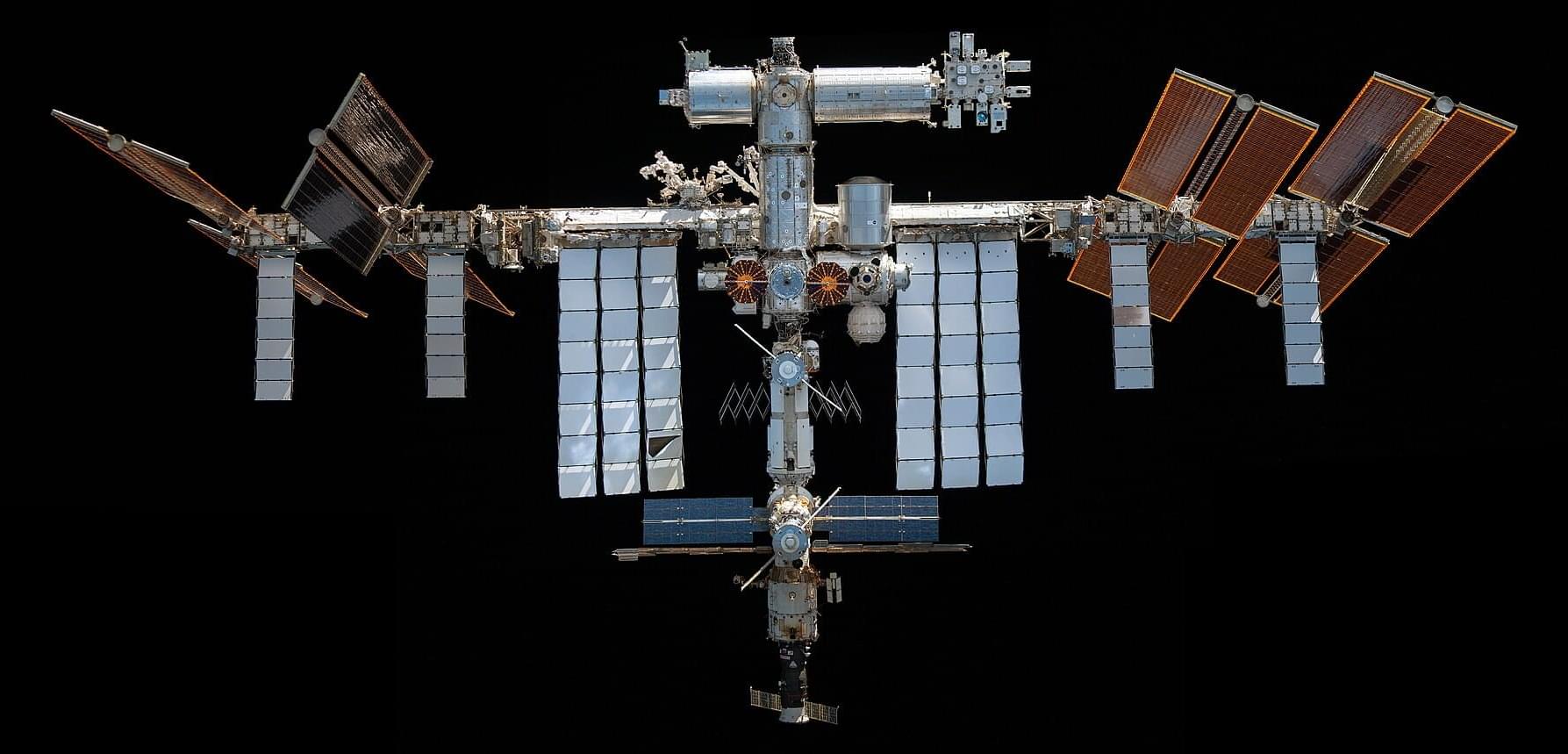
Modern space station ISS could support independently life of several humans within approximately year though there are problems of independent landing and adaptation. Not clearly, whether the certain dangerous agent, capable to get into all cracks on the Earth could dissipate for so short term.
There is a difference between gaso — and bio — refuges which can be on a surface, but are divided into many sections for maintenance of a mode of quarantine, and refuges which are intended as a shelter from in the slightest degree intelligent opponent (including other people who did not manage to get a place in a refuge). In case of biodanger island with rigid quarantine can be a refuge if illness is not transferred by air.
A bunker can possess different vulnerabilities. For example, in case of biological threat, is enough insignificant penetration to destroy it. Only hi-tech bunker can be the completely independent. Energy and oxygen are necessary to the bunker. The system on a nuclear reactor can give energy, but modern machines hardly can possess durability more than 30 – 50 years. The bunker cannot be universal — it should assume protection against the certain kinds of threats known in advance — radiating, biological etc.
The more reinforced is a bunker, the smaller number of bunkers can prepare mankind in advance, and it will be more difficult to hide such bunker. If after a certain catastrophe there was a limited number of the bunkers which site is known, the secondary nuclear war can terminate mankind through countable number of strikes in known places.
The larger is the bunker, the less amount of such bunkers is possible to construct. However any bunker is vulnerable to accidental destruction or contamination. Therefore the limited number of bunkers with certain probability of contamination unequivocally defines the maximum survival time of mankind. If bunkers are connected among themselves by trade and other material distribution, contamination between them is more probable. If bunkers are not connected, they will degrade faster. The more powerfully and more expensively is the bunker, the more difficult is to create it imperceptibly for the probable opponent and so it easeir becomes the goal for an attack. The more cheaply the bunker, the less it is durable.
Casual shelters — the people who have escaped in the underground, mines, submarines — are possible. They will suffer from absence of the central power and struggle for resources. The people, in case of exhaustion of resources in one bunker, can undertake the armed attempts to break in other next bunker. Also the people who have escaped casually (or under the threat of the comong catastrophe), can attack those who was locked in the bunker.
Bunkers will suffer from necessity of an exchange of heat, energy, water and air with an external world. The more independent is the bunker, the less time it can exist in full isolation. Bunkers being in the Earth will deeply suffer from an overheating. Any nuclear reactors and other complex machines will demand external cooling. Cooling by external water will unmask them, and it is impossible to have energy sources lost-free in the form of heat, while on depth of earth there are always high temperatures. Temperature growth, in process of deepening in the Earth, limits depth of possible bunkers. (The geothermal gradient on the average makes 30 degrees C/kilometers. It means, that bunkers on depth more than 1 kilometre are impossible — or demand huge cooling installations on a surface, as gold mines in the republic of South Africa. There can be deeper bunkers in ices of Antarctica.)
The more durable, more universal and more effective, should be a bunker, the earlier it is necessary to start to build it. But in this case it is difficult to foresee the future risks. For example, in 1930th years in Russia was constructed many anti-gase bombproof shelters which have appeared useless and vulnerable to bombardments by heavy demolition bombs.
Efficiency of the bunker which can create the civilisation, corresponds to a technological level of development of this civilisation. But it means that it possesses and corresponding means of destruction. So, especially powerful bunker is necessary. The more independently and more absolutely is the bunker (for example, equipped with AI, nanorobots and biotechnologies), the easier it can do without, eventually, people, having given rise to purely computer civilisation.
People from different bunkers will compete for that who first leaves on a surface and who, accordingly, will own it — therefore will develop the temptation for them to go out to still infected sites of the Earth.
There are possible automatic robotic bunkers: in them the frozen human embryos are stored in a certain artificial uterus and through hundreds or thousand years start to be grown up. (Technology of cryonics of embryos already exists, and works on an artificial uterus are forbidden for bioethics reasons, but basically such device is possible.) With embryos it is possible to send such installations in travel to other planets. However, if such bunkers are possible, the Earth hardly remains empty — most likely it will be populated with robots. Besides, if the human cub who has been brought up by wolves, considers itself as a wolf as whom human who has been brought up by robots will consider itself?
So, the idea about a survival in bunkers contains many reefs which reduce its utility and probability of success. It is necessary to build long-term bunkers for many years, but they can become outdated for this time as the situation will change and it is not known to what to prepare. Probably, that there is a number of powerful bunkers which have been constructed in days of cold war. A limit of modern technical possibilities the bunker of an order of a 30-year-old autonomy, however it would take long time for building — decade, and it will demand billions dollars of investments.
Independently there are information bunkers, which are intended to inform to the possible escaped descendants about our knowledge, technologies and achievements. For example, in Norway, on Spitsbergen have been created a stock of samples of seeds and grain with these purposes (Doomsday Vault). Variants with preservation of a genetic variety of people by means of the frozen sperm are possible. Digital carriers steady against long storage, for example, compact discs on which the text which can be read through a magnifier is etched are discussed and implemented by Long Now Foundation. This knowledge can be crucial for not repeating our errors.

May 6, 2008

Will Today’s Landfills Be Tomorrow’s Energy?

Posted by in category: sustainability

(Hat Tip: IsraGood)

Garbage. No matter where you go or how far you travel, it seems that every society has a means of acquiring it and dumping it in vast landfills – a fitting tribute towards humanities pursuit of a better future.

While recycling and “reducing” can help diminish the amount that goes into these trash havens, it may not be enough to counter the vast amount people throw away everyday.

Since convincing people to throw away less is a never ending battle (especially in this day and age), why not instead turn these “mountains” of garbage into energy?

(Israel 21st Century) There may be gold, or at least electricity, in those dumps. So says Jean Claude Ohayon, CEO of Israeli startup TGE Tech, which has developed and patented a system whereby unrecycled refuse can be converted into fuel with a special patented device that turns garbage into gas — syngas, a well-known element that has some of the properties of gas, oil and coal. […]

But with the TGE system, “the trash is turned into syngas, which can be burned for fuel like any other material. The trash is gone, and in its place is electricity, which can then be used to supply power to a whole neighborhood or small city,” says Ohayon.

Syngas is not as effective as oil or coal, Ohayon realizes; it only has about 15% of the calorie (energy) power of its authentic siblings. However, Ohayon explains, that level of energy is more than enough to power the gasifier, the waste treatment plant, and probably all the streetlights and traffic lights in a city on any particular day.

“One ton of garbage can generate 0.4 kilowatts of electricity an hour, which isn’t a huge amount, but can definitely contribute somewhat to the energy pool in a locality,” he says. And at the same time — the garbage is gone.

If humanity chooses to remain on planet Earth (as opposed to conquering the final frontier) then they will need to find a way to deal with the massive amounts of garbage we “enjoy” creating.

By turning these heaps into fuel, our species could find a semi-lucrative way of not only getting rid of these trash havens, but perhaps easing the burden of energy as well.

Hopefully more cities will consider what TGE Tech (and similar companies) have to offer, as the less we have on planet Earth, the greener the future will be for the upcoming generation.

Apr 15, 2008

$153 million/city thin film plastic domes can protect against nuclear weapons and bad weather

Posted by in categories: biological, chemistry, defense, existential risks, habitats, lifeboat, military, nanotechnology, nuclear, sustainability

Cross posted from Nextbigfuture

Click for larger image

I had previously looked at making two large concrete or nanomaterial monolithic or geodesic domes over cities which could protect a city from nuclear bombs.

Now Alexander Bolonkin has come up with a cheaper, technological easy and more practical approach with thin film inflatable domes. It not only would provide protection form nuclear devices it could be used to place high communication devices, windmill power and a lot of other money generating uses. The film mass covered of 1 km**2 of ground area is M1 = 2×10**6 mc = 600 tons/km**2 and film cost is $60,000/km**2.
The area of big city diameter 20 km is 314 km**2. Area of semi-spherical dome is 628 km2. The cost of Dome cover is 62.8 millions $US. We can take less the overpressure (p = 0.001atm) and decrease the cover cost in 5 – 7 times. The total cost of installation is about 30 – 90 million $US. Not only is it only about $153 million to protect a city it is cheaper than a geosynchronous satellite for high speed communications. Alexander Bolonkin’s website

The author suggests a cheap closed AB-Dome which protects the densely populated cities from nuclear, chemical, biological weapon (bombs) delivered by warheads, strategic missiles, rockets, and various incarnations of aviation technology. The offered AB-Dome is also very useful in peacetime because it shields a city from exterior weather and creates a fine climate within the ABDome. The hemispherical AB-Dome is the inflatable, thin transparent film, located at altitude up to as much as 15 km, which converts the city into a closed-loop system. The film may be armored the stones which destroy the rockets and nuclear warhead. AB-Dome protects the city in case the World nuclear war and total poisoning the Earth’s atmosphere by radioactive fallout (gases and dust). Construction of the AB-Dome is easy; the enclosure’s film is spread upon the ground, the air pump is turned on, and the cover rises to its planned altitude and supported by a small air overpressure. The offered method is cheaper by thousand times than protection of city by current antirocket systems. The AB-Dome may be also used (height up to 15 and more kilometers) for TV, communication, telescope, long distance location, tourism, high placed windmills (energy), illumination and entertainments. The author developed theory of AB-Dome, made estimation, computation and computed a typical project.

His idea is a thin dome covering a city with that is a very transparent film 2 (Fig.1). The film has thickness 0.05 – 0.3 mm. One is located at high altitude (5 — 20 km). The film is supported at this altitude by a small additional air pressure produced by ground ventilators. That is connected to Earth’s ground by managed cables 3. The film may have a controlled transparency option. The system can have the second lower film 6 with controlled reflectivity, a further option.

The offered protection defends in the following way. The smallest space warhead has a
minimum cross-section area 1 m2 and a huge speed 3 – 5 km/s. The warhead gets a blow and overload from film (mass about 0.5 kg). This overload is 500 – 1500g and destroys the warhead (see computation below). Warhead also gets an overpowering blow from 2 –5 (every mass is 0.5 — 1 kg) of the strong stones. Relative (about warhead) kinetic energy of every stone is about 8 millions of Joules! (It is in 2 – 3 more than energy of 1 kg explosive!). The film destroys the high speed warhead (aircraft, bomber, wing missile) especially if the film will be armored by stone.

Our dome cover (film) has 2 layers: top transparant layer 2, located at a maximum altitude (up 5 –20 km), and lower transparant layer 4 having control reflectivity, located at altitude of 1 – 3 km (option). Upper transparant cover has thickness about 0.05 – 0.3 mm and supports the protection strong stones (rebbles) 8. The stones have a mass 0.2 – 1 kg and locate the step about 0.5 m.

If we want to control temperature in city, the top film must have some layers: transparant dielectric layer, conducting layer (about 1 — 3 microns), liquid crystal layer (about 10 — 100 microns), conducting layer (for example, SnO2), and transparant dielectric layer. Common thickness is 0.05 — 0.5 mm. Control voltage is 5 — 10 V. This film may be produced by industry relatively cheaply.

If some level of light control is needed materials can be incorporated to control transparency. Also, some transparent solar cells can be used to gather wide area solar power.


As you see the 10 kt bomb exploded at altitude 10 km decreases the air blast effect about in 1000
times and thermal radiation effect without the second cover film in 500 times, with the second reflected film about 5000 times. The hydrogen 100kt bomb exploded at altitude 10 km decreases the air blast effect about in 10 times and thermal radiation effect without the second cover film in 20 times, with the second reflected film about 200 times. Only power 1000kt thermonuclear (hydrogen) bomb can damage city. But this damage will be in 10 times less from air blast and in 10 times less from thermal radiation. If the film located at altitude 15 km, the
damage will be in 85 times less from the air blast and in 65 times less from the thermal radiation.
For protection from super thermonuclear (hydrogen) bomb we need in higher dome altitudes (20−30 km and more). We can cover by AB-Dome the important large region and full country.

Because the Dome is light weight it could be to stay in place even with very large holes. Multiple shells of domes could still be made for more protection.

Better climate inside a dome can make for more productive farming.

AB-Dome is cheaper in hundreds times then current anti-rocket systems.
2. AB-Dome does not need in high technology and can build by poor country.
3. It is easy for building.
4. Dome is used in peacetime; it creates the fine climate (weather) into Dome.
5. AB-Dome protects from nuclear, chemical, biological weapon.
6. Dome produces the autonomous existence of the city population after total World nuclear war
and total confinement (infection) all planet and its atmosphere.
7. Dome may be used for high region TV, for communication, for long distance locator, for
astronomy (telescope).
8. Dome may be used for high altitude tourism.
9. Dome may be used for the high altitude windmills (getting of cheap renewable wind energy).
10. Dome may be used for a night illumination and entertainment

Apr 8, 2008

Disruptions from small recessions to extinctions

Posted by in categories: biotech/medical, business, defense, existential risks, futurism, habitats, lifeboat, nanotechnology, space, sustainability

Cross posted from Next big future by Brian Wang, Lifeboat foundation director of Research

I am presenting disruption events for humans and also for biospheres and planets and where I can correlating them with historical frequency and scale.

There has been previous work on categorizing and classifying extinction events. There is Bostroms paper and there is also the work by Jamais Cascio and Michael Anissimov on classification and identifying risks (presented below).

A recent article discusses the inevtiable “end of societies” (it refers to civilizations but it seems to be referring more to things like the end of the roman empire, which still ends up later with Italy, Austria Hungary etc… emerging)

The theories around complexity seem me that to be that core developments along connected S curves of technology and societal processes cap out (around key areas of energy, transportation, governing efficiency, agriculture, production) and then a society falls back (soft or hard dark age, reconstitutes and starts back up again).

Here is a wider range of disruption. Which can also be correlated to frequency that they have occurred historically.

High growth drop to Low growth (short business cycles, every few years)
Recession (soft or deep) Every five to fifteen years.
Depressions (50−100 years, can be more frequent)

List of recessions for the USA (includes depressions)

Differences recession/depression

Good rule of thumb for determining the difference between a recession and a depression is to look at the changes in GNP. A depression is any economic downturn where real GDP declines by more than 10 percent. A recession is an economic downturn that is less severe. By this yardstick, the last depression in the United States was from May 1937 to June 1938, where real GDP declined by 18.2 percent. Great Depression of the 1930s can be seen as two separate events: an incredibly severe depression lasting from August 1929 to March 1933 where real GDP declined by almost 33 percent, a period of recovery, then another less severe depression of 1937 – 38. (Depressions every 50 – 100 years. Were more frequent in the past).

Dark age (period of societal collapse, soft/light or regular)
I would say the difference between a long recession and a dark age has to do with breakdown of societal order and some level of population decline / dieback, loss of knowledge/education breakdown. (Once per thousand years.)

I would say that a soft dark age is also something like what China had from the 1400’s to 1970.
Basically a series of really bad societal choices. Maybe something between depressions and dark age or something that does not categorize as neatly but an underperformance by twenty times versus competing groups. Perhaps there should be some kind of societal disorder, levels and categories of major society wide screw ups — historic level mistakes. The Chinese experience I think was triggered by the renunciation of the ocean going fleet, outside ideas and tech, and a lot of other follow on screw ups.

Plagues played a part in weakening the Roman and Han empires.

Societal collapse talk which includes Toynbee analysis.

Toynbee argues that the breakdown of civilizations is not caused by loss of control over the environment, over the human environment, or attacks from outside. Rather, it comes from the deterioration of the “Creative Minority,” which eventually ceases to be creative and degenerates into merely a “Dominant Minority” (who forces the majority to obey without meriting obedience). He argues that creative minorities deteriorate due to a worship of their “former self,” by which they become prideful, and fail to adequately address the next challenge they face.

My take is that the Enlightenment would strengthened with a larger creative majority, where everyone has a stake and capability to creatively advance society. I have an article about who the elite are now.

Many now argue about how dark the dark ages were not as completely bad as commonly believed.
The dark ages is also called the Middle Ages

Population during the middle ages

Between dark age/social collapse and extinction. There are levels of decimation/devastation. (use orders of magnitude 90+%, 99%, 99.9%, 99.99%)

Level 1 decimation = 90% population loss
Level 2 decimation = 99% population loss
Level 3 decimation = 99.9% population loss

Level 9 population loss (would pretty much be extinction for current human civilization). Only 6 – 7 people left or less which would not be a viable population.

Can be regional or global, some number of species (for decimation)

Categorizations of Extinctions, end of world categories

Can be regional or global, some number of species (for extinctions)

== The Mass extinction events have occurred in the past (to other species. For each species there can only be one extinction event). Dinosaurs, and many others.

Unfortunately Michael’s accelerating future blog is having some issues so here is a cached link.

Michael was identifying manmade risks
The Easier-to-Explain Existential Risks (remember an existential risk
is something that can set humanity way back, not necessarily killing
everyone):

1. neoviruses
2. neobacteria
3. cybernetic biota
4. Drexlerian nanoweapons

The hardest to explain is probably #4. My proposal here is that, if
someone has never heard of the concept of existential risk, it’s
easier to focus on these first four before even daring to mention the
latter ones. But here they are anyway:

5. runaway self-replicating machines (“grey goo” not recommended
because this is too narrow of a term)
6. destructive takeoff initiated by intelligence-amplified human
7. destructive takeoff initiated by mind upload
8. destructive takeoff initiated by artificial intelligence

Another classification scheme: the eschatological taxonomy by Jamais
Cascio on Open the Future. His classification scheme has seven
categories, one with two sub-categories. These are:

0:Regional Catastrophe (examples: moderate-case global warming,
minor asteroid impact, local thermonuclear war)
1: Human Die-Back (examples: extreme-case global warming,
moderate asteroid impact, global thermonuclear war)
2: Civilization Extinction (examples: worst-case global warming,
significant asteroid impact, early-era molecular nanotech warfare)
3a: Human Extinction-Engineered (examples: targeted nano-plague,
engineered sterility absent radical life extension)
3b: Human Extinction-Natural (examples: major asteroid impact,
methane clathrates melt)
4: Biosphere Extinction (examples: massive asteroid impact,
“iceball Earth” reemergence, late-era molecular nanotech warfare)
5: Planetary Extinction (examples: dwarf-planet-scale asteroid
impact, nearby gamma-ray burst)
X: Planetary Elimination (example: post-Singularity beings
disassemble planet to make computronium)

A couple of interesting posts about historical threats to civilization and life by Howard Bloom.

Natural climate shifts and from space (not asteroids but interstellar gases).

Humans are not the most successful life, bacteria is the most successful. Bacteria has survived for 3.85 billion years. Humans for 100,000 years. All other kinds of life lasted no more than 160 million years. [Other species have only managed to hang in there for anywhere from 1.6 million years to 160 million. We humans are one of the shortest-lived natural experiments around. We’ve been here in one form or another for a paltry two and a half million years.] If your numbers are not big enough and you are not diverse enough then something in nature eventually wipes you out.

Following the bacteria survival model could mean using transhumanism as a survival strategy. Creating more diversity to allow for better survival. Humans adapted to living under the sea, deep in the earth, in various niches in space, more radiation resistance,non-biological forms etc… It would also mean spreading into space (panspermia). Individually using technology we could become very successful at life extension, but it will take more than that for a good plan for human (civilization, society, species) long term survival planning.

Other periodic challenges:
142 mass extinctions, 80 glaciations in the last two million years, a planet that may have once been a frozen iceball, and a klatch of global warmings in which the temperature has soared by 18 degrees in ten years or less.

In the last 120,000 years there were 20 interludes in which the temperature of the planet shot up 10 to 18 degrees within a decade. Until just 10,000 years ago, the Gulf Stream shifted its route every 1,500 years or so. This would melt mega-islands of ice, put out our coastal cities beneath the surface of the sea, and strip our farmlands of the conditions they need to produce the food that feeds us.

The solar system has a 240-million-year-long-orbit around the center of our galaxy, an orbit that takes us through interstellar gas clusters called local fluff, interstellar clusters that strip our planet of its protective heliosphere, interstellar clusters that bombard the earth with cosmic radiation and interstellar clusters that trigger giant climate change.

Jan 8, 2008

Accelerating Greenland Melting “Shocks” Scientists

Posted by in categories: biological, sustainability

The New York Times is reporting today that continued acceleration of the rate at which the Greeland ice sheets are melting have scientists scrambling for answers. In particular, a combination of changes have the glaciologists particularly concerned. They say the accumulation of meltwater on the surface of the ice in the form of ponds and streams absorbs as much as four times more heat than the lighter colored ice thereby accelerating the rate at which the surface melts.

Additionally, this meltwater eventually finds its way to bedrock where it appears to ever so slightly lubcricate the surface between ice and rock thereby facilitating more rapid shifting of the ice towards the ocean. A third factor in the trifecta is the breakup of huge semi-submerged clots of ice that typically block narrow fjords. As these blockages are cleared that accelerates the flow of the frozen glacial rivers.

While there is still a tremendous amount about this cycle that remains unknown, what is clear is that the best estimates to date have fallen far short in terms of the speed at which these rare environments are changing. Although questions remain about how much of these changes are cyclical and how much are due specifically to man-originated global warming it is imperative that we gain a more complete understanding of these events so that we can take whatever steps we must to ameliorate any damage we’ve caused before the situation becomes so critical that massive changes come about as a result of our negligent handling of our environment.

Jan 3, 2008

Oil Surpasses $100 Per Barrel

Posted by in categories: geopolitics, sustainability

Peak OilIn an upward spurt that has been long predicted by the more realistic analysts, oil has finally broken through the triple digit threshold. While some experts maintain that this number is little more than a psychological barrier and has little real-world importance it is an inescapable fact that oil prices themselves have actually increased approximately 73% in the past year.

This price increase alone should be a call to action sufficient to bring us to a state of alert yet it appears that the general population remains relatively complacent in the face of this looming crisis. It should be noted by those of us more aware of the ramifications of peak oil and the impending oil supply shock that such a drastic reduction in oil availability represents one of the clearest and most present threats to the stability of a global peace and the longevity of mankind.

As with all threats of a global nature, the Lifeboat Foundation will continue to monitor news related to oil reserves, prices, supply and of course replacement technologies and continue to provide information, perspective and solutions.

Jan 2, 2008

The Enlightenment Strikes Back

Posted by in categories: complex systems, futurism, geopolitics, lifeboat, nanotechnology, open access, sustainability

In a recent conversation on our discussion list, Ben Goertzel, a rising star in artificial intelligence theory, expressed skepticism that we could keep a “modern large-scale capitalist representative democracy cum welfare state cum corporate oligopoly” going for much longer.

Indeed, our complex civilization currently does seem to be under a lot of stress.

Lifeboat Foundation Scientific Advisory Board member and best-selling author David Brin’s reply was quite interesting.

David writes:

* THE UNLIKELINESS OF A POSITIVE SUM SOCIETY

Today’s “modern large-scale capitalist representative democracy cum welfare state cum corporate oligopoly” works largely because the systems envisioned by John Locke and Adam Smith have burgeoned fantastically, producing synergies in highly nonlinear ways that another prominent social philosopher — Karl Marx — never imagined. Ways that neither Marx nor the ruling castes of prior cultures even could imagine.

Through processes of competitive creativity and reciprocal accountability, the game long ago stopped being zero-sum (I can only win if you lose) and became prodigiously positive-sum. (We all win, though I’d still like to win a little more than you.) (See Robert Wright’s excellent book “Non-Zero”.)

Yes, if you read over the previous paragraph, I sound a lot like some of the boosters of FIBM or Faith In Blind Markets… among whom you’ll find the very same neocons and conspiratorial kleptocrats who I accuse of ruining markets! Is that a contradiction?

Not at all. Just as soviet commissars recited egalitarian nostrums, while relentlessly quashing freedom in the USSR, many of our own right-wing lords mouth “pro-enterprise” lip service, while doing everything they can to cheat and foil competitive markets. To kill the golden goose that gave them everything.

The problem is that our recent, synergistic system has always had to push uphill against a perilous slope of human nature. The Enlightenment is just a couple of centuries old. Feudalism/tribalism had uncountable millennia longer to work a selfish, predatory logic into our genes, our brains. We are all descended from insatiable men, who found countless excuses for cheating, expropriating the labor of others, or preserving their power against challenges from below. Not even the wisest of us can guarantee we’d be immune from temptation to abuse power, if we had it.

Some, like George Washington, have set a pretty good example. They recognize these backsliding trends in themselves, and collaborate in the establishment of institutions, designed to let accountability flow. Others perform lip-service, then go on to display every dismal trait that Karl Marx attributed to shortsighted bourgeois “exploiters.”

Indeed, it seems that every generation must face this ongoing battle, between those who “get” what Washington and many others aimed for — the positive-sum game — and rationalizers who are driven by our primitive, zero-sum drives. A great deal is at stake, at a deeper level that mere laws and constitutions. Moreover, if the human behavior traits described by Karl Marx ever do come roaring back, to take hold in big ways, then so might some of the social scenarios that he described.

* SHOULD WE — SERIOUSLY — HAVE A FRESH LOOK AT OLD KARL MARX?

Do you, as an educated 21st Century man or woman, know very much about the controversy that transfixed western civilization for close to a century and a half? A furious argument, sparked by a couple of dense books, written by a strange little bearded man? Or do you shrug off Marx as an historical oddity? Perhaps a cousin of Groucho?

Were our ancestors — both those who followed Marx and those who opposed him — stupid to have found him interesting or to have fretted over the scenarios he foretold?

I often refer to Marx as the greatest of all science fiction authors, because — while his long-range forecasts nearly all failed, and some of his premises (like the labor theory of value) were pure fantasy — he nevertheless shed heaps of new light and focused the attention of millions upon many basics of both economics and human nature. As a story-spinner, Marx laid down some “if this goes on” thought-experiments that seemed vividly plausible to people of his time, and for a century afterwards. People who weren’t stupid. People who were, in fact, far more intimate with the consequences of social stratification than we have been, in the latest, pampered generation.

As virtually the inventor of the term “capitalism,” Marx ought to be studied (and criticized) by anyone who wants to understand our way of life.

What’s been forgotten, since the fall of communism, is that the USSR’s ‘experiment’ was never even remotely “Marxism.” And, hence, we cannot simply watch “The Hunt For Red October” and then shrug off the entire set of mental and historical challenges. By my own estimate, he was only 50% a deluded loon — a pretty good ratio, actually. (I cannot prove that I’m any better!) The other half was brilliant (ask any economist) and still a powerful caution. Moreover, anyone who claims to be a thinker about our civilization should be able to argue which half was which.

Marx’s forecasts seem to have failed not because they were off-base in extrapolating the trends of 19th Century bourgeois capitalism. He extrapolated fine. But what he never imagined was that human beings might intelligently perceive, and act to alter those selfsame powerful trends! While living amid the Anglo Saxon Enlightenment, Marx never grasped its potential for self-criticism, reconfiguration and generating positive-sum alternatives.

A potential for changing or outgrowing patterns that he (Marx) considered locked, in stone.

Far from the image portrayed by simplistic FIBM cultists, we did not escape Marx’s scenarios through laissez-faire indolence. In fact, his forecasts failed — ironically — because people read and studied Karl Marx.

* HUMAN NATURE ALWAYS CONSPIRES AGAINST ENLIGHTENMENT

This much is basic. We are all descended from rapacious, insatiable cheaters and (far worse) rationalizers. Every generation of aristocrats (by whatever surface definition you use, from soviet nomenklatura, theocrats, or royalty to top CEOs) will come up with marvelous excuses for why they should be allowed to go back to oligarchic rule-by-cabal and “guided allocation of resources” (GAR), instead of allowing open competition/cooperation to put their high status under threat. Indeed, those who most stridently tout faith in blind markets are often among the worst addicts of GAR.

In particular, it is the most natural thing in the world for capital owners and GAR-masters to behave in the way that Karl Marx modeled. His forecast path of an ever-narrowing oligarchy — followed ultimately by revolution — had solid historical grounding and seemed well on its way to playing out.

What prevented it from happening — and the phenomenon that would have boggled poor old KM — was for large numbers of western elites and commonfolk to weigh alternatives, to see these natural human failure modes, and to act intelligently against them. He certainly never envisioned a smart society that would extend bourgeois rights and social mobility to the underclasses. Nor that societies might set up institutions that would break entirely from his model, by keeping things open, dynamic, competitive, and reciprocally accountable, allowing the nonlinear fecundity of markets and science and democracy to do their positive-sum thing.

In his contempt for human reasoning ability (except for his own), Marx neglected to consider that smart men and women would actually read his books and decide to remodel society, so that his scenario would not happen. So that revolution, when it came, would be gradual, ongoing, moderate, lawful, and generally non-confiscatory, especially since the positive sum game lets the whole pie grow, while giving bigger slices to all.

In fact, I think the last ninety years may be partly modeled according to how societies responded to the Marxian meme. First, in 1917, came the outrageously stupid Soviet experiment, which simply replaced Czarist monsters with another clade of oppressors, that mouthed different sanctimonious slogans. Then the fascist response, which was a deadly counter-fever, fostered by even more-stupid European elites. Things were looking pretty bleak.

* THE ENLIGHTENMENT STRIKES BACK

Only then this amazing thing that happened — especially in America — where a subset of wealthy people, like FDR, actually read Marx, saw the potential pathway into spirals of crude capital formation, monopolization, oppression and revolution… and decided to do something about it, by reforming the whole scenario away! By following Henry Ford’s maxim and giving all classes a stake — which also meant ceding them a genuine share of power. A profoundly difficult thing for human beings to do,

Those elites who called FDR a “traitor to his class” were fools. The smart ones knew that he saved their class, and enabled them to enjoy wealth in a society that would be vastly more successful, vibrant, fun, fair, stable, safe and fantastically more interesting.

I believe we can now see the recent attempted putsch by a neocon-kleptocrat aristocratic cabal in broad but simple and on-target context. We now have a generation of wealthy elites who (for the most part) have never read Marx! Who haven’t a clue how chillingly plausible his scenarios might be, if enlightenment systems did not provide an alternative to revolution. And who blithely assume that they are in no danger, whatsoever, of those scenarios ever playing out.

Shortsightedly free from any thought or worry about the thing that fretted other aristocracies — revolution — they feel no compunction or deterrence from trying to do the old/boring thing… giving in to the ancient habit… using influence and power to gather MORE influence and power at the expense of regular people, all with the aim of diminishing the threat of competition from below. And all without extrapolating where it all might lead, if insatiability should run its course.

What we would call “cheating,” they rationalize as preserving and enhancing a natural social order. Rule by those best suited for the high calling of rulership. Those born to it. Or Platonic philosopher kings. Or believers in the right set of incantations.

* REVENGE OF THE DARKSIDE LORDS

Whatever the rationalizations, it boils down to the same old pyramid that failed the test of governance in nearly 100% of previous civilizations, always and invariably stifling creativity while guiding societies to delusion and ruin. Of course, it also means a return to zero-sum logic, zero-sum economics, zero-sum leadership thinking, a quashing of nonlinear synergies… the death of the Enlightenment.

Mind you! I am describing only a fraction of today’s aristocracy of wealth or corporate power. I know half a dozen billionaires, personally, and I’d wager none of them are in on this klepto-raid thing! They are all lively, energetic, modernistic, competitive and fizzing with enthusiasm for a progressive, dynamic civilization. A civilization that’s (after all) been very good to them.

They may not have read Marx (in this generation, who has?) But self-made guys like Bezos and Musk and Page etc share the basic values of an Enlightenment. One in which some child from a poor family may out-compete overprivileged children of the rich, by delivering better goods, innovations or services. And if that means their own privileged kids will also have to work hard and innovate? That’s fine by them! Terrific.

When the chips come down, these better billionaires may wind up on our side, weighing the balance and perceiving that their enlightened, long range self-interest lies with us. With the positive-sum society. Just the way FDR and his smart-elite friends did, in the 1930s… while the dumber half of the aristocracy muttered and fumed.

We can hope that the better-rich will make this choice, when the time comes. But till then, the goodguy (or, at least with-it) billionaires are distracted, busy doing cool things, while the more old-fashioned kind — our would-be lords — are clustering together in tight circles, obeying 4,000 years of ingrained instinct, whispering and pulling strings, appointing each other to directorships, awarding unearned golden parachutes, conniving for sweetheart deals, and meddling in national policy…

…doing the same boring thing that human beings will always do — what you and I would be tempted to do — whenever you mix un-curbed ego with unaccountable privilege, plus a deficit of brains.

Page 4 of 512345