
Category: education – Page 188
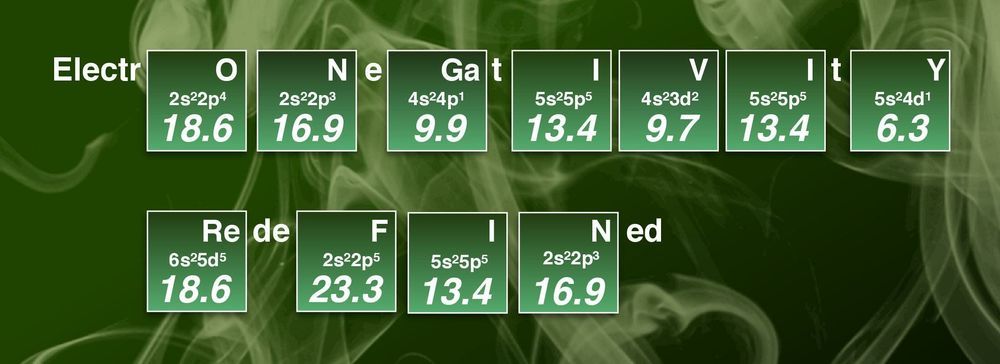
New scale for electronegativity rewrites the chemistry textbook
Electronegativity is one of the most well-known models for explaining why chemical reactions occur. Now, Martin Rahm from Chalmers University of Technology, Sweden, has redefined the concept with a new, more comprehensive scale. His work, undertaken with colleagues including a Nobel Prize-winner, has been published in the Journal of the American Chemical Society.
The theory of electronegativity is used to describe how strongly different atoms attract electrons. By using electronegativity scales, one can predict the approximate charge distribution in different molecules and materials, without needing to resort to complex quantum mechanical calculations or spectroscopic studies. This is vital for understanding all kinds of materials, as well as for designing new ones. Used daily by chemists and materials researchers all over the world, the concept originates from Swedish chemist Jöns Jacob Berzelius’ research in the 19th century and is widely taught at high-school level.
Now, Martin Rahm, Assistant Professor in Physical Chemistry at Chalmers University of Technology, has developed a brand-new scale of electronegativity.
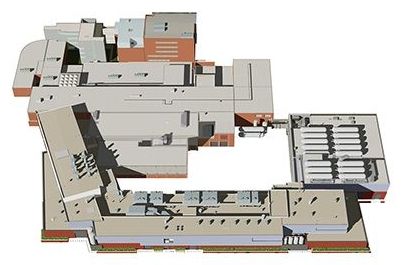
Facility for Rare Isotope Beams
FRIB) will be a scientific user facility for the Office of Nuclear Physics in the U.S. Department of Energy Office of Science (DOE-SC). FRIB is funded by the DOE-SC, MSU and the State of Michigan. Supporting the mission of the Office of Nuclear Physics in DOE-SC, FRIB will enable scientists to make discoveries about the properties of rare isotopes (that is, short-lived nuclei not normally found on Earth), nuclear astrophysics, fundamental interactions, and applications for society, including in medicine, homeland security, and industry.
This video — The Facility for Rare Isotope Beams at MSU — explains the history of FRIB, its role in research and education, and its future in rare-isotope discoveries. It includes an animated sequence to help viewers understand what FRIB is about.
Employment opportunities: FRIB is looking for engineers, physicists, and other talented professionals to build the world’s leading rare isotope facility.

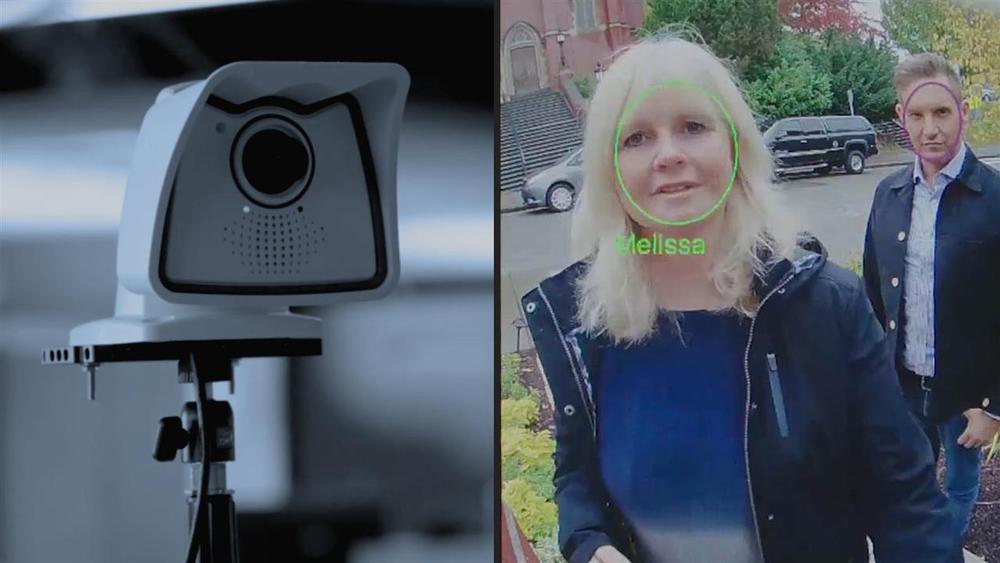
Facial Recognition Tech Aims to Identify Good and Evil
Facial recognition is going mainstream. The technology is increasingly used by law-enforcement agencies and in schools, casinos and retail stores, spurring privacy concerns. In this episode of Moving Upstream, WSJ’s Jason Bellini tests out the technology at an elementary school in Seattle and visits a company that claims its algorithm can identify potential terrorists by their facial features alone.

Biohacker injects himself with DNA sequence made from Bible and Koran verses
A biohacker injected himself with DNA sequence made from parts of the Bible and Koran in a risky experiment because he “wondered whether it would be possible.”
Adrien Locatelli, from Grenoble in France, translated religious passages into DNA code to build unknown proteins which he then poured into his body.
The high-school student risked potentially fatal consequences after conducting the procedure without any knowledge of the effects the proteins would have on his body.

If energy can’t be created, where did it come from in the first place?
We’re taught at school that energy can’t be created, merely converted from one form to another. But at the birth of the Universe – that is, everything – the energy needed for the Big Bang must have come from somewhere. Many cosmologists think its origin lies in so-called quantum uncertainty, which is known to allow energy to emerge literally from nowhere. What isn’t clear, however, is why this cosmic energy persisted long enough to drive the Big Bang.

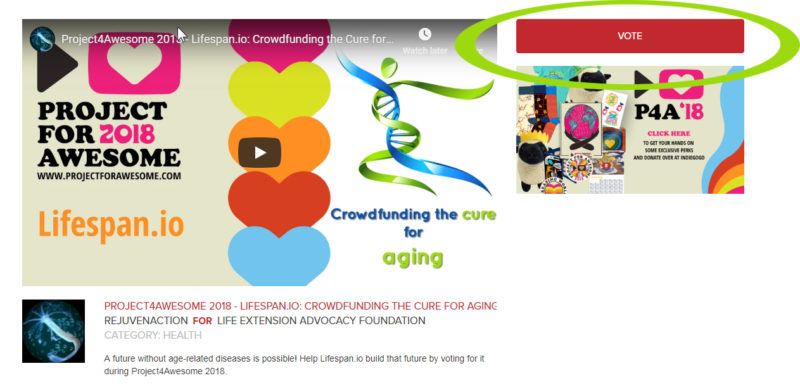
Support the Drive to End Age-Related Diseases During Project for Awesome
Project for Awesome (P4A) 2018 is finally here, and you can help us to win much-needed funds at no cost to you by voting for the videos supporting our charity.

Every year, a number of charities are chosen through voting, and they each receive a sum of money based on what the fundraiser at P4A has raised. In the past, charities have received around $25,000 each, which is a considerable sum, especially for a small non-profit org such as LEAF.
With these funds, we can purchase new equipment to support reporting at conferences and events and to bring our audience the best media experience possible. We are also planning to host a second conference in New York City in 2019, and this will be far more ambitious in scale and will be a two-day event rather than the single-day conference we held this year; with your support, we can make this one of the top conferences supporting the field of rejuvenation biotechnology and make high-quality footage available to the public. Finally, we can use the funds to hire new writers in order to bring you even more high-quality news articles and educational pieces about aging and research.