Toggle light / dark theme

Get the latest international news and world events from around the world.

Log in for authorized contributors

DHL-11, a novel prieurianin-type limonoid isolated from Munronia henryi, targeting IMPDH2 to inhibit triple-negative breast cancer

Breast cancer destroyed by a plant compound.


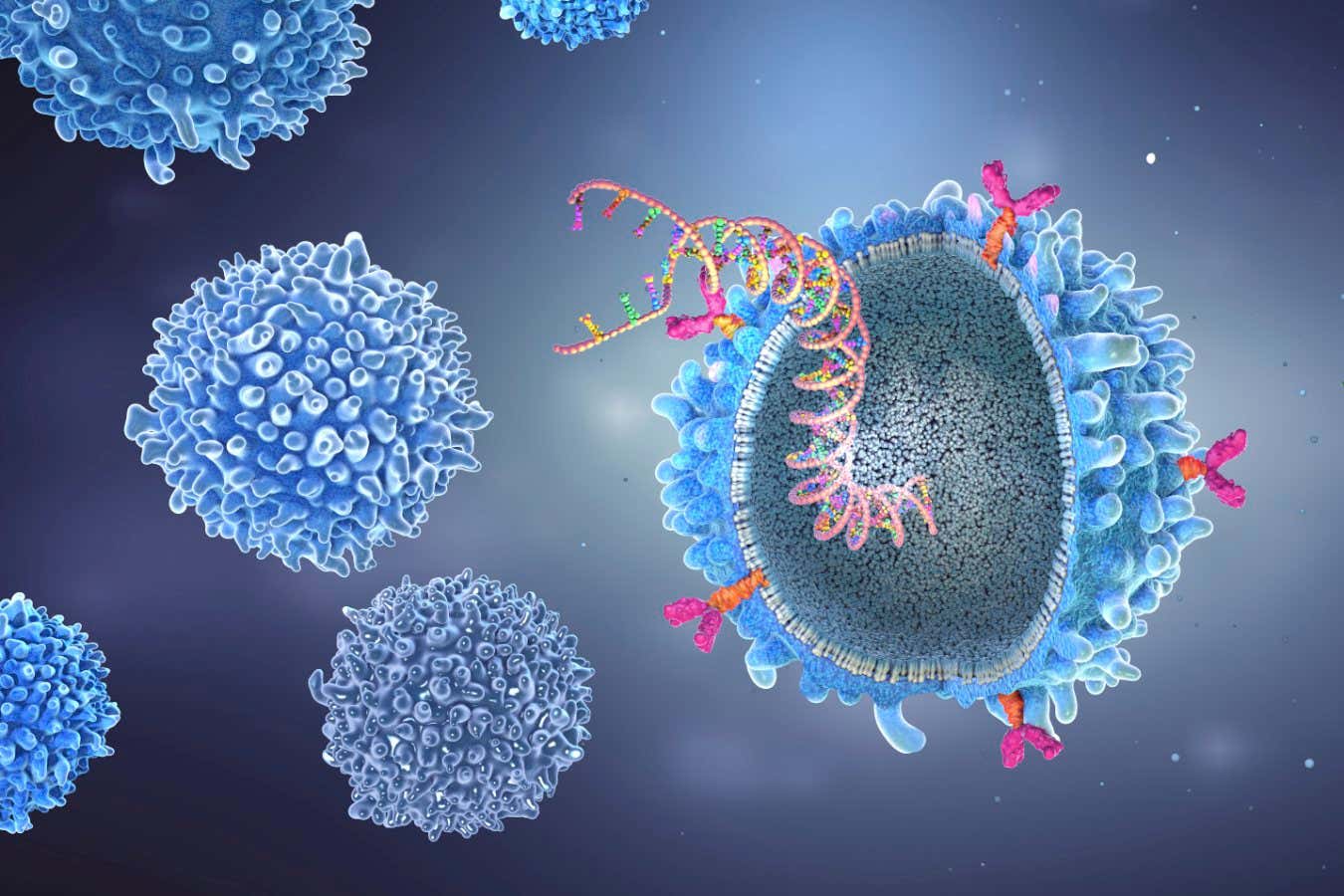
Triple-negative breast cancer (TNBC) is the most aggressive subtype of breast cancer, characterized by the poorest prognosis, and poses a significant threat to women’s health. In this study, we identified two novel prieurianin-type limonoids extracted from Munronia henryi, one of which, named DHL-11, exhibited antitumor activity against TNBC cells. DHL-11 suppressed cell proliferation and migration, induced G2/M cell cycle arrest and apoptosis, and effectively increased the accumulation of reactive oxygen species (ROS) and cellular DNA damage in TNBC cells. Mechanistically, we found that DHL-11 binds to the non-catalytic pocket of IMPDH2 and disrupts the interaction between IMPDH2 and FANCI, leading to the degradation of the IMPDH2 protein. The decrease of IMPDH2 protein reduced guanine synthesis, increased ROS levels, and induced DNA damage.

Tiny Blood Smidges in the Brain: Amount and Location Tied to Dementia

Ploidy and neuron size impact nervous system development and function in Xenopus.


Liu et al. use triploid Xenopus as a model to characterize effects of neuron size on vertebrate nervous system development and function. They report association between neuron size, cell proliferation, brain activity, and tadpole swimming behavior.

Proton therapy for colorectal cancer

SA-CME credits are available for this article here.

Ever since the first proton beam therapy (PBT) treatment in 1954 at University of California, Berkley, the use of PBT worldwide has rapidly increased.1 Due to the depth-dose characteristics of protons that allow for steep fall-off just distal to the tumor target, PBT can reduce unnecessary radiation dose to nearby normal tissues and allow for safer dose escalation in select clinical scenarios. Superior normal tissue avoidance can lead to reductions in acute and late toxicities, safe dose escalation can lead to improved local control, and the combination of both factors has the potential to impact overall survival (OS).

Early data have suggested that PBT led to improved clinical outcomes in the treatment of various pediatric cancers, ocular melanomas, sarcomas of the paravertebral region, and brain tumors when compared with traditional photon-based radiation.2 Historically, fewer studies evaluated the utility of PBT in the treatment of gastrointestinal (GI) malignancies; however, retrospective studies in the setting of gastroesophageal cancer and pancreatic cancer show that preoperative PBT may reduce postoperative complications and definitive PBT may improve outcomes for those with unresectable disease.3–6 Even fewer studies have evaluated the role of PBT in the primary or neoadjuvant treatment of colorectal cancer (CRC), but there have been published clinical outcomes in the treatment of recurrent disease as well as liver metastases. The aim of this review is to discuss the existing dosimetric and clinical data for PBT in the treatment of patients with CRC.

Injectable ‘satellite livers’ could offer an alternative to liver transplantation

More than 10,000 Americans who suffer from chronic liver disease are on a waitlist for a liver transplant, but there are not enough donated organs for all of those patients. Additionally, many people with liver failure aren’t eligible for a transplant if they are not healthy enough to tolerate the surgery.

To help those patients, MIT engineers have developed “mini livers” that could be injected into the body and take over the functions of the failing liver.

In a new study in mice, the researchers showed that these injected liver cells could remain viable in the body for at least two months, and they were able to generate many of the enzymes and other proteins that the liver produces.

Reduce rust by dumping your wok twice, and other kitchen tips

When you reach the bottom of a container of milk or honey, you might be tempted to tip the container over to get that last pesky little bit out. After all, you only need another teaspoon for that recipe, and you’re sure it’s in there. From emptying jars to drying dishes, research about thin film flows in the kitchen highlights everyday connections to physics.

In Physics of Fluids, researchers from Brown University present two related studies about thin film fluid flows in the kitchen: one about the relationship between how long it takes to tip the remaining liquid out of a container and its viscosity, and the other about the ideal time to wait before dumping water out of a wok to minimize rusting—it’s more effective to wait a few minutes to let the water accumulate so there’s more to pour out. “The kitchen is sort of the prime laboratory,” said author Jay Tang. “It deals with a lot of chemistry, materials science, and physics.”

Most people have an intuitive sense of what viscosity is, often described as how thick a fluid feels. It is measured scientifically by applying a certain amount of force to a fluid and measuring its flow rate.

/* */