Toggle light / dark theme

Progression Independent of Relapse Activity in Aquaporin-4-IgG–Positive NMOSDA Decade-Long Cohort Study

This study assessed the frequency of PIRA in a well-characterized cohort of patients with AQP4-IgG–positive NMOSD with over a decade of follow-up.


This website uses a security service to protect against malicious bots. This page is displayed while the website verifies you are not a bot.

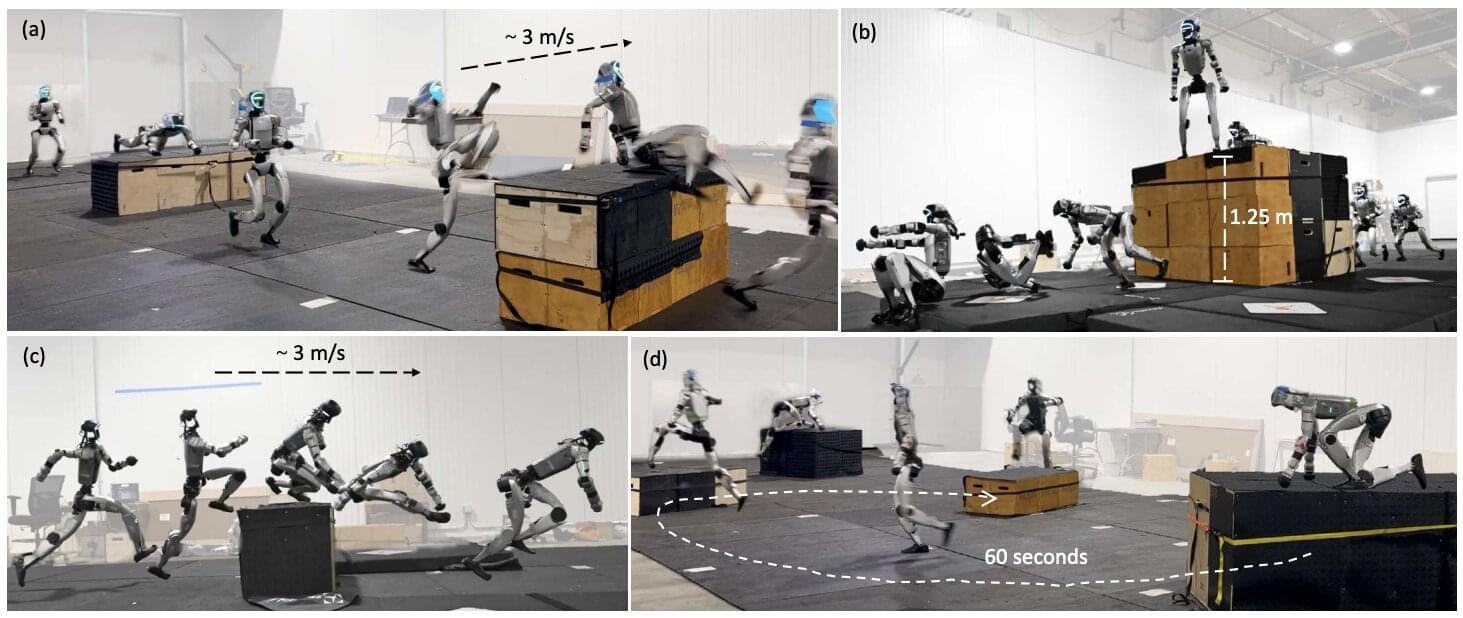
Humanoid robots master parkour and acquire human-like agility

Humanoid robots, robotic systems with a human-like body structure, have the potential of tackling various real-world tasks that are currently being completed by humans. In recent years, many robotics researchers and computer scientists have been trying to broaden these robots’ capabilities and improve how they move in their surroundings.

A research team at Amazon Frontier AI & Robotics (FAR) and University of California Berkeley (UC Berkeley) recently introduced perceptive humanoid parkour (PHP), a framework that could allow humanoid robots to move with remarkable agility, running, jumping and climbing over obstacles in urban or natural environments. Their proposed approach, outlined in a paper published on the arXiv preprint server, entails training computational models on recordings of humans engaging in parkour, a popular urban sport that allows practitioners to rapidly navigate environments using their agility and body strength.

“While recent advances in humanoid locomotion have achieved stable walking on varied terrains, capturing the agility and adaptivity of highly dynamic human motions remains an open challenge,” wrote Zhen Wu, Xiaoyu Huang and their colleagues in their paper.

Can thermal noise train a computer? A new framework points to low-power AI

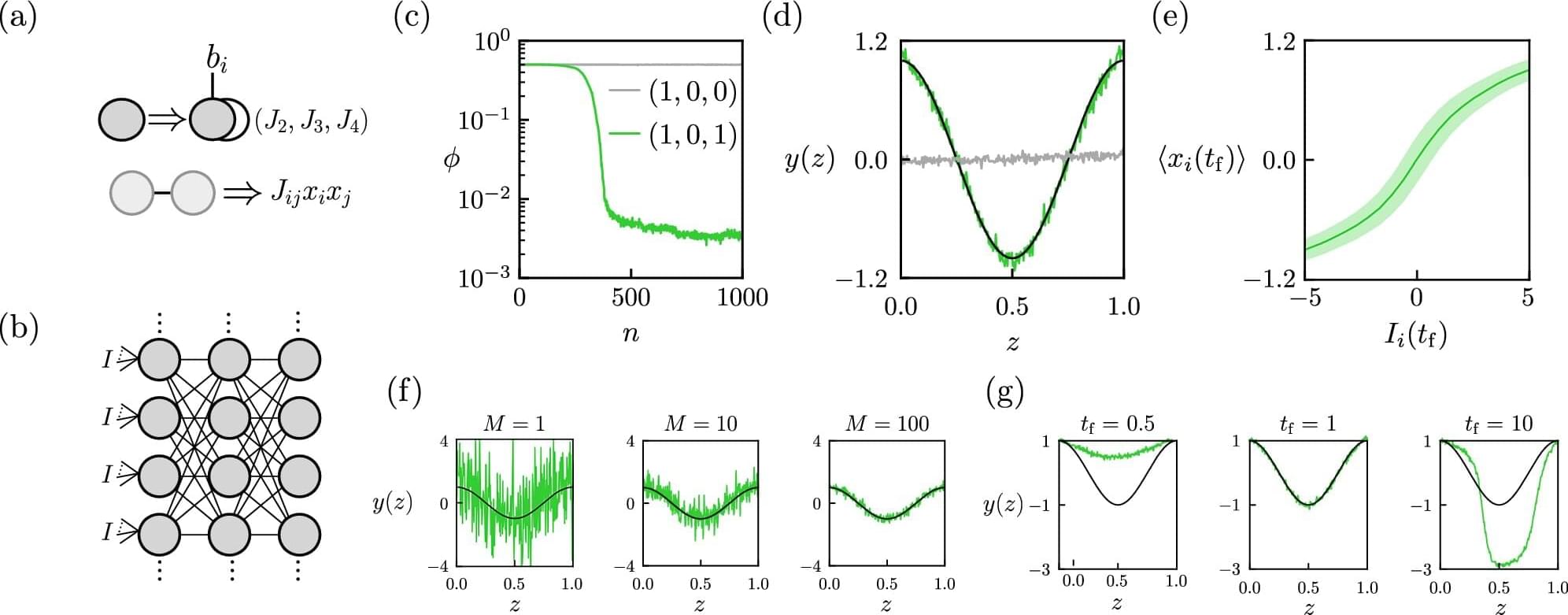
What if the thermal noise that hinders the efficiency of both classical and quantum computers could, instead, be used as a power source? What if computers could make use of the noise instead of suppressing or overcoming it? These are the goals of a relatively new branch of computing known as thermodynamic computing. A collaboration between researchers at the Molecular Foundry and the National Energy Research Scientific Computing Center (NERSC), both U.S. Department of Energy (DOE) user facilities located at Lawrence Berkeley National Laboratory (Berkeley Lab), is bringing them closer to reality.

In a paper published in Nature Communications, the researchers have proposed a design and training framework for a type of thermodynamic computer that mimics a neural network, which could drastically reduce the energy requirements of machine learning.

Modern computing requires energy: a single Google search, for example, consumes enough energy to power a six-watt LED for three minutes. This is partly because computers must contend with thermal noise—that is, the vibration of charge carriers, mostly electrons, within electronically conductive materials. In classical computers, even the smallest devices, such as transistors and gates, operate at energy scales thousands of times larger than that of this vibration.
AI-designed diffractive optical processors pave the way for low-power structural health monitoring

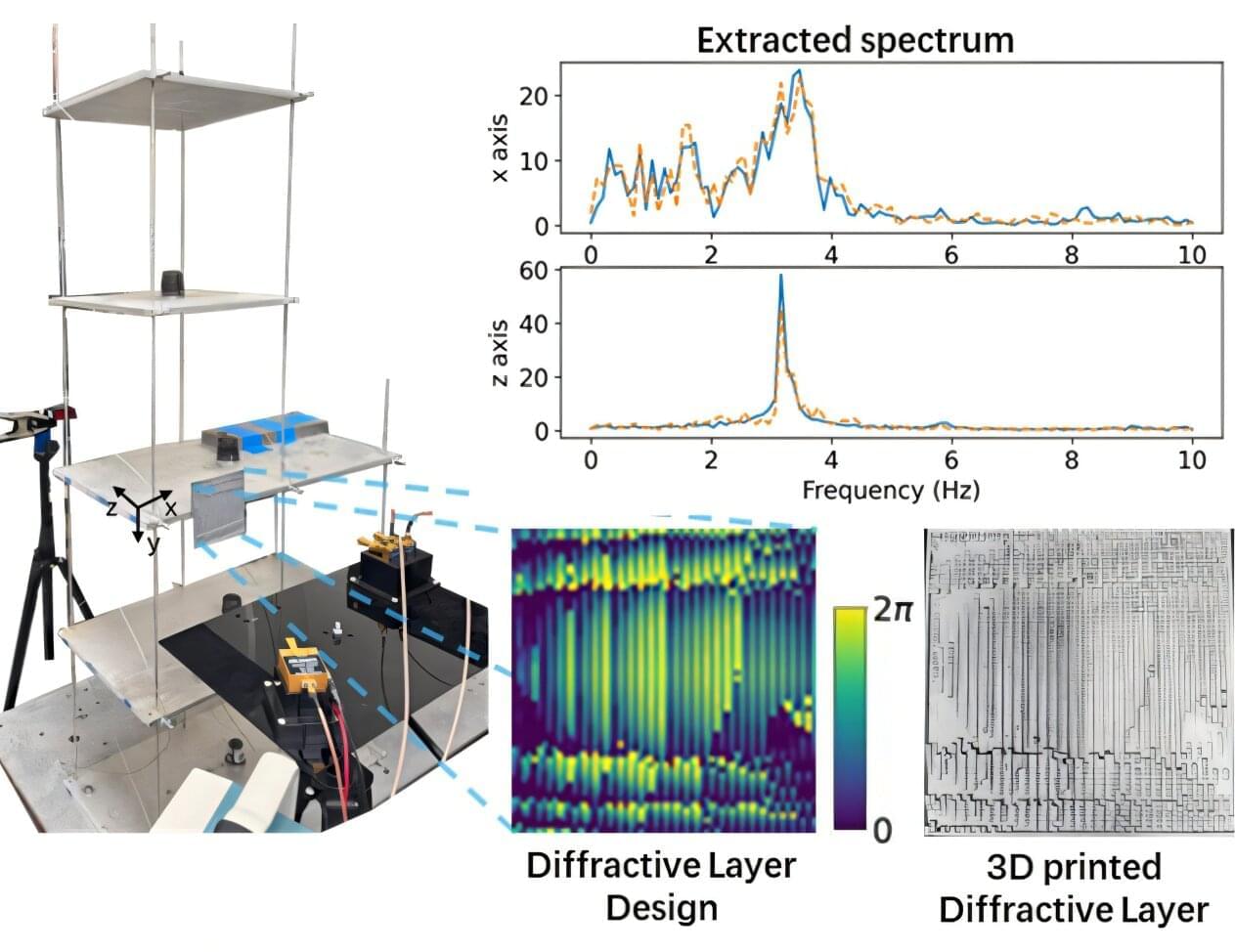
A team of researchers at the University of California, Los Angeles (UCLA) has introduced a novel framework for monitoring structural vibrations using diffractive optical processors. This new technology uses artificial intelligence to co-optimize a passive diffractive layer and a shallow neural network, allowing the system to encode time-varying mechanical vibrations into distinct spatiotemporal optical patterns.

Structural Health Monitoring (SHM) systems are vital for assessing the condition of civil infrastructure, such as buildings and bridges, particularly after exposure to natural hazards like earthquakes. Traditional vibration-based methods rely on sensor networks of accelerometers and strain gauges, which demand significant power, generate large datasets requiring complex digital signal processing, and can be expensive to install and maintain.

Furthermore, achieving high spatial resolution for accurate damage localization often requires a costly, dense sensor deployment.

Long-Term Outcomes in Antibody-Negative Autoimmune EncephalitisA Systematic Review and Meta-Analysis

Long-term outcomes in antibody-negative autoimmune encephalitis: a systematic review and meta-analysis.


This website uses a security service to protect against malicious bots. This page is displayed while the website verifies you are not a bot.

Alibaba’s Qwen 3

QWEN 3.5 running on iPhone Pro in airplane mode. Full large language model running onan edge device with no network connectivity.


5 is now running fully on device on an iPhone 17 Pro, and that’s a big deal.

Despite its compact size, Qwen 3.5 reportedly outperforms models up to four times larger. It shows strong multimodal capability, meaning it can interpret and reason over images as well as text. It also includes a reasoning toggle, letting users switch between faster responses and deeper step by step thinking depending on the task.

The demo uses a 2B parameter model quantized to 6 bit precision, optimized with MLX for Apple Silicon. That combination allows advanced AI to run locally, without relying on cloud servers.

If this scales, it signals a shift toward powerful, private, on device AI that doesn’t need a data center to compete.

Beyond amyloid plaques: AI reveals hidden chemical changes across the Alzheimer’s brain

Scientists at Rice University have produced the first full, dye-free molecular atlas of an Alzheimer’s brain. By combining laser-based imaging with machine learning, they uncovered chemical changes that spread unevenly across the brain and extend beyond amyloid plaques. Key memory regions showed major shifts in cholesterol and energy-related molecules. The findings hint that Alzheimer’s is a whole-brain metabolic disruption—not just a protein problem.

The End of Work: Vinod Khosla’s Bold AI Prediction

What if AI made your paycheck optional? Vinod Khosla, one of the world’s greatest venture capitalists and an early backer of AI, believes the technology will take over 80% of labor, freeing humans to live on passion instead.

His track record backs up the boldness, as early bets on OpenAI, DoorDash, Instacart, and Square have made him one of the most consequential investors of our time.

In this episode of Titans, Khosla sits down with Fortune Editor-in-Chief Alyson Shontell to unpack his abundant vision for the AI future, what government policy should tackle for a more equitable 2040, and what the U.S. needs to do to win the global AI race.

/* */