Toggle light / dark theme

Vagus nerve’s right branch plays a key role in digestive signaling

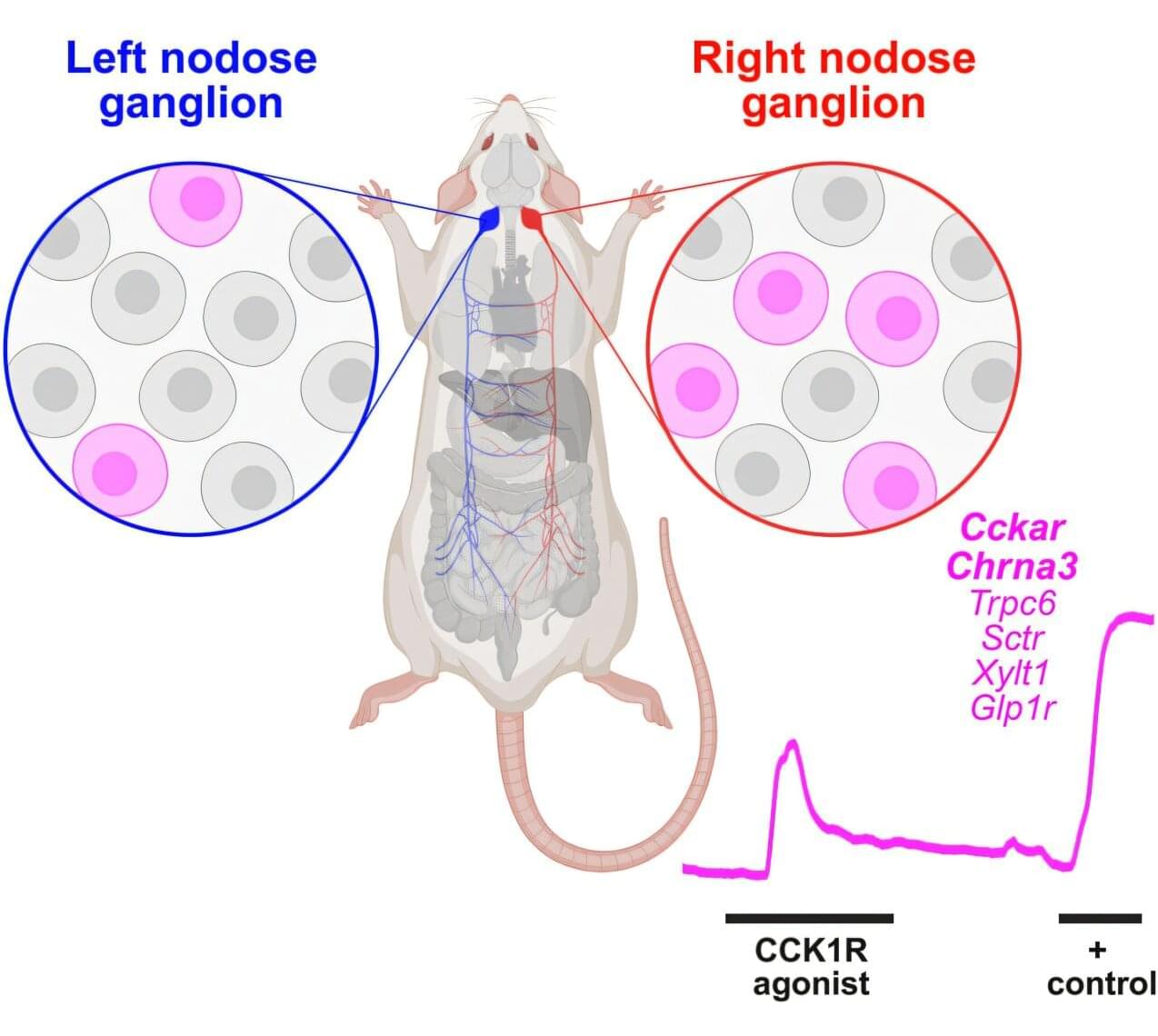
After years of work, cognition and neuroscience doctoral student Hailey Welch is—for the first time—the lead author of a study published in an academic journal, a paper appearing in Cell Reports, which examined the role of the vagus nerve’s branches in digestive signaling.

The goal of Welch’s research is to learn more about the ’s role in the forming of dietary habits. The vagus nerve includes left and right branches. Earlier research in the Motor and Habit Learning Lab of Dr. Catherine Thorn, associate professor of neuroscience in the School of Behavioral and Brain Sciences and the corresponding author of the Cell Reports study, indicates that those two sides have different functions.

“We know that the vagus nerve transmits information about the nutritional and reward aspects of food from the gut to the brain,” Welch said. “What we are discovering is that such reward signaling is lateralized—mainly right-sided.”
Quantifying the intensity of emotional response to sound, images and touch through skin conductance

When we listen to a moving piece of music or feel the gentle pulse of a haptic vibration, our bodies react before we consciously register the feeling. The heart may quicken and palms may sweat, resulting in subtle electrical resistance variations in the skin. These changes, though often imperceptible, reflect the brain’s engagement with the world.

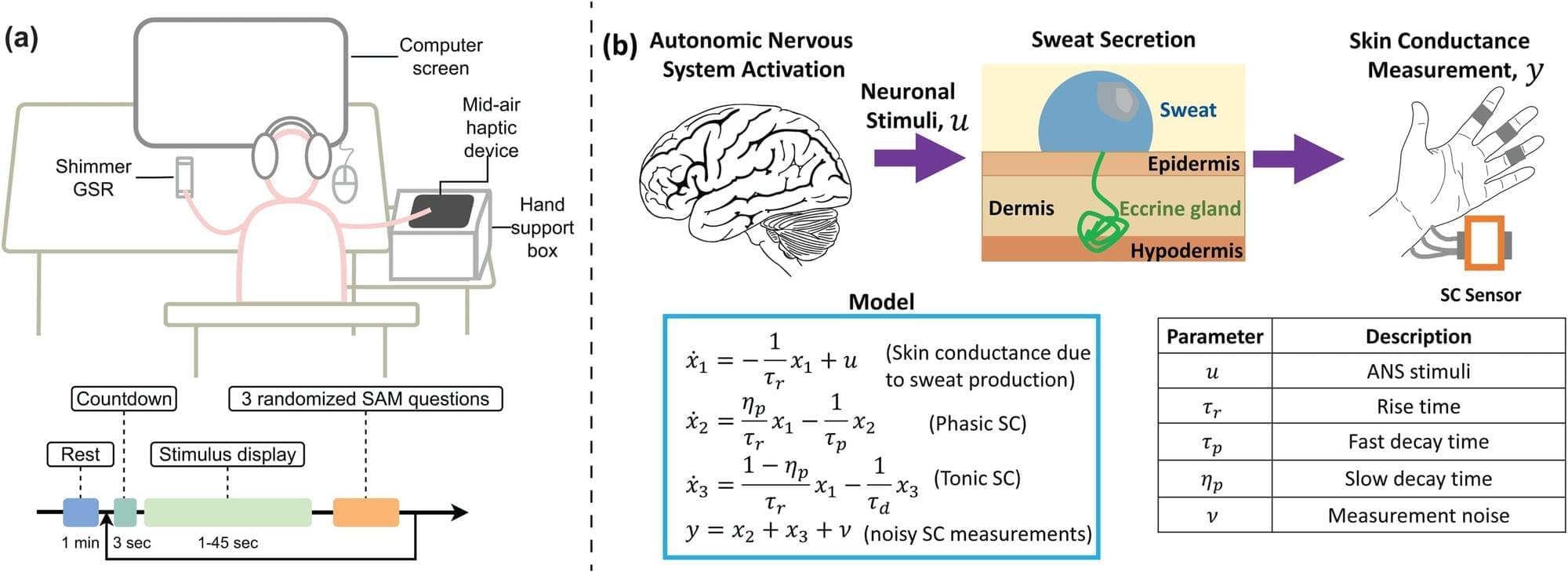
A recent study by researchers at NYU Tandon and the Icahn School of Medicine at Mount Sinai and published in PLOS Mental Health explores how such physiological signals can reveal cognitive arousal—the level of mental alertness and emotional activation—without the need for subjective reporting.

The researchers, led by Associate Professor of Biomedical Engineering Rose Faghih at NYU Tandon, focused on skin conductance, a well-established indicator of autonomic nervous system activity. When are stimulated, even minutely, the skin’s ability to conduct electricity changes.

New ultrasound technique could help aging and injured brains

Scientists at Stanford have created a non-invasive ultrasound method of brain cleansing that boosted the survival rate of mice after stroke by activating natural detoxification mechanisms. The technology, accidentally discovered during experiments with the blood-brain barrier, stimulates microglial immune cells to dispose of toxic waste and improves the circulation of cerebrospinal fluid. The method opens the way to treating the consequences of strokes and injuries without drugs.


A non-invasive, drug-free ultrasound method helps cleanse the brain and reduce inflammation, potentially offering a radically simple new approach to treating neurological diseases.

Scientists Map the Brain’s Construction From Stem Cells to Early Adolescence

This herculean effort could help scientists unravel the causes of neurodevelopmental disorders. In one study, led by Arnold Kriegstein at the University of California, San Francisco, scientists found brain stem cells that are potentially co-opted to form a deadly brain cancer in adulthood. Other studies shed light on imbalances between excitatory and inhibitory neurons—these ramp up or tone down brain activity, respectively—which could contribute to autism and schizophrenia.

“Many brain diseases begin during different stages of development, but until now we haven’t had a comprehensive roadmap for simply understanding healthy brain development,” said Kriegstein in a press release. “Our map highlights the genetic programs behind the growth of the human brain that go awry during specific forms of brain dysfunction.”

Over a century ago, the first neuroscientists used brain cell shapes to categorize their identities. BICAN collaborators have a much larger arsenal of tools to map the brain’s cells.

A 500-million-year-old brain “radar” still shapes how you see

New research shows that the superior colliculus, a primitive brain region, can independently interpret visual information. This challenges long-held beliefs that only the cortex handles such complex computations. The discovery highlights how ancient neural circuits guide attention and perception, shaping how we react to the world around us.

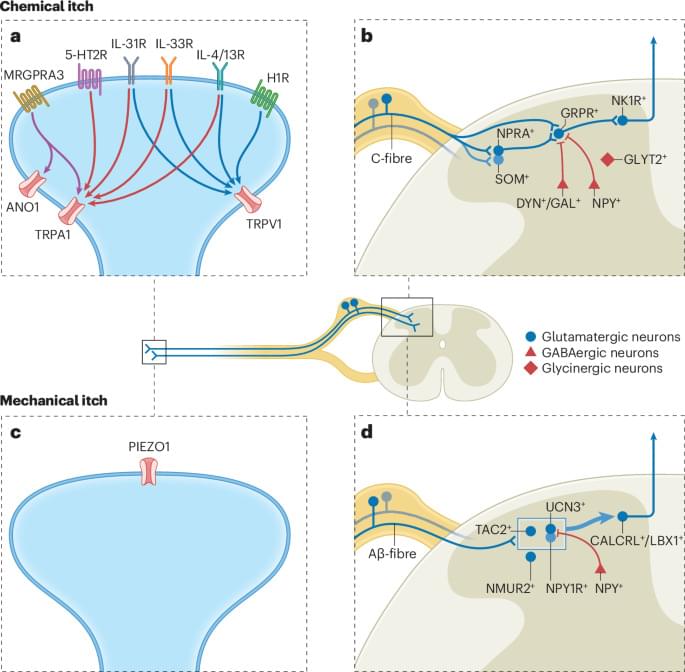
Central neural circuits underlying itch sensation

Itch has an important role as a somatosensory defensive mechanism. In this Review, Sun synthesizes CNS circuits underlying itch signal processing and its modulation in the spinal cord, transmission of processed itch information to the brain for encoding, and evoked sensory and affective components from the perception of itch.

Paul Thagard | How Brains Build Consciousness

Paul Thagard is Distinguished Professor Emeritus of Philosophy at the University of Waterloo and a Fellow of the Royal Society of Canada, the Cognitive Science Society, and the Association for Psychological Science. His work focuses on cognitive science, philosophy of mind, and the philosophy of science and medicine.

Check out his recent book, \.

Scientists identify a crucial brain feature connecting genetics to intelligence

A team of neuroscientists has uncovered evidence that genetic influences on intelligence may operate through the density of brain wiring, highlighting a potential biological bridge between inherited DNA differences and the brain structures that support reasoning and problem-solving.

Alzheimer’s risk calculator could spot danger years before symptoms begin

Mayo Clinic researchers have developed a new tool that can estimate a person’s risk of developing memory and thinking problems associated with Alzheimer’s disease years before symptoms appear.

The research, published in The Lancet Neurology, builds on decades of data from the Mayo Clinic Study of Aging—one of the world’s most comprehensive population-based studies of .

The study found that women have a higher than men of developing and (MCI), a transitional stage between healthy aging and dementia that often affects quality of life but still allows people to live independently. Men and women with the common genetic variant, APOE ε4, also have a higher lifetime risk.

/* */