Think transhumanism is a relatively new social and intellectual phenomenon? Guess again.
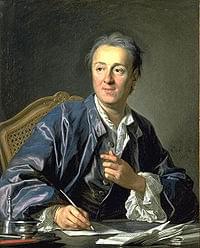
Many of the ideas characteristic of the movement have already been bantered about for literally hundreds of years—whether it be such things as radical life extension or the construction of machine minds. The Enlightenment period in particular was a fruitful time for these ideas to take flight, mostly on account of the new sciences, the rise of rationalism and secular humanism, and the waning influence of religion. Two thinkers that best exemplified Enlightenment-era proto-transhumanism were Denis Diderot and Marquis de Condorcet, and their early contributions are worth revisiting.
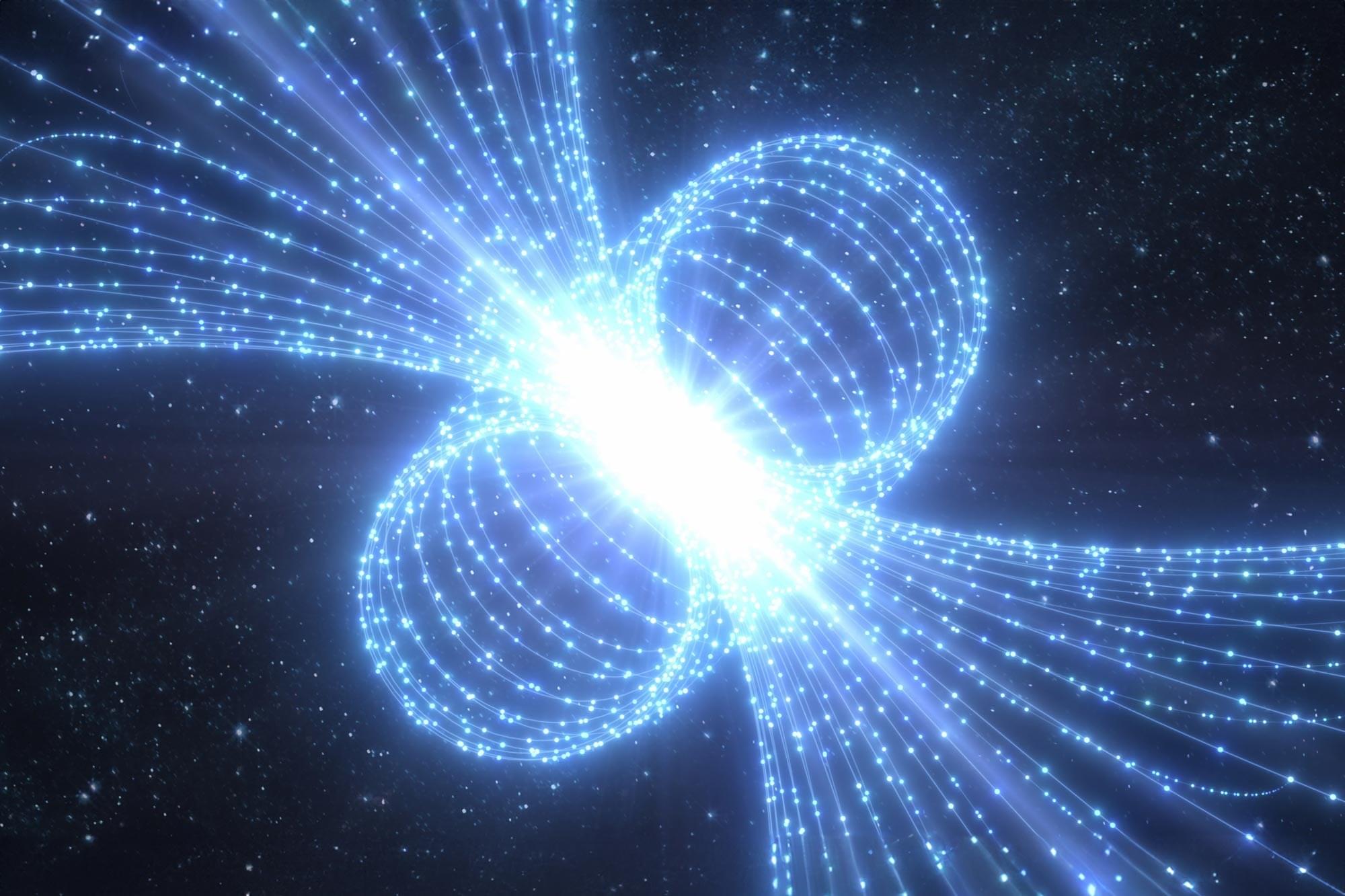
Researchers have identified a potential mechanism that explains how turbulent plasma can produce the vast, ordered magnetic fields observed across the universe Cosmic magnetic fields are everywhere, but their origin has remained one of plasma astrophysics’ most persistent mysteries. Planets, star
Asteroids could be the ultimate spacecraft. Explore how space rocks become starships, habitats, and interstellar vessels.
Compare news coverage. Spot media bias. Avoid algorithms. Be well informed. Download the free Ground News app at https://ground.news/isaacarthur. Join this channel to get access to perks: / @isaacarthursfia. Visit our Website: http://www.isaacarthur.net. Join Nebula: https://go.nebula.tv/isaacarthur. Support us on Patreon: / isaacarthur. Support us on Subscribestar: https://www.subscribestar.com/isaac-a… Group: / 1,583,992,725,237,264 Reddit: / isaacarthur Twitter: / isaac_a_arthur on Twitter and RT our future content. SFIA Discord Server: / discord Credits: Using Asteroids As Spaceships Science & Futurism with Isaac Arthur Episode 379, January 26, 2023 Written, Produced & Narrated by Isaac Arthur Editors: Briana Brownell David McFarlane Donagh B. Graphics by: Fishy Tree Jeremy Jozwik Ken York Sergio Botero Udo Schroeter Music Courtesy of Epidemic Sound http://epidemicsound.com/creator Markus Junnikkala, “We Roam the Stars”, “A Memory of Earth” Stellardrone, “Red Giant”, “Ultra Deep Field“ Facebook Group: / 1583992725237264 Reddit: / isaacarthur. Twitter: / isaac_a_arthur on Twitter and RT our future content. SFIA Discord Server: / discord.
Credits: Using Asteroids As Spaceships. Science & Futurism with Isaac Arthur. Episode 379, January 26, 2023 Written, Produced & Narrated by Isaac Arthur.
Editors: Briana Brownell. David McFarlane. Donagh B.
Graphics by: Fishy Tree. Jeremy Jozwik. Ken York. Sergio Botero. Udo Schroeter.
Could we sculpt dead planets into living worlds? From artificial crusts and orbital mirrors to taming tectonics and engineering biospheres, this is your definitive guide to turning alien rocks into second Earths.
Watch my exclusive video Fishbowl Starships — Water As Shielding — https://nebula.tv/videos/isaacarthur–… Nebula using my link for 40% off an annual subscription: https://go.nebula.tv/isaacarthur Get a Lifetime Membership to Nebula for only $300: https://go.nebula.tv/lifetime?ref=isa… Use the link https://gift.nebula.tv/isaacarthur to give a year of Nebula to a friend for just $36. Visit our Website: http://www.isaacarthur.net Support us on Patreon: / isaacarthur Support us on Subscribestar: https://www.subscribestar.com/isaac-a… Facebook Group: / 1,583,992,725,237,264 Reddit: / isaacarthur Twitter: / isaac_a_arthur on Twitter and RT our future content. SFIA Discord Server: / discord Credits: Interstellar Travel: Can We Survive The Long Journey? Episode 725; June 15, 2025 Written, Produced & Narrated by: Isaac Arthur Graphics: Jarred Eagley Jeremy Jozwik Ken York YD Visual Mafic Studios Sergio Botero Select imagery/video supplied by Getty Images Music Courtesy of Epidemic Sound http://epidemicsound.com/creator Chris Zabriskie, “Unfoldment, Revealment”, “A New Day in a New Sector”, “Oxygen Garden”, “Wonder Cycle” Kai Engel, “Endless Story About Sun and Moon” Taras Harkavyi, “Alpha and…” Dark Future, “Staring Through” pt1 Miguel Johnson. “The Commanders”, “Far From Home” Lombus, “Hydrogen Sonata”, “Cosmic Soup” Aerium, “Deijocht” Stellardrone, “Red Giant”, “Solar Eclipse”, “Billions and Billions” Chapters 0:00 Intro 5:33 What is Terraforming? 8:27 Terraforming vs Para-Terraforming 11:54 Planets vs Megastructures 14:05 Terraforming vs Bioforming 17:14 The Inevitable Hybrid Approach 20:59 Ethics & Debate: Preservation vs. Transformation 22:42 Terraforming as a Civilization-Scale Endeavor 23:46 Terraforming Technologies & Techniques 24:42 Artificial Gravity Solutions 27:58 Atmospheric Manipulation 31:25 Bioforming & Genetic Engineering 34:06 Comet & Asteroid Bombardment 39:43 Domes & Worldhouses 43:24 Geoengineering & Climate Control 47:05 Hydrospheric Engineering 49:58 Magnetosphere Generation 53:35 Fishbowl Starships 55:02 Mass & Orbital Adjustments 1:00:17 Mega-Mirrors & Solar Shades 1:04:30 Oxygenation & Soil Processing 1:07:39 Planetary Shells & Artificial Crusts 1:10:37 Terraforming Nanotechnology 1:14:04 Tidal & Seismic Stabilization 1:18:45 From Theory to Practice: Adapting Terraforming to Specific Worlds 1:20:27 Extreme Radiation Levels 1:23:57 Frequent Asteroid & Meteor Impacts 1:27:41 High Gravity 1:30:29 Highly Eccentric Orbits 1:34:46 Hostile Native Life 1:38:25 Intense Volcanism 1:40:55 Long or Erratic Day/Night Cycles 1:51:09 Low Light Levels 1:52:57 No Air 1:54:25 No Magnetosphere 1:56:17 No Seasons 1:58:13 No Water 2:00:48 Short or Long Years & Seasons 2:02:05 Tidally Locked 2:03:32 Tidally Wracked 2:04:36 Too Cold 2:05:36 Too Hot 2:06:21 Too Much Air 2:07:05 Too Much Ocean 2:08:44 Too Much Solar Wind 2:11:13 Toxic or Corrosive Atmosphere or Surface 2:14:09 Unstable Tectonics 2:15:10 Wrong Air Composition 2:16:21 Final Thoughts. Get Nebula using my link for 40% off an annual subscription: https://go.nebula.tv/isaacarthur. Get a Lifetime Membership to Nebula for only $300: https://go.nebula.tv/lifetime?ref=isa… Use the link https://gift.nebula.tv/isaacarthur to give a year of Nebula to a friend for just $36.
Visit our Website: http://www.isaacarthur.net. Support us on Patreon: / isaacarthur. Support us on Subscribestar: https://www.subscribestar.com/isaac-a… Facebook Group: / 1583992725237264 Reddit: / isaacarthur. Twitter: / isaac_a_arthur on Twitter and RT our future content. SFIA Discord Server: / discord. Credits: Interstellar Travel: Can We Survive The Long Journey? Episode 725; June 15, 2025 Written, Produced & Narrated by: Isaac Arthur. Graphics: Jarred Eagley. Jeremy Jozwik. Ken York YD Visual. Mafic Studios. Sergio Botero. Select imagery/video supplied by Getty Images. Music Courtesy of Epidemic Sound http://epidemicsound.com/creator. Chris Zabriskie, \
Roger Penrose developed a radical new idea of how to think about fundamental physics, Twistor theory. here he gives a brief laypersons guide as to what it is and its implications are for cosmology and our place in the universe.
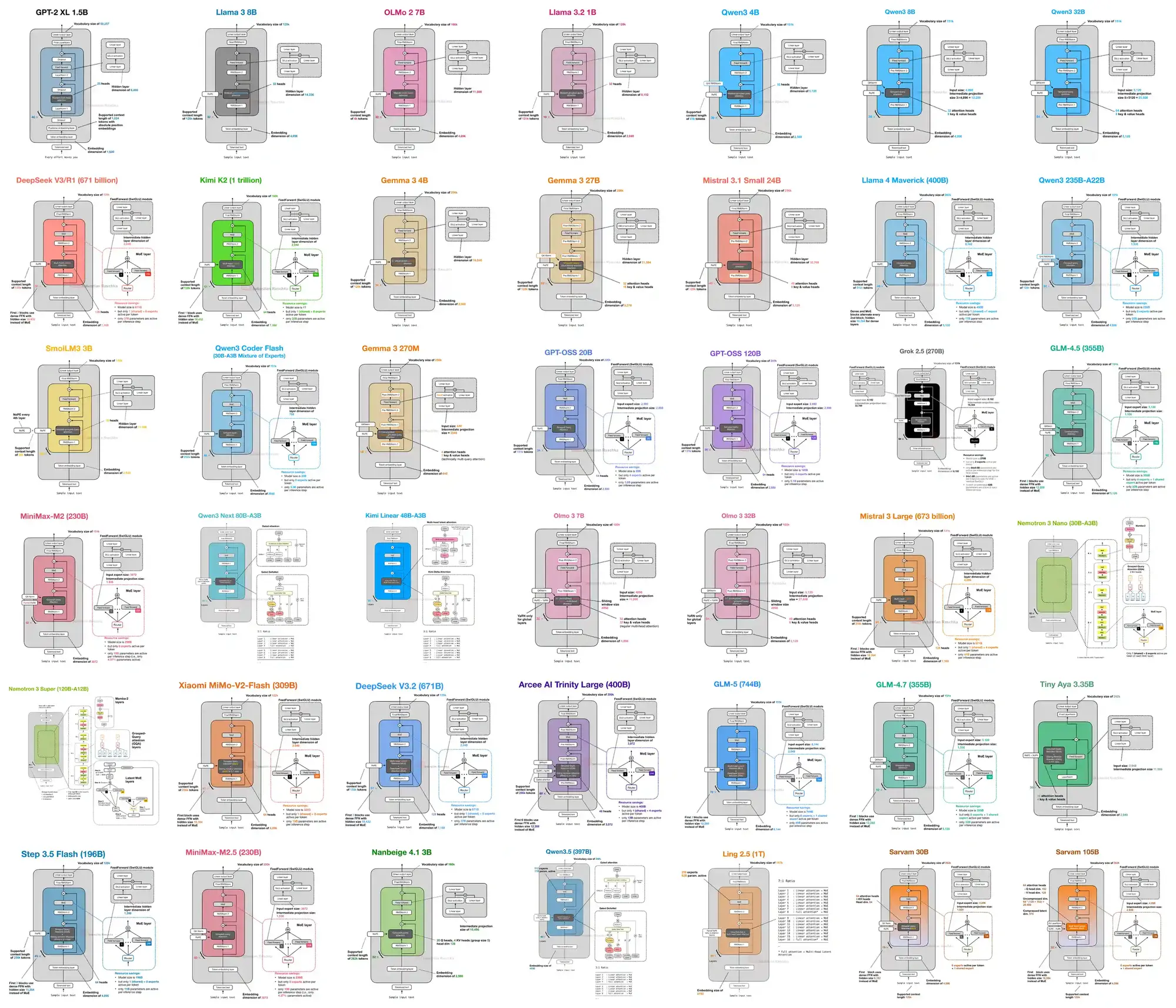
A gallery that collects architecture figures from The Big LLM Architecture Comparison and related articles, with fact sheets and links back to the original sections.