Strange magnetic surges above the Moon have baffled scientists for years. A new model points to an unexpected plasma interaction as the culprit.
Get the latest international news and world events from around the world.






Hackers exploit critical flaw in Ninja Forms WordPress plugin
A critical vulnerability in the Ninja Forms File Uploads premium add-on for WordPress allows uploading arbitrary files without authentication, which can lead to remote code execution.
Identified as CVE-2026–0740, the issue is currently exploited in attacks. According to WordPress security company Defiant, its Wordfence firewall blocked more than 3,600 attacks over the past 24 hours.
With over 600,000 downloads, Ninja Forms is a popular WordPress form builder that lets users create forms without coding using a drag-and-drop interface. Its File Upload extension, included in the same suite, serves 90,000 customers.

Oxford scientists uncover how the brain resolves emotional ambiguity
Non-invasive ultrasound study reveals causal role of the amygdala in interpreting uncertain emotions.
Scientists at the University of Oxford have demonstrated, for the first time, that a key emotional centre deep in the human brain directly influences how we interpret ambiguous social cues.
In a new study, published in Neuron, researchers used low-intensity focused ultrasound to temporarily and non-invasively alter activity in the amygdala — a region known to be involved in emotion and affected in depression. They found that this changed how people responded to facial expressions, particularly when those expressions were emotionally unclear.
Physicists trace the sun’s magnetic engine, 200,000 kilometers below its surface
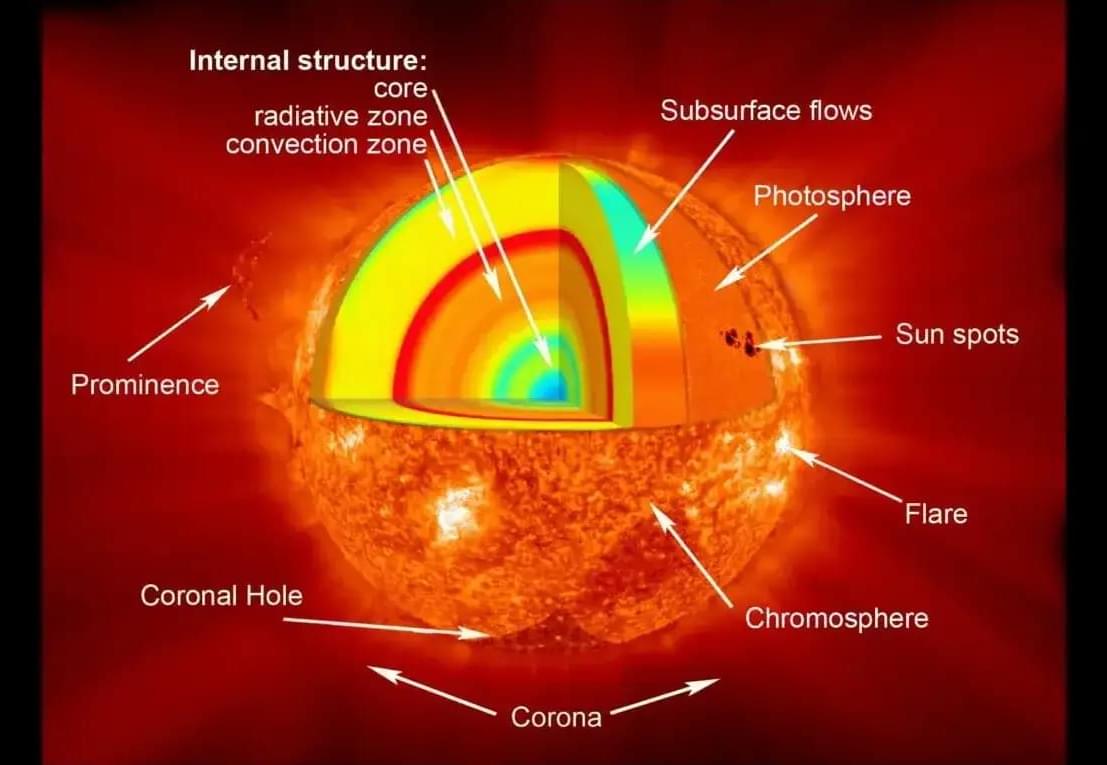
Every eleven years, the sun’s magnetic field flips. Sunspots—dark, cooler regions on the sun’s surface that mark intense magnetic activity and often trigger solar eruptions—appear at mid-latitudes and migrate toward the star’s equator in a butterfly-shape pattern before fading as the cycle resets. While this spectacle on the star’s surface has long been visible to astronomers, where this powerful cycle begins inside the star has remained hidden until now.
Researchers at the New Jersey Institute of Technology (NJIT) have analyzed nearly three decades of solar oscillation data to trace the sun’s interior dynamics, and have now pointed to the likely location of the star’s magnetic engine deep beneath its surface: roughly 200,000 kilometers down, about the length of stacking 16 Earths end to end.
The findings, published in Scientific Reports, provide one of the clearest observational windows yet into the sun’s magnetic engine—the solar dynamo—shedding light on hidden forces shaping space weather patterns linked to the solar cycle, not only on Earth’s nearest star, but potentially on other stars across the galaxy.