Get the latest international news and world events from around the world.
The ‘Miracle Mineral Solution’—amazing cure or toxic illusion?
Miracle Mineral Solution, also known as MMS, has been marketed for years as a purported miracle cure for various conditions, including cancer, autism, and COVID-19. MMS is the marketing name for sodium chlorite (NaClO₂), a powerful disinfectant used, among other things, for water treatment. When sodium chlorite is acidified, chlorine dioxide (ClO₂) is formed. Its consumption can be hazardous to health.
A team of scientists from Wroclaw Medical University decided to investigate this.
In a study published in Scientific Reports, they analyzed the effects of acidified sodium chlorite (ASC), from which ClO₂ is produced.
The “Triple Singularity” is Here: Why 2028 Breaks the Economy
The world is prepping for 2030. But the math says the break happens two years early. 📥 Download the FREE Singularity Survival Guide (Assessment+Timeline): https://technomics.gumroad.com/l/ai-s…
In this video: While governments draft \.
Why AGI Is Impossible
As a listener of TOE you can get a special 20% off discount to The Economist and all it has to offer! Visit https://www.economist.com/toe.
Join My New Substack (Personal Writings): https://curtjaimungal.substack.com.
Listen on Spotify: https://tinyurl.com/SpotifyTOE
Become a YouTube Member (Early Access Videos):
https://www.youtube.com/channel/UCdWIQh9DGG6uhJk8eyIFl1w/join.
Support TOE on Patreon: https://patreon.com/curtjaimungal.
Twitter: https://twitter.com/TOEwithCurt.
Fermi Paradox: The Firstborn and the Reset Hypotheses
The interdict hypothesis is interesting too.
An exploration of the firstborn and reset hypothetical solutions to the Fermi Paradox.
My Patreon Page:
https://www.patreon.com/johnmichaelgodier.
My Event Horizon Channel:
How Epigenetic Reprogramming Makes Cells Act Young Again
Aging doesn’t rewrite your DNA, it scrambles how your cells read it.
This clip explains epigenetic drift and how Life Biosciences’ therapy, ER100, uses Yamanaka factors to restore youthful epigenetic patterns in aged cells. By resetting the chemical marks that control gene expression, cells can behave as if they’re young again without changing the underlying DNA.
It’s the same biological process that happens early in embryonic development, applied in a controlled way to adult cells.
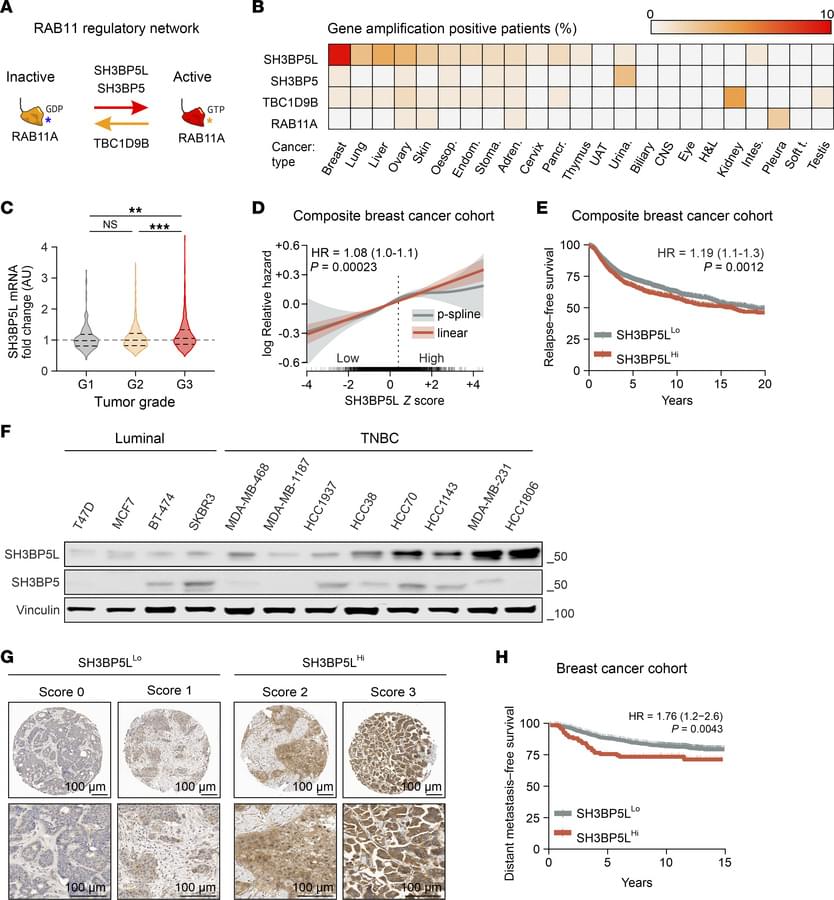
Abstract: In a cohort of over 1,000 patients with BreastCancer
Emilio Hirsch & team identify SH3BP5L as the most highly expressed guanine nucleotide exchange factor (GEF) for RAB11A, and its inhibition lowers lung metastasis and cell spreading in triple negative breast cancer models (TNBC):
The figure shows immunohistochemical assessment of SH3BP5L expression in tissue from patients with breast cancer.
@unito.it @fondazioneumbertoveronesi
1Department of Molecular Biotechnology and Health Sciences, Molecular Biotechnology Center “G. Tarone,” University of Torino, Torino, Italy.
2IEO, European Institute of Oncology IRCCS, Milan, Italy.
3Department of Oncology and Hemato-Oncology, University of Milano, Milano, Italy.
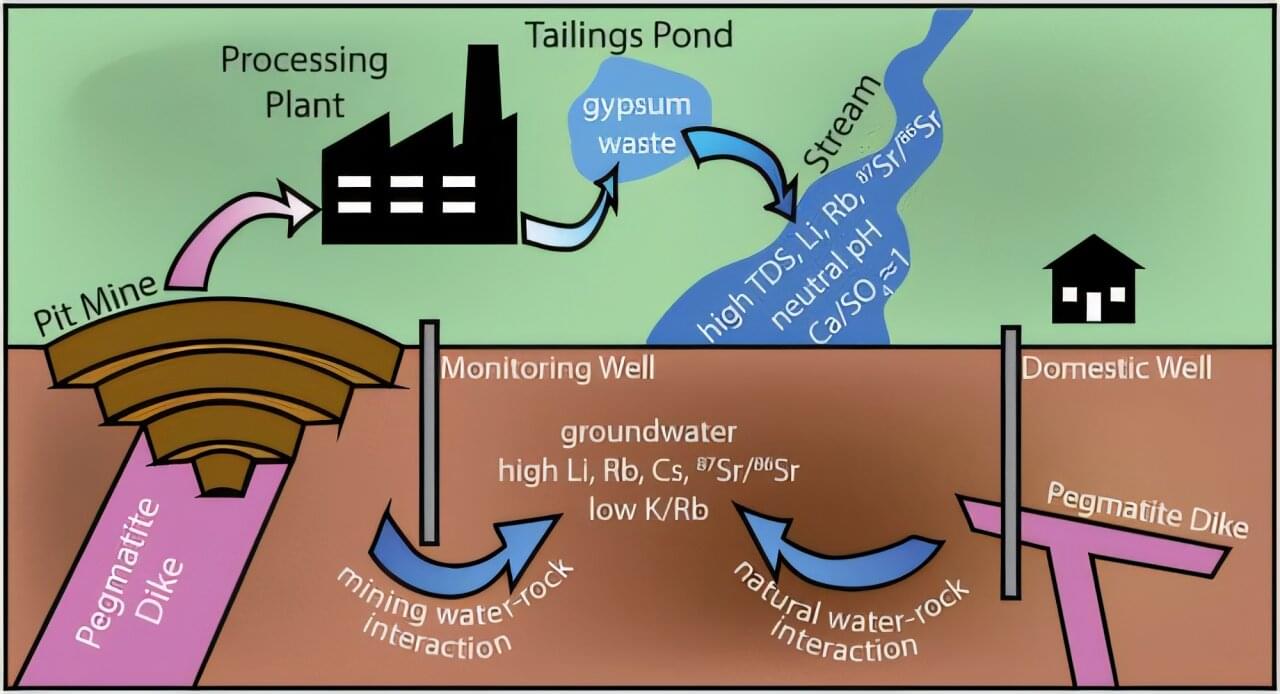
When water meets rock: Exploring water quality impacts from legacy lithium mining in North Carolina
Starting just outside Charlotte, North Carolina, a vast underground deposit of lithium stretches south for 25 miles. A key component of rechargeable batteries and energy grid storage systems, the soft, silvery metal is a global commodity, making this subterranean cache a geopolitically important and potentially lucrative resource.
Here, lithium primarily occurs within granite-like rocks called pegmatite, bound to a green-tinged mineral called spodumene. Two large lithium mines once operated in this region—called the Carolina Tin-Spodumene Belt—but closed decades ago. As demand for renewable energy climbs, mining companies have growing interest in the area.
The presence of historic, or legacy, lithium mines and the prospect of new lithium mining activity have led nearby residents to wonder about the possibility of drinking water contamination. Over the past several years, a team led by Avner Vengosh, Distinguished Professor and Nicholas Chair of Environmental Quality at Duke University’s Nicholas School of the Environment, has been working to address those concerns.

This job has become the ultimate case study for why AI won’t replace human workers
Want to understand how artificial intelligence could change your job? Look to radiology as a clue.
Radiology has come up multiple times as an example of a field that’s been impacted by AI without replacing the need for human workers.