Toggle light / dark theme

Clever AI Hid Data From Its Creators to Cheat at Tasks They Gave It

Recent research from Stanford and Google has made the worst nightmare of some concerned with artificial intelligence (AI) all the more real. A machine learning agent was caught cheating by hiding information in “a nearly imperceptible, high-frequency signal.”

Clever, but also creepy.

The agent was instructed to turn aerial images into street maps and back again as part of research to improve Google’s process of turning satellite images into the widely used and relied upon Google Maps. The process involves CycleGAN, “a neural network that learns to transform images of type X and Y into one another, as efficiently yet accurately as possible.” Though the agent was performing this task quite well, it quickly became apparent that it was performing the task too well.

WATCH LIVE: SpaceX to Launch Falcon 9 Rocket #GPS III-1 #2018Finale @8:51am EST

For its 2018 finale, A SpaceX Falcon 9 rocket will launch the U.S. Air Force’s first third-generation navigation satellite for the Global Positioning System (GPS 3–01) from Cape Canaveral Air Force Station in Florida.

Liftoff window begins at 8:51 a.m. EST (1351 GMT).

▰ Get Live Alerts: (Rocket Launches & Webcasts)
https://goo.gl/9RFfhT

▰ Upcoming launch events:
https://goo.gl/JV4PrD

On Tuesday morning SpaceX will attempt to launch what the company and the Air Force are calling an “historic” mission from Cape Canaveral.

The launch will be SpaceX’s first of a national security mission, carrying the first in a new generation of satellites modernizing the Global Positioning System.

SpaceX and Blue Origin Just Scrubbed Near-Simultaneous Rocket Launches (Arianespace and ULA, Too!)

With no less than FOUR rocket launches by four different companies, today promised to be an epic one for space fans. But by mid-morning, two of the most anticipated launches, by SpaceX and Blue Origin, were scrubbed by glitches, while weather forced another launch delay in South America.

SpaceX and Blue Origin kicked off the launch attempts today (Dec. 18). A SpaceX Falcon 9 rocket was set to launch GPS III SV01, the first of an advanced new navigation satellite system for the U.S. military. At first the mission, initially scheduled for 9:11 a.m. EST (1411 GMT), slipped a few minutes to 9:34 a.m. EST as SpaceX prepared for launch at its Cape Canaveral Air Force Station pad in Florida. But seven minutes before liftoff, the Falcon 9’s onboard computer triggered an abort, forcing SpaceX to stand down for the day.

“We did have an abort,” SpaceX Firmware Engineer Tom Praderio said during live commentary. “This abort was triggered by the onboard Falcon 9 flight computer. The unfortunate part is that it has pushed us past our launch window today.” SpaceX had a 26-minute window for the launch attempt. The company will try again Wednesday (Dec. 19), with liftoff set for 9:07 a.m. EST (1407 GMT).

Next-generation of GPS satellites are headed to space

DENVER, United States — After months of delays, the U.S. Air Force is about to launch the first of a new generation of GPS satellites, designed to be more accurate, secure and versatile.

But some of their most highly touted features will not be fully available until 2022 or later because of problems in a companion program to develop a new ground control system for the satellites, government auditors said.

The satellite is scheduled to lift off Tuesday from Cape Canaveral, Florida, aboard a SpaceX Falcon 9 rocket. It’s the first of 32 planned GPS III satellites that will replace older ones now in orbit. Lockheed Martin is building the new satellites outside Denver.

The end of GEO Satellites as we know today

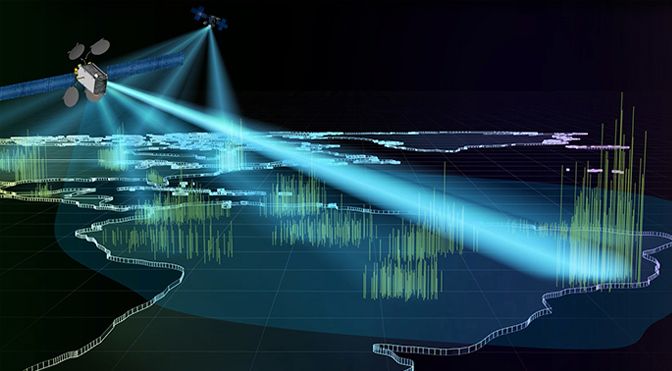
GEO Satellites business globally make roughly 80% of the overall Space market business with $270B revenues claimed in 2017. How a Space Industry of such kind level of business can disappear is not an argument for many years to come but how a transformation of the Satellite configuration can impact the Space Industry this represents a real topic.

I already discussed in my previous article of how the advancement of A.I. bringing to autonomous missions for satellites, 3D printing permitting on-orbit Manufacturing and Robotic Assembly are not far away technologies, with the mature advancements achieved in on-Ground applications, to be applied to Space Satellites. Already today recently born Startups are working on Satellites on-board software/hardware permitting more autonomous tasks with decision making capability without being piloted from remote on-Ground Stations, significantly reducing operative costs.

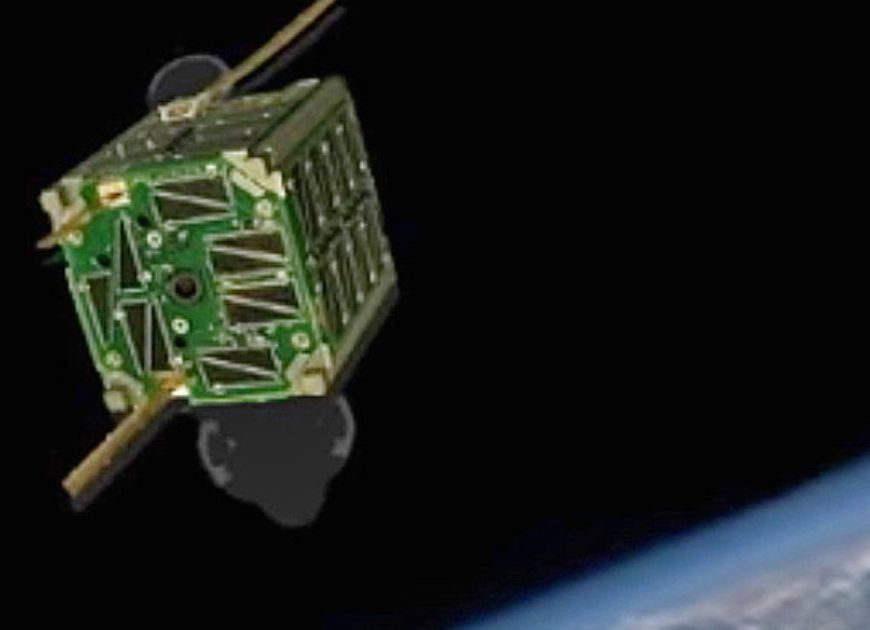
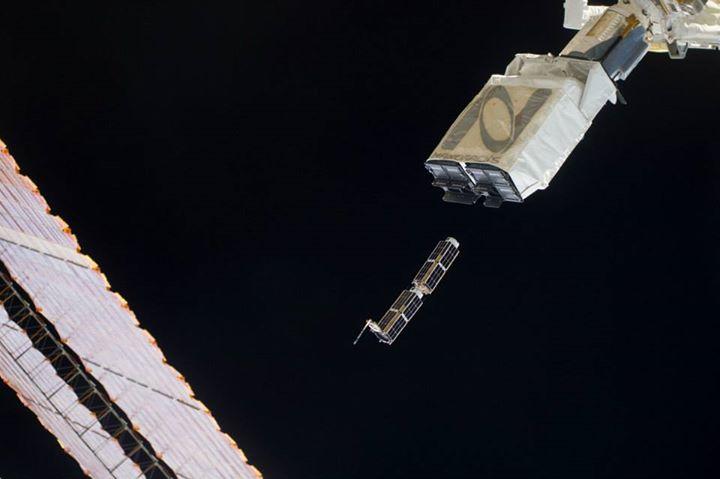
Arriving to build fully autonomous Satellites is just a matter of time, with remotely controlled operations to be applied only for safety contingencies. The foreseen growth in the number of small satellites by order of magnitudes push the market this way.

/* */