Toggle light / dark theme

Get the latest international news and world events from around the world.

Log in for authorized contributors

Free radicals caught in the act with slow spectroscopy

Why does plastic turn brittle and paint fade when exposed to the sun for long periods? Scientists have long known that such organic photodegradation occurs due to the sun’s energy generating free radicals: molecules that have lost an electron to sunlight-induced ionization and have been left with an unpaired one, making them very eager to react with other molecules in the environment. However, the exact mechanisms for how and why the energy from the sun’s photons get stored and released in the materials over very long periods have eluded empirical evidence.

The problem lies in the timeframe. While scientists have access to extremely sophisticated spectroscopy equipment capable of measuring the energy levels of individual electrons at femtosecond to millisecond scales in organic materials, they have paid little attention to time scales beyond seconds—and these are processes that can take years.

As such, slow, transient charge accumulation has presented a disappointing data gap in both applied and theoretical optics. But now, researchers from the Organic Optoelectronics Unit at the Okinawa Institute of Science and Technology (OIST) have addressed this challenge with a new methodology that detects these faint signals. Their findings are published in Science Advances.

Rydberg-atom detector conquers a new spectral frontier

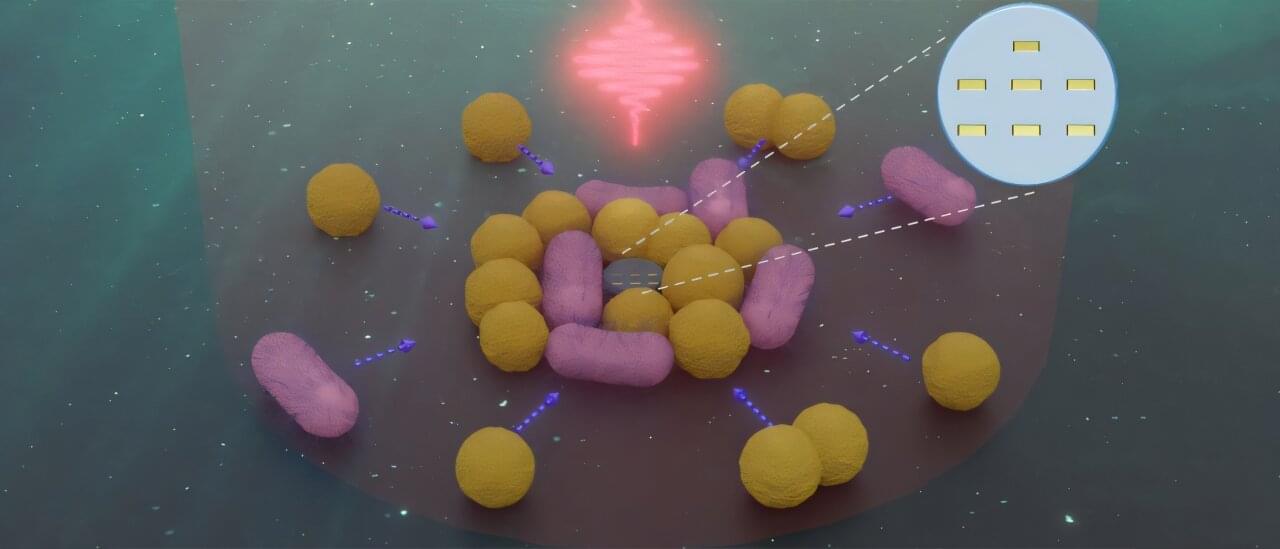
A team from the Faculty of Physics and the Center for Quantum Optica l Technologies at the Center of New Technologies, University of Warsaw has developed a new method for measuring elusive terahertz signals using a “quantum antenna.”

The authors of the work utilized a novel setup for radio wave detection with Rydberg atoms to not only detect but also precisely calibrate a so-called frequency comb in the terahertz band. This band was until recently a white spot in the electromagnetic spectrum, and the solution described in the journal Optica paves the way for ultrasensitive spectroscopy and a new generation of quantum sensors operating at room temperature.

Terahertz (THz) radiation, being part of the electromagnetic spectrum, lies at the boundary of electronics and optics, positioned between microwaves (used, for example, in Wi-Fi) and infrared.

People’s sniffing behaviors predict what they are smelling, study shows

Humans and other animals actively sense their surrounding environment. This entails the deliberate adjustment of motor behavior involved in sensory sampling (i.e., movements of the eyes, ears and hands) in line with the stimulus information.

When it comes to the sense of smell, the principal motor behavior that supports active sensing is the sniff, which entails brief inhalations aimed at pulling odor molecules into the nasal cavity. So far, the extent to which sniffing behaviors can be influenced and adapted based on the odors that one is smelling has remained unknown.

Researchers at Northwestern University recently carried out a study aimed at exploring this possibility. Their findings, published in Nature Human Behavior, suggest that people’s sniffing patterns are continuously shaped by what they are smelling and carry detailed information about specific odors.

Miniature microscope captures real-time voltage signals in awake animals

Researchers have built a tiny, lightweight microscope that captures neuron activity with unprecedented speed that can be used in freely moving animals. The new tool could give scientists a more complete view of how brain cells process information during natural behavior.

The microscope is designed to image genetically encoded voltage indicators —fluorescent dyes that rapidly change brightness when a neuron fires—through a small window in the skull while the animal is awake.

“Unlike most miniature microscopes that track slower calcium signals, ours captures electrical spikes at hundreds of frames per second,” said Emily Gibson from the University of Colorado Anschutz Medical Campus. “This makes it possible to capture the moment a neuron fires as well as the quieter signals that build up inside neurons before firing.”

Loss of brain protein eases Alzheimer’s symptoms and brain damage in mice

New research published in the journal eNeuro examined whether eliminating a protein that is elevated in the brains of those with Alzheimer’s could prevent or reduce damage and behavioral symptoms in a mouse model of Alzheimer’s disease.

“Previous work from our research team and others found evidence that a specific protein named Centaurin-α1 is involved in the progression of Alzheimer’s damage within neurons,” explained lead author of the study, Dr. Erzsebet Szatmari. “To confirm the role of this protein and see if it might be a good therapeutic target, we tested whether genetically removing it would prevent or slow disease progression in a mouse model of the disease.”

The scientists used a well-characterized model of Alzheimer’s disease in mice. The disease model (called J20) contains two genetic mutations associated with rare familial variants of Alzheimer’s disease. These animals develop changes in brain tissue and behavioral deficits characteristic of many symptoms seen in human Alzheimer’s disease, including neuroinflammation, accumulation of neuronal plaques, synapse loss, and impairments in spatial memory and learning.

Ceramic electrochemical cell production temperature drops by over 500°C with new method

As power demand surges in the AI era, the protonic ceramic electrochemical cell (PCEC), which can simultaneously produce electricity and hydrogen, is gaining attention as a next-generation energy technology. However, this cell has faced the technical limitation of requiring an ultra-high production temperature of 1,500°C.

A KAIST research team has succeeded in establishing a new manufacturing process that lowers this limit by more than 500°C for the first time.

Chameleon-like nanomaterial can adapt its color to mechanical strain

Inspired by the Japanese art of kirigami, a team of scientists from the University of Amsterdam have developed a material that can reflect different colors of light, depending on how it is stretched. The results were recently published in the journal ACS Photonics.

Similar to its perhaps better-known cousin origami—the Japanese art of folding paper—kirigami is an art form in which paper is both folded and cut. The jaw-dropping three-dimensional designs that kirigami artists create, inspired a team of physicists from the University of Amsterdam to design an equally spectacular type of material: one that smoothly changes its color when it is stretched.

Iron-on electronic patches enable easy integration of circuits into fabrics

Iron-on patches can repair clothing or add personal flair to backpacks and hats. And now they could power wearable tech, too. Researchers reporting in ACS Applied Materials & Interfaces have combined liquid metal and a heat-activated adhesive to create an electrically conductive patch that bonds to fabric when heated with a hot iron. In demonstrations, circuits ironed onto a square of fabric lit up LEDs and attached an iron-on microphone to a button-up shirt.

“E-textiles and wearable electronics can enable diverse applications from health care and environmental monitoring to robotics and human-machine interfaces. Our work advances this exciting area by creating iron-on soft electronics that can be rapidly and robustly integrated into a wide range of fabrics,” says Michael D. Bartlett, a researcher at Virginia Tech and corresponding author on the study.

Reservoir thermal energy storage offers efficient cooling for data centers

The rise of artificial intelligence, cloud platforms, and data processing is driving a steady increase in global data center electricity consumption. While running computer servers accounts for the largest share of data center energy use, cooling systems come in second—but a new study by researchers at the National Laboratory of the Rockies (NLR), formerly known as NREL, offers a potential solution to reduce peak energy consumption.

Published in Applied Energy, a techno-economic analysis led by Hyunjun Oh, David Sickinger, and Diana Acero-Allard—researchers in NLR’s energy storage and computational science groups—has demonstrated a system to cool data centers more efficiently and cost-effectively.

The approach, called reservoir thermal energy storage (RTES), stores cold energy underground then uses it to cool facilities during peak-demand periods.

New haptic display technology creates 3D graphics you can see and feel

Researchers at UC Santa Barbara have invented a display technology for on-screen graphics that are both visible and haptic, meaning that they can be felt via touch.

The screens are patterned with tiny pixels that expand outward, yielding bumps when illuminated, enabling the display of dynamic graphical animations that can be seen with the eyes and felt with the hand. This technology could one day enable high-definition visual-haptic touch screens for automobiles, mobile computing or intelligent architectural walls.

Max Linnander, a Ph.D. candidate in the RE Touch Lab of mechanical engineering professor Yon Visell, led the research, which appears in the journal Science Robotics.

/* */