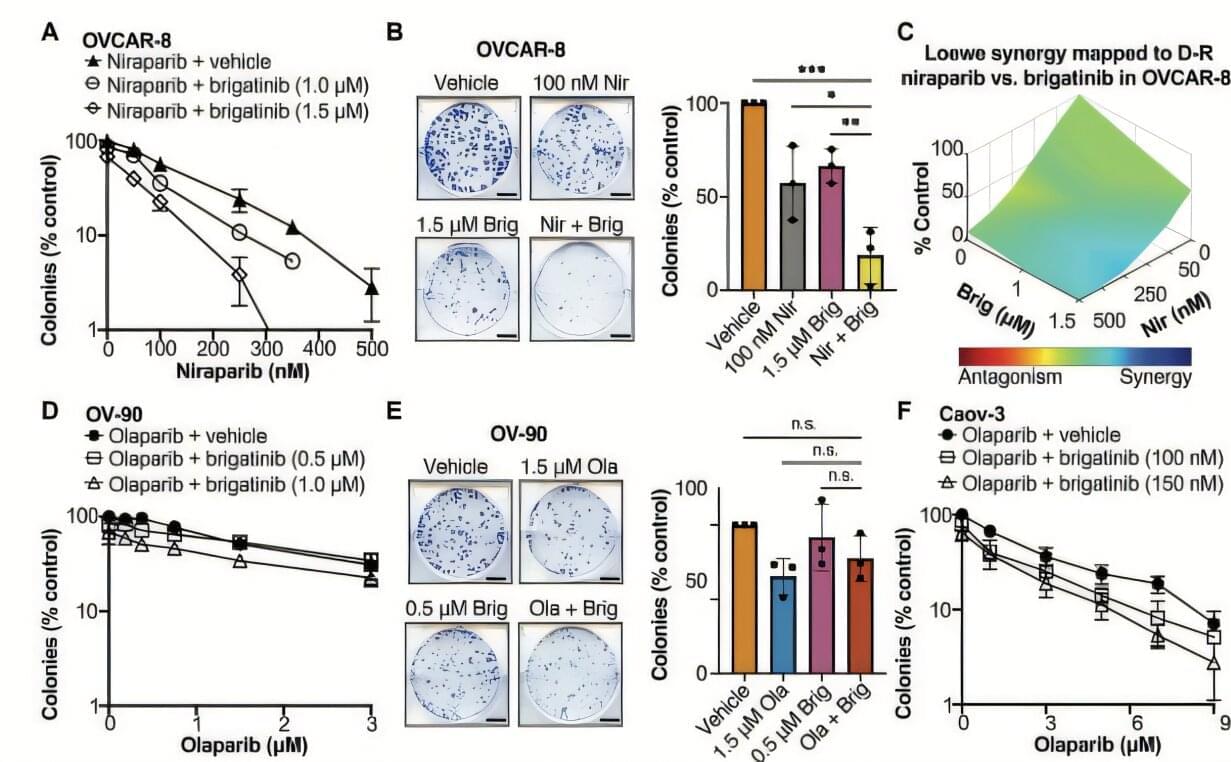
A new study published by Mayo Clinic researchers suggests that ovarian cancer cells quickly activate a survival response after PARP inhibitor treatment, and blocking this early response may make this class of drugs work better. The research is published in the journal Science Translational Medicine.
PARP inhibitors are a common treatment for ovarian cancer and can be especially effective in cancers with impaired DNA repair. However, many tumors eventually stop responding, even when the drugs initially show results. The new research identifies a way cancer cells may survive PARP inhibitor treatment early on, and it points to a potential strategy to block that response.
In the study, researchers found that ovarian cancer cells rapidly activate a pro-survival program after exposure to PARP inhibitors. A key driver of this response is FRA1, a transcription factor that helps turn on genes that allow cancer cells to adapt and avoid cell death.