This badge represents independent contributors who have met NewsBreak’s standards for quality, along with adhering to policies, requirements, and editorial guidelines.
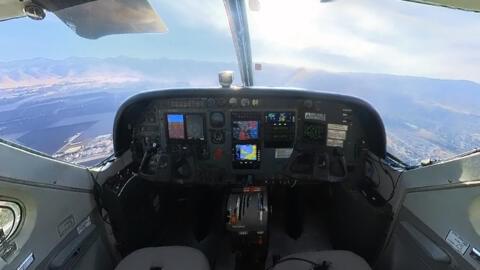
In a significant stride forward for aviation, Reliable Robotics, a trailblazer in aircraft automation systems, has successfully operated a Cessna 208B Caravan with no one on board. The aircraft, while not as large as a 737–100, is still a considerable size, marking a noteworthy milestone in the field of aviation automation.
The flight was remotely controlled from Reliable’s control center, located 50 miles away. This system is not just about remote control, but full automation of the aircraft, including taxi, takeoff, and landing. The technology is designed to prevent controlled flight into terrain and loss of control in flight, two major causes of fatal aviation accidents.
A NEW Walmart center is equipped with robots, allowing for humans to work faster and alongside them, and resulting in faster deliveries.
Walmart has been testing out some new technology, granting a peek inside their newest warehouse location.
Based in Katy, Texas, the warehouse showcases some of the latest technology in the industry, allowing humans to work alongside some state of the art robots.
Google has revealed “Gemini”, which it says is its largest science and engineering project ever.
It is also the company’s latest attempt to catch up with rival OpenAI to develop artificial intelligence, and try and build a better system than its ChatGPT.
As such, Gemini will come to Google’s Bard, the chatbot that it released in the wake of ChatGPT in an attempt to catch up. But it will also roll out to Google’s Pixels phones and elsewhere.
In this video I discuss New IBM’s Analog chip for Artificial Intelligence with IBM Staff Researcher Manuel Le Gallo-Bourdeau: https://research.ibm.com/people…
Kai-Fu Lee is China’s most famous venture capitalist, the former CEO of Google China, and one of the leading voices on the possibilities of AI. He says that…