Toggle light / dark theme

Italian woman makes 90 stuffed olives while undergoing brain surgery

She cooked up Italian food to protect her noodle!

A 60-year-old woman from the country’s Marche region prepared dozens of delicious stuffed olives while undergoing brain surgery — to reduce the risk of damaging the vital organ, according to a report Wednesday.

As doctors removed a brain tumor from her left temporal lobe, the unnamed patient whipped up 90 of the breaded-and-fried olives in a makeshift kitchen inside the operating room, according to the BBC.

What A Trump Loss In November Would Mean For NASA’s Lunar Return

NASA Administrator Jim Bridenstine tells me that despite the pandemic, the agency will do its utmost to meet the 2024 Artemis lunar return deadline.


“We continue to assess the impact the COVID-19 pandemic has had on our missions, but we strongly believe that we can still meet the goal of landing the first woman and the next man on the Moon in 2024,” NASA Administrator Jim Bridenstine told me via a headquarters’ spokesperson.

Yet NASA has also experienced shakeups in its human spaceflight directorate that could hinder meeting Artemis’ goals. Case in point, Doug Laverro, Associate Administrator of NASA’s Human Exploration and Operations Mission Directorate, departed less than a month ago.

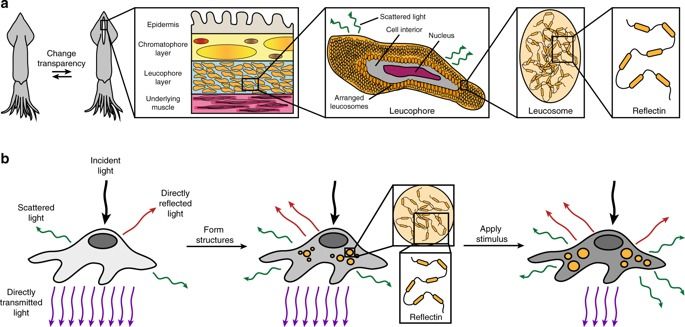
Cephalopod-inspired optical engineering of human cells

Although many animals have evolved intrinsic transparency for the purpose of concealment, the development of dynamic, that is, controllable and reversible, transparency for living human cells and tissues has remained elusive to date. Here, by drawing inspiration from the structures and functionalities of adaptive cephalopod skin cells, we design and engineer human cells that contain reconfigurable protein-based photonic architectures and, as a result, possess tunable transparency-changing and light-scattering capabilities. Our findings may lead to the development of unique biophotonic tools for applications in materials science and bioengineering and may also facilitate an improved understanding of a wide range of biological systems.

J&J moves up start of coronavirus vaccine human trials to July

(Reuters) — Johnson & Johnson moved up the start of human clinical trials for its experimental vaccine against the highly contagious coronavirus by two months to the second half of July, as the drugmaker rushes to develop a prevention for COVID-19, the company said on Wednesday.

The acceleration should allow J&J to take part in the massive clinical trials program planned by the U.S. government, which aims to have an effective vaccine by year end.

J&J shares rose nearly 2% to $148.69.

This device can read your medical history in a drop of sweat

“ “The monitoring of human health and well-being with the use of wearables is considered critical in the next generation of biomedical devices,” write the authors. “[But] most existing paper-based devices are designed for one-time use only, functioning under relatively intense capillary flow into the paper, which ceases upon saturation… [Our approach] can function as a key part of a platform for long-term sweat sampling and biomarker monitoring.””


Researchers have designed a paper-based wearable device that can monitor your sweat for 10-days at a time to detect important information about your health.

Stem cell-loaded microneedles speed up wound healing

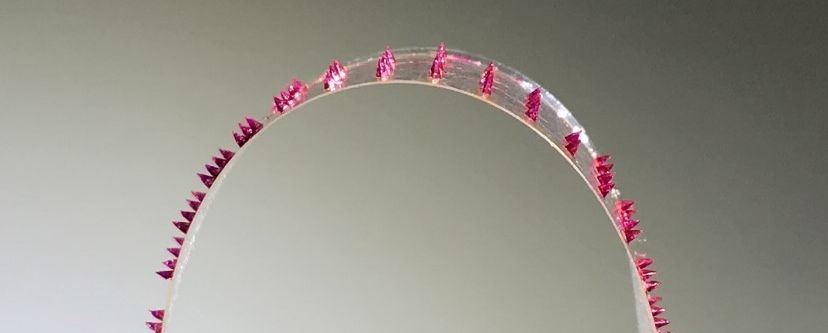
Stem cells are powerful tools that could one day unlock new frontiers in regenerative medicine. Now, a new study has shown that a certain type of stem cell can be delivered into injured tissues with dissolvable microneedles, to heal wounds.

Mesenchymal stem cells (MSCs) are responsible for replenishing bone, cartilage, muscle and fat cells in the body. But more recently, scientists have found that they have broader healing potential. If introduced to injured tissue, MSCs have been found to boost the formation of new blood vessels, reduce inflammation, and keep cells alive.

But there are a few problems. For one, injecting MSCs into the tissue with regular needles can cause further damage and scarring. Plus, it takes huge amounts of the cells to make sure that enough of them stick around to do their job.

How the pandemic fast-tracked this multibillion-dollar industry | Make It International

The coronavirus pandemic has been a real learning curve, not least for educators. But with many schools now reopening, questions are being asked about what the future of education might look like. CNBC Make It’s Karen Gilchrist spoke to entrepreneurs in India, Hong Kong and the U.S. to learn more about the multibillion-dollar business opportunity.

Like our Facebook page:
https://www.facebook.com/cnbcinternational

Follow us on Instagram:
https://www.instagram.com/cnbcinternational/

Follow us on Twitter:

/* */