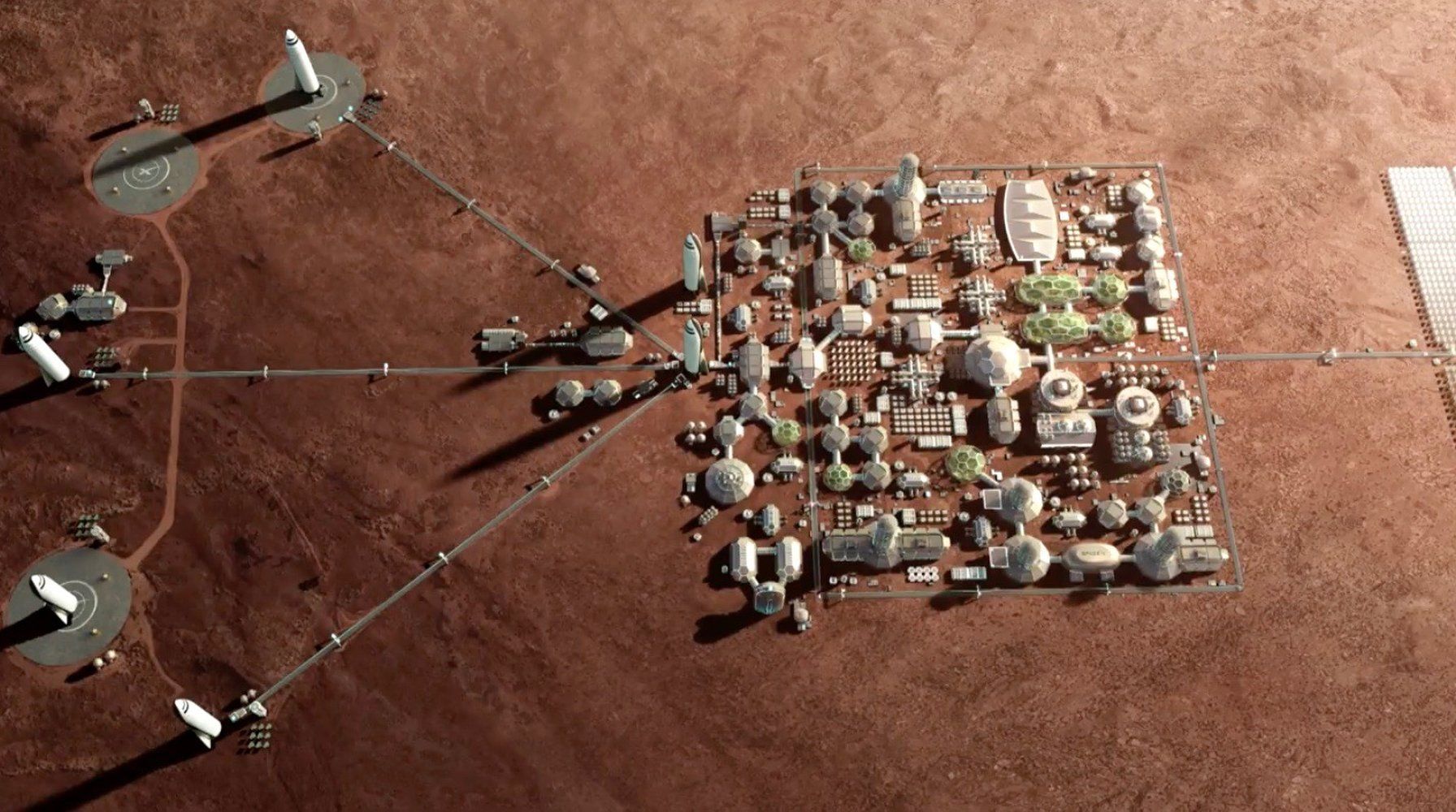
Humanity’s brutal and bellicose past provides ample justification for pursuing settlements on the moon and Mars, Elon Musk says.
The billionaire entrepreneur has long stressed that he founded SpaceX in 2002 primarily to help make humanity a multiplanet species — a giant leap that would render us much less vulnerable to extinction.
Human civilization faces many grave threats over the long haul, from asteroid strikes and climate change to artificial intelligence run amok, Musk has said over the years. And he recently highlighted our well-documented inability to get along with each other as another frightening factor. [The BFR: SpaceX’s Mars Colony Plan in Images].
Recent headlines have contained lots of asteroid-nuking talk. There’s a team of Russian scientists zapping mini asteroids in their lab, and supposedly NASA is thinking about a plan that would hypothetically involve nuking Bennushould it threaten Earth in 2135.
It’s true that NASA is drafting up ideas on how one might nuke an incoming asteroid, a theoretical plan called HAMMER, or the Hypervelocity Asteroid Mitigation Mission for Emergency Response, as we’ve reported. But scientists probably won’t need to use such a response on the “Empire State Building-sized” asteroid 101955 Bennu, which is set to pass close to Earth in 2135. Diverting such a threat could be much, much easier.
“Even just painting the surface a different color on one half would change the thermal properties and change its orbit,” Michael Moreau, NASA’s OSIRIS-REx Flight Dynamics System Manager, told Gizmodo. That would involve literally sending a spacecraft to somehow change the color of some of the asteroid.
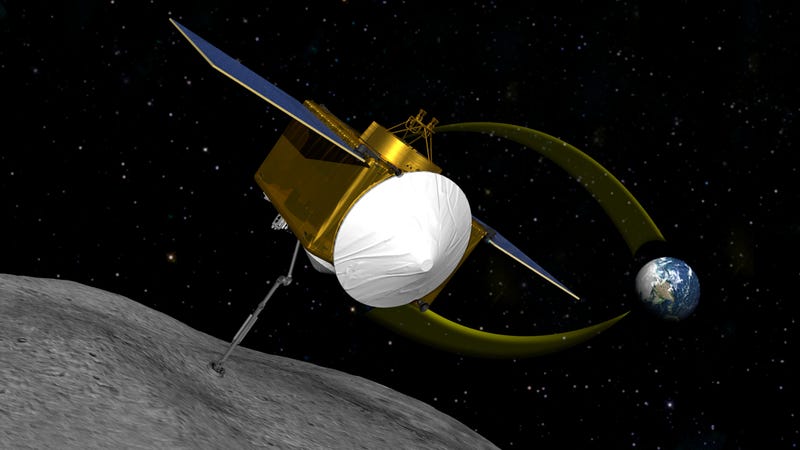
There’s lots we don’t know about asteroids just yet, which is why NASA has sent the probe OSIRIS-REx toward Bennu. This mission aims to scoop up and return a sample of the rock in 2023.
There is a minuscule chance, around 1 in 2,700 odds, that Bennu will strike Earth in 2135, reports the Washington Post. The rock isn’t big enough to end humanity, but it could cause some major damage. The OSIRIS-REx spacecraft will study the rock more, and NASA will continue to collect data to either rule out the chance of an impact or increase the odds.
But don’t worry about Bennu yet. Should the odds of a Bennu strike grow too high, the laws of physics will allow for a much easier solution than nuking. We could just splash it with some paint.
The sun pelts everything in the solar system with a slew of tiny particles, for example. This imparts a little bit of pressure. These particles are of no consequence to our own orbit, since Earth is incredibly massive, but Bennu weighs only around 13 times the mass of the Great Pyramid of Giza. That’s very light, comparatively. Given the 120 years or so we’ve got and the amount of distance Bennu has left to travel before its nearby approach, if scientists could make some of it more susceptible to the solar radiation, that would slightly alter its path enough that it would miss us. Doing so would require changing part of its surface so it absorbs more radiation—for example, by covering one side of it with paint. Scientists first need to better study its orbit around the sun to determine the best course of action.
All that is to say, as usual, we’re not about to be hit by the giant asteroid in the headlines.
There are asteroids we need to worry about, of course. But as we’ve reported before, we’re not tracking them. The government has only required that NASA track asteroids larger than a football field or so. Something smaller could go under the radar and cause significant local damage without the 120 years of warning Bennu has afforded us.
The thought of nuking asteroids makes for great science fiction. But instead, you should spend more time upset that we don’t know what smaller asteroids are threatening us, rather than worry about the ones scientists are tracking that could be diverted more easily.
A massive asteroid estimated to be 2.7 miles wide is set to make a ‘relatively close encounter’ with Earth on 1 September.
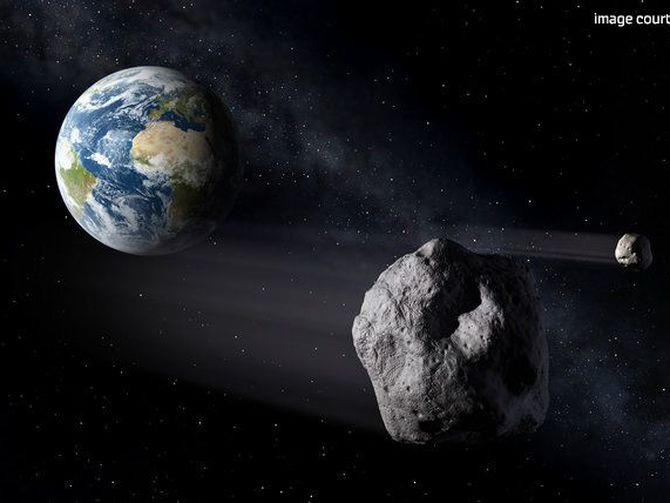
Dubbed ‘Florence,’ the huge space rock will pass just 4.4 million miles from our planet on Friday – or, about 18 times the distance between Earth and the moon.
According to NASA, this is the closest an asteroid of this size has come since they first began tracking near-Earth objects, giving scientists an unprecedented opportunity to study it up close through ground-based radar observations.
Asteroid Day is a global awareness movement to protect Earth against asteroid impacts. The original inspiration for this campaign came from Grigorij Richters’ asteroid impact disaster film 51 Degrees North — all profits from which he has now dedicated to the cause of Asteroid Day world-wide. Dr. Brian May is a key supporter and delivered a slight update of the original mix, specifically for the Asteroid Day launch. Learn more about Asteroid Day, here: http://www.asteroidday.org
Scientists have discovered a new branch of the Taurids meteor stream that could pose a major risk to Earth, with asteroids up to 1,000 feet wide flying past us every few years. The Taurids meteor shower peaks every October and November, producing a relatively small display of shooting stars as the planet.
NASA has announced that asteroid strikes may have tipped over Saturn’s icy, ocean-bearing moon Enceladus. Researchers came to the conclusion after analysing the latest images and data from Cassini.
Researchers say they have enough evidence to suggest the moon’s spin axis – the line through the north and south poles – reoriented from its original position due to a collision with a smaller body, most likely an asteroid. The shift from its original axis is by 55 degrees, more than halfway rolling completely onto its side.
“A hackathon (also known as a hack day, hackfest or codefest) is a design sprint-like event in which computer programmers and others involved in software development, including graphic designers, interface designers, project managers, and others, often including subject-matter-experts, collaborate intensively on software projects. Occasionally, there is a hardware component as well. Hackathons typically last between a day and a week. Some hackathons are intended simply for educational or social purposes, although in many cases the goal is to create usable software.” https://en.wikipedia.org/wiki/Hackathon
In February 2014, Dr. Brian May, astrophysicist and famed guitarist for the rock band QUEEN, began working with Grigorij Richters, the director of a new film titled 51 Degrees North, a fictional story of an asteroid impact on London and the resulting human condition. May composed the music for the film and suggested that Richters preview it at Starmus, an event organized by Dr. Garik Israelian and attended by esteemed astrophysicists, scientists and artists, including Dr. Stephen Hawking, Richard Dawkins and Rick Wakeman. The result was the beginning of discussions that would lead to the launch of Asteroid Day in 2015. See : https://asteroidday.org/
Creating rejuvenation will probably be quite expensive, but that’s no reason to give up on it. We can pull it off.
The first thing to realise is that, when you wonder how much something will cost, you’re actually wondering how many resources and how many people doing how much work it will take to do that something. That’s all that really matters. The problem is that we have a sucky economic system such that even if we do have more than enough people and resources to do the job, the monetary cost of it could be so high that you can’t get the job done without creating financial problems left and right. This should be a hint that the problem, if it exists, lies in our crappy economic system, not in rejuvenation itself or whatever other thing we may create.
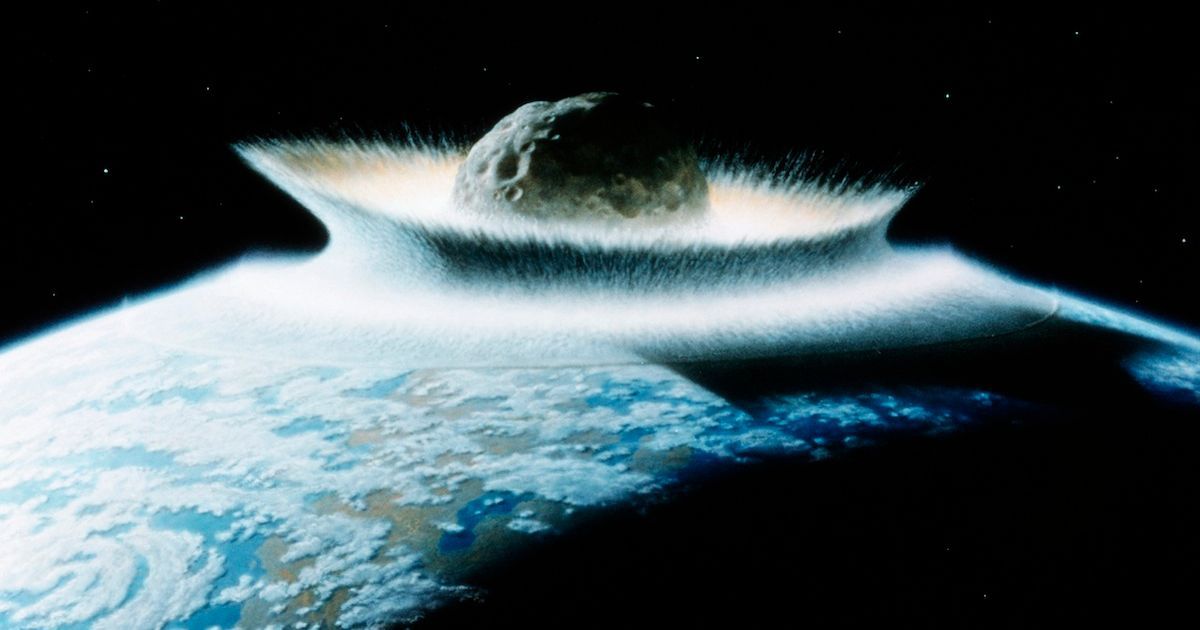
Apart from the obvious fact that other hysterically expensive endeavours (such as space missions) are pulled off despite their costs, we must take into account that desperate circumstances call for desperate measures. We don’t need to tear apart our economic system and replace it with another before we create rejuvenation, and neither would we if faced with another health crisis (such as a pandemic) or a planetary crisis, but we need to get the job done despite its costs and the consequences they may have. We can’t give up on rejuvenation on the grounds that it may be too expensive to create, just like we wouldn’t in the case of an existential risk. Can you imagine that? There’s a huge asteroid on a collision course with Earth, and our only hope is a spectacularly expensive space mission to destroy it before it’s too late. Just who in their right mind would step up and say: ‘Nah, too expensive. Let’s not do it.