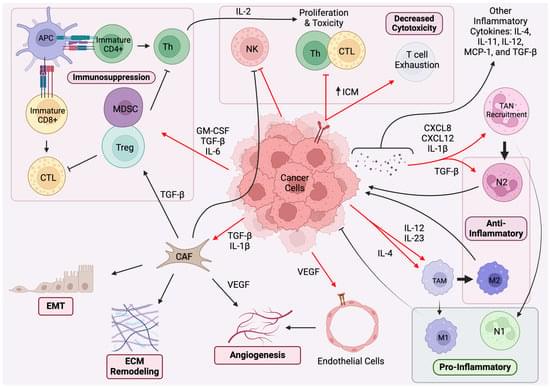
Simple SummaryDespite massive strides taken across the board in oncology, there remain gaps in understanding the relationship between cancer cells and the body’s immune system, tissues, and signaling pathways.
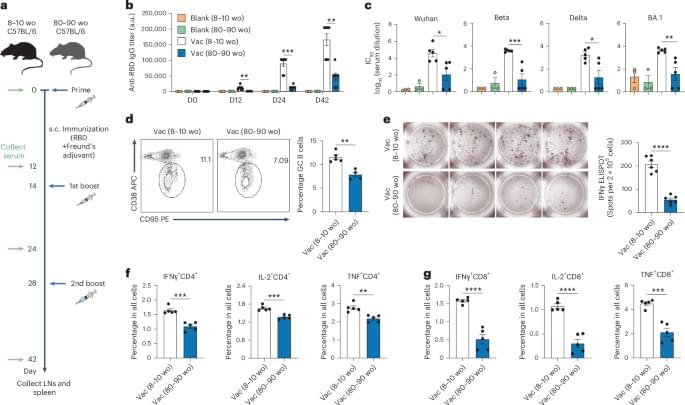

Scientists at the University of California, Irvine’s School of Pharmacy & Pharmaceutical Sciences have discovered how muscle stem cells “flip a switch” to rebuild damaged muscle—a finding that could help address muscle loss linked to aging, injury and widely used weight-loss medications.
The study, published this week in Nature Metabolism, shows that muscle recovery is not just about protein or exercise. It depends on timing and how muscle cells use fuel.
Researchers learned that immediately after stress, muscle stem cells temporarily slow down energy production. Instead of burning glucose for energy, they reroute it into protective repair processes to produce antioxidants that reduce inflammation. Once repairs are complete, energy production ramps back up and new muscle fibers form and strengthen.
When it comes to health, some of our animal neighbors have extraordinary advantages. Ostriches, for example, are highly resistant to viruses, while sharks rarely develop cancer. And species like naked mole rats and bowhead whales live for astonishingly long periods of time, decades and centuries, respectively.
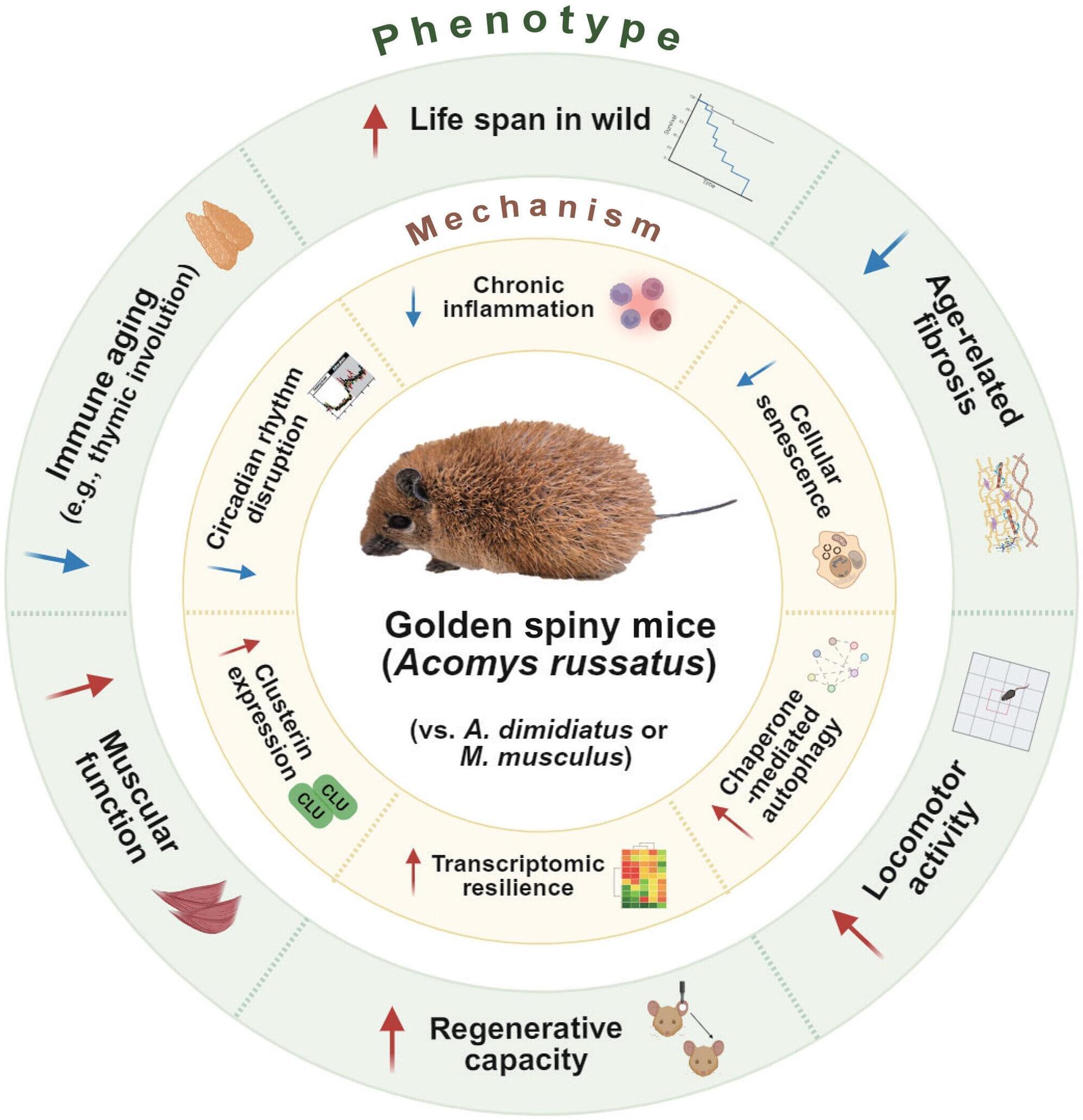
Researchers are now starting to understand why another species—the golden spiny mouse—seems to be unhindered by the negative health effects that typically accompany aging.
Reporting in Science Advances, researchers at Yale School of Medicine (YSM) have begun to uncover how this wild mouse, native to rocky deserts in the Middle East, resists physical, cognitive, and immunological decline while living six to seven times longer than other wild mice.
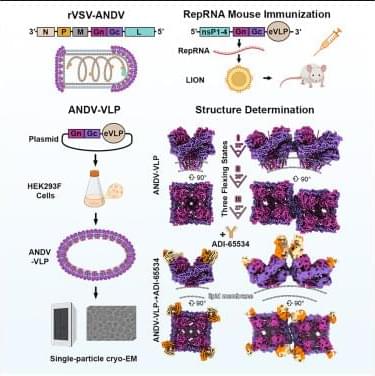
Now online! The cryo-EM structures of Andes hantavirus (ANDV) glycoprotein tetramers, dimers of tetramers, and ADI-65534 Fab complexes on eVLPs unveil the molecular basis of New World hantavirus glycoprotein architecture, acid-induced membrane fusion, and antibody-mediated neutralization. Immunization with repRNA encoding ANDV-VLPs elicits high neutralizing-antibody titers.
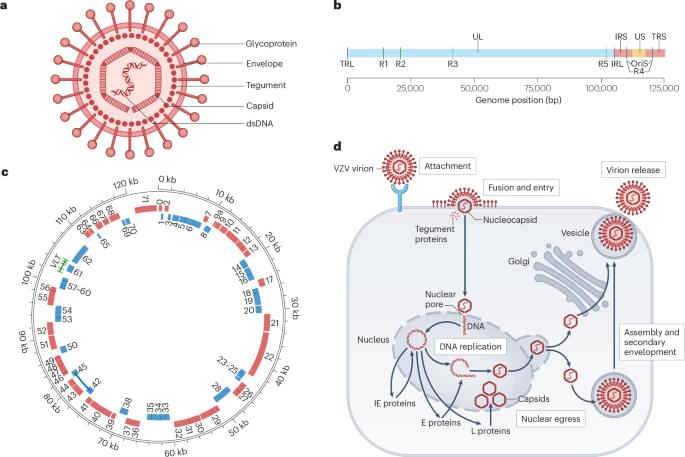
Varicella zoster virus (VZV) infection causes varicella and herpes zoster and, rarely, severe central nervous system (CNS) complications, including encephalitis. Ogunjimi et al. review the evidence linking herpes zoster with stroke and dementia, summarize innate and adaptive immune responses to VZV-related CNS disease, and debate the consequences of vaccination.
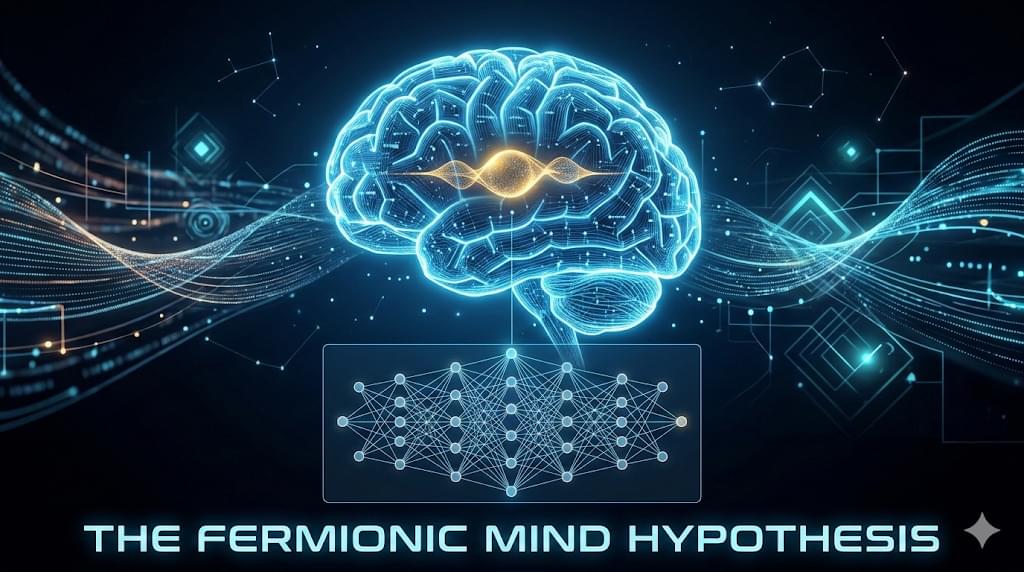
Understanding consciousness is the ultimate prize for creators of artificial intelligence. Nevertheless, consciousness theory will also shape how we view ourselves and our place in the world. Although AI systems can mimic human reasoning, they can only regurgitate the input data. They are sophisticated pattern recognizers and content remixers, but cannot step beyond the limitations of the input. Understanding consciousness would enable us to transition from synthetic to synthesis, unlocking unlimited potential.
Computer scientists hope that recurrent computation will somehow ‘awaken’ code to consciousness. Yet the spectacular achievements of large language and diffusion models have not moved beyond imitation. We train models on the outputs of consciousness—our language, our art, our logic—while remaining entirely ignorant of the process that produces them. An AI can write a gut-wrenching paragraph about sadness by replicating patterns, vocabulary, and syntax. But it knows nothing of grief. It can create a shadow play, yet knows nothing of the object that casts it. This imitation, while impressive, should not be mistaken for a proper understanding of consciousness. No amount of coloring can turn the shadow into a solid object.
To reverse-engineer the mind, we need a blueprint. The pressing need to advance AI is a physicalist theory of consciousness, the architecture of subjective experience itself. The Fermionic Mind Hypothesis (FMH) is such a physicalist framework. It posits that selfhood is structurally and functionally analogous to a fermion in physics. The self’s persistent core operates as an energy-regulating system, maintaining mental equilibrium through continuous thermodynamic cycles. Within this cycle, cognitive processes such as decision-making are wave-particle transitions that capture the inherent nondeterminism and contextual collapse of probabilistic mental states.
Unlike treatments that focus on removing plaques that have already formed, levetiracetam works differently. It blocks the production of toxic amyloid beta peptides in the first place.