Two investigations underscore the role of orbital instabilities in accounting for the diversity of planetary systems.
Webb just revealed Uranus’s upper atmosphere in 3D, exposing wild auroras and a planet that is still cooling.
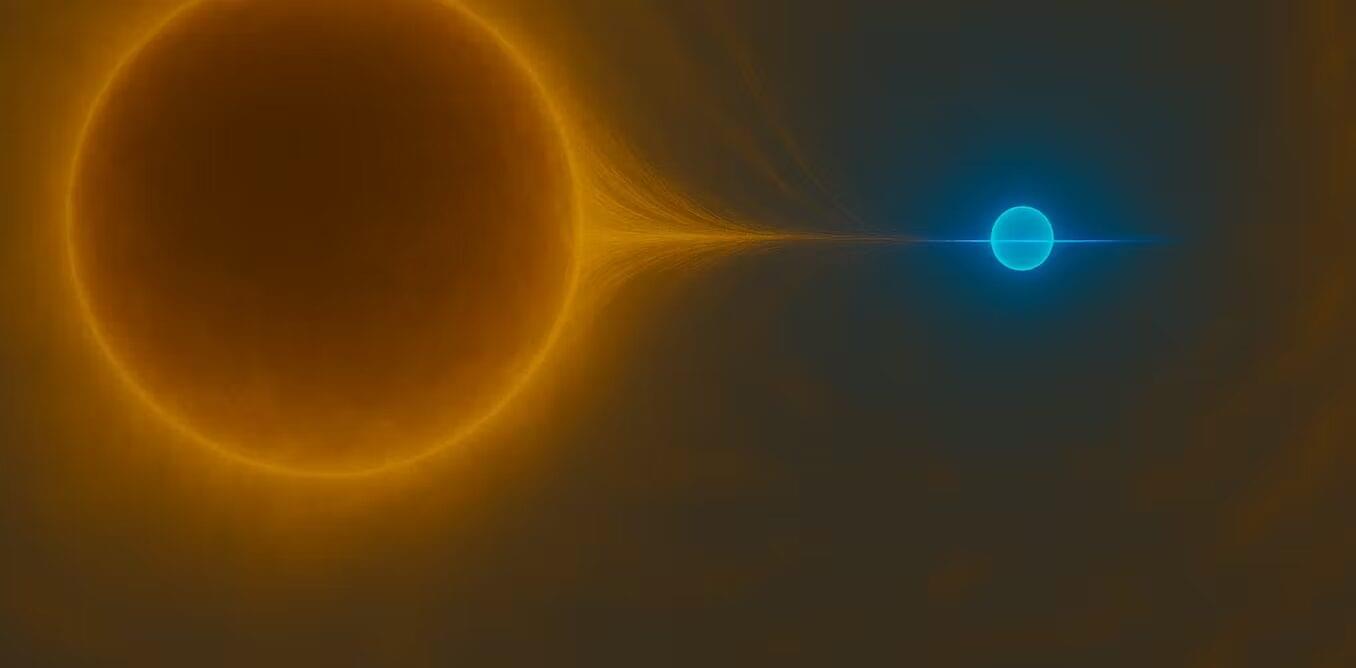
For decades, astronomers have been watching WOH G64, an enormous heavyweight star in the Large Magellanic Cloud, a galaxy visible with the naked eye from the Southern Hemisphere. This star is more than 1,500 times larger than the sun and emitting over 100,000 times more energy. For a long time, red supergiant WOH G64 looked like a star steadily reaching the end of its life, shedding material and swelling in size as it began to run out of fuel.
Astronomers didn’t think its final demise would happen anytime soon, because no one has ever seen a known red supergiant die. But in recent years, astronomers—including our team working with the Southern African Large Telescope (SALT)—discovered that this star has started to change, growing dimmer than before and seemingly warmer. This has surprised scientists and suggests the star’s final stages of life may be more complicated, and perhaps unfold faster, than once thought.
Massive stars, more than about eight times the mass of the sun, produce so much energy, which we see as light, that they run out of fuel within millions of years, instead of the billions of years of the sun’s lifespan.
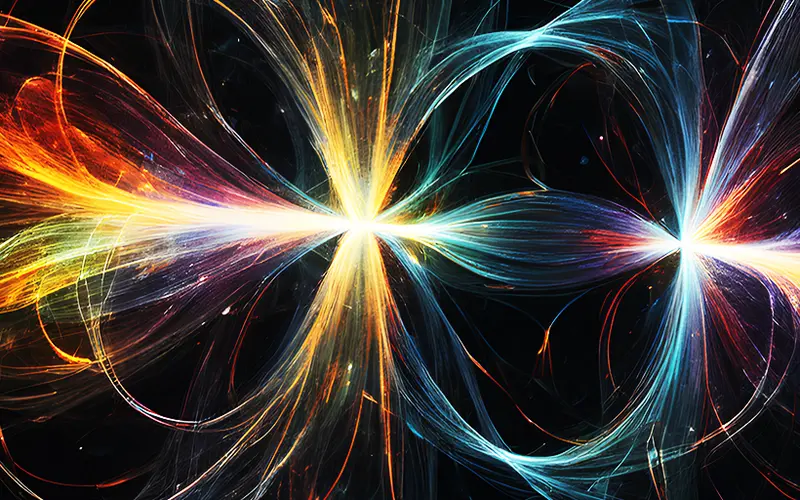
The everyday picture: a world of objects
We ordinarily think of the world as a collection of things or individual objects: tables, trees, planets, particles, people.
This way of thinking is not only intuitive but also tremendously useful. Whether crossing a busy street or hunting prey, we survive by tracking the motions of objects —judging their distances, anticipating their paths, and timing our actions accordingly. Evolutionarily speaking, this is a worldview to which humanity owes its continued existence.
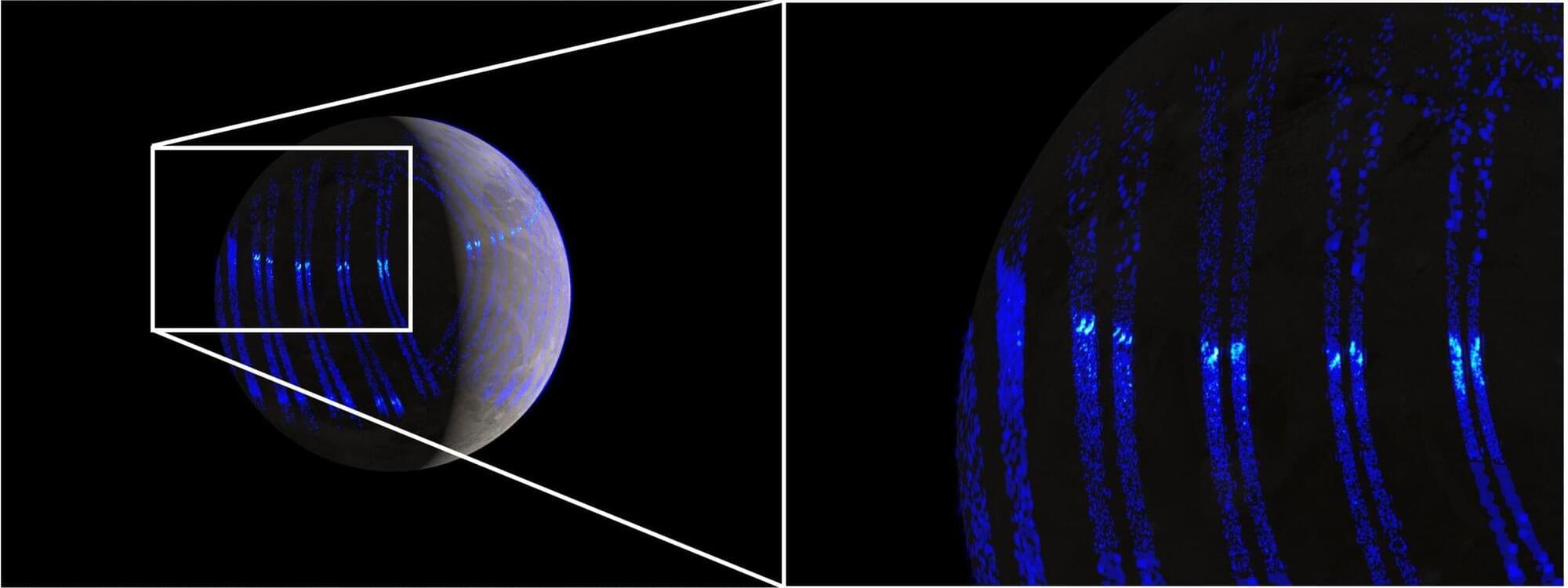
New observations of Ganymede reveal a striking similarity between the auroras on the largest moon in the solar system and those on Earth. The international team of astrophysicists, led by researchers from the University of Liège, has produced new results indicating that, despite different conditions, the fundamental physical processes that generate auroras are common to different celestial bodies, and not just planets.
A team of astrophysicists from the Laboratory of Atmospheric and Planetary Physics (LPAP) has observed for the first time the fine details of the auroras on Ganymede, the only moon in the solar system to have its own intrinsic magnetic field, similar to that of Earth. The observation of auroras is a cornerstone of space weather analysis, as it provides a comprehensive view of the characteristics and effects of space particle precipitation into atmospheres.
For centuries, humanity has witnessed a diffuse and changing glow that occasionally illuminates the night sky with red, green, purple and blue lights—known as the “aurora.” Auroras are typically observed at polar latitudes, although we have just passed the peak of the 11-year solar cycle, which is producing many instances of intense auroras at mid-latitudes.
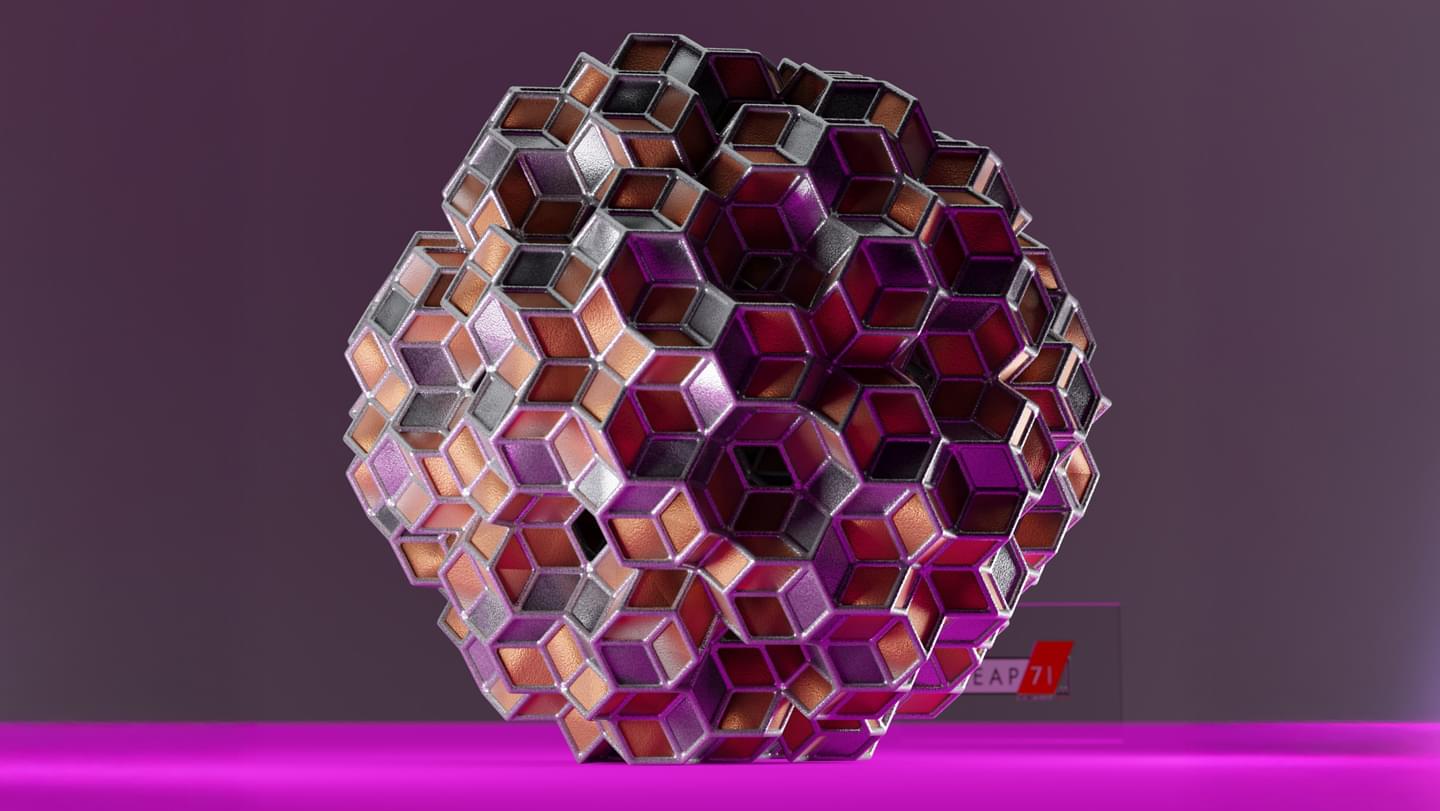
Spacetime obeys a rule known as Lorentz symmetry means that something is unchanged whether you’re sitting still or moving at close to the speed of light. For example, the laws of physics respect Lorentz symmetry: They don’t change for fast moving observers. Lorentz symmetry doesn’t hold for previously known quasicrystals, or for normal crystals either: An ant sitting still would observe a different structure than would a near light-speed ant. In relativity, observers traveling at high speeds observe an apparent shortening of objects, and that distorts the materials’ structure.
But the new spacetime quasicrystals obey Lorentz symmetry. They would appear the same to an ant sitting still as to one on a speeding rocket. The researchers mathematically formulated their quasicrystals by taking a four-dimensional slice through a grid of points in higher dimensions and projecting those points onto the slice. The slice has a slope that is an irrational number — one that can’t be written as a fraction of two whole numbers, such as pi. The irrational slope means the slice never directly intersects the points on the grid, and that helps produce the structure that never repeats.
Quasicrystals are a mathematical concept that shows up in the structure of real materials, but the concept could appear elsewhere. “The spacetime that we live in could be a quasicrystal,” says Sotiris Mygdalas of the Perimeter Institute in Waterloo, Canada, a coauthor of the study.
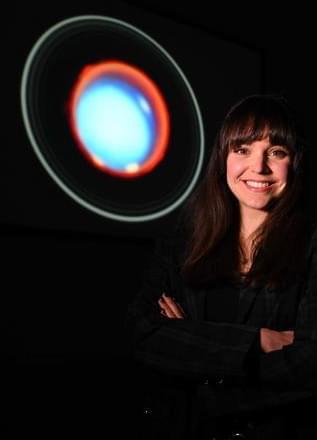
“This is the first time we’ve been able to see Uranus’s upper atmosphere in three dimensions,” said Paola Tiranti.
What does the atmosphere of Uranus look like? This is what a recent study published in Geophysical Research Letters hopes to address as a team of researchers from the United States and United Kingdom investigated new data about the upper atmosphere of Uranus. This study has the potential to help scientists better understand the atmosphere of Uranus and establish new methods for exploring gas giant atmospheres.
For the study, the researchers analyzed data obtained from NASA’s James Webb Space Telescope (JWST) in January 2025 with its powerful infrared instruments. The motivation for the study was due to the lack of understanding of Uranus’s upper atmosphere, whose temperature and composition have remained elusive. The researchers focused on a region of the upper atmosphere known as the ionosphere, which is the region that interacts with the space environment and produces the auroras.
In the end, the researchers not only created the first 3D map of Uranus’s upper atmosphere, but found that atmospheric temperatures peak between 3,000 to 4,000 kilometers (1,864 to 2,485 miles) above the planet while the density of charged particles, where space radiation interacts with the atmosphere, peak at approximately 1,000 kilometers (621 miles) above the planet. Additionally, the researchers were surprised to discover that the charged particle density was weaker than longstanding models had predicted.
Forget tentacles—what matters is the mind. We explore how alien behavior might emerge from evolution, culture, and technology, and why our biggest first contact risk may be misunderstanding.
Watch my exclusive video Mass Drivers on the Moon: https://nebula.tv/videos/isaacarthur–…
Get Nebula using my link for 40% off an annual subscription: https://go.nebula.tv/isaacarthur.
Get a Lifetime Membership to Nebula for only $300: https://go.nebula.tv/lifetime?ref=isa…
Use the link https://gift.nebula.tv/isaacarthur to give a year of Nebula to a friend for just $36.
Visit our Website: http://www.isaacarthur.net.
Join Nebula: https://go.nebula.tv/isaacarthur.
Support us on Patreon: / isaacarthur.
Support us on Subscribestar: https://www.subscribestar.com/isaac-a…
Facebook Group: / 1583992725237264
Reddit: / isaacarthur.
Twitter: / isaac_a_arthur on Twitter and RT our future content.
SFIA Discord Server: / discord.
Credits:
How Would Aliens Behave?
July 13, 2025; Episode 732
Written, Produced & Narrated by: Isaac Arthur.
Select imagery/video supplied by Getty Images.
Music Courtesy of Epidemic Sound http://epidemicsound.com/creator.
Stellardrone, \