Toggle light / dark theme

David Sinclair seeks £100m for anti-aging fight

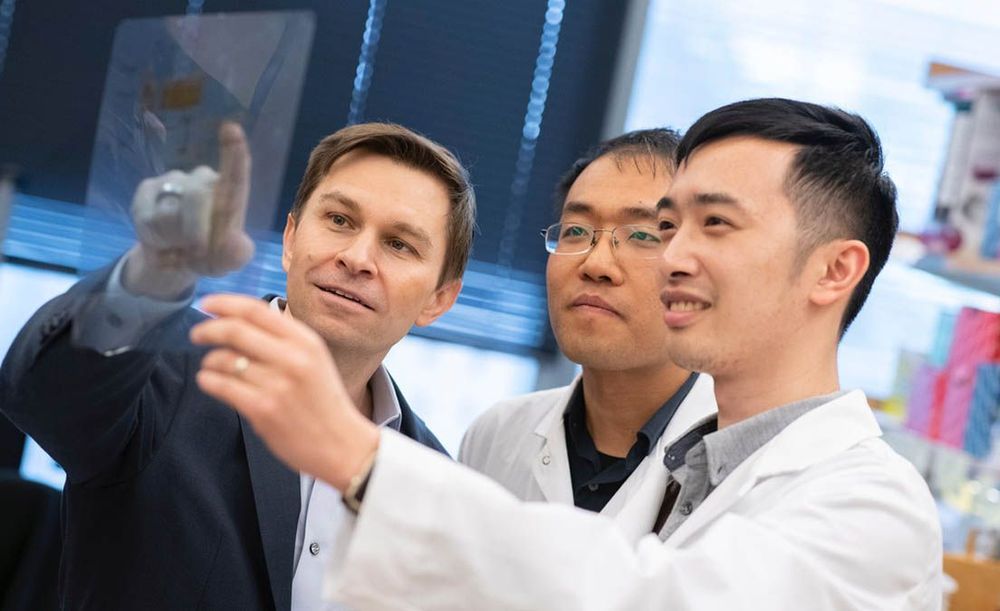
One of the world’s greatest anti-aging scientists continues his groundbreaking efforts. In the photo next to Dr David Sinclair, there is a fella who kind of looks like my friend, Dr Yuancheng Ryan Lu. Is that you? (Dr Lu has confirmed that he is indeed the scientist on the right. Dr Sinclair is on the left.)

I can’t wait to see what they develop next!


Harvard scientist David Sinclair is one of Longevity’s big hitters. Just a year after raising $50M in Series B financing, his company Life Biosciences LLC is looking for $100M to progress its anti-aging research [1].

Longevity. Technology: Life Biosciences had an original Series B goal of $25M; it doubled it. As NAD continues to embed in the anti-aging supplement marketplace, the company is looking to expand, with a range of subsidiaries under its Longevity umbrella. Although the company isn’t spilling any secrets on its proposed clinical trials, we will be sure to keep a close eye on progress.

Life Biosciences, valued last year at approximately $500M, is built on Sinclair’s experience as co-Director of the Paul F Glenn Center for the Biology of Aging at Harvard Medical School, as a genetics professor at Harvard University and on previously-founded companies Arc Bio, Genocea and Ovascience.
Lab Mice Telomeres Do Not Break Them as Disease Models

With comments from Aubrey de Grey.


Bret Weinstein was interviewed on the Joe Rogan show and Bret claimed that the breeding protocols and telomeres of lab mice are broken. Bret claims that this problem is so severe that it calls into question the safety and correctness of decades of pharmaceutical studies.

Bret wrote a paper on that in 2002 which is totally broken.

Aubrey reviewed the paper.

Restaurants Are in Need of a Helping Hand. Miso Robotics Is Offering Them One. Literally

https://vimeo.com/234073915

Both are AI-enabled, allowing them to take in their surroundings and learn and evolve over time. They know what time to start cooking a well-done burger so that it’s done at exactly the same time as a medium-rare burger for the same order, or could learn how to optimize oil use to minimize waste, for instance.

In a pre-pandemic time of restaurant labor shortages, Flippy kept kitchen productivity high and costs low, a giant deal in an industry known for tiny margins. Introducing Flippy into a kitchen can increase profit margins by a whopping 300%, not to mention significantly reduce the stress managers feel when trying to fill shifts.

But even if restaurants have an easier time finding workers as places reopen, Flippy and ROAR aren’t gunning for people’s jobs. They’re designed to be collaborative robots, or cobots, the cost-effective machines created to work with humans, not against them.

DARPA Invisible Man: Human Cells Engineered With Squid-Like Transparency

Bioinspired research project a first step toward intrinsically translucent tissue.

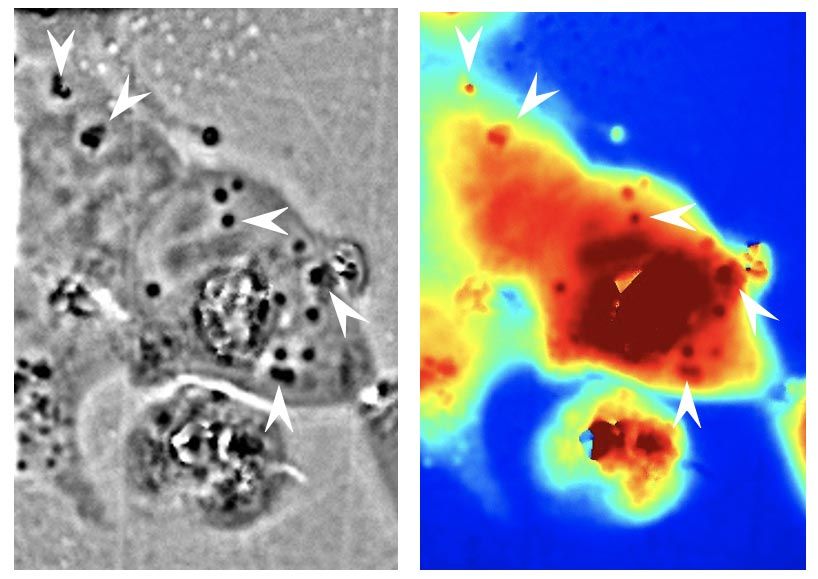
Octopuses, squids and other sea creatures can perform a disappearing act by using specialized tissues in their bodies to manipulate the transmission and reflection of light, and now researchers at the University of California, Irvine have engineered human cells to have similar transparent abilities.

In a paper published today in Nature Communications, the scientists described how they drew inspiration from cephalopod skin to endow mammalian cells with tunable transparency and light-scattering characteristics.

3 thoughts on “Arrival of Gene-Edited Babies: What lies ahead?”

By Valentina Lagomarsino figures by Sean Wilson

Nearly four months ago, Chinese researcher He Jiankui announced that he had edited the genes of twin babies with CRISPR. CRISPR, also known as CRISPR/Cas9, can be thought of as “genetic scissors” that can be programmed to edit DNA in any cell. Last year, scientists used CRISPR to cure dogs of Duchenne muscular dystrophy. This was a huge step forward for gene therapies, as the potential of CRISPR to treat otherwise incurable diseases seemed possible. However, a global community of scientists believe it is premature to use CRISPR in human babies because of inadequate scientific review and a lack of international consensus regarding the ethics of when and how this technology should be used.

Early regulation of gene-editing technology.

The brain’s functional organization slows down following a relationship breakup

Summary: Findings reveal individual differences in the severity of depressive symptoms following a relationship breakdown are associated with changes in resting-state whole-brain dynamics.

Source: UPF Barcelona

During a person’s life, the experience of a stressful life event can lead to the development of depressive symptoms, even in a non-clinical population. For example, a relationship breakup is a fairly common event and is a powerful risk factor for quality of life, in addition to increasing the risk of a major depressive disorder.

The case for self-explainable AI

For instance, suppose a neural network has labeled the image of a skin mole as cancerous. Is it because it found malignant patterns in the mole or is it because of irrelevant elements such as image lighting, camera type, or the presence of some other artifact in the image, such as pen markings or rulers?

Researchers have developed various interpretability techniques that help investigate decisions made by various machine learning algorithms. But these methods are not enough to address AI’s explainability problem and create trust in deep learning models, argues Daniel Elton, a scientist who researches the applications of artificial intelligence in medical imaging.

Elton discusses why we need to shift from techniques that interpret AI decisions to AI models that can explain their decisions by themselves as humans do. His paper, “Self-explaining AI as an alternative to interpretable AI,” recently published in the arXiv preprint server, expands on this idea.

New adjuvant successful in extending immunity against HIV

Researchers at the Yerkes National Primate Research Center and the Emory Vaccine Center (EVC) are first to show a new adjuvant, 3M-052, helps induce long-lasting immunity against HIV. The study results are published today in Science Immunology.

In this pre– that included 90 , the researchers showed 3M-052, a new, synthetic small molecule that targets a specific receptor (TLR 7/8), successfully induced vaccine-specific, long-lived bone marrow plasma cells (BM-LLPCs), which are critical for durable immunity. In a striking observation, 3M-052-induced BM-LLPCs were maintained at high numbers for more than one year after vaccination. This prolonged interval is not only feasible in monitoring pre–, it is also highly informative in down selecting vaccine candidates.

First author Sudhir Pai Kasturi, Ph.D., an assistant professor in the Department of Pathology and Laboratory Medicine and a research assistant professor at Yerkes and the EVC, says, “We have known adjuvants are critical immunity-boosting supplements that help improve the effectiveness of vaccines. Until now, however, it has been unclear which class of adjuvants can promote stable and long-lived immunity in nonhuman primate models. Our study provides that information.”

/* */