Toggle light / dark theme

Alex M. Vikoulov

Big News! My New Audiobook The Intelligence Supernova is Now Live! 🎧 I’m thrilled to announce the release of the audiobook edition of The Intelligence Supernova: Essays on Cybernetic Transhumanism, the Simulation Singularity & the Syntellect Emergence. This project has been incredibly close to my heart—it dives deep into the unfolding convergence of advanced AI, consciousness, and our collective evolution beyond biology. In this book, I explore the concept of the “Intelligence Supernova”—a coming explosion of synthetic and post-biological intelligence that may soon give rise to a planetary-scale mind, the Syntellect. It’s a philosophical and scientific journey that challenges you to imagine what lies beyond the Technological Singularity: digital immortality, mind-uploading, the emergence of infomorphs, and the architecture of a conscious Universe. This audiobook is for futurists, technophilosophers, and all curious minds ready to glimpse humanity’s metamorphic future. If you’re drawn to ideas like cybernetic immortality, experiential realism, or the Omega Point Cosmology, I think you’ll find this work especially meaningful.

Now available on Amazon: Audible: https://www.audible.com/pd/The-Intelligence-Supernova-Audiobook/B0FGZ3JMPM #IntelligenceSupernova #CyberneticTranshumanism #SimulationSingularity #SyntellectEmergence #SyntellectHypothesis #cybernetics #singularity #transhumanism #posthumanism #AGI #superintelligence


Amazon.com: The Intelligence Supernova: Essays on Cybernetic Transhumanism, The Simulation Singularity & The Syntellect Emergence (Audible Audio Edition): Alex M. Vikoulov, Ecstadelic Media Group, Virtual Voice: Books.
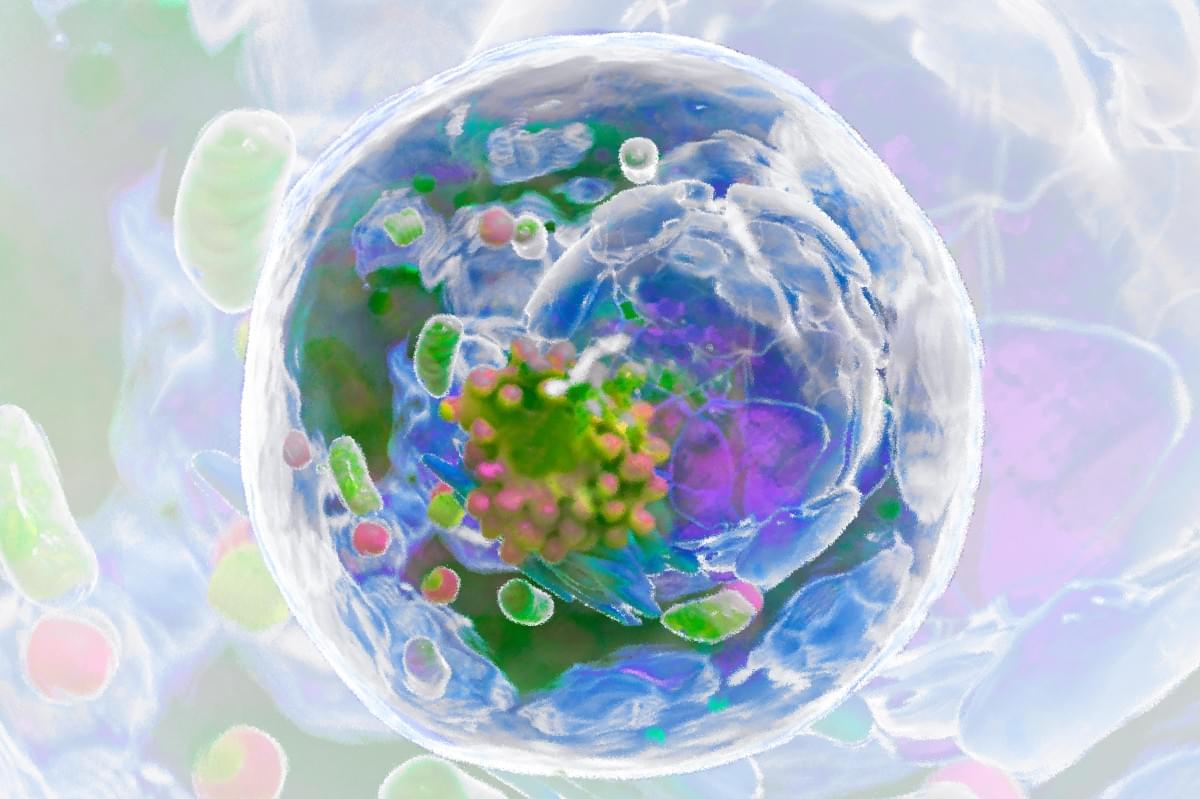
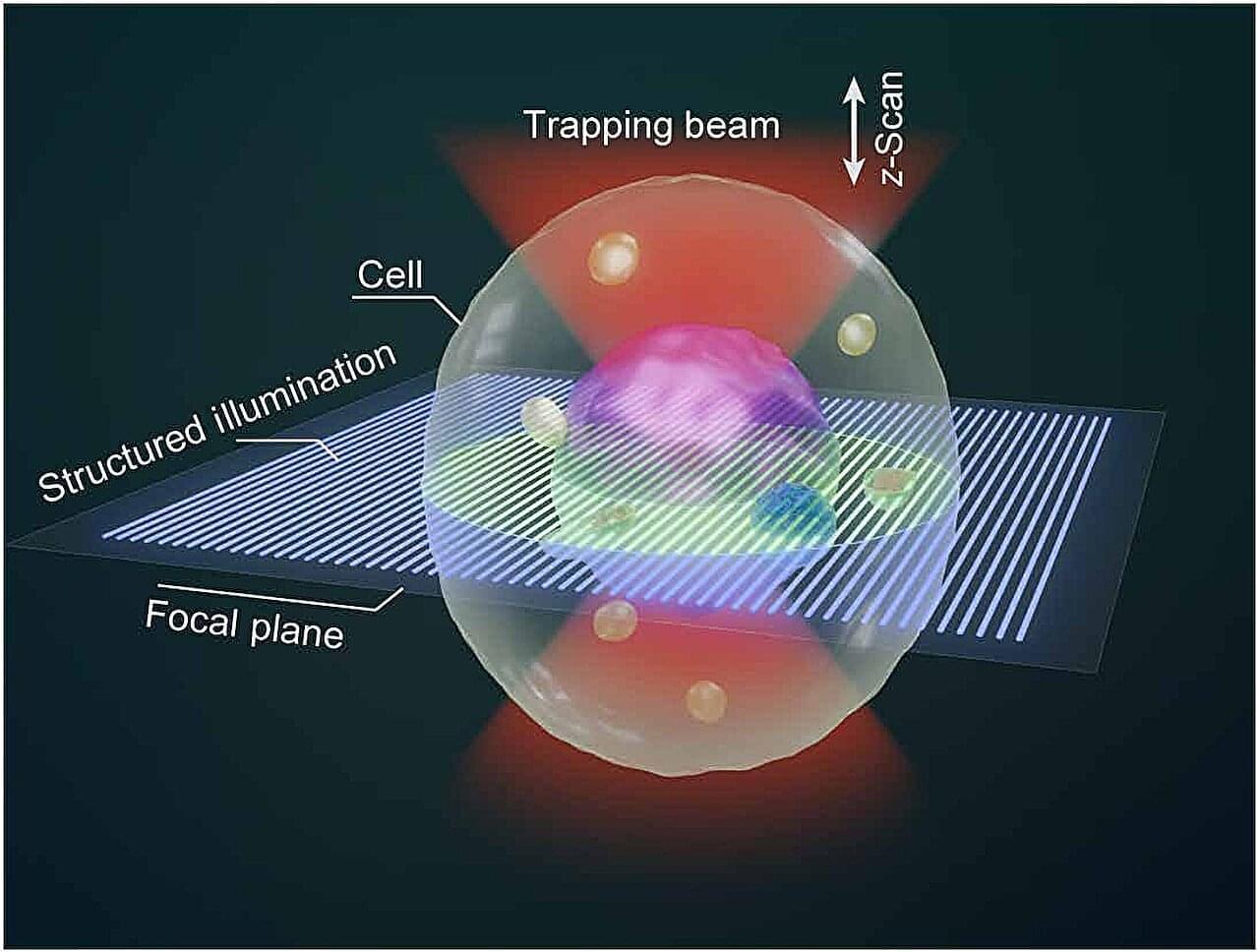
Optical tweezer sectioning microscopy enables 3D imaging of floating live cells

Three-dimensional (3D) imaging is essential for investigating cellular structure and dynamics. Traditional optical methods rely on adhesive or mechanical forces to hold and scan cells, which limit their applicability to suspended cells and may induce stress responses. Developing a non-contact, all-optical 3D imaging technique for live suspended cells remains a major challenge in advancing in situ biological research.

In a study published in Science Advances, Prof. Yao Baoli from the Xi’an Institute of Optics and Precision Mechanics (XIOPM) of the Chinese Academy of Sciences and Prof. Olivier J. F. Martin, from the Swiss Federal Institute of Technology, Lausanne, developed the optical tweezer sectioning (OTSM), enabling all-optical 3D imaging of suspended , which offers a powerful new tool for live-cell imaging, dynamic biological studies and multicellular assembly.

Researchers developed OTSM by integrating holographic optical tweezers (HOTs) with structured illumination microscopy (SIM).

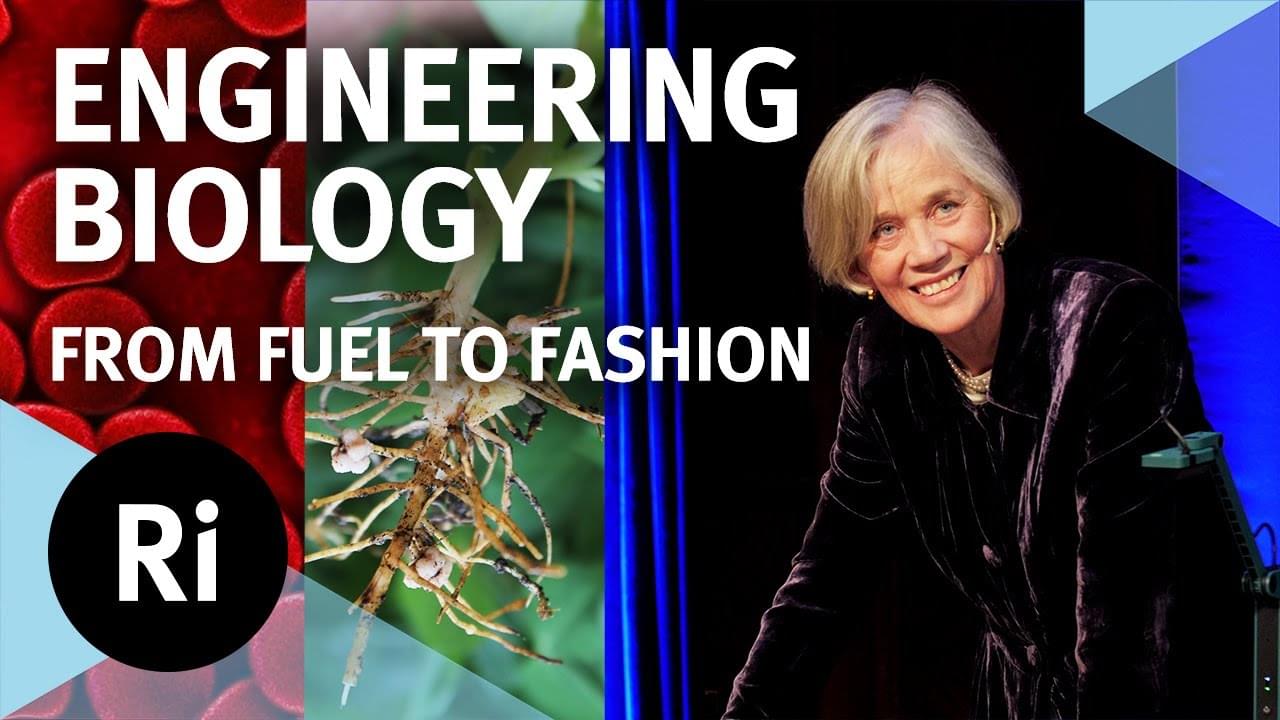
The future of engineering biology — with Angela McLean

Join Dame Angela McLean, the Government’s Chief Scientific Adviser, as she discusses the transformative potential of the field of engineering biology.

This Discourse was recorded at the Ri on 25 April 2025. Find out more about Discourses here: https://www.rigb.org/explore-science/explore/blog/history-fr
-discourse.

Watch the Q&A here (exclusively for subscribers): https://youtu.be/GKRTtoEpFeI
Join this channel to get access to perks:
https://www.youtube.com/channel/UCYeF244yNGuFefuFKqxIAXw/join.

The field of engineering biology uses the whole span of biological sciences in conjunction with technology and engineering to benefit multiple sectors and our society more broadly.

But as a relatively new field, scientists still have many unanswered questions. What are the key opportunities and risks it presents? What barriers stand in the way of engineering biology revolutionising society?

Dame Angela McLean, the Government Chief Scientific Adviser, has been considering the scientific evidence behind the many claims – both utopian and dystopian – associated with research and innovation in engineering biology. In this Discourse, Dame Angela shares what she has learned from her “Year of Engineering Biology”, describing her vision for this suite of technologies and the applications she expects to emerge over the next decade and beyond.

Striking parallels between biological brains and AI during social interaction suggest fundamental principles

UCLA researchers have made a significant discovery showing that biological brains and artificial intelligence systems develop remarkably similar neural patterns during social interaction. This first-of-its-kind study reveals that when mice interact socially, specific brain cell types synchronize in “shared neural spaces,” and AI agents develop analogous patterns when engaging in social behaviors.

The study, “Inter-brain neural dynamics in biological and artificial intelligence systems,” appears in the journal Nature.

This new research represents a striking convergence of neuroscience and artificial intelligence, two of today’s most rapidly advancing fields. By directly comparing how biological brains and AI systems process social information, scientists reveal fundamental principles that govern across different types of intelligent systems.

ReSURF: Stretchable, self-healing water quality sensor enables ultrafast surveillance

Clean, safe water is vital for human health and well-being. It also plays a critical role in our food security, supports high-tech industries, and enables sustainable urbanization. However, detecting contamination quickly and accurately remains a major challenge in many parts of the world.

A new device developed by researchers at the National University of Singapore (NUS) has the potential to significantly advance water quality monitoring and management.

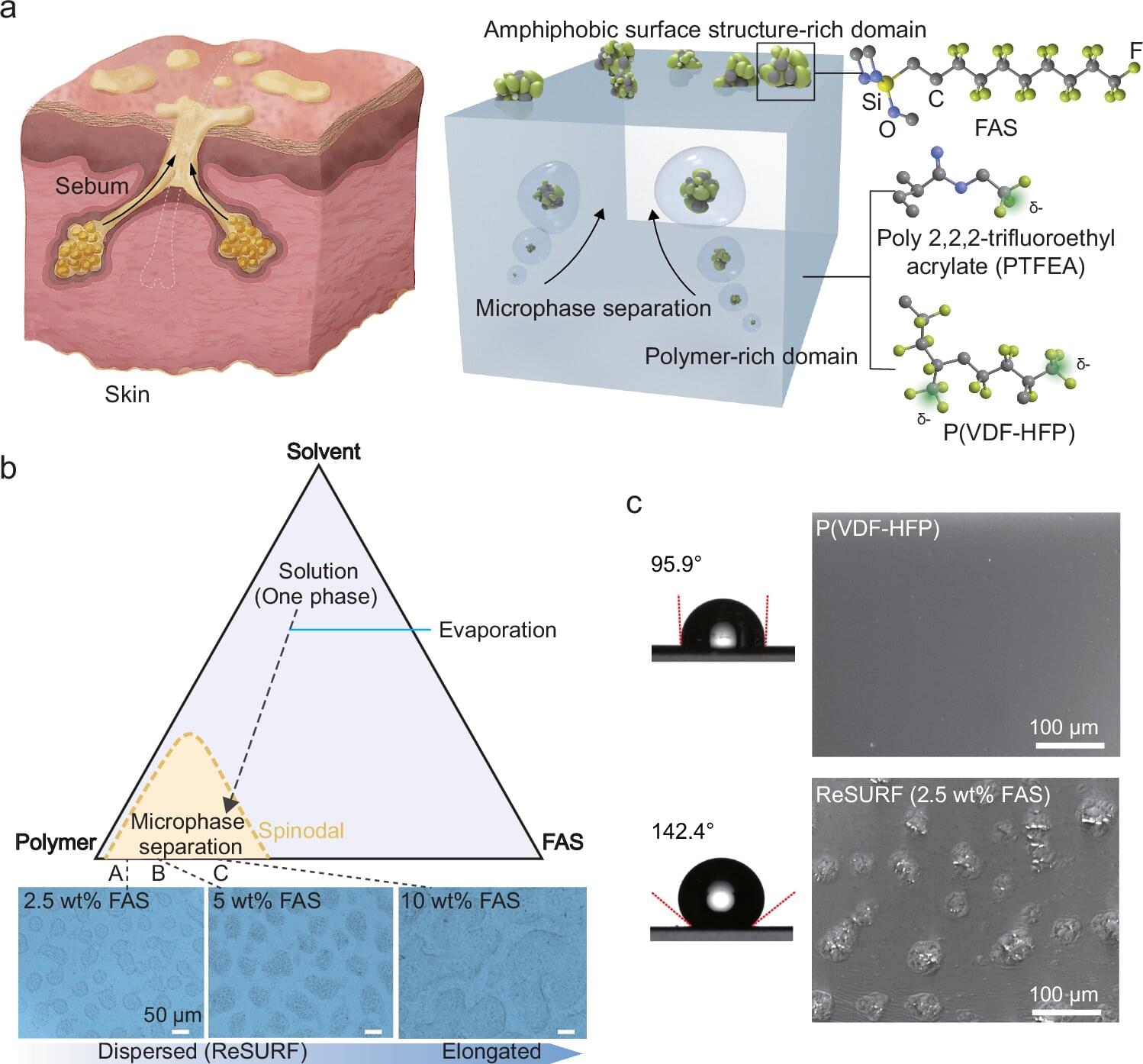
Taking inspiration from the biological function of the oily protective layer found on , a team of researchers led by Associate Professor Benjamin Tee from the Department of Materials Science and Engineering in the College of Design and Engineering at NUS translated this concept into a versatile material, named ReSURF, capable of spontaneously forming a water-repellent interface.

/* */