Toggle light / dark theme

Get the latest international news and world events from around the world.

Log in for authorized contributors

Salvage Focal Therapy vs Radical Prostatectomy for Localized Radiorecurrent Prostate Cancer

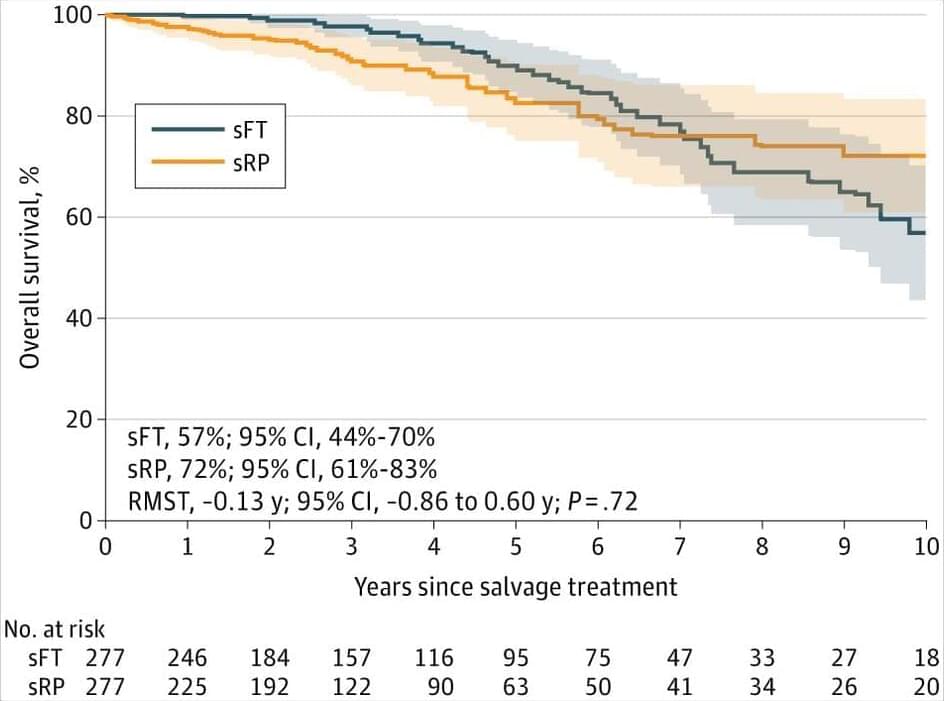
In localized radiorecurrent ProstateCancer, salvage focal therapy provided similar 10-year survival outcomes as radical prostatectomy but resulted in substantially fewer perioperative complications.


Question How do cancer control and perioperative complications compare after salvage focal therapy vs salvage radical prostatectomy for localized radiorecurrent prostate cancer?

Findings In this cohort study with a mean matched cohort size of 554 patients with biopsy-confirmed, localized recurrent prostate cancer, 10-year cancer-specific survival and overall survival were not meaningfully different between salvage focal therapy and salvage radical prostatectomy. The adjusted odds of any and major complications were approximately 24 and 9 times higher, respectively, following salvage radical prostatectomy.

Meaning Salvage focal therapy and salvage radical prostatectomy are both effective for treating localized radiorecurrent prostate cancer, though salvage focal therapy confers fewer perioperative complications.
Combating leukemia by stopping stem cells from turning cancerous

Acute myeloid leukemia (AML) is an aggressive form of blood cancer. It affects people of all ages but is most common in those over 65. Around 150 people are diagnosed with the disease each year in Norway. Men are affected slightly more often than women. Fewer than 5 in 100 patients over the age of 65 survive.

This type of leukemia arises in the bone marrow, where blood cells are produced. The only treatment that can cure the disease is stem cell transplantation, which is highly intensive and therefore not available to everyone, including elderly patients, due to its severe potential side effects.

In a new study, researchers have examined how cancer cells develop in the bone marrow and whether it might be possible to stop them.

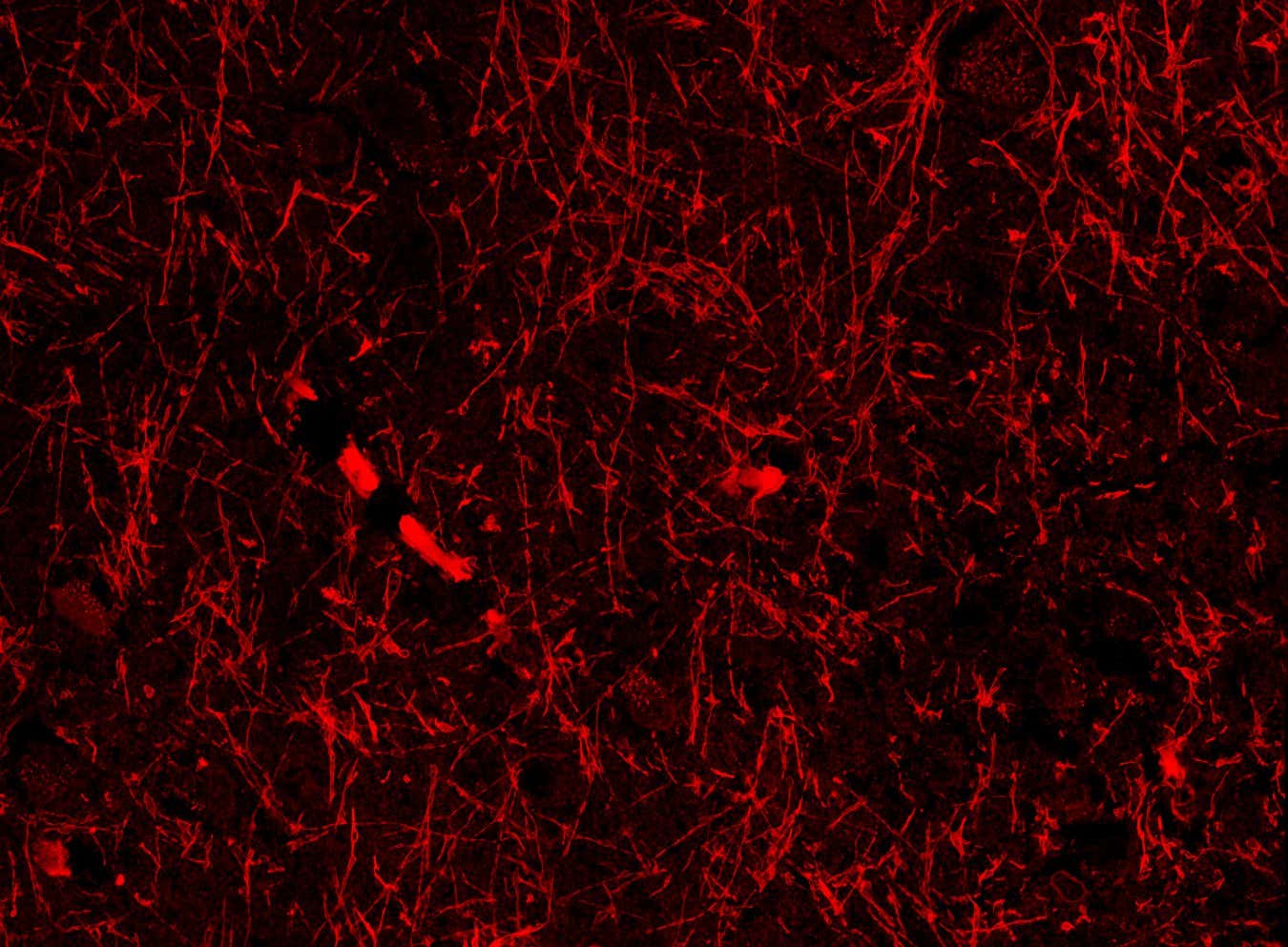
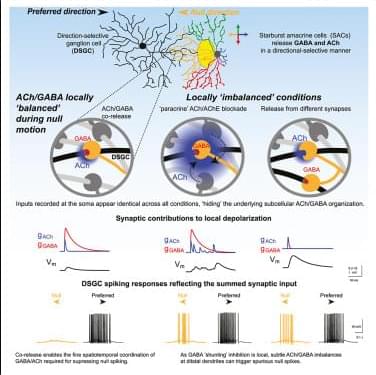
Uncovering the “hidden” synaptic microarchitecture of the retinal direction selective circuit

DeRosenroll et al. show that direction selectivity relies on finely patterned ACh and GABA inputs that are “hidden” in somatic measurements. Expanding ACh spread disrupts this micro-scale E/I organization, revealing that subcellular—not global—balance determines DSGC spike output.

Technical advance ✨

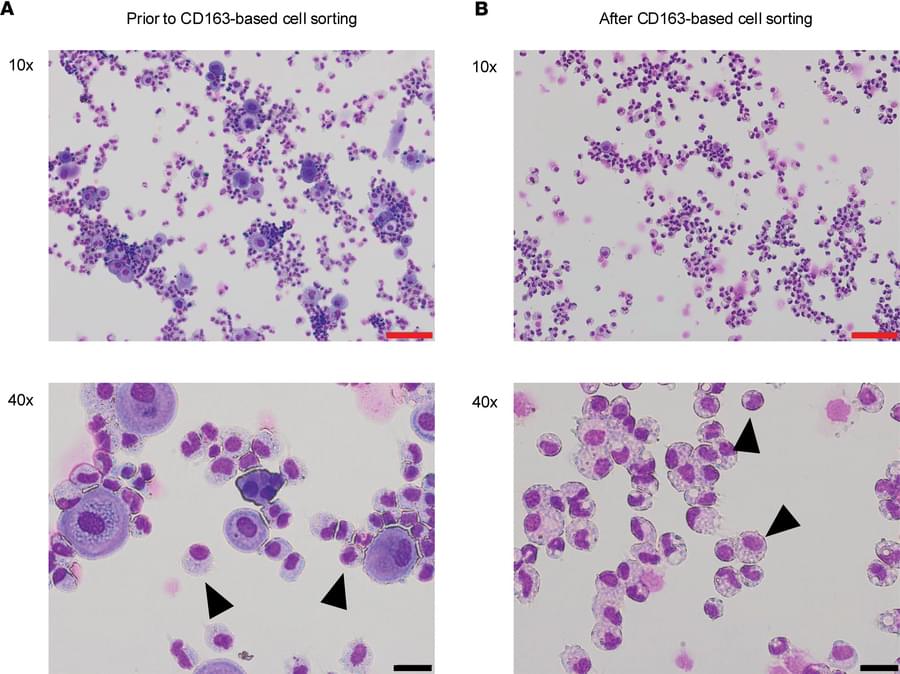
Laszlo Nagy & team define unique regulatory programs of placental Hofbauer cells, advancing understanding of their role in pregnancy health and potential disease:

The image shows enrichment of Hofbauer cells by CD163-based cell sorting Placenta Fetal Development.


1Department of Biochemistry and Molecular Biology, Faculty of Medicine, and.

2Doctoral School of Molecular Cell and Immune Biology, University of Debrecen, Debrecen, Hungary.

3Institute for Fundamental Biomedical Research, Johns Hopkins All Children’s Hospital, St. Petersburg, Florida, USA.

Scientists Grew Mini Human Spinal Cords, Then Made Them Repair After Injury

Scientists have taken a major step toward treating spinal cord injuries that cause paralysis.

In lab dishes, researchers at Northwestern University grew tiny organoids of the human spinal cord. Then, they injured the samples and administered a treatment that helped the tissue repair and regenerate.

“We decided to develop two different injury models in a human spinal cord organoid and test our therapy to see if the results resembled what we previously saw in the animal model,” biomedical engineer Samuel Stupp says.

Regrow Joints? Future of Cartilage Regeneration Revealed

What if worn-out parts of your body didn’t need to be replaced just regenerated?

Stanford researchers recently published work showing cartilage lost to aging or arthritis can be regrown, using either an oral drug or a local injection.

If this translates to humans, it could make knee and hip replacements unnecessary.

Millions of people undergo major joint replacement surgery every year.
Regenerating cartilage instead of replacing joints would mean less pain, lower cost, and far better outcomes.

That future may be closer than we think.

/* */