Toggle light / dark theme

Astronomers shocked by how these giant exoplanets formed

JWST just found evidence that some “super-Jupiters” may have formed like planets, not failed stars. A distant star system with four super-sized gas giants has revealed a surprise. Thanks to JWST’s powerful vision, astronomers detected sulfur in their atmospheres — a chemical clue that they formed like Jupiter, by slowly building solid cores. That’s unexpected because these planets are far bigger and orbit much farther from their star than models once allowed.

Gas giants are enormous planets made primarily of hydrogen and helium. They may contain dense central cores, but unlike Earth, they do not have solid surfaces you could stand on. In our solar system, Jupiter and Saturn are classic examples. Beyond our neighborhood, astronomers have identified many gas giant exoplanets, some far larger than Jupiter. The most massive of these worlds begin to resemble brown dwarfs, substellar objects sometimes called “failed stars” because they do not fuse hydrogen.

This overlap raises a major question in astronomy. How exactly do these massive planets form? One possibility is core accretion, the same process believed to have created Jupiter and Saturn. In this scenario, a solid core slowly builds up inside a disk of dust and ice, gathering rocky and icy material until it becomes massive enough to pull in surrounding gas. Another possibility is gravitational instability, where a swirling cloud of gas around a young star collapses quickly under its own gravity, forming a large object more like a brown dwarf.
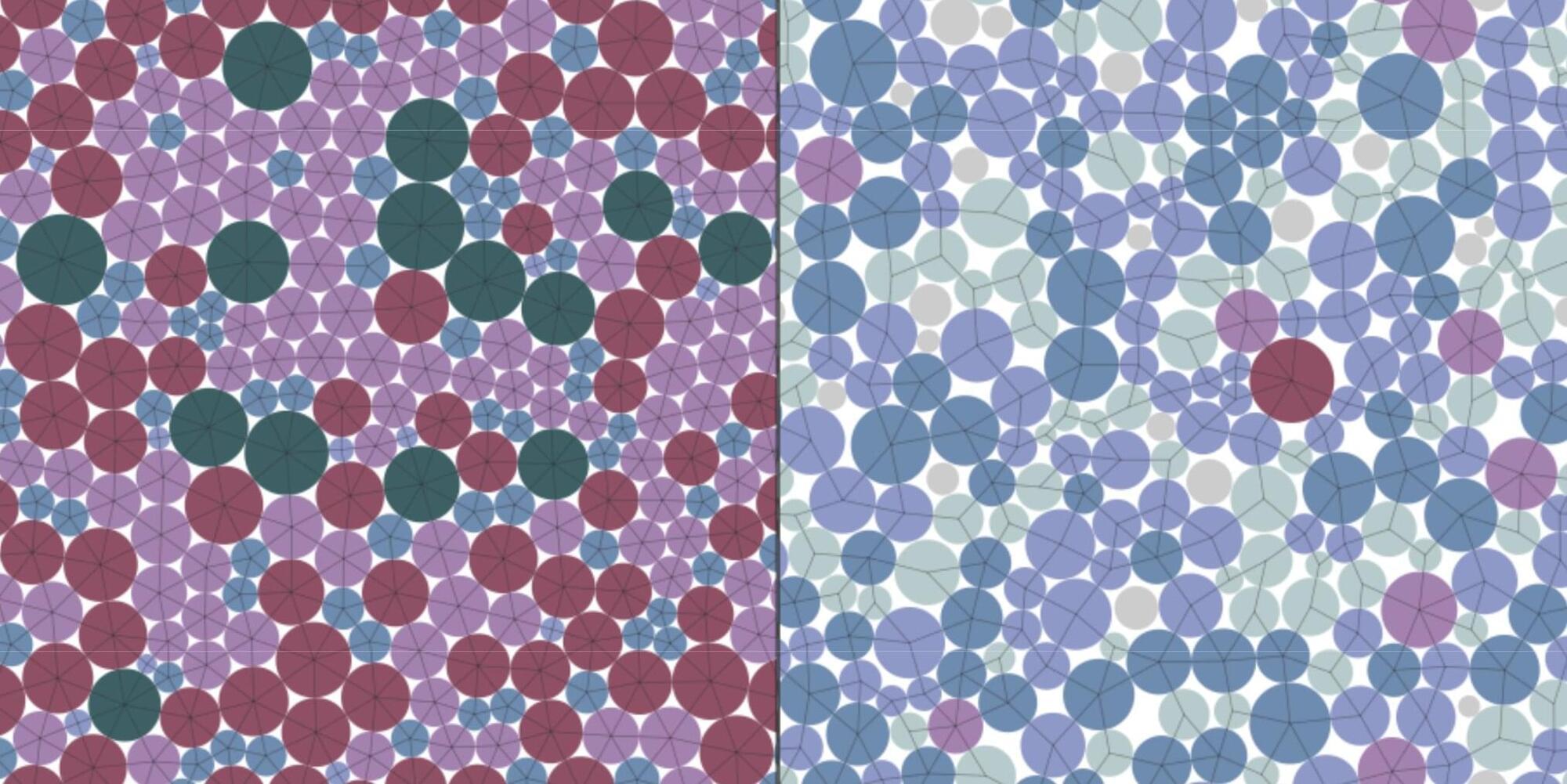
Simulations show a path to ‘ideal glass’ with crystal-like entropy

The types of glass that we encounter in everyday life, such as window glass or smartphone screens, are disordered solids. This means that they consist of particles locked in place, like those in solids, but arranged randomly, similarly to how they would be in a liquid.

Almost a century ago, Walter Kauzmann, who was a chemistry professor at Princeton University at the time, was confronted with the possible existence of a so-called ideal glass, an amorphous system with the entropy of a crystal. This is a glass in which particles are still arranged randomly, but the particles fill space so efficiently that there is only one possible arrangement, as opposed to the many disordered arrangements of conventional glass.

Kauzmann’s theoretical proposals inspired numerous other physicists to explore the idea of this perfectly equilibrated glass. Previous studies suggested that this elusive state could not be reached using conventional cooling processes.

Rydberg atoms detect clear signals from a handheld radio

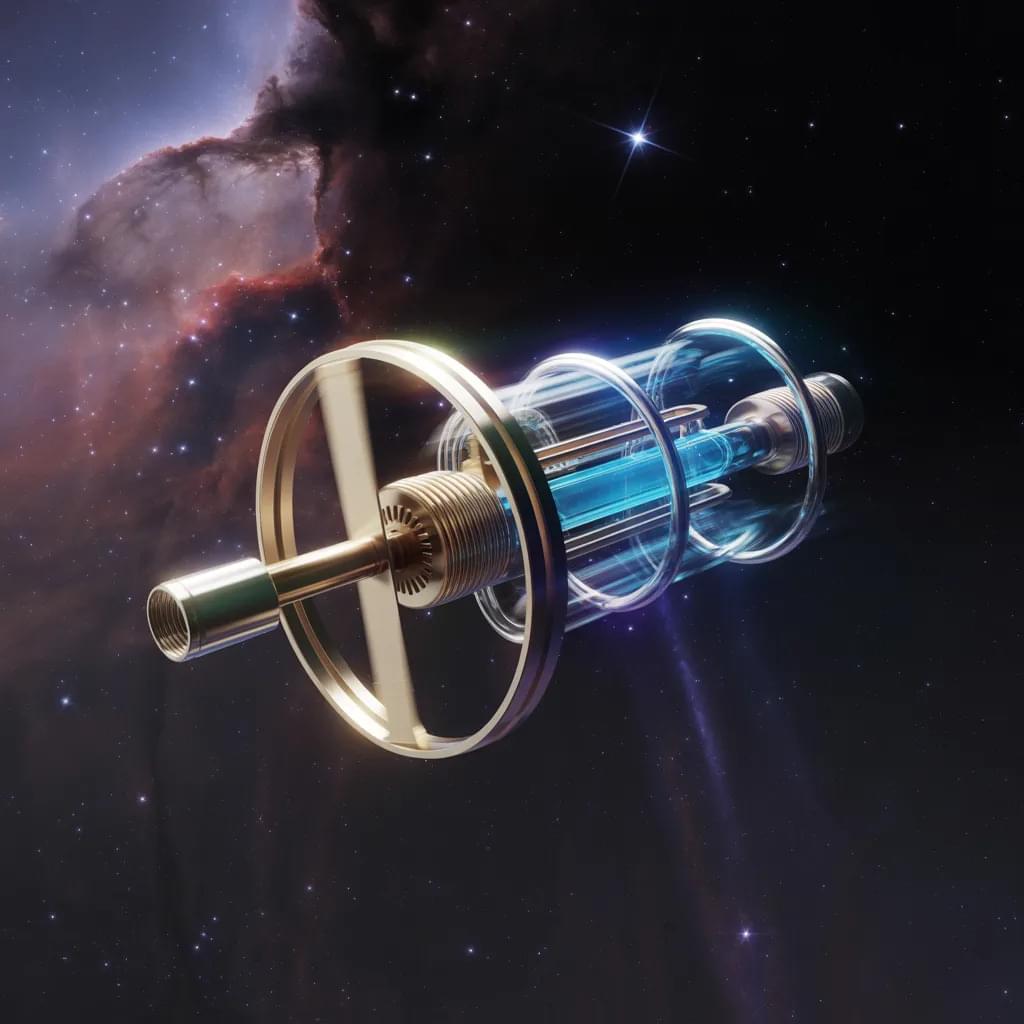
For the first time, a team of US researchers has used sensors containing highly excited Rydberg atoms to detect signals from an ordinary handheld radio. Through a careful approach to demodulating the incoming signals, Noah Schlossberger and colleagues at the National Institute of Standards and Technology (NIST) were able to recover audio encoded in multiple public radio channels, with promising implications for everyday uses in consumer electronics. The research has been published in Physical Review Applied.

In a Rydberg atom, a single electron is excited to an extremely high energy level, pushing it far from its host atom’s nucleus. From a distance, these atoms resemble a single electron orbiting a positively charged ion.

When any atom is exposed to an external electric field, the positions of its electrons’ energy levels shift through a process called the Stark effect. Yet in a Rydberg atom, the shift becomes far more pronounced, causing particularly striking changes in the spectral patterns produced when the atom is probed by a laser.

Why Does This Galaxy Have Tentacles? Deep Space Mystery Stuns Astronomers

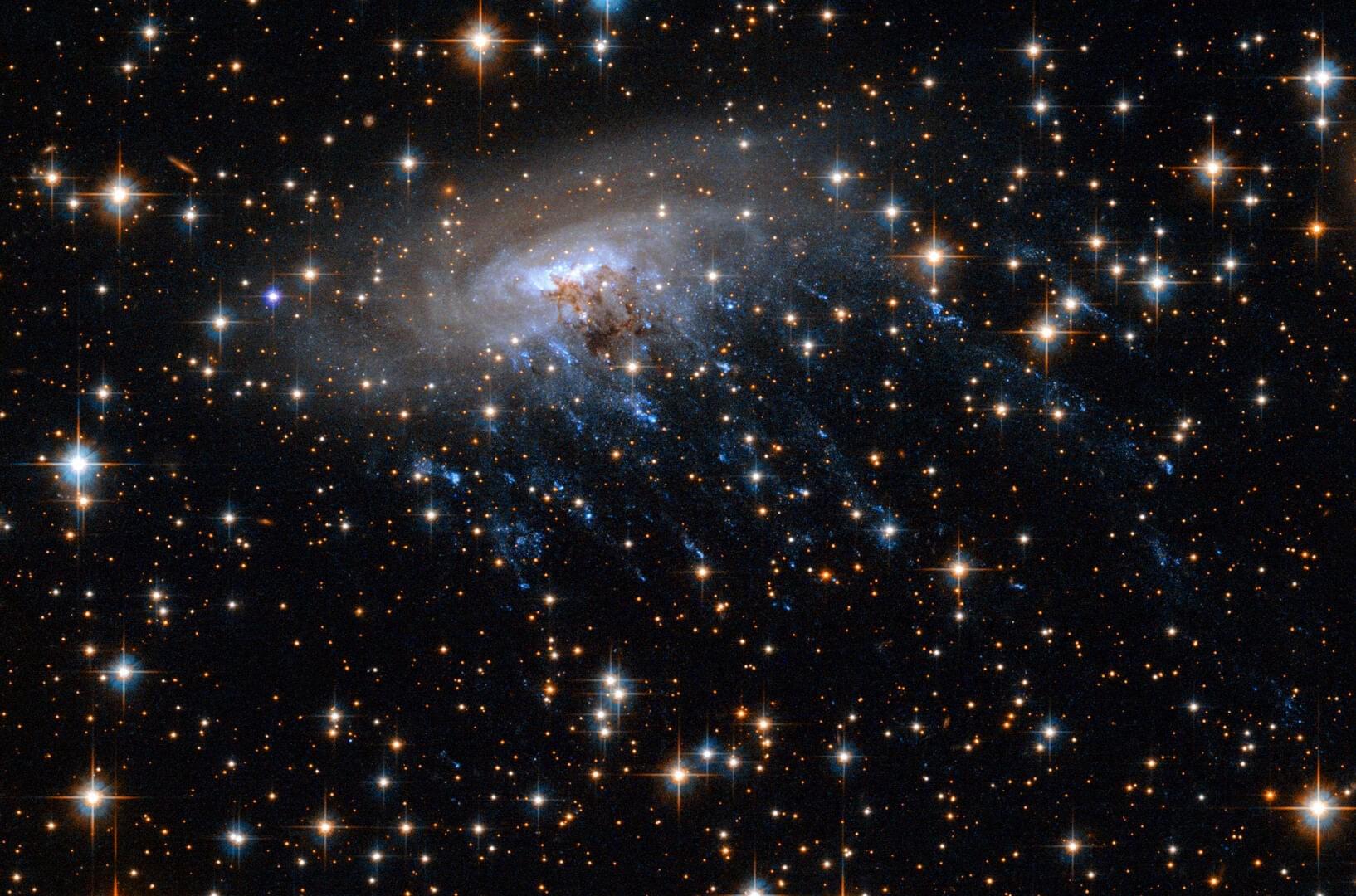
A newly discovered jellyfish galaxy, seen as it existed 8.5 billion years ago, is challenging assumptions about conditions in the early universe. Astrophysicists at the University of Waterloo have identified a newly discovered jellyfish galaxy that is now the most distant example of its kind ever

Biology, not physics, holds the key to reality

Three centuries after Newton described the universe through fixed laws and deterministic equations, science may be entering an entirely new phase.

According to biochemist and complex systems theorist Stuart Kauffman and computer scientist Andrea Roli, the biosphere is not a predictable, clockwork system. Instead, it is a self-organising, ever-evolving web of life that cannot be fully captured by mathematical models.

Organisms reshape their environments in ways that are fundamentally unpredictable. These processes, Kauffman and Roli argue, take place in what they call a “Domain of No Laws.”

This challenges the very foundation of scientific thought. Reality, they suggest, may not be governed by universal laws at all—and it is biology, not physics, that could hold the answers.

Tap here to read more.

THE ARTEMIS TRAP — Why We’re Designing for Failure

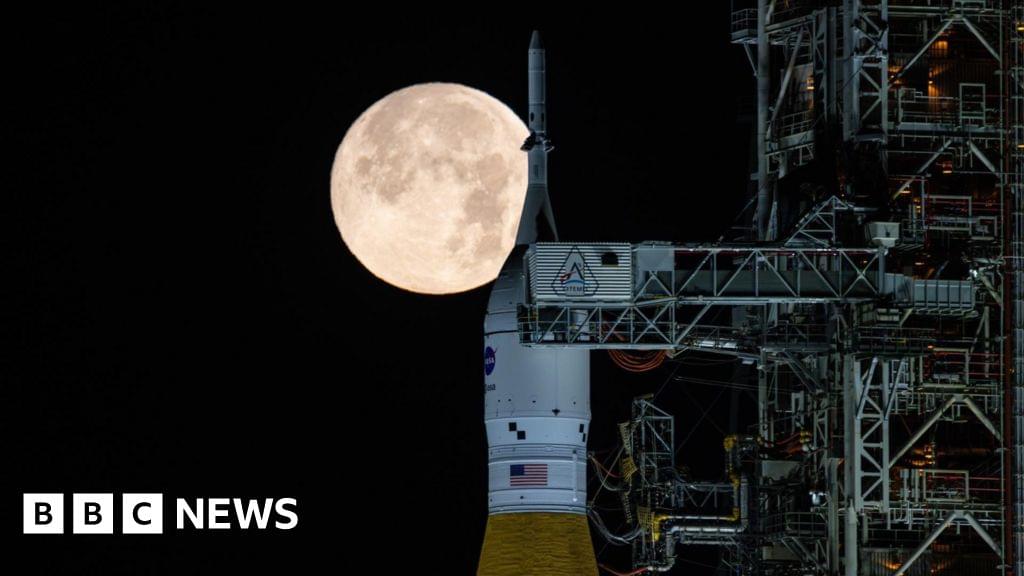
NASA’s Lunar program is destined to fail if BIG changes aren’t made fast. Especially the plans for Artemis II to land humans on the moon.

Tired of toxins in your consumer products? https://switchwithgreg.com/

GoldBacks from Galactic/Green Greg’s affiliate link:
https://www.defythegrid.com/goldbacks… coupon code GreenGregs for 1% off.

/* */