Artificial Neural Networks work like the human brain using neurons→nodes, synapses→connections, enabling machines to learn, adapt and recognize patterns with…
Category: robotics/AI – Page 247

Mathematical Innovation Advances Complex Simulations for Science’s Toughest Problems
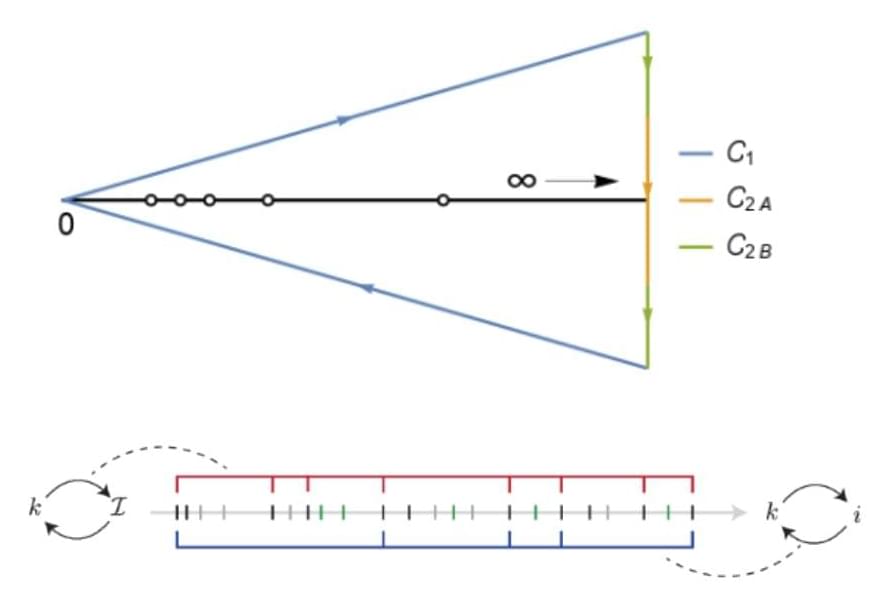
Berkeley researchers have developed a proven mathematical framework for the compression of large reversible Markov chains—probabilistic models used to describe how systems change over time, such as proteins folding for drug discovery, molecular reactions for materials science, or AI algorithms making decisions—while preserving their output probabilities (likelihoods of events) and spectral properties (key dynamical patterns that govern the system’s long-term behavior).
While describing the dynamics of ubiquitous physical systems, Markov chains also allow for rich theoretical and computational investigation. By exploiting the special mathematical structure behind these dynamics, the researchers’ new theory delivers models that are quicker to compute, equally accurate, and easier to interpret, enabling scientists to efficiently explore and understand complex systems. This advance sets a new benchmark for efficient simulation, opening the door to scientific explorations once thought computationally out of reach.
Background.
2026 Age Reversal: 5 Real Innovations To Stop Us Growing Old
The last few weeks in longevity science have been absolutely unreal. In this episode of Longevity Science News, Emmett Short breaks down 5 bombshell breakthroughs that could reshape the future of human health in 2026 — including an FDA-approved trial aiming to reverse cellular aging, cancer vaccines eliminating brain tumors in days, the regeneration of human teeth, one-shot GLP-1 Ozempic-style gene therapies, and a shocking new discovery linking gut bacteria to multiple sclerosis.
These aren’t sci-fi predictions — these are real developments happening right now in clinical trials, biotech labs, and cutting-edge medical research. If you care about anti-aging, regenerative medicine, epigenetic reprogramming, cancer immunotherapy, GLP-1 weight loss drugs, or the future of human lifespan, this is the episode you don’t want to miss.
Hume Band 20% off with Code LSN20
https://humehealth.com/pages/hume-ban… Huma Band Review: • Best Fitness Tracker For Longevity: Hume B… JOIN LSN Patreon for exclusive access to news, tips and a community of like minded longevity enthusiasts: https://www.patreon.com/user?u=29506604 ✅ Chapters 00:00 – The Longevity Science Explosion 00:48 Hume Band 20% Off 01:02 – Exclusive Interviews 01:43 Bombshell #1: FDA Approves Age Reversal Trial (Yamanaka Factors) 04:40 – Bombshell #2: Cancer’s Worst Month Ever (Vaccines + Immunotherapy) 09:19 – Bombshell #3: The Regeneration Revolution (Cartilage, Teeth, Liver) 11:30 – Bombshell #4: The One-Shot Ozempic Gene Therapy 12:25 – Bombshell #5: Gut Bacteria Linked to Multiple Sclerosis 13:55 – Final Recap + What Breakthrough Comes Next? Links in Script David Sinclair FDA Trial Tweet
https://twitter.com/davidasinclair/status/2
… FDA Greenlights Age Reset Trial (Endpoints) https://endpoints.news/exclusive-fda–… Life Biosciences Epigenetic Reprogramming Video • Reprogramming Human Life — Michael Ringel… mRNA Brain Cancer Vaccine Tweet
just setting up my twttr
— jack (@jack) March 21, 2006
… ANKTIVA Glioblastoma Case Tweet
https://twitter.com/LoriMills4CA42/status/2
… Dr. Patrick Soon-Shiong ANKTIVA Clip Tweet
stalking my coworkers
— crystal (@crystal) March 24, 2006
… Dr. Soon-Shiong Cancer Clip (YouTube) • Patrick Soon-Shiong’s cancer drug Anktiva… MIT/Stanford AbLecs Cancer Breakthrough Tweet
https://twitter.com/ShiningScience/status/2
… Universal mRNA Cancer Vaccine Tweet
https://twitter.com/ShiningScience/status/2
… AI Urine Test for Cancer Detection Tweet
https://twitter.com/Dr_Singularity/status/2
… Akkermansia Gut Bacteria + Immunotherapy Tweet
https://twitter.com/drwilliamli/status/2006
… Cartilage Regeneration Tweet (Liz Parrish)
I feel bad for Pluto. No one likes being demoted.
— David Warner (@hiddeninput) August 24, 2006
… Stanford Cartilage Regeneration Article https://news.stanford.edu/stories/202… Tooth Regrowth Drug Trial Tweet
https://twitter.com/kimmonismus/status/2006
… NewLimit Liver Rejuvenation Tweet
https://twitter.com/byersblake/status/20086
… One-Shot GLP-1 Gene Therapy Thread (Cremieux) https://twitter.com/cremieuxrecueil/status/.… MS Gut Bacteria Breakthrough Video Tweet
trying to get odeo thoughts down
— Ev (@ev) March 23, 2006
… ⚠️ Disclaimer: This video is for educational and informational purposes only and does not constitute medical advice. Consult a qualified clinician before making health or treatment decisions. 🔗 EXCLUSIVE INTERVIEWS & BONUS CONTENT Get extended conversations, deep dives, and behind-the-scenes research ans a YouTube Member Patreon: 👉 / u29506604 YT Membership: 👉
/ @longevitysciencenews PRODUCTION CREDITS ⎺⎺⎺⎺⎺⎺⎺⎺⎺⎺⎺⎺⎺⎺⎺⎺⎺⎺⎺⎺ Executive Producer – Keith Comito @Retromancers Host, Producer, Writer – Emmett Short @emmettshort
Full huma band review: • best fitness tracker for longevity: hume B…
JOIN LSN Patreon for exclusive access to news, tips and a community of like minded longevity enthusiasts: https://www.patreon.com/user?u=29506604
✅ Chapters.
Machine learning accelerates plasma mirror design for high-power lasers
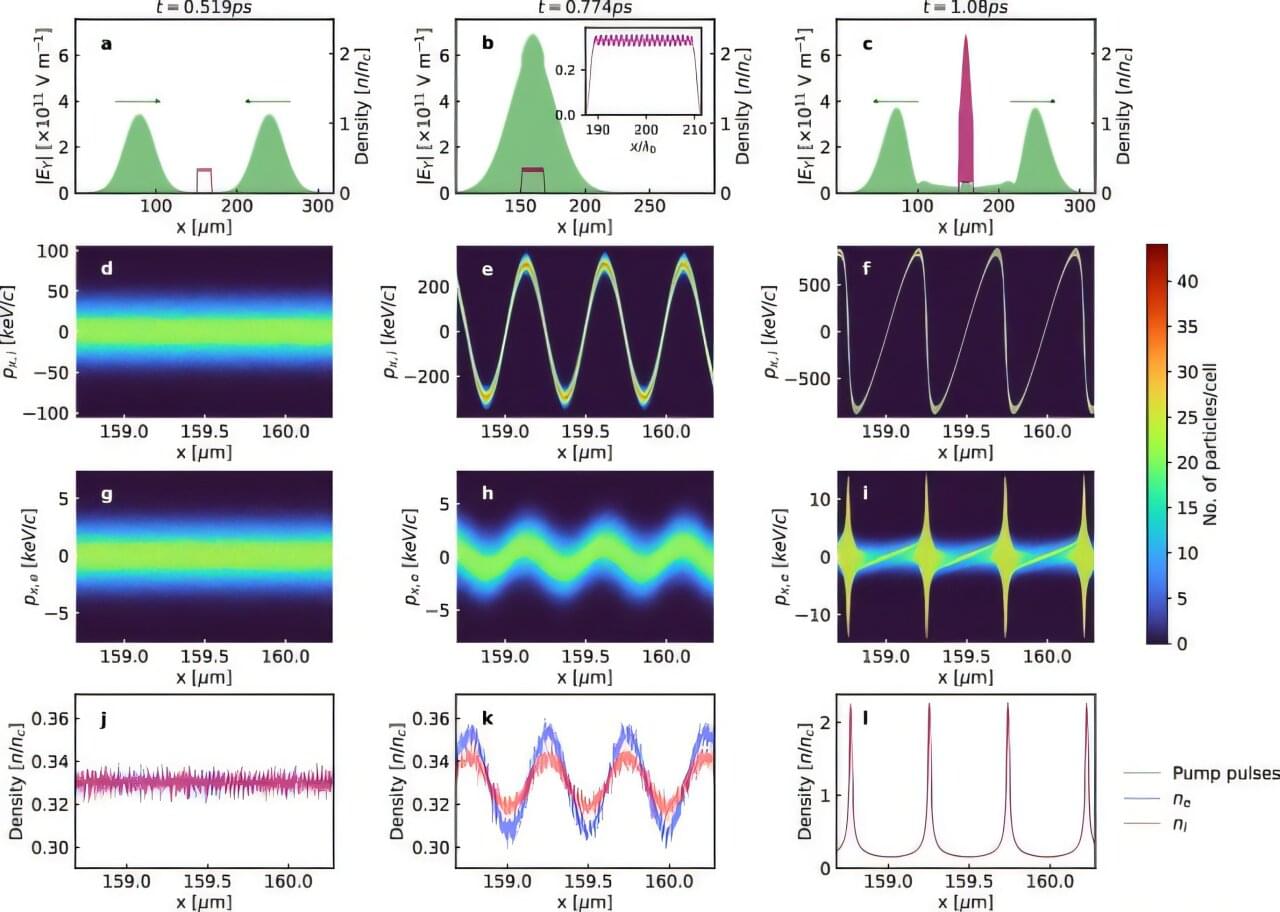
Plasma mirrors capable of withstanding the intensity of powerful lasers are being designed through an emerging machine learning framework. Researchers in Physics and Computer Science at the University of Strathclyde have pooled their knowledge of lasers and artificial intelligence to produce a technology that can dramatically reduce the time it takes to design advanced optical components for lasers—and could pave the way for new discoveries in science.
High-power lasers can be used to develop tools for health care, manufacturing and nuclear fusion. However, these are becoming large and expensive due to the size of their optical components, which is currently necessary to keep the laser beam intensity low enough not to damage them. As the peak power of lasers increases, the diameters of mirrors and other optical components will need to rise from approximately one meter to more than 10 meters. These would weigh several tons, making them difficult and expensive to manufacture.
New AI system fixes 3D printing defects in real time
Additive manufacturing has revolutionized manufacturing by enabling customized, cost-effective products with minimal waste. However, with the majority of 3D printers operating on open-loop systems, they are notoriously prone to failure. Minor changes, like adjustments to nozzle size or print speed, can lead to print errors that mechanically weaken the part under production.
Traditionally, manufacturers fix these issues on a case-by-case basis, ultimately “babysitting” the printer to manually adjust parameters and test samples in an effort to figure out what went wrong.
AI streamlines deluge of data from particle collisions
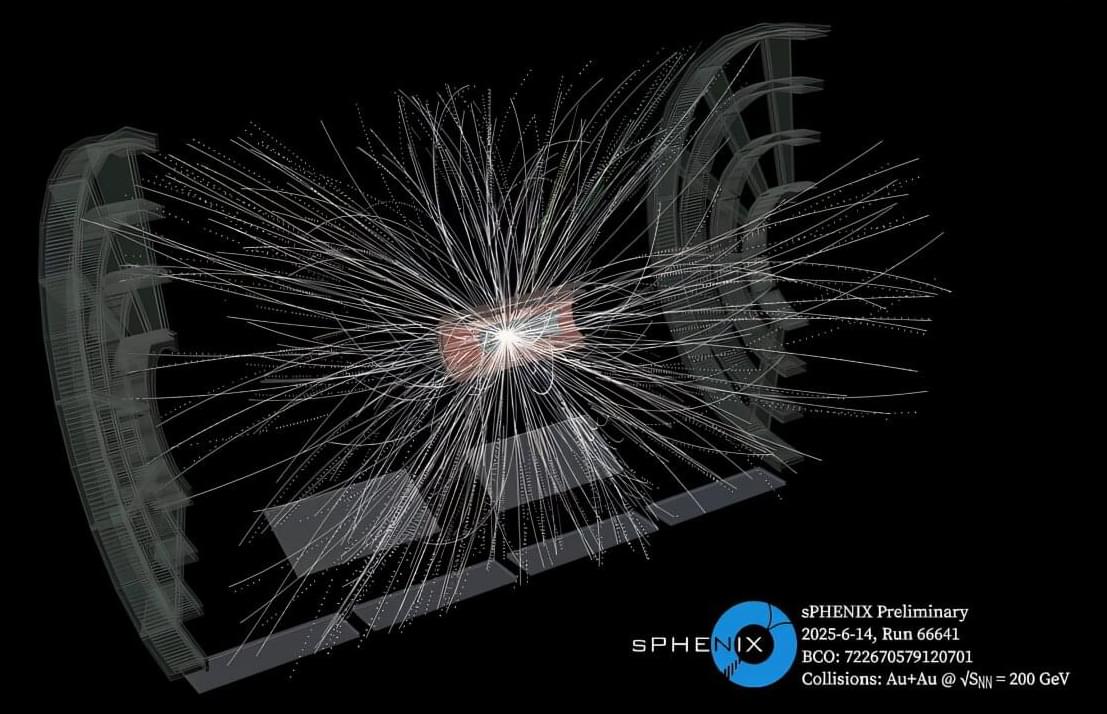
Scientists at the U.S. Department of Energy’s (DOE) Brookhaven National Laboratory have developed a novel artificial intelligence (AI)-based method to dramatically tame the flood of data generated by particle detectors at modern accelerators. The new custom-built algorithm uses a neural network to intelligently compress collision data, adapting automatically to the density or “sparsity” of the signals it receives.
As described in a paper just published in the journal Patterns, the scientists used simulated data from sPHENIX, a particle detector at Brookhaven Lab’s Relativistic Heavy Ion Collider (RHIC), to demonstrate the algorithm’s potential to handle trillions of bits of detector data per second while preserving the fine details physicists need to explore the building blocks of matter.
The algorithm will help physicists gear up for a new era of streaming data acquisition, where every collision is recorded without pre-selecting which ones might be of interest. This will vastly expand the potential for more accurate measurements and unanticipated discoveries.

Researchers Find 341 Malicious ClawHub Skills Stealing Data from OpenClaw Users
A security audit of 2,857 skills on ClawHub has found 341 malicious skills across multiple campaigns, according to new findings from Koi Security, exposing users to new supply chain risks.
ClawHub is a marketplace designed to make it easy for OpenClaw users to find and install third-party skills. It’s an extension to the OpenClaw project, a self-hosted artificial intelligence (AI) assistant formerly known as both Clawdbot and Moltbot.
The analysis, which Koi conducted with the help of an OpenClaw bot named Alex, found that 335 skills use fake pre-requisites to install an Apple macOS stealer named Atomic Stealer (AMOS). This activity set has been codenamed ClawHavoc.
Mozilla announces switch to disable all Firefox AI features
In response to user feedback on AI integration, Mozilla announced today that the next Firefox release will let users disable AI features entirely or manage them individually.
The new “Block AI enhancements” toggle will be available in Firefox 148 on February 24 and will help block current and future generative AI features in the desktop browser from a single location. Users will also have the option to enable specific AI tools while keeping others disabled.
“We’ve heard from many who want nothing to do with AI. We’ve also heard from others who want AI tools that are genuinely useful. Listening to our community, alongside our ongoing commitment to offer choice, led us to build AI controls,” said Firefox head Ajit Varma.

Malicious MoltBot skills used to push password-stealing malware
More than 230 malicious packages for the personal AI assistant OpenClaw (formerly known as Moltbot and ClawdBot) have been published in less than a week on the tool’s official registry and on GitHub.
Called skills, the packages pretend to be legitimate tools to deliver malware that steals sensitive data, like API keys, wallet private keys, SSH credentials, and browser passwords.
Originally named ClawdBot and switching to Moltbot and now OpenClaw in under a month, the project is a viral open-source AI assistant designed to run locally, with persistent memory and integrate with various resources (chat, email, local file system). Unless configured properly, the assistant introduces security risks.