Toggle light / dark theme

New study shows promising results for COPD treatment

We live longer and longer, and as we age, a lot of us develop a series of health issues and chronic diseases, including Chronic Obstructive Pulmonary Disease (COPD), which is found in around 600 million individuals globally. However, only half of them know they have the disease.

COPD patients often experience shortness of breath, persistent cough with mucus, wheezing and frequent respiratory infections, which can make everyday activities difficult.

Now a new study from the University of Copenhagen and Bispebjerg Hospital suggests that a form of vitamin B3 may be the key to improving quality of life for these patients.

“In the study, we show that nicotinamide riboside, also known as vitamin B3, can reduce lung inflammation in COPD patients,” says Associate Professor Morten Scheibye-Knudsen from the Center for Healthy Aging at the Department of Cellular and Molecular Medicine, University of Copenhagen, who has co-authored the new study.


A new study carried out by researchers at the University of Copenhagen and Bispebjerg Hospital shows that a form of vitamin B3 can reduce lung inflammation in COPD patients.
Dietary AGE Products Impact Insulin Resistance And Inflammation: Jaime Uribarri, M.D

Join us on Patreon! https://www.patreon.com/MichaelLustgartenPhD

Discount Links/Affiliates:
Blood testing (where I get the majority of my labs): https://www.ultalabtests.com/partners/michaellustgarten.

At-Home Metabolomics: https://www.iollo.com?ref=michael-lustgarten.
Use Code: CONQUERAGING At Checkout.

Clearly Filtered Water Filter: https://get.aspr.app/SHoPY

Epigenetic, Telomere Testing: https://trudiagnostic.com/?irclickid=U-s3Ii2r7xyIU-LSYLyQdQ6…M0&irgwc=1
Use Code: CONQUERAGING

NAD+ Quantification: https://www.jinfiniti.com/intracellular-nad-test/

Breakthroughs in Stopping Aging

Japanese researchers are making groundbreaking discoveries on the mechanisms of aging and working to apply them. As we age, senescent cells, or aged cells that have stopped dividing, accumulate, causing inflammation that can damage blood vessels and organs. Animal experiments have shown that removing these cells improves kidney function and reduces arteriosclerosis. They have led to the identification of a drug and development of a vaccine to eliminate the cells.

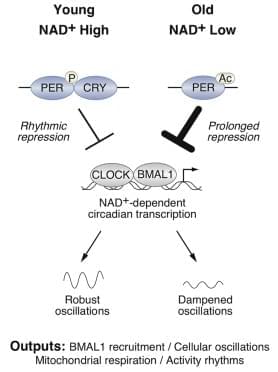
NAD+ Controls Circadian Reprogramming through PER2 Nuclear Translocation to Counter Aging

Disrupted sleep-wake and molecular circadian rhythms are a feature of aging associated with metabolic disease and reduced levels of NAD+, yet whether changes in nucleotide metabolism control circadian behavioral and genomic rhythms remains unknown. Here, we reveal that supplementation with the NAD + precursor nicotinamide riboside (NR) markedly reprograms metabolic and stress-response pathways that decline with aging through inhibition of the clock repressor PER2. NR enhances BMAL1 chromatin binding genome-wide through PER2 K680 deacetylation, which in turn primes PER2 phosphorylation within a domain that controls nuclear transport and stability and that is mutated in human advanced sleep phase syndrome.

How to prevent chronic inflammation from zombie-like cells that accumulate with age

In humans and other multicellular organisms, cells multiply. This defining feature allows embryos to grow into adulthood, and enables the healing of the many bumps, bruises and scrapes along the way.

Certain factors can cause cells to abandon this characteristic and enter a zombie-like state known as senescence where they persist but no longer divide to make new cells. Our bodies can remove these senescent cells that tend to pile up as we age. The older we get, however, the less efficient our immune systems become at doing so.

“In addition to no longer growing and proliferating, the other hallmark of senescent cells is that they have this inflammatory program causing them to secrete inflammatory molecules,” said Peter Adams, Ph.D., director and professor of the Cancer Genome and Epigenetics Program at Sanford Burnham Prebys and senior and co-corresponding author of the study.

/* */