OpenAI and Retro Biosciences achieve 50x increase in expressing stem cell reprogramming markers.


Altruism, the tendency to behave in ways that benefit others even if it comes at a cost to oneself, is a valuable human quality that can facilitate cooperation with others and promote meaningful social relationships. Behavioral scientists have been studying human altruism for decades, typically using tasks or games rooted in economics.
Two researchers based at Willamette University and the Laureate Institute for Brain Research recently set out to explore the possibility that large language models (LLMs), such as the model underpinning the functioning of the conversational platform ChatGPT, can simulate the altruistic behavior observed in humans. Their findings, published in Nature Human Behavior, suggest that LLMs do in fact simulate altruism in specific social experiments, offering a possible explanation for this.
“My paper with Nick Obradovich emerged from my longstanding interest in altruism and cooperation,” Tim Johnson, co-author of the paper, told Tech Xplore. “Over the course of my career, I have used computer simulation to study models in which agents in a population interact with each other and can incur a cost to benefit another party. In parallel, I have studied how people make decisions about altruism and cooperation in laboratory settings.
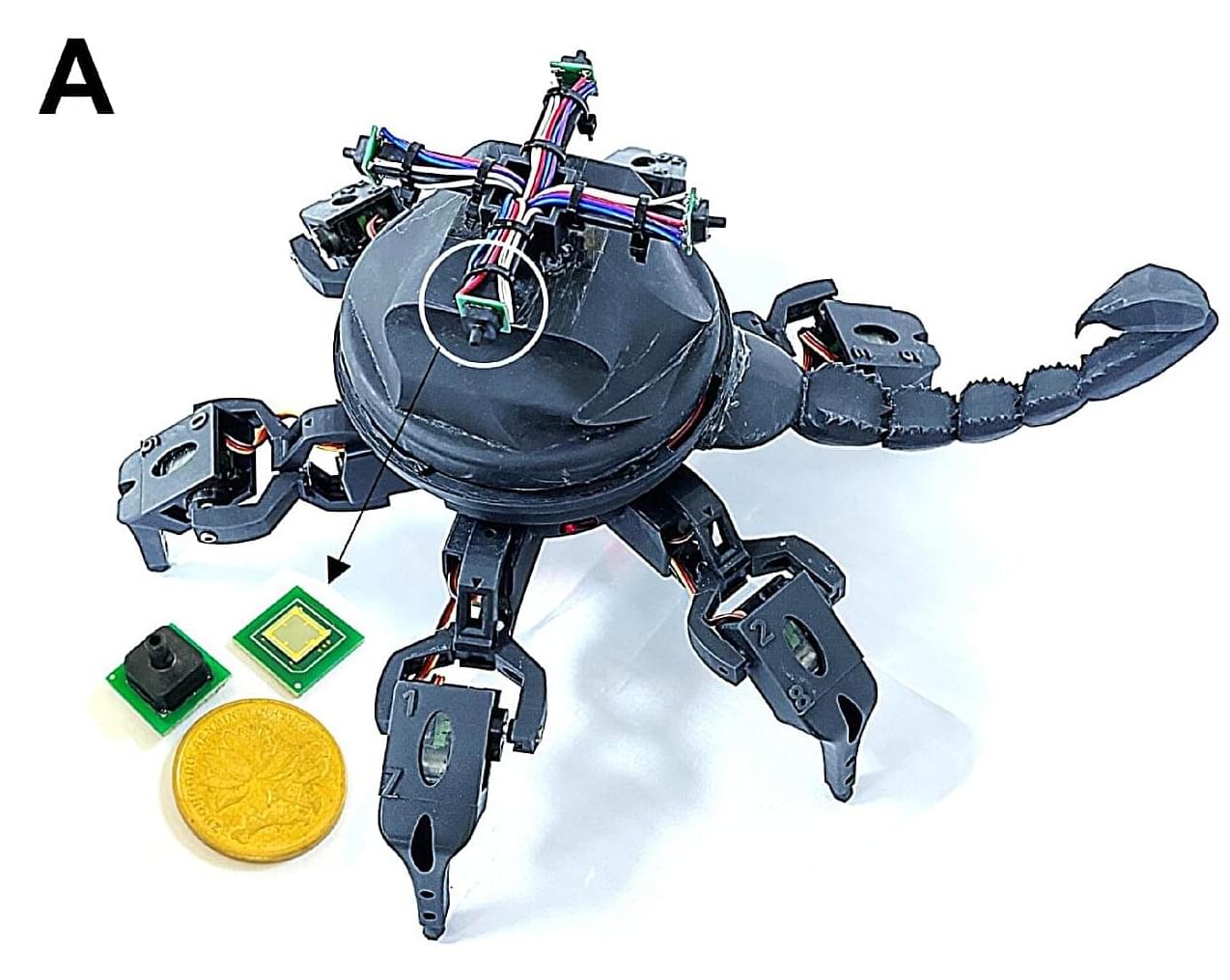
Nature, the master engineer, is coming to our rescue again. Inspired by scorpions, scientists have created new pressure sensors that are both highly sensitive and able to work across a wide variety of pressures.
Pressure sensors are key components in an array of applications, from medical devices and industrial control systems to robotics and human-machine interfaces. Silicon-based piezoresistive sensors are among the most common types used today, but they have a significant limitation. They can’t be super sensitive to changes and work well across a range of pressures at the same time. Often, you have to choose one over the other.
In a major step toward intelligent and collaborative microrobotic systems, researchers at the Research Center for Materials, Architectures and Integration of Nanomembranes (MAIN) at Chemnitz University of Technology have developed a new generation of autonomous microrobots—termed smartlets—that can communicate, respond, and work together in aqueous environments.
These tiny devices, each just a millimeter in size, are fully integrated with onboard electronics, sensors, actuators, and energy systems. They are able to receive and transmit optical signals, respond to stimuli with motion, and exchange information with other microrobots in their vicinity.
The findings are published in Science Robotics, in a paper titled “Si chiplet–controlled 3D modular microrobots with smart communication in natural aqueous environments.”

A line of engineering research seeks to develop computers that can tackle a class of challenges called combinatorial optimization problems. These are common in real-world applications such as arranging telecommunications, scheduling, and travel routing to maximize efficiency.
Unfortunately, today’s technologies run into limits for how much processing power can be packed into a computer chip, while training artificial-intelligence models demands tremendous amounts of energy.
Researchers at UCLA and UC Riverside have demonstrated a new approach that overcomes these hurdles to solve some of the most difficult optimization problems. The team designed a system that processes information using a network of oscillators, components that move back and forth at certain frequencies, rather than representing all data digitally. This type of computer architecture, called an Ising machine, has special power for parallel computing, which makes numerous, complex calculations simultaneously. When the oscillators are in sync, the optimization problem is solved.


The research was less about what’s wrong with today’s AI models and more about what’s wrong with how companies are trying to use them
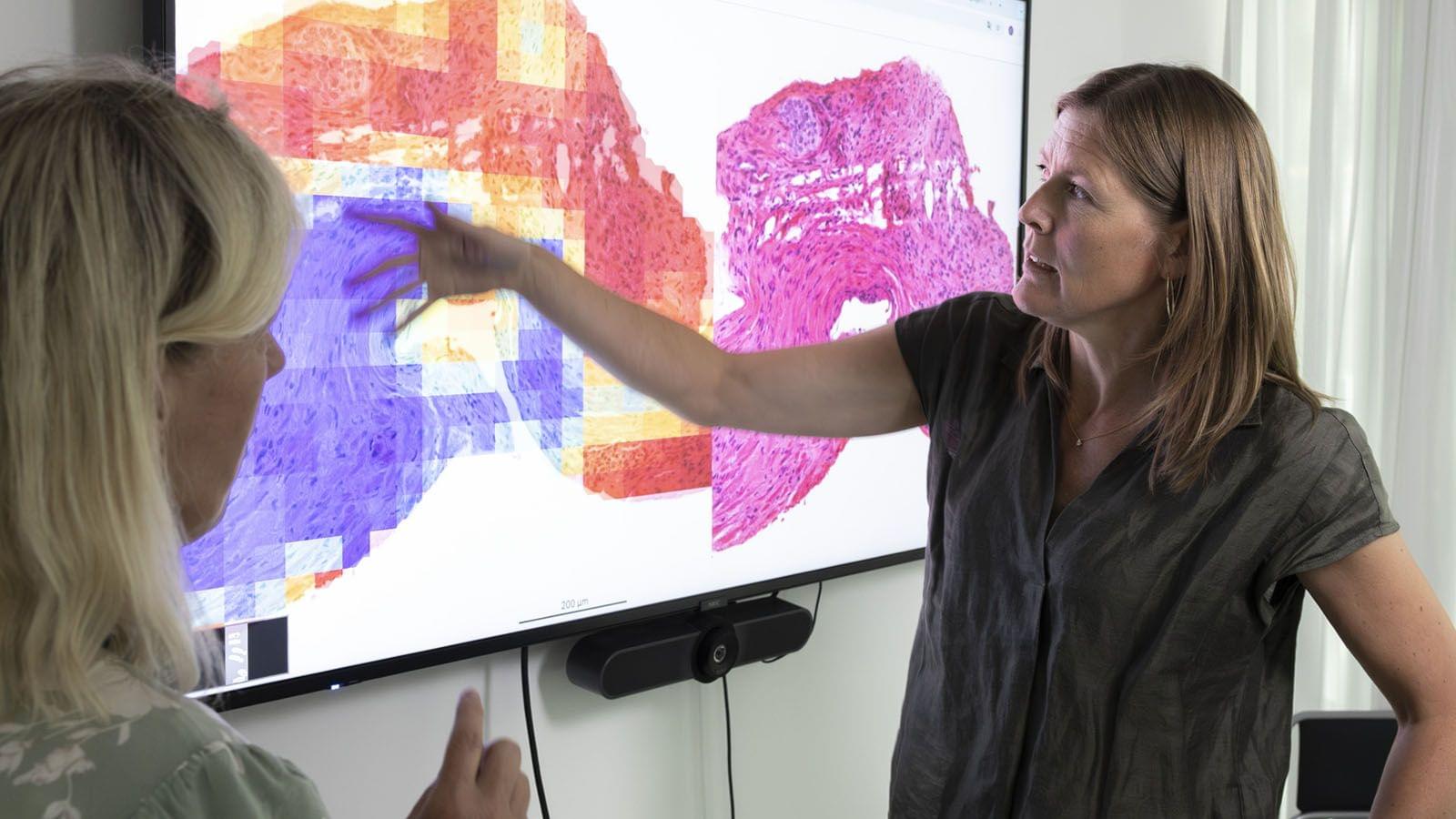
Men assessed as healthy after a pathologist analyses their tissue sample may still have an early form of prostate cancer. Using AI, researchers at Uppsala University have been able to find subtle tissue changes that allow the cancer to be detected long before it becomes visible to the human eye.
Previous research has demonstrated that AI is able to detect tissue changes indicative of cancer. In the current study, published in Scientific Reports, the researchers show that AI can also find cancers missed by pathologists.
“The study has been nicknamed the ‘missed study’, as the goal of finding the cancer was ‘missed’ by the pathologists. We have now shown that with the help of AI, it is possible to find signs of prostate cancer that were not observed by pathologists in more than 80 per cent of samples from men who later developed cancer,” says Carolina Wählby, who led the AI development in the study.
“When we looked at the patterns that the AI ranked as informative, we saw changes in the tissue surrounding the glands in the prostate”, says Carolina Wählby. Photo: Mikael Wallerstedt.
Questions to inspire discussion.
🚕 Q: How is Tesla’s robo taxi service progressing? A: Tesla’s robo taxi service is already larger than competitors in Austin and the Bay Area, with plans for significant expansion.
Business Model Shifts.
📊 Q: How might Tesla’s business model change with autonomy? A: Tesla may shift to manufacturing cars primarily for their own robo taxi service, rather than selling to individual customers.
🚛 Q: What potential does Tesla see in autonomous semi trucks? A: Tesla believes autonomous semi trucks could unlock trillions in value and shift supply chains from rail to trucking.
📅 Q: How is Tesla’s leasing strategy evolving? A: Tesla is focusing more on shorter leases (1−2 years) and inventory car leases, indicating a move towards a leasing and subscription model.