Category: futurism – Page 136
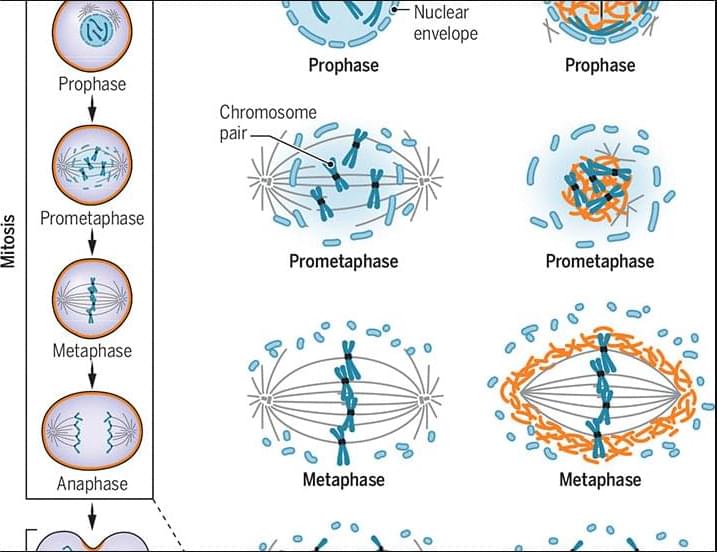
Rewriting the rules of cell division
Findings in Science demonstrate that successful mitosis may draw on more mechanisms than commonly assumed.
Learn more in this Science Perspective.
Microtubules get help from actin filaments during mitosis.
William Bement Authors Info & Affiliations
Science
Vol 388, Issue 6749

Cell type–specific spatiotemporal control of GFP-tagged protein degradation in mice
New: Alexandra Prado-Mantilla, Terry Lechler et al. develop a mouse line to allow cell type–specific, rapid, and reversible degradation of GFP-tagged proteins.
Prado-Mantilla et al. develop a mouse line to allow cell type–specific, rapid, and reversible degradation of GFP-tagged proteins. Using this line, they dem.

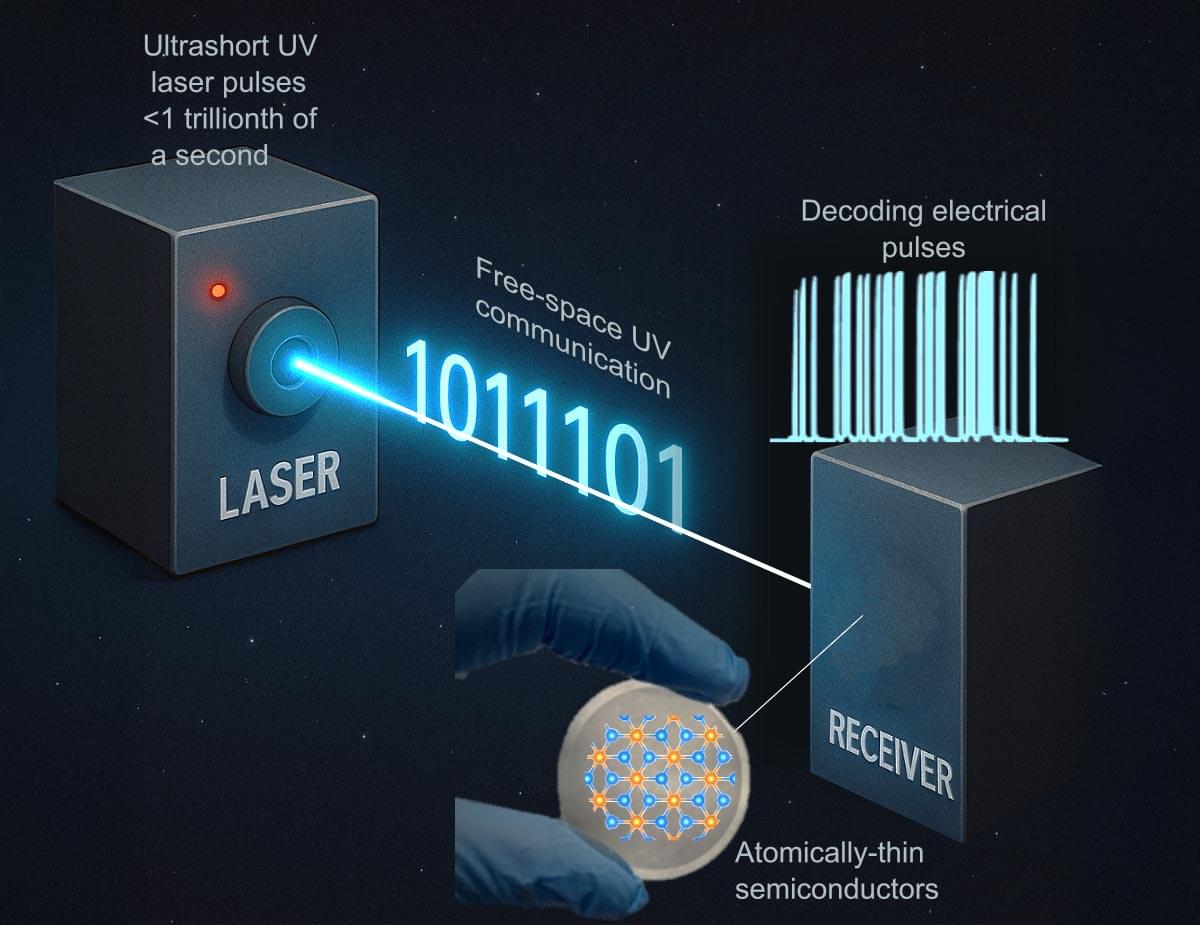
A New UV Laser Sends Messages in Trillionths of a Second
Ultrafast UV-C light just took a leap forward, opening the door to lightning-fast communications and next-generation photonic technologies.
Devices that work with ultraviolet light in the UV-C range (100−280 nm) are becoming increasingly important across many fields, including super-resolution microscopy and optical communications. Scientists are especially interested in UV-C light because it scatters strongly in the atmosphere, a property that makes it useful for non-line-of-sight communication. This means data could be sent even when a clear line of sight is blocked, such as in cluttered or obstructed environments. Despite these advantages, progress has been slow because researchers have lacked practical components that can reliably generate and detect UV-C light.
A new platform for ultrafast UV-C pulses.
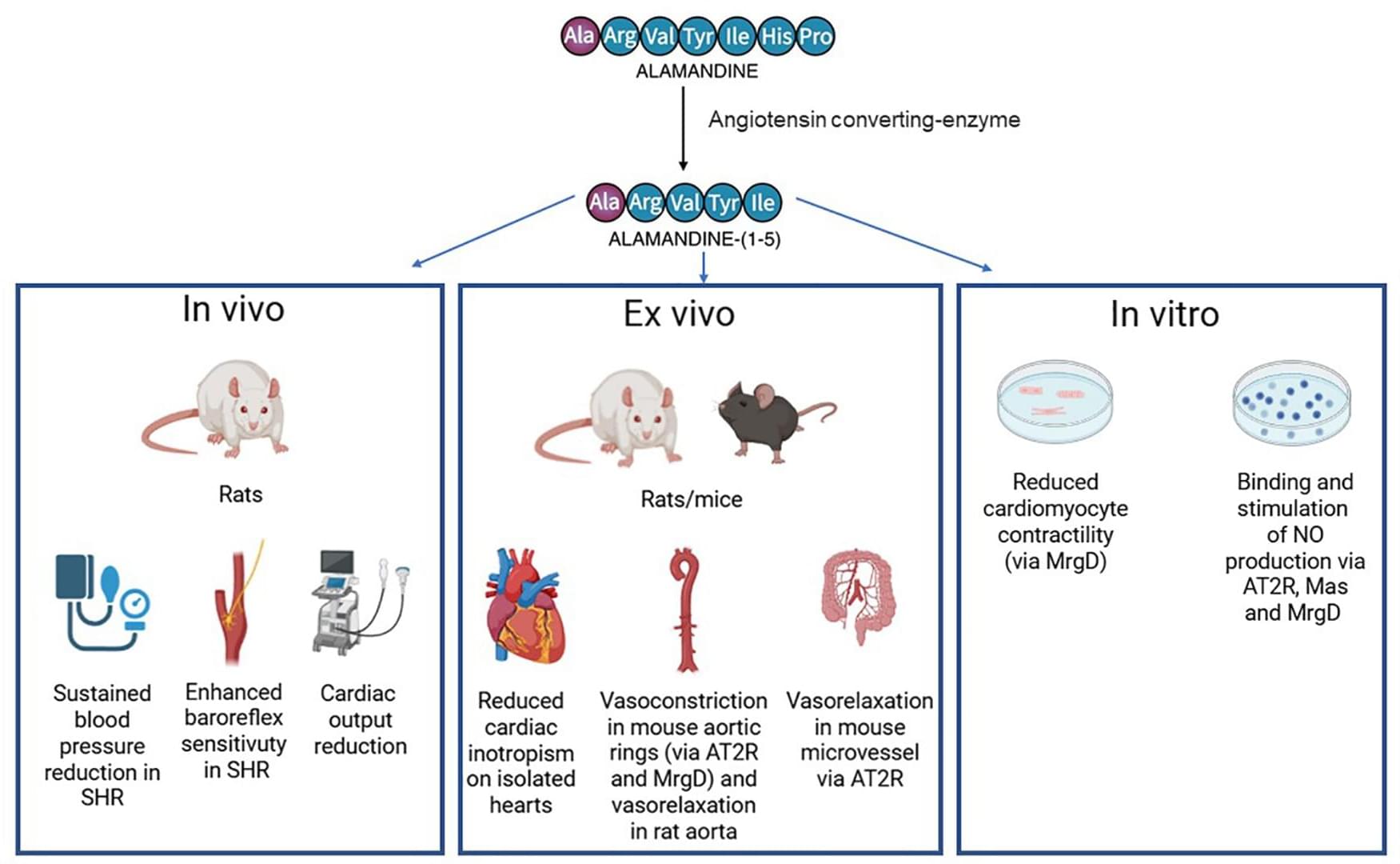
Identification and Characterization of Alamandine-(1−5), a New Component of the Renin-Angiotensin System
The nitrogenase-like enzyme superfamily.
Nitrogenases are the only enzymes that reduce dinitrogen to ammonia, a reaction essential for all life on Earth.
Recent work demonstrates that nitrogen fixation‐like (Nfl) enzymes have extensive functions beyond nitrogen fixation, including reducing C=C double bonds of tetrapyrroles and breaking C–S bonds to support bacterial sulfur scavenging.
All nitrogenase-like enzymes consist of a reductase component containing an [Fe4S4]-cluster, and a catalytic component containing diverse metalloclusters.
The catalytic components of the nitrogenase-like enzymes contain simpler FeSclusters than nitrogenases, including [Fe4S4]-clusters and nitrogenase cluster precursors. https://sciencemission.com/nitrogenase-like-enzym
Nitrogenases are the only enzymes capable of converting atmospheric nitrogen into bioavailable ammonia, an essential process for all life on Earth. Early ancestors of bona fide nitrogenases and their maturases gave rise to several structural homologues with diverse functions. The nitrogen fixation-like enzyme superfamily comprises ancient metalloproteins involved in elemental processes that range from the biosynthesis of bacteriochlorophyll in bacterial photosynthesis to the biosynthesis of cofactor F430 in archaeal methanogenesis. Recently, new functions of nitrogenase-like enzymes in sulfur scavenging were discovered and have spurred interest due to the simultaneous production of small hydrocarbons.
A New Theory Says Hidden Dimensions May Create Mass. That Would Rewrite Particle Physics
This theoretical explanation could also help explain some of the outstanding questions about the accelerating expansion of the universe. The team explains the possible existence of a particle known as the “torstone,” which would be linked to torsion that could be detected in future experience—if this theory proves out.
Of course, that’s a pretty big if. With the Nobel Prize-winning discovery of the Higgs boson in 2012, the idea of a Higgs scalar field is a strong theory in the standard model. And as with every incredible theoretical idea, this new proposal requires equally incredible evidence. Luckily, scientists are developing ever more-sensitive detectors for probing these very questions. But until scientists can glimpse some semblance of a “torstone,” or other piece pointing to the complicated interaction between higher-dimensional space time and mass, this idea will remain just that—an idea.
NVIDIA Live with CEO Jensen Huang
Live from CES in Las Vegas, NVIDIA CEO Jensen Huang shares how the next generation of accelerated computing and AI will transform every industry. The event kicks off with a one-hour NVIDIA pregame show where panelists discuss the future of AI infrastructure, open ecosystems, and physical AI.