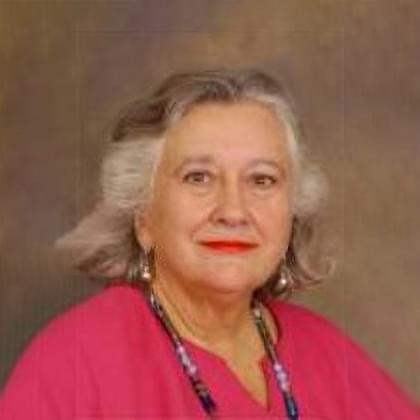
Professor Margaret A. Boden
Margaret A. Boden, OBE, Sc.D., PhD, FBA, was Research Professor of Cognitive Science at the University of Sussex and the founding Dean of its School of Cognitive and Computing Sciences (COGS), the interdisciplinary school that survives today as the Sussex Centre for Cognitive Science. A philosopher, psychologist, and cognitive scientist, she spent six decades asking how mental phenomena such as purpose, perception, and creativity can arise from purely mechanistic processes, whether in brains or in computers.
She was one of the last surviving members of the first generation of artificial intelligence researchers, and her books, translated into 20 languages, helped define the philosophy of AI, the history of cognitive science, and the field of computational creativity. She died peacefully in her sleep in Brighton on July 18, 2025, aged 88. Read Margaret Boden obituary and Margaret Boden obituary: cognitive scientist who explored how machines might emulate human imagination.
Maggie joined the University of Sussex in 1965 as a lecturer in philosophy and psychology. In 1974, she, the philosopher Aaron Sloman, and the computer vision researcher Max Clowes jointly launched the Sussex Cognitive Studies Programme, a radical attempt to bring psychologists, linguists, philosophers, and AI researchers together around the study of mind.
According to the University, this made Sussex the first university in the world to offer undergraduate and postgraduate degrees in the field. By the mid-1980s, the program was recognized as one of the two major centers for AI research in the United Kingdom.
Maggie became a professor in 1980 and Dean of the School of Social Sciences in 1985. In 1987, the program became the autonomous School of Cognitive Sciences, the first new school created at Sussex since the university’s founding, with Maggie as its founding Dean. After absorbing the Computer Science Department, it was renamed the School of Cognitive and Computing Sciences, which became the leading European AI center of the 1990s.
In 2003, it was reorganized into the Sussex Centre for Cognitive Science (COGS), which today draws more than 50 academics from across the university’s four faculties. From 2002 until her death, Maggie held the title of Research Professor of Cognitive Science. Read Professor Margaret Boden awarded OBE and Obituary: Professor Maggie Boden.
COGS became the crucible in which many prominent AI careers were forged. Maggie chaired the 1984 appointment of the philosopher Andy Clark, the 1988 appointment of the evolutionary robotics pioneer Phil Husbands, and taught our Blay Whitby as a philosophy postgraduate in 1979, sparking his own career in AI. The computer scientist Dave Cliff, who spent a decade in COGS from 1987, wrote that she provided “the launchpad, the rocket and the fuel” for embryonic academic careers.
She almost always dressed in purple, which became the predominant color of COGS brochures, technical reports, and academic gowns, and a purple robot at Sussex was named “Maggie” in her honor. She was also a lifelong champion of fellow female academics. Read Remembering Margaret A. Boden, the tribute by Andy Clark, Ernest Edmonds, Phil Husbands, Pasha Parpia, Mike Sharples, Steve Torrance, and Whitby published by the Cognitive Science Society.
Her first book, Purposive Explanation in Psychology (Harvard University Press, 1972), grew out of her 1968 Harvard University doctoral thesis on the psychologist William McDougall. In it, she first advanced the argument that AI programs could serve as a form of theoretical psychology, allowing mental processes to be studied rigorously in non-living systems.
Her earliest philosophy papers, including a 1968 talk titled Intentionality in Machines, examined how a mind can refer to and act upon the world. Artificial Intelligence and Natural Man (1977), a 537-page critical survey of AI research up to the mid-1970s, established her reputation as an authority on the field and is sometimes described as the world’s first book on AI. It became a set text for the Open University, and, unusually for the time, it used “she” as the indefinite pronoun throughout.
She went on to publish Piaget (1979) in the Fontana Modern Masters series, Minds and Mechanisms: Philosophical Psychology and Computational Models (1981), Computer Models of Mind: Computational Approaches in Theoretical Psychology (1988), and the edited collection The Philosophy of Artificial Intelligence (1990). She also contributed an essay on the social impact of AI to our Ray Kurzweil’s The Age of Intelligent Machines (1990).
Creativity in living and artificial systems was the theme to which Maggie returned most often. The Creative Mind: Myths and Mechanisms (1990) argued that new ideas arise by combining familiar ideas, by exploring structured conceptual spaces, and, most powerfully, by transforming the rules that define those spaces. Her 1998 paper Creativity and Artificial Intelligence in the journal Artificial Intelligence predicted that AI would find it far easier to generate new ideas than to evaluate them, a prediction that her obituary in Nature sees borne out today.
She extended this work in the edited volume Dimensions of Creativity (1994), in Creativity and Art: Three Roads to Surprise (2010), and in From Fingers to Digits: An Artificial Aesthetic (2019), coauthored with the digital artist Ernest Edmonds. She was a friend and interlocutor of computer artists including Harold Cohen, and in the mid-2000s she collaborated with the artist Paul Brown, Ernest Edmonds, and Phil Husbands on whether a machine could make art independent of its designer’s influence.
Maggie also helped shape the philosophy of artificial life, editing The Philosophy of Artificial Life (1996). Her masterwork, the two-volume Mind as Machine: A History of Cognitive Science (2006), spans almost 1,700 pages and was offered, in her words, as a one-person view of cognitive science as a whole. It prompted a symposium in Artificial Intelligence that included a sharply critical response from Noam Chomsky. Read Symposium on Margaret Boden, Mind as Machine: A History of Cognitive Science.
She played a leading role in early public debate about the benefits and risks of AI, long before the subject became fashionable, and she resented the 1973 Lighthill Report that led to cuts in British AI funding. A 1984 televised debate with John Searle about his Chinese room argument, broadcast in Channel 4’s Voices series, is still remembered as a classic of academic argument.
In later life, she distilled her views for general readers in AI: Its Nature and Future (2016) and Artificial Intelligence: A Very Short Introduction (2018). She argued that the main obstacle to an all-powerful AI is not a lack of intelligence but the fact that computers have no needs or desires of their own, and that societies should deliberately protect room for human care and relationships.
Read The Robots Won’t Take Over Because They Couldn’t Care Less in Aeon and Thinking Intelligently About Artificial Intelligence. Watch The Future of Intelligence: What Matters?, the inaugural Margaret Boden Lecture she delivered for the Leverhulme Centre for the Future of Intelligence at the Cambridge Union in June 2018, and Not Gizmos, but Ghosts: AI and the Mind, her talk at the 2018 Religion and Science Conference of Cambridge Muslim College.
Maggie was born in London on November 26, 1936, the only surviving child of a civil servant, Leonard Boden, and his wife Violet. As a teenager, she was fascinated by Grey Walter’s robotic tortoises at the 1951 Festival of Britain. From the City of London School for Girls she went to Newnham College, Cambridge, where she completed the three-year medical sciences course in two years and earned a prize-winning first-class degree in 1958 with the highest mark in Natural Sciences.
Intending at first to become a psychiatrist, she then took a second degree in philosophy in 1959, supervised by the machine translation pioneer Margaret Masterman of the Cambridge Language Research Unit. From 1959 to 1965, she taught philosophy at the University of Birmingham. Between 1962 and 1964 she held a Harkness Fellowship of the Commonwealth Fund at Harvard University, joining the Center for Cognitive Studies founded by Jerome Bruner and George A. Miller, where reading Miller, Galanter, and Pribram’s Plans and the Structure of Behavior convinced her that computational ideas could apply to all of psychology.
She earned her PhD in social psychology, with a specialism in cognitive studies, from Harvard University in 1968, and she later received the higher doctorate of Sc.D. from the University of Cambridge. Read A Polymath at Play: An Interview with Margaret Boden.
Maggie was elected a Fellow of the British Academy in 1983, served as its Vice-President between 1989 and 1991, and chaired its Philosophy Section until 2002. She joined the Council of the Royal Institution in 1992 and led the institution as Vice-President and Chairman of Council until 1995, and she delivered two of its Friday Evening Discourses, Creativity and Computers in 1990 and Is Artificial Life Possible? in 2002.
She served on the Council of the Royal Institute of Philosophy and was elected to Academia Europaea in 1993, the same year she became a Fellow of the American Association for Artificial Intelligence. She was also a Fellow of the European Coordinating Committee for Artificial Intelligence (now the European Association for Artificial Intelligence) and the Royal Society of Arts, and a Life Fellow of the Society for the Study of Artificial Intelligence and the Simulation of Behaviour.
In 2003, she gave the Pufendorf Lectures at Lund University, and over her career she lectured across North and South America, Europe, India, the USSR, and the Pacific. Read Royal Institution Pays Tribute to the Life and Work of Professor Margaret Boden.
She was appointed an Officer of the Order of the British Empire in the 2002 New Year Honours for services to cognitive science. She received honorary doctorates from the University of Sussex in 2001, the University of Bristol in 2002, and the Open University in 2004. The International Association for Computing and Philosophy gave her its Covey Award in 2013, and the International Society for Artificial Life gave her its 2016 Award for Lifetime Achievement in the field of artificial life.
In 2017, she received the ACM AAAI Allen Newell Award “for contributions to the philosophy and historiography of cognitive science and artificial intelligence, particularly in the study of human creativity.” In 2014, she was the guest of Jim Al-Khalili on BBC Radio 4’s The Life Scientific. Listen to Margaret Boden on Artificial Intelligence.
Her legacy is honored by the Margaret Boden Informatics Ph.D. Scholarship at the University of Sussex, by The Margaret Boden Lectures of the Leverhulme Centre for the Future of Intelligence at the University of Cambridge, and by the Margaret Boden Annual Lecture in Interdisciplinary AI at Sussex. On June 30, 2026, the Sussex Centre for Cognitive Science held Celebrating the Life and Work of Professor Margaret Boden, a day of reflections and talks on computational creativity that closed with a panel on her legacy featuring Andy Clark, our Anil Seth, Joanna Bryson, Pasha Parpia, and Ron Chrisley. Sasha Roseneil, Vice-Chancellor of the University of Sussex, said that with her death the university had lost “a huge figure” in its history.
Maggie married the writer and publisher John Spiers in 1967, and they divorced in 1981. She is survived by two children and four grandchildren. For almost 30 years, she spent six weeks of every year in the Cook Islands, where she loved the drumming and dancing and became a keen snorkeller and an accomplished scholar of Polynesia.
Visit her Wikipedia page, British Academy profile, Academia Europaea page, Leverhulme Centre for the Future of Intelligence profile, and Academia Europaea biography. Read her Contributions on Aeon.