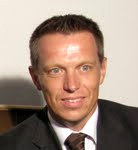
Dr. Soenke Ziesche
Soenke Ziesche, PhD, is a Consultant for AI and for Disaster Information Management who has worked for the United Nations since 2000 in data and information management across the humanitarian, recovery, and sustainable development fields.
He currently serves UNICEF as a Consultant developing AI governance training and a framework for responsible AI in statistics in India, and he is a member of AI Ethics Experts Without Borders, the UNESCO network of experts from over 50 countries that supports Member States in implementing the Recommendation on the Ethics of Artificial Intelligence.
Soenke works at the frontier of AI welfare and digital minds research, fields he helped establish. In 2026, he published Digital Minds 1.0: AI Welfare, Ethics, and Beyond, a comprehensive introduction to the moral implications of AI systems that may possess consciousness-like properties, covering their potential experiences and vulnerabilities, human–digital mind relationships, and opportunities for artificial moral agents. Watch Digital Minds: Preparing for a Moral Challenge Before It Arrives and his talk Linking Digital Minds and Artificial Moral Agents at the AI, Animals, and Digital Minds (AIADM) 2025 conference in New York.
In 2025, he coauthored Considerations on the AI Endgame: Ethics, Risks and Computational Frameworks with our Roman V. Yampolskiy, examining AI welfare science, AI identity, value alignment, and non-Western perspectives on AI ethics. Their earlier joint work proposed this discipline: Read Towards AI Welfare Science and Policies, published in Big Data and Cognitive Computing in 2019, and High Performance Computing of Possible Minds, published in the International Journal of Grid and High Performance Computing in 2017.
In 2025, Soenke coauthored AI Alignment: The Case for Including Animals in Philosophy & Technology with Yip Fai Tse, Adrià Moret, and our Peter Singer, arguing that AI systems should incorporate at least a basic level of consideration for animal welfare. He had made the case earlier in AI Ethics and Value Alignment for Nonhuman Animals, published in Philosophies in 2021.
Soenke also introduced the Japanese concept of ikigai — purpose in life — into AI ethics, proposing “i-risks”, the risk that humans lose their sources of meaning amid technological change, as a third category to be addressed alongside existential and suffering risks. Read Introducing the concept of ikigai to the ethics of AI and of human enhancements, presented at an IEEE conference in 2020, and listen to The Impact of AI on Ikigai on the Ikigai Podcast.
From May 2024 to April 2025, Soenke was UNESCO’s Lead Expert for the AI Readiness Assessment of Bangladesh, the Maldives, and, in part, India. Read the Bangladesh: Artificial Intelligence Readiness Assessment Report. The Maldives assessment, the first completed in South Asia, was launched in Malé in 2025, and the India AI Readiness Assessment Report was launched at the India AI Impact Summit 2026 in New Delhi.
Between 2021 and 2023, he authored UNESCO’s guidelines for open data and AI for its Member States, Open data for AI: what now?. In 2022, he was the Lead Author of the UNESCO State of the Education Report for India 2022: Artificial Intelligence in Education. He also serves in the Expert Network of UNESCO’s Technology Policy Assistance Facility, which helps G20 members and other countries design ethical and inclusive AI policies, and has been a featured expert of the ITU’s Digital Transformation Dialogues.
Soenke’s more than a quarter century of United Nations service began in 2000 as an Associate Officer at UNRWA in Gaza City. From 2001 to 2005, he managed the daily update of ReliefWeb, the leading humanitarian information service, at the United Nations Office for the Coordination of Humanitarian Affairs (OCHA) in New York.
He supported the post-tsunami response in Colombo, Sri Lanka in 2005; in 2006, coordinated high-altitude relief teams in Pakistan after the South Asia earthquake, where he established and facilitated the cluster approach for the first time after a natural disaster; headed the Resident Coordinator’s Support Office of the United Nations Mission in Sudan in Blue Nile State from 2007 to 2009; and led IOM departments in London running reintegration programmes and the out-of-country voting campaigns for the Southern Sudan Referendum 2011 and the 2012 Libyan National General Congress election.
As Head of OCHA’s Sub-Office in Benghazi in 2011, he was temporarily the highest UN representative inside Libya during the revolution. He then headed OCHA’s Sub-Office in Karachi and its Communication and Information Management Unit in Islamabad from 2012 to 2014, and returned to OCHA from 2020 to 2021 for COVID-19 surge-capacity information management supporting Nepal, Viet Nam, Cambodia, and the Philippines.
His early publications on humanitarian information management include Semantic Wikis and Disaster Relief Operations and Social-networking Web Systems: Opportunities for Humanitarian Information Management in the Journal of Humanitarian Assistance.
As a long-time consultant for the United Nations Office for Disaster Risk Reduction (UNDRR), Soenke has authored many of its global and regional flagship analyses, including the 2022 and 2025 editions of the Sendai Framework Voluntary Commitments Synthesis and Analysis Report, the Asia-Pacific Action Plan 2021–2024 for the implementation of the Sendai Framework, and the Midterm Review of the Implementation of the Sendai Framework for Disaster Risk Reduction 2015–2030: Regional Report for Asia-Pacific, and he was the Specialist/Lead Author of the Regional Assessment Report on Disaster Risk Reduction 2023 – Europe and Central Asia.
From September 2024 to February 2025, he was the Lead Technical Advisor of the Regional Assessment Report on Disaster Risk Reduction in the Arab Region 2024, and in 2025 he authored the Strategic Framework 2026–2030 for the International Recovery Platform. For UNDP, he coordinated and drafted the Sri Lanka Post Disaster Needs Assessment 2016 following that year’s floods and landslides, and for ESCAP he developed training on disaster-related statistics and reported on harnessing big data, the Internet of Things, and AI to monitor the Sustainable Development Goals.
From January 2017 to January 2019, Soenke was a Consultant, Senior Lecturer, and Researcher for AI at the Maldives National University in Malé, where he led innovative projects on the automated detection and mapping of dengue vector breeding sites from drone imagery, smart waste management through sensor-equipped garbage bins, the analysis of big health insurance data to monitor Sustainable Development Goal 3, and the compilation of Common Operational Datasets of the Maldives for the UN’s Humanitarian Data Exchange platform.
During that period, he also wrote AI & Global Governance: A Seat at the Negotiating Table for AI? Opportunities and Risks for the United Nations University Centre for Policy Research.
Soenke earned his PhD in Natural Sciences (Doktor der Naturwissenschaften) in Computer Science in 1997 from the University of Hamburg within a doctoral program in Artificial Intelligence, with the dissertation Perspektivierungsprozesse bei der Sprachproduktion, and earned his MSc in Computer Science (Diplom-Informatiker) with a minor in Medical Science from the same university in 1994, both with the grade “very good”.
From 1994 to 1998, he was a Research Associate at the University of Hamburg, working on cognitive science, artificial intelligence, and human–computer interaction and lecturing in logic and theoretical computer science. Soenke lives in Brooklyn, New York.
Visit his LinkedIn profile, Google Scholar page, ORCID profile, ResearchGate profile, PhilPeople profile, and SciProfiles page. Follow him on Facebook.