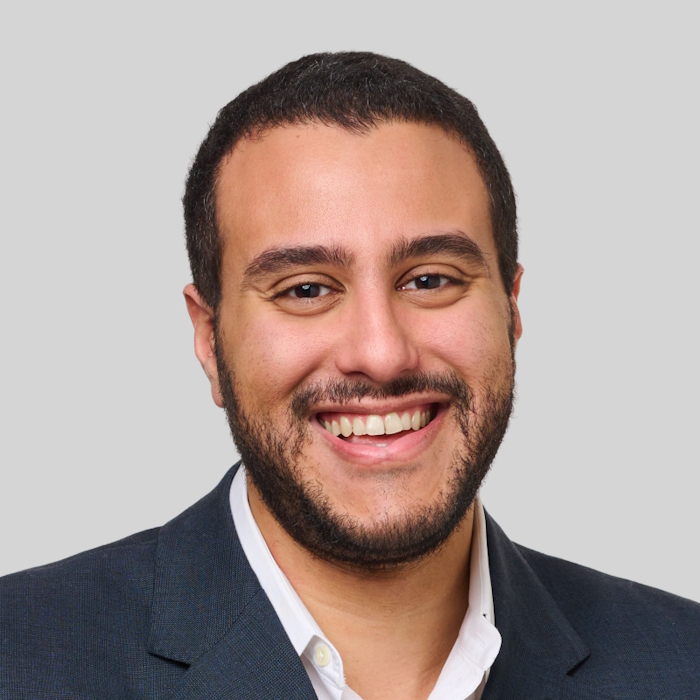
Professor Omar Abudayyeh
Omar Abudayyeh, PhD, is Assistant Professor at Harvard Medical School, Investigator at Brigham and Women’s Hospital, and Director of Gene Editing at the Mass General Brigham Gene and Cell Therapy Institute. He is also affiliated with Harvard University’s Department of Stem Cell and Regenerative Biology.
Omar codirects the Abudayyeh-Gootenberg Lab with Jonathan Gootenberg, a partnership that began in an MIT classroom in 2010 and has since produced a series of widely adopted molecular technologies. The lab builds programmable tools for biology by combining natural biological systems, mechanism-inspired design, and machine learning, with the aim of controlling genomes, transcriptomes, and cells.
Its four research directions are engineering natural programmable systems, studying cellular aging and rejuvenation, applying artificial intelligence to biological data, and investigating cellular secretomes and intercellular communication.
In 2025, the lab introduced STITCHR, a retrotransposon-derived editing system that installs changes ranging from a single base to 12.7 kilobases without leaving a scar at the insertion site. Read Reprogramming site-specific retrotransposon activity to new DNA sites, published in Nature with Omar as a corresponding author. Announcing the work, he noted that “CRISPR can’t target every location in the genome, and it can’t fix the thousands of mutations present in diseases like cystic fibrosis.” Read New gene editing tool shows promise for treating diseases with multiple mutations.
The lab’s earlier integration platform, PASTE — Programmable Addition via Site-specific Targeting Elements — pairs CRISPR-directed targeting with serine integrases to insert multi-kilobase sequences without double-strand breaks. Read Drag-and-drop genome insertion of large sequences without double-strand DNA cleavage using CRISPR-directed integrases in Nature Biotechnology and the accompanying method, Precise kilobase-scale genomic insertions in mammalian cells using PASTE, in Nature Protocols.
Omar’s artificial intelligence work centers on protein engineering. EVOLVEpro, a few-shot active learning framework that couples protein language models with activity predictors, improving the function of dozens of proteins by as much as several hundredfold. Read Rapid in silico directed evolution by a protein language model with EVOLVEpro. He and Gootenberg set out the broader argument for this approach in Programmable biology through artificial intelligence: from nucleic acids to proteins to cells, published in Nature Methods in 2024.
Aging and rejuvenation form the lab’s second major thrust. Omar contributed to Immune aging biomarkers for clinical trials, a 2026 Nature Medicine perspective written with our Luigi Ferrucci and our Chiara Herzog, and he works alongside our Vadim N. Gladyshev on multimodal, organ- and cell-resolved measures of biological aging intended to surface longevity interventions. He presented this line of work at the Aging Research and Drug Discovery meeting in Copenhagen.
In 2025, the Rett Syndrome Research Trust awarded the lab $858,000 to develop RNA trans-splicing as a mutation-agnostic treatment for Rett syndrome. “Instead of treating each of the individual mutations that can cause Rett syndrome, we’re hoping to replace parts or even the entire gene with a single treatment,” Omar explained.
He has translated much of this research into companies. In 2018, he cofounded Sherlock Biosciences, which built diagnostics on the CRISPR detection chemistry he coinvented and in May 2020, received the first FDA Emergency Use Authorization granted to a CRISPR-based test, for SARS-CoV-2. Read Sherlock Biosciences CRISPR SARS-CoV-2 Diagnostic Test Gets FDA Emergency Use Authorization.
Sherlock Biosciences was acquired by OraSure Technologies in December 2024. Between 2020 and 2024, he was a Cofounder of Proof Diagnostics, whose OMEGA libraries of compact, RNA-programmable non-Cas enzymes were acquired by Ginkgo Bioworks in February 2024. In 2021, he cofounded Tome Biosciences, which emerged from stealth in December 2023 with $213 million in financing to commercialize programmable genomic integration based on the PASTE platform licensed from MIT.
From 2014 to 2019, Omar conducted his doctoral and postdoctoral research in Feng Zhang’s laboratory at the Broad Institute of MIT and Harvard, where he was a coauthor on the papers that defined several of the field’s core tools. These include Cpf1 is a single RNA-guided endonuclease of a class 2 CRISPR-Cas system, C2c2 is a single-component programmable RNA-guided RNA-targeting CRISPR effector, and Nucleic acid detection with CRISPR-Cas13a/C2c2, the 2017 Science paper introducing SHERLOCK.
The RNA-targeting discovery drew wide coverage, including Scientists Find Form of Crispr Gene Editing With New Capabilities in The New York Times and New CRISPR system for targeting RNA from the McGovern Institute for Brain Research, where Omar said, “C2c2’s greatest impact may be made on our understanding of the role of RNA in disease and cellular function.”
Between 2019 and 2023, he was a McGovern Institute Fellow at MIT, running an independent group years ahead of a conventional faculty appointment. During that period his team characterized Cas7-11, a single-protein effector drawn from class 1 CRISPR systems that cleaves RNA without the collateral activity and toxicity seen in comparable tools. Read Programmable RNA targeting with the single-protein CRISPR effector Cas7-11 and Convenience-sized RNA editing, on the compact Cas7-11S variant engineered to fit a single viral vector.
Omar earned his BSc in Mechanical Engineering and Biological Engineering from MIT in 2012, where he was a Barry M. Goldwater Scholar and a Henry Ford II Scholar. He entered the MD/PhD program at Harvard Medical School through the Harvard-MIT Program in Health Sciences and Technology in 2012 and was awarded his PhD in Medical Engineering and Medical Physics in September 2018, completing two years of medical training before placing the MD on hold to pursue independent research.
His graduate work was supported by a National Science Foundation Graduate Research Fellowship, a National Defense Science and Engineering Graduate Fellowship, and an NIH F30 National Research Service Award. Earlier, between 2012 and 2013, he was Cofounder and VP of Engineering at Modalyst, an online wholesale marketplace for independent fashion designers.
His recognitions include selection as a 2013 Paul and Daisy Soros Fellow, Forbes 30 Under 30 in healthcare in 2018, MIT Technology Review Innovators Under 35 in 2020 for work on CRISPR-based home testing, designation as a Bloomberg New Economy Catalyst in 2022, and selection with Gootenberg as one of the two inaugural Termeer Scholars that same year. He has delivered invited seminars including the Butler Seminar kick-off at Princeton University’s Department of Molecular Biology.
Born in Raleigh, North Carolina and raised in Kalamazoo, Michigan, Omar is the son of Palestinian and Jordanian immigrants who arrived in the United States in 1985 and became engineering professors. Read Not On My Resume: Omar Abudayyeh and A Jewish American and a Palestinian American are tackling science’s toughest challenges.
Visit his personal website, lab website, Harvard Medical School profile, Foresight Institute profile, LinkedIn profile, and ResearchGate profile. Follow him on Facebook and X.