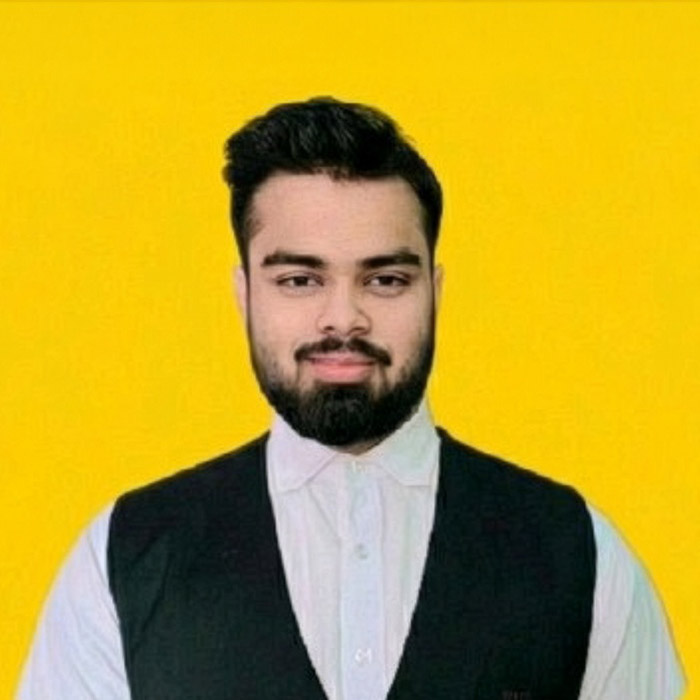
Yug Raman Srivastava
Yug Raman Srivastava is a B.A. LL.B. (Hons.) candidate at Rajiv Gandhi National University of Law, Patiala (RGNUL), Founder and CEO of YUGALITY, and an incoming intern at Karanjawala & Co. Advocates in New Delhi.
He is an early-career legal researcher working at the intersection of space law, aviation law, cyber jurisprudence, and Indian constitutional and tax law, with a growing international record of peer-reviewed publications and invited conference presentations across the United States, Australia, Türkiye, Sri Lanka, Japan, and Europe.
Yug is a registered member of the International Institute of Space Law (IISL) Expert Initiative on Article XI of the Outer Space Treaty, contributing to the collaborative drafting of a Conference Room Paper for submission to the 65th session of the UN Committee on the Peaceful Uses of Outer Space (COPUOS) Legal Subcommittee in 2026.
He is also a member of the Space Law & Policy Project Group at the Space Generation Advisory Council (SGAC), the global youth network that holds permanent observer status at COPUOS, where he coordinates research teams, approves research themes, and liaises with SGAC central leadership for the 2025–2026 cycle.
In April 2026, Yug joined Air India Limited as a Legal Ambassador on its campus programme, representing the airline on strategic outreach and brand engagement initiatives at RGNUL. Since November 2024, he has served as an Editorial Board Member at Think India’s Punjab Chapter, the national student forum for premier Indian institutes, where he edits and curates articles on emerging legal trends for the organisation’s quarterly publication.
Yug founded YUGALITY in March 2025 as a legal-technology venture focused on efficiency, accessibility, and structured growth in the delivery of professional legal services. Yug previously served as a Research Assistant at Astrodottir International, the space-sustainability consultancy founded by Dr. Heather Katharine Allansdottir.
Yug’s scholarly output spans more than a dozen articles in Indian and international journals. His paper with Heather Allansdottir, Temporal Sovereignty: Juridical Plurality and the Ontology of Time Beyond Earth, appears in the Fall 2025 issue of the Journal of Space Philosophy published by the Kepler Space Institute, examining how Martian sols, lunar phases, and relativistic velocities fracture the monolithic timeline that underpins terrestrial contract and constitutional law.
With Ranjan Kumar Srivastava, he coauthored Militarisation of Space: Reconciling Anti-Satellite Testing with the Outer Space Treaty Framework, the space law journal published by the West Bengal National University of Juridical Sciences (NUJS), analysing Article IV and Article IX loopholes illuminated by India’s 2019 Mission Shakti anti-satellite test.
Yug has published further space-law work in the Space Court Foundation’s Student Space Law Journal — including Modernizing the Outer Space Treaty: Article IX and the Legal Governance of Kinetic Anti-Satellite Activities (April 2026) — and in the International Journal of Space Law and Policy, both tackling Article IX and kinetic anti-satellite weaponry.
Yug’s terrestrial legal scholarship is equally prolific. His case commentary From Consent to Control: CJEU’s Ruling in Meta Platforms v Bundeskartellamt was published as a Cyber Jurisprudence International Initiative (CyJurII) Scholar contribution, examining the CJEU’s landmark fusion of GDPR enforcement and competition law.
With Raman Nagpal, he coauthored Complexities of Alcohol Taxation in India: A Constitutional and Judicial Analysis in Volume III of the HPNLU Journal of Tax Law, the annual double-blind peer-reviewed journal of the Centre for Business Law and Economics at Himachal Pradesh National Law University, Shimla.
Additional contributions include Neobanks in India: A Digital Revolution in Banking for the Centre for Study and Research in Intellectual Property Rights at the National University of Study and Research in Law, Ranchi (NUSRL), and Waqf Board: Changes Board in the Journal of Legal Research and Juridical Sciences, tracing the socio-legal trajectory of the Waqf Amendment Bill 2024 across constitutional and religious-rights dimensions.
He has also published A Jurisprudential Exegesis of Menstrual Accommodation in India: Re-Characterising Physiological Inevitability as a Constitutional Imperative in the Indian Journal of Law and Legal Research, Implementation of the Bharatiya Vayuyan Adhiniyam, 2024: Modernizing India’s Colonial-Era Aviation Framework at the Center for Policies, Laws and Agenda of NUSRL, and Enhancing MSME Innovations Through Utility Models in the Scopus-indexed Educational Administration: Theory and Practice.
Yug’s international conference record is unusually active for a second-year law student. He presented Myco-Architecture for Martian Settlements as a Top Presenter at the National Space Society Space Settlement Summit 2025 in Orlando, Florida, exploring fungal biocomposites as self-generative, radiation-shielding materials for in-situ resource utilisation in extraterrestrial habitats.
He was selected as the only delegate from India to the 3rd Middle East Space Generation Workshop at Middle East Technical University in Ankara, Türkiye in December 2025, and was a finalist in the CSCF Competition at the 23rd Space Generation Congress in Sydney in September 2025. He presented A Cooperative Framework for Spectrum Management in Sustainable Space-Based Solar Power Systems at the 24th Australian Space Research Conference hosted at Monash University in Melbourne in October 2025.
He will deliver a presentation on fungal biocomposites and in-situ resource utilisation on the Mars Track at the National Space Society’s International Space Development Conference 2026 in Washington, D.C.
Other invited appearances include the ETLTC–ACM Chapter International Conference in Japan in November 2025, where he presented Utilising Artificial Intelligence and Remote Sensing to Predict Flooding in Real-Time and Address Climate Resilience Policy in South Asia, the Global Peace Summit Paris 2026, and an international conference on Indian tax reform at HPNLU Shimla.
Yug’s legislative and policy research has reached UN-level documentation. As a researcher with the Centre for Advanced Studies in Cyber Law and Artificial Intelligence (CASCA) at RGNUL, he contributed to a submission on Indigenous Peoples’ Right to Data that was cited in the UN OHCHR draft report for the 18th Session of the Expert Mechanism on the Rights of Indigenous Peoples, subsequently published as A/HRC/60/66.
He has contributed research to Indian aviation policy submissions to the Directorate General of Civil Aviation, including work on the Rules for the Protection of Interests in Aircraft Objects (September–October 2025) — where he proposed a fully automated, API-integrated, and blockchain-based digital registry for aircraft interests aligned with the Cape Town Convention — the Aircraft (Carriage of Dangerous Goods) Rules (July 2025), the Civil Aviation Requirements Compliance Review (March–April 2025), and the ITSO Legal Gaps and Reform Proposals in Indian Aviation (April–May 2025).
He has also contributed to the Digital India Bill research at CASCA and to the National Sports Governance Bill 2024 through the Centre for Excellence in Sports and Entertainment Laws at RGNUL, and served as Policy Analyst on Labour Migration, Business and Human Rights. Yug earned a score of 88.25 out of 120 on the Common Law Admission Test (CLAT) 2024, placing him among top-performing candidates nationwide and securing admission to RGNUL.
He is on track to complete his B.A. LL.B. (Hons.) in June 2029. He completed his senior secondary education at St. Michael’s High School, India, under the CBSE board with a 2024 grade of 83 percent, and his matriculation at Don Bosco Academy, Patna, under the ICSE board with a 2022 grade of 93.8 percent, where he was First Runner-Up at the National Debate Competition of the Geological Survey of India and Ministry of Mines in 2022 and 2nd Runner-Up in the District Elocution Competition of the Rotary Club in 2021.
At RGNUL, Yug is a member of the RGNUL Financial and Mercantile Law Review, the Centre for Advanced Studies in Cyber Law and Artificial Intelligence (CASCA), the Centre for Advanced Studies in Labor Welfare, the Centre for Excellence in Sports and Entertainment Laws, the Student Alumni Cell, and the Punjab Chapters of Think India and Increasing Diversity by Increasing Access to Legal Education (IDIA). He volunteered with TEDxRGNUL 5.0 and with the Moot Court Committee of RGNUL in August 2024.
He is based in New Delhi, is fluent in English and a native speaker of Hindi, and publishes regularly under the #yugwrites tag on LinkedIn.
Visit his LinkedIn profile.