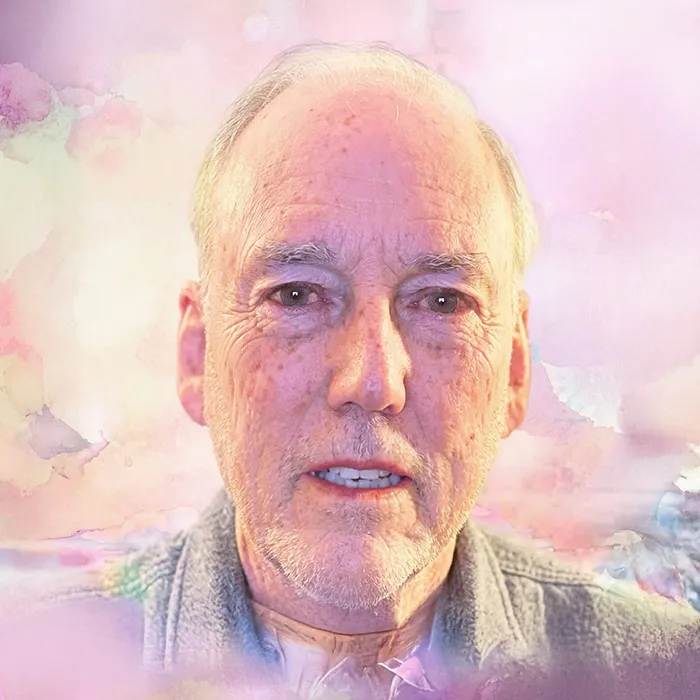
Professor Timothy E. Dolan
Timothy E. Dolan, PhD is the Principal of Policy Foresight, a public policy foresight consultancy, and Faculty at DMS Foresight Academy. He is a Futurist, Political Scientist, and Policy Foresight Specialist with extensive international and cross-cultural competencies in course development, long-term policy analysis, and anticipatory governance.
Timothy is an alumnus of the Manoa School of Futures Studies at the University of Hawaiʻi at Mānoa and a contemporary of such prominent futurists as Sohail Inayatullah, Wendy Schultz, and Chris Jones. He is the author of over 35 articles and book chapters on anticipatory public policy, with his publications accumulating over 100 citations and 14,000 reads on ResearchGate.
His current research interests are in the futures of nation states, higher education, and administrative law, conducted using both conventional and proprietary forecasting techniques. Timothy serves on the Editorial Board of the Journal of Futures Studies, a leading international publication in the foresight and futures studies community. Through this role, he contributes to the scholarly direction of futures research alongside distinguished futurists including Jim Dator, Peter Bishop, and Ivana Milojević.
His published works span a wide range of topics at the intersection of political science, foresight methodology, e-governance, and bioethics. He published Framing Indeterminacy: Dialectical Analysis and Futures Studies, in the World Futures Review, in which he explores the dialectical process as an outcome framing method for futures studies, connecting it with emerging issues analysis and the futures wheel. Read Science Fiction as Moral Allegory and Revisiting Adhocracy: From Rhetorical Revisionism to Smart Mobs.
Timothy contributed a chapter titled A Review of Leadership Theories and Possible New Directions to the book Leadership for the Future: Lessons from the Past, Current Approaches, and Future Insights, published in 2021, in which twenty authors from around the globe presented multi-disciplinary and multi-cultural perspectives on futures-oriented leadership. He also contributed to The City as Commons: a Policy Reader, a volume bringing together 34 contributions exploring policy options and strategies for urban development as common pool resources.
His current project is a book on the biotech revolution and market-driven evolution. Timothy has designed numerous graduate-level courses on various topics relating to foresight and futures studies. Previously, Timothy was Professor and Public Affairs Program Director at ADA University in Baku, Azerbaijan, where he oversaw the development of the graduate public affairs program at what is considered the most elite institution of higher learning in the country.
During his tenure at ADA University, he directed numerous projects including a feasibility study on a natural gas spur to the Balkan nations as part of SOCAR’s European gas line project, and a study on the status of Afghan refugee children’s education in Baku. He taught courses in negotiation and mediation, international systems and global governance, and power and society.
Read Heaven is High and the Emperor is Far Away: The Hong Kong/China Crisis in the Nation-State System Context, his essay on Azerbaijan’s future as a resource-dependent nation facing fossil fuel depletion.
Timothy was a Faculty Member in International Studies and Public Policy at the American University of Kurdistan in Duhok, Iraq, where he taught courses in negotiation and mediation, international systems and global governance, and power and society.
Between 2011 and 2012, Timothy was Professor at the School of Global Affairs and Public Policy at the American University in Cairo, where he taught public administration and public policy. His time in Egypt during a period of historic political transformation informed his research on e-government and institutional reform in the Middle East.
Read Potemkin Portals or the Real Revolution? The State of E-Government in Egypt, published in the Digest of Middle East Studies, in which he applied a six-dimensional assessment tool to evaluate the state of Egyptian e-government service implementation.
Timothy was also Professor of Public Administration and Policy at the Catholic University of Korea in Seoul, South Korea. During his time there, he presented research on conflict resolution and stakeholder consultation at a conference organized by the Korea Institute of Public Administration (KIPA), where he discussed the case study of the Honolulu Convention Center site selection and the dynamics of rational choice and politics in collision. Read Rising social conflict sapping national progress. His experience in South Korea also informed his scenario work on Korean unification, which was later published in the Journal of Futures Studies.
Before ADA University, Timothy was Professor and MPA Program Director at Texas A&M International University in Laredo, Texas. His research during this period included work on e-government strategic development frameworks. He published A Six-Dimensional Strategic Development Tool for e-Government Effectiveness, a chapter in the Springer volume Government e-Strategic Planning and Management, assessing the homepage sites of 25 U.S. states.
Timothy earned his PhD in Political Science (Public Policy/Futures) from the University of Hawaiʻi at Mānoa in 1991, where he studied under pioneer futurist Jim Dator at the Hawaii Research Center for Futures Studies. He also earned his M.A. in Political Science with a focus on International Relations and Methodology from the University of Hawaiʻi at Mānoa.
The Center, established by the Hawaii State Legislature in 1971, is one of the world’s most renowned institutions for futures research, consulting, and education. His doctoral work there laid the foundation for a career spanning over three decades at the intersection of political science, futures studies, and anticipatory public policy.
Timothy’s scholarly contributions also extend to scenario writing and its application in policy analysis. In his work on Korean unification scenarios, Introduction: A Primer on the Problem Korean Unification, he uses screenplay as a scenario vehicle to unpack integration policy options, demonstrating the capacity of expertly informed scenarios to provide awareness of potential wild card contingencies. He has also written on the intersections of neuroscience and public policy, exploring the implications of informed consent in futures research.
Read A Transformation Journey to Creative and Alternative Planetary Futures and Who Are Us Anyway? Dr. Strange Gets Weird.
Listen to him on the Future Intelligent Leadership Podcast, where he discusses his work on policy foresight and leadership theory.
Visit his ResearchGate profile, Google Scholar page, Academia page, DMS Academy faculty page, and his Medium blog.