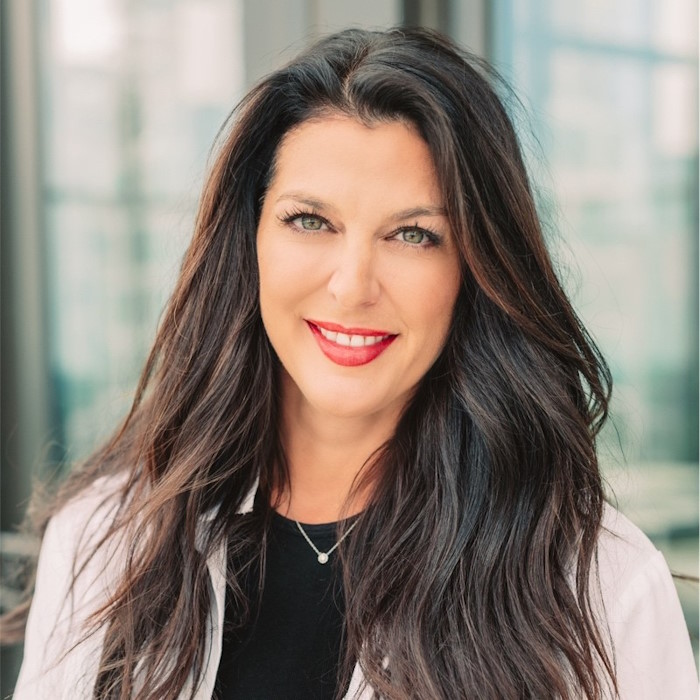
Dr. Louise Hecker
Louise Hecker, PhD is an Associate Professor at Baylor College of Medicine and the Founder and Chief Scientific Officer at Fibronox with over 15 years of experience in regenerative biology, fibrosis research, and age-related disease therapeutics. She is a world-leading expert on Nox4 and Nrf2, having made numerous seminal discoveries in understanding how oxidative stress contributes to tissue fibrosis and aging.
Her groundbreaking research has revolutionized the understanding of fibrotic diseases and recently expanded into psychedelic medicine, where her team discovered that psilocybin extends cellular lifespan by up to 57% and improves survival in aged mice. As an academic entrepreneur, she has founded five companies and secured approximately $15 million in research funding as Principal Investigator while holding around 20 patent applications. Read Psilocybin treatment extends cellular lifespan and improves survival of aged mice.
Louise currently serves as an Associate Professor in the Department of Medicine at Baylor College of Medicine since December 2024 and maintains her position as Founder and Chief Scientific Officer of Fibronox, a pharmaceutical startup she established in November 2017 to develop novel Nox4 inhibitors for treating fibrotic diseases.
She also founded PreClinico in March 2023, a contract research organization providing highly specialized preclinical efficacy testing services for pulmonary diseases. Her recent pioneering research on psilocybin’s anti-aging properties, published in July 2025, demonstrated that the psychedelic compound delays cellular senescence, preserves telomere length, and extends lifespan in both human cells and aged mice, opening new frontiers in longevity medicine. Watch Psilocybin and the Fountain of Youth with Dr. Louise Hecker and read Magic mushrooms rewind aging in mice—could they do the same for humans?
Between 2020 and 2024, Louise served as Associate Professor at Emory University School of Medicine in the Division of Pulmonary, Allergy, Critical Care & Sleep Medicine, where she was named a Georgia Research Alliance Distinguished Investigator. During her tenure at Emory, she screened over 35,000 compounds to develop Nox4 inhibitors for aging-related lung diseases and established collaborative research programs with the Atlanta Department of Veterans Affairs. Her work at Emory was supported by multiple funding sources including the Imagine, Innovative, and Impact (I3) Award from the Emory School of Medicine. Read Georgia Research Alliance supporting two new scholars at Emory.
Prior to Emory, Louise was an Associate Professor of Medicine at the University of Arizona from 2014 to 2020, where she received significant recognition for her entrepreneurial and scientific achievements. In 2019, the University of Arizona’s Tech Launch Arizona named her “Inventor of the Year” and the Governor of Arizona recognized her as “Innovator of the Year” for her work developing small-molecule inhibitors targeting Nox4 through Fibronox.
During her time at Arizona, she secured a $4.4 million grant from the U.S. Department of Defense for her project “Preclinical Development of Small-Molecule Inhibitors Targeting Nox4 for Pulmonary Fibrosis.” Her team competed in and won the University of Arizona College of Medicine – Tucson’s Shark Tank competition at Research Day 2019 and was selected as one of the top 12 finalists nationally to present at Science2Startup in Cambridge, Massachusetts.
In 2009, Louise achieved a major scientific breakthrough when she and her colleagues published a landmark paper in Nature Medicine identifying the critical role of the oxidant-generating enzyme Nox4 (NADPH oxidase-4) in mediating pro-fibrotic myofibroblast activation and fibrogenic responses to lung injury, titled NADPH oxidase-4 mediates myofibroblast activation and fibrogenic responses to lung injury. This discovery has since been validated by hundreds of independent studies, establishing Nox4 as a critical mediator of tissue fibrosis in various organs including lung, kidney, blood vessels, liver, skin, skeletal muscle, and heart.
Her subsequent 2014 publication Reversal of Persistent Fibrosis in Aging by Targeting Nox4-Nrf2 Redox Imbalance in Science Translational Medicine revealed novel mechanisms by which Nox4 becomes dysfunctional in aging, demonstrating that its sustained upregulation results in age-dependent persistent fibrotic responses. This work showed that genetic and pharmacological targeting of Nox4 in aged mice could reverse established fibrosis, providing hope for treating age-associated fibrotic disorders. Read Reversal of Persistent Fibrosis in Aging by Targeting Nox4-Nrf2 Redox Imbalance.
Louise earned her PhD in Applied Physics from the University of Michigan in 2008, with her dissertation Development of Functional Bioengineered Muscle Models and a Novel Micro-Perfusion System focusing on regenerative biology after being inspired by amphibians’ ability to regenerate cardiac tissue. She completed a postdoctoral fellowship in lung injury-repair responses at Michigan from 2008 to 2009, where she led the research team that first identified Nox4’s critical role in lung fibrosis.
She earned her Master’s degree in Cell and Developmental Biology from the University of Michigan in 2007, her Master’s degree in Ecology, Evolution, and Behavior from Binghamton University in 2002, and her Bachelor’s degree in Biology from Hartwick College in 2000. During her time at Hartwick, she conducted early research on amphibian regeneration that would shape her future career trajectory. Read NOX Enzymes and Pulmonary Disease and How trematodes cause limb deformities in amphibians.
From 2009 to 2014, Louise was an Assistant Professor of Medicine at the University of Alabama at Birmingham, where she transitioned from her postdoctoral work to establishing her independent research program. It was at UAB that she became interested in understanding why normal repair processes “go awry” in aging, leading to her groundbreaking discovery that Nox4 becomes dysfunctional with age. She has also maintained a long-standing appointment as a Research Scientist at the Department of Veterans Affairs since June 2012, where she conducts research on veteran health issues related to pulmonary fibrosis and aging.
In 2011, just three years after earning her PhD, Louise founded her first company, Regenerative Solutions, serving as Chief Scientific Officer. This contract research organization provides highly specialized preclinical testing services for biotechnology and pharmaceutical companies developing drug platforms for pulmonary fibrosis. Through her entrepreneurial ventures, she has successfully bridged the gap between academic research and clinical application, with several of her approximately 20 patent applications being licensed to companies.
Her startup, Fibronox, has developed the first highly selective Nox4 small-molecule inhibitors, addressing a critical unmet need after hundreds of failed clinical trials for fibrotic diseases.
Louise has received numerous awards and recognitions throughout her career, including the EmpowHER Award, the Wick 40 Under 40 Award from Hartwick College, and winner of the Science2Startup business pitch competition in Cambridge, Massachusetts. She has been funded by many prestigious organizations, including the National Institutes of Health, U.S. Department of Defense, U.S. Department of Veterans Affairs, and the BIO5 Institute. Her research has been featured in major media outlets, including high-impact journals, with over 96 publications cited more than 3,597 times.
Louise’s research interests extend beyond fibrosis to include acute respiratory distress syndrome (ARDS), Duchenne muscular dystrophy, and, most recently, the intersection of psychedelic medicine and aging. Her 2025 study on psilocybin represents a paradigm shift in understanding how psychedelics might influence systemic aging processes beyond their neurological effects.
The research showed that psilocybin treatment delayed cellular senescence, preserved telomere length, reduced oxidative stress, and increased expression of SIRT1, a protein associated with longevity. This work has opened new avenues for developing “geroprotective” agents that could revolutionize healthy aging interventions. Read Psilocybin delays aging, extends lifespan, new Emory study suggests.
Louise currently resides in Atlanta, Georgia, where she continues her research while leading multiple companies focused on translating scientific discoveries into clinical therapies. She is recognized as an outside-the-box scientist who believes that unlocking the secrets of how the repair process becomes less efficient in aging will lead to novel treatments that could delay the onset of and/or reverse age-associated disease.
Visit her LinkedIn profile, ResearchGate profile, and Emory Faculty Page. Follow her on X.