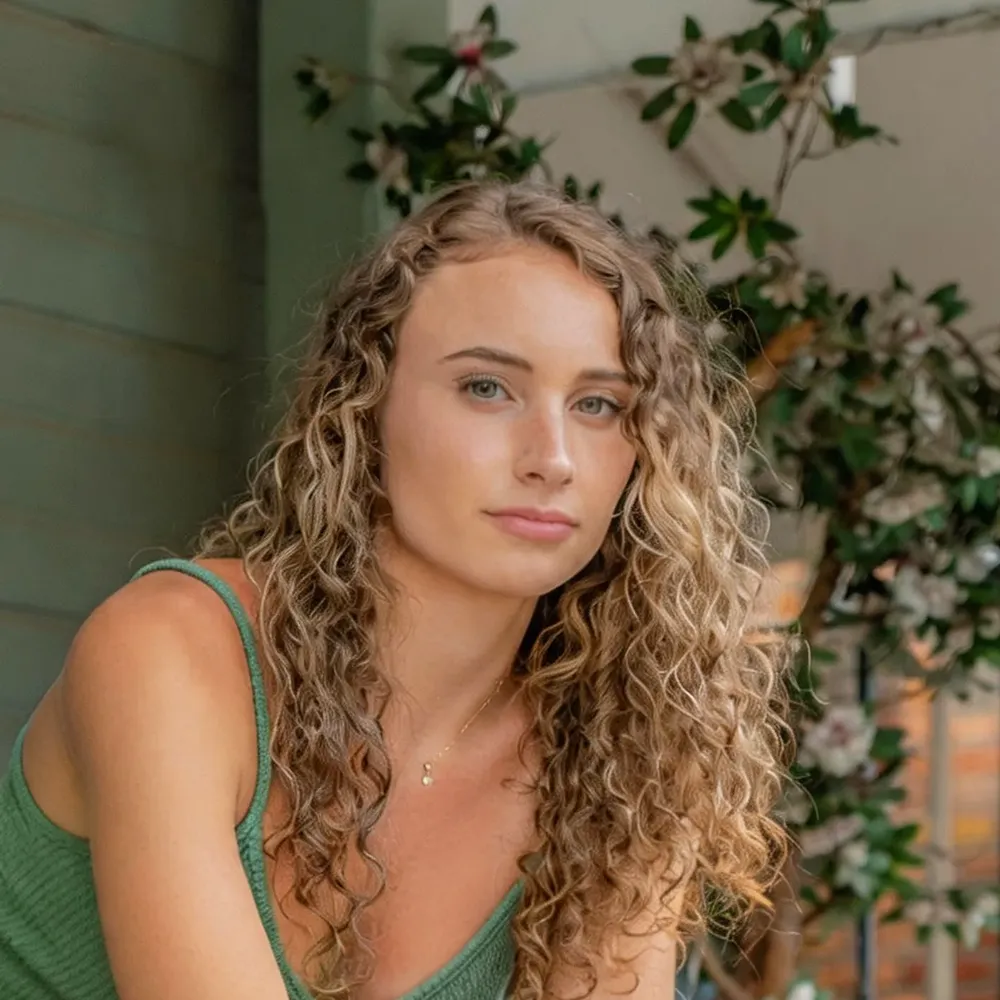
Daliah Bibas, MSc
Daliah Bibas, MSc is a Doctoral Scholar in Philosophy & Moral Sciences at Vrije Universiteit Brussel (VUB), a PhD Researcher at the Centre Leo Apostel for Transdisciplinary Research (CLEA), an international Research Affiliate of the SETI Post-Detection Hub at the University of St Andrews, and an Affiliated Scholar with the Evo-Devo Universe / Evo-Devo Institute.
Her interdisciplinary work sits at the intersection of astrobiology, the Search for Extraterrestrial Intelligence (SETI), AI ethics, and futures studies, with a particular focus on how uncertainty is communicated, how risk is handled, and how decisions are made under conditions of deep unknowns.
As a PhD student under the supervision of Professor Cornelis Schilt and Dr. Clément Vidal, Daliah is developing a multidimensional impact model to examine the societal, social, and psychological effects of the discovery of non-human intelligence, including extraterrestrial and artificial general intelligences. Read Lessons from the Past: Responsible Science and Astrobiology.
As a Research Affiliate of the SETI Post-Detection Hub since November 2024, Daliah has collaborated with an international network of 46+ researchers developing collaborative coordination and anticipatory capacities in the event of the discovery of life beyond Earth.
The Hub is an initiative of the UK SETI Research Network (UKSRN) and is jointly hosted by the St Andrews Centre for Exoplanet Science, the Centre for Global Law and Governance, the Durham Law School, and the Jodrell Bank Centre for Astrophysics.
She is a coauthor of the white paper SETI Post-Detection Futures: Directions for Technosignature Research and Readiness. submitted to inform the NASA Decadal Astrobiology Research and Exploration Strategy (NASA-DARES 2025), and a coauthor of the 2025 poster The SETI Post-Detection Hub: Paving the Way for Post-Detection Research Culture, presented at the Penn State SETI Symposium.
Read SETI Post-Detection Futures: Directions for Technosignature Research and Readiness and Scientists Are Planning for Life After Finding Aliens.
At the Centre Leo Apostel, a deeply interdisciplinary research center that works on complexity, systems, evolution, cognition, and emergence, Daliah pursues her doctoral research in the Doctor of Philosophy in Philosophy and Moral Sciences program with a Non-Human Intelligence Specialization.
Her recent work includes coauthoring the chapter Responsibility before Discovery: A Proactive Approach to Prepare for the Discovery of Extraterrestrial Life with Clément Vidal, forthcoming in Responsibility in Space edited by G. Ünüvar, R. Gonzalez, and A. Bower (Routledge), and the peer-reviewed paper Life in the Clouds of Venus: The Phosphine Debate and its Scientific, Social, and Psychological Impact with Vidal, published in the Proceedings of the International Astronomical Union in 2025. She also presented the poster What is Intelligence? Building a Shared Definition for SETI and Beyond at the 2025 PSETI Symposium in State College, Pennsylvania.
From September 2023 to August 2024, Daliah served as Researcher-Programmer in Astronomy & Space Sciences at the Ontario Science Centre in Toronto, where she conceptualized, researched, developed, and enhanced exhibits, digital content, and programs for the public, working collaboratively with interdisciplinary teams while serving as a scientific resource and media representative. During this period, she earned the Information and Communications Standards Certification and contributed extensively to public coverage of the April 8, 2024 Total Solar Eclipse.
Read Feel your place in the cosmos during Monday’s solar eclipse in Toronto, Photographing the total solar eclipse: Is it safe to use your phone?. Here’s the best way to get a glimpse of the solar eclipse in Ontario this weekend, When the eclipse will peak in your community, Best meteor shower of the year can be seen from Toronto Wednesday night, and Ontario task force aims to ensure Canadians can safely view total solar eclipse.
She has been an active speaker on the international SETI and astrobiology circuit. Recent presentations include Preparing for Contact with Non-Human Intelligence at the Social and Ethical Frontiers in Space Conference in Kiruna, Sweden in 2024; Responsibility Before Discovery: A Proactive Approach to Prepare Discovery for the Academy of International Affairs NRW in Bonn, Germany in 2024; and the workshop What is intelligence? Building a shared definition for SETI and beyond at the Penn State SETI Symposium in Pennsylvania. She has also been featured in Grad Student Highlights: Daliah Raquel Bibas, Western University.
Daliah is a Doctoral Scholar of Philosophy in Philosophy and Moral Sciences with a Non-Human Intelligence Specialization at Vrije Universiteit Brussel, starting in 2024, where she serves as a Centre Leo Apostel Researcher.
She earned her Master of Science in Geology, Planetary Sciences, & Space Exploration with an Astrobiology Specialization from the University of Western Ontario in 2023, with her thesis titled Thermal and Fluid Evolution of the Clearwater West Impact-Generated Hydrothermal System, Quebec, and Associated Astrobiological Implications, conducted at the Earth and Planetary Materials Analysis Laboratory. She earned her Bachelor of Science Double Honours in Biology & Medical Sciences from the University of Western Ontario in 2021.
During her MSc, she received the David J. Stenason Global Opportunities Award in 2022, the Western Graduate Research Scholarship in 2021, and the Foundation for International Mobility & Engagement Certification from the Institute for Earth and Space Exploration (Western Space) in 2022.
From May to August 2021, she was a Summer Research Intern at the Institute for Earth and Space Exploration under the supervision of Dr. Gordon Osinski, conducting research on a comparative study of impact melts on the Earth and Moon and on the role of meteorite impacts in the origin of life.
She also served as Graduate Teaching Assistant for courses including Earth, Art, and Culture Sciences, Environmental Science and Sustainability, and Natural Science of Environmental Problems. Earlier in her career, she worked as Animal Care Attendant at Western University (2019), Administrator in Global Medical Affairs at Apotex (2018) supporting the Pharmacovigilance and Opioid Risk Management Plan, Veterinary Assistant at Canyon Hill Animal Hospital (2016–2017), and as a private tutor for grades 1 to 12 between 2010 and 2017.
Daliah’s published research includes contributions to the Lunar and Planetary Science Conference on In Situ X-Ray Diffraction (ISXRD) to Explore Mineralogy and Geology of Mars in 2024, and to the Geological Association of Canada – Mineralogical Association of Canada on the same topic in 2021.
She has authored a series of public-facing essays on Medium, including Human Nature: Intelligence, Life Beyond Earth: The Search for Extraterrestrial Intelligence (SETI), Life Beyond Earth: The Kardashev Scale, and Space Exploration: Why It Matters.
She served as Vice President of the Western Graduate Geosciences Society between August 2022 and September 2023, Project Liaison for the Western Space Graduate Council between September 2021 and September 2023, Vice President of Academic Outreach for the Space Society of London, and Vice President of Internal Events for Women in Science, both between 2020 and 2021.
She has been a member of the Space Generation Advisory Council since February 2026 and a member of the Cosmic Footprint Society since January 2026. Daliah is fluent in English (native) and French (full professional proficiency).
She is passionate about science communication, has organized and led several panels on the philosophy of astrobiology, and is dedicated to making complex ideas accessible to a wider audience. Read her Contributions on Medium.
Visit her Personal Homepage, LinkedIn profile, CLEA profile, VUB Research Portal, Evo-Devo Universe profile, SETI Post-Detection Hub Researchers page, and her ResearchGate profile. Follow her on Facebook and X.