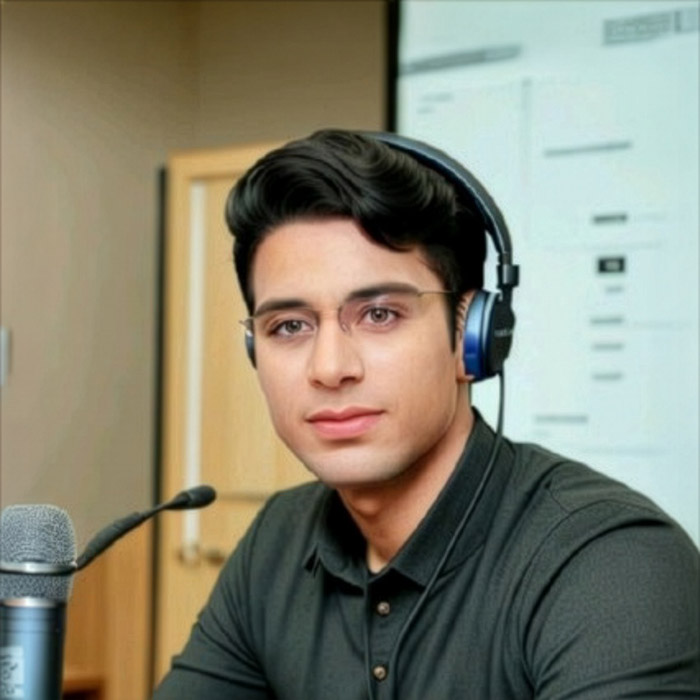
Khawaja Hammad (Maddy) Akbar, APF
Khawaja Hammad (Maddy) Akbar, APF, often known in the futurist community as Maddy, works where the future quietly takes shape at the intersection of policy, imagination, and power. A futurist by practice and instinct, he maps uncertainty across the Global South, translating complexity into strategy for governments, think tanks, and institutions.
Maddy’s work moves between boardrooms, classrooms, and global networks, designing scenarios, challenging inherited narratives, and building tools that outlive conversations. From training senior officials to co-creating decolonized futures frameworks, he treats foresight as both method and responsibility, questioning not just what comes next, but who gets to shape it.
A credentialed member of the Association of Professional Futurists (APF) since 2024, Maddy practices strategic foresight across academic, governmental, and civil-society settings. He serves as the Pakistan Node Member of The Millennium Project, a global participatory think tank of futurists, scholars, scientists, and policy makers that has assessed the future of humanity since 1996, and as a Decolonization Strategist at Future Resources, where he implements inclusive foresight strategies that challenge systemic biases and reshape future narratives.
Since 2025, he has been a Co-Teacher at Laurea University of Applied Sciences in Vantaa, Finland, delivering the MBA PRO course in Future Studies and Foresight Methods (5 ECTS), where he mentors students in applied foresight projects and integrates foresight applications into business and governance frameworks. He is also a Member of the Global South Futures Community and, since 2025, a Fellow at Mangroves — a Collaboratory in Surging Life, a nonprofit collaboratory that convenes thinkers across disciplines to engage with questions of life, growth, and more-than-human futures.
Through the Global South Futures Community, Maddy is coordinating a Special Issue of World Futures Review: A Journal of Strategic Foresight titled Global South Futures: Decolonizing Foresight in, with, and through Plural Perspectives, inviting contributions from scholars, practitioners, and community voices across the Global South.
Maddy has served as Executive Director of the Council on Global Policy in Islamabad since 2021, where he has shaped policy discussions and driven strategic initiatives that bring diverse stakeholders together to address critical global issues. His futures research engages directly with emerging global challenges, particularly the governance of artificial general intelligence (AGI). He is a regular Op-Ed Contributor to two of Pakistan’s prominent English-language newspapers — Pakistan Observer since 2022 and The Nation since 2019 — writing on geopolitics, foresight, and South Asian security dynamics. Read AGI race outpaces global governance, From fault line to frontier of hope: The Durand Line and future of regional peace, and No, Ukraine won’t be the next war theatre, but why?
Since 2023, he has also been the Co-Host of Geopolitics: Exploring Myths and Realities, a platform for analyzing geopolitical developments from Islamabad.
Between 2023 and 2024, Maddy held several roles at the Pakistan Health Parliament — a social initiative connecting future health leadership through dialogue, stakeholder engagement, and advocacy — serving as Secretary General, Secretary General of the Capital Cabinet, and Member of the Central Consultation Council, where he aligned strategic health initiatives with long-term foresight and policy goals.
In 2023, he cofounded Acmenex, a digital management and consultancy organization based in Islamabad. He also served as Information Secretary at Tehreek-e-Tarrqi-e-Kamal between 2022 and 2023. Maddy began his career as a Research Fellow at the Center for Global and Strategic Studies (CGSS) in Islamabad from 2017 to 2019, a public policy institution focused on counter-terrorism, politics, energy, education, health, justice, environment, and national and international security affairs.
He completed coursework in Geopolitics and Peace Studies at Stanford University, centered on the program Living at Nuclear Brink: Yesterday and Today.
Visit his LinkedIn profile.