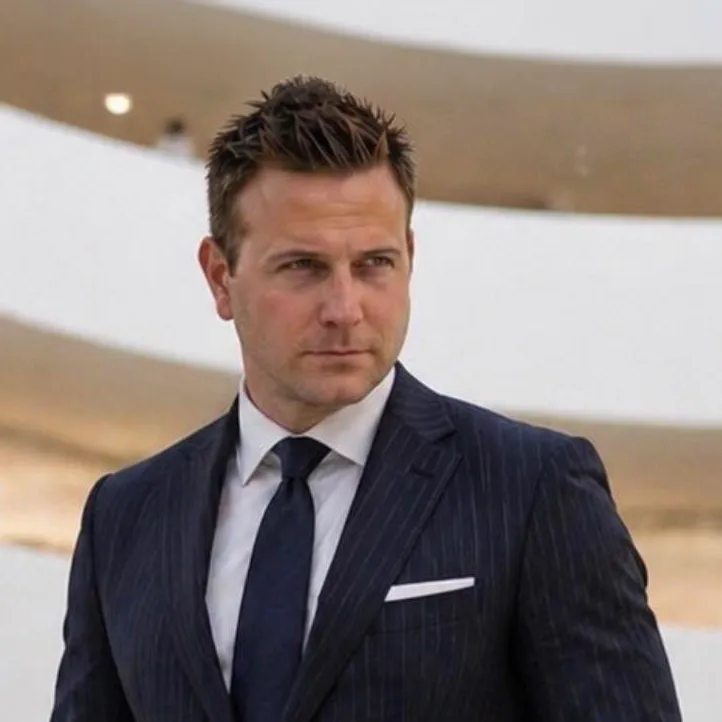
Christopher Altman
Christopher Altman is Founder and Principal Investigator of the Continuation Observatory and Chief Scientist for Quantum Technology and Artificial Intelligence at Astradyne (Astral Dynamic Networks). He is an American physicist, quantum-information scientist, artificial-intelligence researcher, and NASA-trained commercial astronaut whose work spans evolutionary neural architectures, quantum information, and evaluation methods for frontier AI.
Christopher founded the Continuation Observatory in 2026 as a live research platform for frontier AI evaluation, national security benchmarking, and continuation-risk measurement. It is built around the Unified Continuation-Interest Protocol (UCIP), a framework he developed to determine whether an advanced AI system preserves itself as a terminal objective or merely as an instrumental strategy.
UCIP encodes agent trajectories using a classically implemented quantum Boltzmann machine formalism and measures von Neumann entropy across a bipartition of hidden units, combining that signal with persistence, perturbation, and confound-rejection tests.
On gridworld agents with known ground truth, the protocol reported an entanglement-entropy gap of 0.381 between terminal and instrumental continuation objectives, a separation that classical autoencoder and principal component analysis baselines did not reproduce. Read Detecting Intrinsic and Instrumental Self-Preservation in Autonomous Agents: The Unified Continuation-Interest Protocol. He filed a corresponding United States patent application in March 2026.
Through his Frontier AI Research Lab, Christopher builds reproducible evaluation harnesses that package each research claim with baselines and falsification criteria, spanning quantum kernel methods for telemetry anomaly detection, satellite quantum key distribution security curves, and superconducting-qubit benchmarks. Read Wigner’s Friend as a Circuit: Inter-Branch Communication Witness Benchmarks on Superconducting Quantum Hardware, an IBM Quantum hardware study run on the ibm_fez backend.
Since 2019, Christopher has served as Chief Scientist for Quantum Technology and Artificial Intelligence at Astradyne, directing technical strategy, architecture assessment, and technical diligence across quantum-secure communications, secure computing, and AI-enabled technologies.
Since 2023, he has been Astronaut Lead and Scientific Advisor for anomaly detection and observational research with the VASCO Project, an international collaboration that compares historic photographic sky surveys against modern catalogues to separate genuine transient and vanishing sources from instrumental artifacts. Read Exploring nine simultaneously occurring transients on April 12th 1950.
Since 2016, he has been Cofounder and Founding Scientific Advisor of the SolarCoin Foundation, having cofounded SolarCoin and ElectriCChain, a renewable-energy data and incentive initiative linking verified solar-generation telemetry with open, distributed infrastructure.
Between 2021 and 2023, Christopher was a Scientific Research Affiliate at Harvard University, advising the Galileo Project at the Center for Astrophysics | Harvard & Smithsonian from its inception under the direction of Professor Avi Loeb, contributing scientific framing, anomaly-evaluation methodology, and the responsible interpretation of high-uncertainty observational evidence.
Between 2011 and 2022, Christopher served as Board Director, Chief Science Officer, commercial astronaut, and flight member of the Association of Spaceflight Professionals, an early professional corps focused on scientist-astronaut training and research-payload development. Selected by a panel of veteran astronauts, he completed the organization’s inaugural training program alongside Jason Reimuller, Erik Seedhouse, and Brian Shiro, including suborbital scientist training at the NASTAR Center. Read Commercial space flight: Scientists in space and Astronauts For Hire: The Emergence of a Commercial Astronaut Corps.
Between 2009 and 2013, he was Senior Research Scientist at the Pacific International Space Center for Exploration Systems, a University of Hawaiʻi-associated lunar-analog research and astronaut field-training program, where he was principal investigator for a DARPA Quiness proposal developing an entanglement-based secure communications architecture spanning space and ground infrastructure.
Christopher’s quantum-information research began in Europe. In 2010, he held a Templeton International Research Fellowship at the Institute for Quantum Optics and Quantum Information of the Austrian Academy of Sciences, in residence at the Internationale Akademie Traunkirchen with the group of Nobel laureate Anton Zeilinger. Between 2005 and 2009, he was a graduate research fellow in applied physics at the Kavli Institute of Nanoscience at Delft University of Technology, conducting experimental work in entanglement, coherent optics, and metrology.
With Romàn R. Zapatrin and collaborators, he recast adaptive neural networks in quantum mechanical terms, treating network topology itself as a trainable variable. Read Superpositional Quantum Network Topologies, Backpropagation Training in Adaptive Quantum Networks, and Quantum State Engineering with the rf-SQUID: A Brief Introduction. He was interviewed on macroscopic quantum coherence and quantum effects in biological systems in Is Quantum Mechanics Controlling Your Thoughts?
Between 2003 and 2004, Christopher was Senior Technical Analyst for the United States Quantum Information Science and Technology Project with the Asian Technology Information Program in Tokyo, preparing national-level assessments of East Asian quantum research for American funding-agency leadership. Between 2002 and 2003, he chaired the First Committee on Disarmament and International Security at UNISCA, the United Nations International Student Conference of Amsterdam.
His committee chair report, Converging Technologies: The Future of the Global Information Society, received the 2004 RSA Information Security Award for Outstanding Achievement in Government Policy.
Christopher began his scientific career between 2000 and 2001 at Starlab, the multidisciplinary “Deep Future” research institute outside Brussels cofounded by MIT Media Lab founder Nicholas Negroponte, where he was Research Scientist and Director of the global CAM-Brain teams. He coinvented a neural-network design for FPGA-based evolutionary hardware and helped specify a cellular-automata platform that used genetic algorithms to evolve artificial neural networks.
The project’s evolutionary computing platform was recognized in the 2001 Guinness Book of World Records as the world’s most complex artificial brain, and he presented the work to policy audiences including European leaders at the French Sénat in Paris. Read The CAM-Brain Machine (CBM) and Starlab: the ‘Noah’s Ark’ of scientific research that launched 1,000 startup ideas.
Christopher earned his Bachelor’s Degree with honors in Philosophy from the Pierre Laclede Honors College at the University of Missouri–St. Louis, and pursued graduate study at the University of Amsterdam and in applied physics at Delft University of Technology. He studied in Tokyo at J. F. Oberlin University on a scholarship from the Association of International Education, Japan, a program widely described as the Japanese Fulbright.
In 2001, he was selected as one of three student fellows for the Salishan Conference on High-Speed Computing, an invitation-only meeting organized by the United States national laboratories. He received the Outstanding Young Alumni Award from the University of Missouri–St. Louis in 2007, and in 2015 was profiled in Flat World Navigation by Kim Chandler McDonald and named a Distinguished and Outstanding Alumnus of the Hive Global Leaders Program.
In 2009, Christopher was selected as a Founding Advisor and Teaching Fellow across all three technical tracks of the inaugural Graduate Studies Program at Singularity University at NASA Ames Research Center: Artificial Intelligence and Robotics (AIR), Networks and Computing Systems (NCS), and Space and Physical Sciences (SPS). He was subsequently promoted to Track Chair for Networks and Computing Systems, with lead instructional responsibility for the track. The inaugural cohort comprised 38 students selected from more than 1,200 applicants, and he collaborated with Horst Simon, Deputy Laboratory Director of Lawrence Berkeley National Laboratory (LBNL), on curriculum development and Berkeley Lab engagement.
He taught alongside track chairs Neil Jacobstein, Bob Metcalfe, Kevin Fall, and NASA astronaut Daniel T. Barry; hosted senior scientific and technology leaders including Vint Cerf, widely recognized as a father of the Internet, and George Smoot, recipient of the 2006 Nobel Prize in Physics; and brought Dharmendra Modha and Larry Smarr into the program. Watch Enernet with Bob Metcalfe.
Since 2019, he has been Chief Astronaut Technical Officer for Mars City Design, a multidisciplinary initiative developing sustainable habitat concepts for Mars, the Moon, and Earth.
Since 2021, he has served on the Global Council of Expert Advisors and as an astronaut mission specialist instructor with OASA, a space-leadership academy at the University of Hong Kong. He has also been a Scientific Advisor to the Overview Institute and to Planetary Human since 2018, and a Special Envoy for science, technology, and spaceflight with the International Human Rights Organization since 2015.
Christopher is based in the San Francisco Bay Area and speaks Dutch and Japanese. He is a solo-rated glider pilot and holds the rank of shodan in kyūdō, traditional Japanese archery.
Visit his Homepage, Frontier AI Research Lab, LinkedIn profile, professional biography, and Google Scholar page. Follow him on Facebook, Instagram, GitHub, Hugging Face, ORCiD, Bluesky, and X.