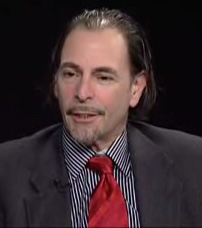
Lifeboat Foundation: How do you define synthetic biology (A-Life)?
Dr. Alan Goldstein: It is crucial to this discussion that people recognize that Synthetic Biology is not the same as Artificial Life. I have spent a great deal of time trying to explain the difference in terms that are understandable to non-technical folks.
It is much more useful, I suggest, to think in terms of life
forms:
- Natural Biological Life forms are those created by evolution without any form of molecular manipulation by Homo sapiens.
- Recombinant DNA-based biological life forms are still natural insofar as they only use nature’s tools to mix and match biological components, albeit at a much faster rate than can be achieved by evolution. This would include cell biology methods like somatic nuclear transfer and stem cell technology.
- Synthetic Biology involves the same molecules used to create natural and recombinant DNA-based life forms, but the molecules themselves (DNA, RNA, proteins, the bounding membrane of the synthetic cell, etc.) are made in the laboratory de novo (i.e. from their monomeric precursors).
- Finally, Nonbiological Life involves the introduction of molecules that have not previously been involved as essential components of living systems here on earth. We need to be very specific here because many “esoteric” elements (e.g. manganese and zinc) are essential co-factors in biological enzymes. Therefore Nonbiological Life (Animats) must be clearly defined as having significant functional units (e.g. molecules) fabricated from nonbiological materials.
The purpose of the Animat Test as presented in the article I, Nanobot is to provide an operational method for determining when the human race breaks the Carbon Barrier™ and creates the first nonbiological life form. I have termed such a life form an Animat (short for Anima materials).
LF: Can you expand a little on who you would give the A-PRIZE to?
AG: I would give the A-PRIZE to the first person or group that creates a life form that can pass the Animat Test or the first person or group providing information that leads us to the the inventor(s) of the first Animat (because, as we have discussed, many will worry that the publicity associated with creating the first nonbiological life form could be highly unfavorable).
I believe the Animat Test, as stated in I, Nanobot covers all possibilities. I don’t have the test in front of me but I believe it says something to the effect that, if all the information necessary to encode essential life cycle processes cannot be stored in DNA or RNA then the the organism or entity is an Animat. That means if a single nonbiological chemical transformation is necessary for life-cycle programming, an “Animat event” is identified. Since nanobiotechnology is about molecular engineering, this is actually the most likely scenario.
Think about it scientifically. All biological life forms we know of encode their reproductive information in DNA or RNA. Even prions must have an original gene that encodes the first protein molecule. So if even one step essential to programming the reproductive cycle cannot be encoded in DNA or RNA then we have a singularity — different from all natural life on Earth discovered or created to date.
We must put this singularity in a different category because it is, de facto, unique. Even if 999,999 out of 1,000,000 steps are encoded by DNA/RNA, that 1 step takes us through the Carbon Barrier. Just as 339.29 meters/sec is subsonic (97.1% of Mach 1 — 340.29 meters/sec — at sea level). Of course the significance of the Carbon Barrier is much greater than the Sound Barrier since is it will mark the first change in the chemical programming language of life in 3 billion years.
If even a single step in the life cycle cannot be encoded in DNA or RNA that is revolutionary! Consider that the entire field of stem cells is based on the concept of totipotency, i.e. that all the programming necessary to the life cycle is contained in the genome of a single stem cell, i.e. in DNA and/or RNA. Therefore, breaking the Carbon Barrier, even if it is only one molecule thick, will be a revolution because terrestrial biology as we define it (including Type 1 – 3 Life Forms) must — without exception — be DNA or RNA based.
So the Animat Test allows us to ask a Boolean question: Is this life form entirely biological? The answer, based on everything science has discovered to date, must be yes or no. If no, we will have identified/created a life form different from any other on Earth. If it is different from any other on Earth we need a name for it and the name I have proposed is Animat.
In fact, as explained in I, Nanobot the most likely scenario will be that the first Animat will arise as a small nonbiological component within an overwhelmingly biological system. However, if that nonbiological component is essential for the life cycle then it is essential for the life form which, in turn, means that the life form cannot be considered as biological.
But, given that this singularity in life form evolution could be as “small” as one chemical reaction if we are not watching for it very closely we will not see it! Someone may, in fact, do something much more dramatic… like make a self-perpetuating, fully functional Animat, e.g. an entity like NeoSil that self-catalyzed and reproduced without the need to associate with a biological system. But we need to watch the entire spectrum from stand-alone to one-molecule-in-a-million if we want to know when the Carbon Barrier has been broken.

Therefore, my bottom line remains, if it can pass the Animat Test, it’s an Animat. That is the moment Homo sapiens breaks through the Carbon Barrier and, whoever (or whatever group) does this or whoever (or whatever group) brings this to the world’s attention should win the A-PRIZE.
LF: Why is A-Life an existential threat?
AG: It is not my intention to come off as an alarmist but I do feel an obligation to speak with intensity about the potential dangers of nanobiotechnology (more accurately about our growing ability to engage in molecular enginneering of both living and nonliving materials).
Why? Because most scientists engaged in this work who have considered its potentially catastrophic nature have not and will probably never speak out about these dangers. Why? Some may be truly naive or simply optimistic, but many fear a public backlash, loss of funding or both. To counterbalance this, I spend more time on the “dark side” of nanobiotech than I would like. If we are going to get existential… since I work to create enabling technology in this field, either I am a bad or amoral person or I obviously do not consider developing this technology wrong or bad in any conventional sense. To the extent that I can know my own mind, I believe the latter to be the case.
But what I also believe, without question, is that the emerging ability of Homo sapiens to engineer the molecular and atomic integration of living and nonliving materials — the explicit goal of nanobiotechnology — is the most significant event in human evolution since the evolution of consciousness itself. Because when this technology matures, the result will be the creation of nonbiological life forms (Animats). The creation of Animats, in turn, will mean the end of any clear boundary between living and nonliving materials. Homo sapiens will have broken through the Carbon Barrier.
Is this an existential threat? That depends on whether one considers it essential to maintain Carbon-based biological life as the only life on the planet. The truth is that nanobiotechnology is both a gift and a threat on every possible level. Each new molecular engineering tool we develop will have multiple uses from medicine to bioweapons. I have written extensively on this topic in my series of articles for Salon.com.
What I consider most important is that society be informed of what is actually going on! Right now that is definitely not the case. The moral, ethical, and safety issues raised by nanobiotechnology are so monumental that, by comparison, stem cells and genetically engineered crops look like motherhood and apple pie. So why isn’t the public concerned? Answer, because they don’t understand what nanotechnology (much less nanobiotechnology) is really about or what it can really do. Furthermore, they will not understand until those of us who do take it upon ourselves to explain the full potential of molecular engineering applications to them.
There has never been a technology like this before. Breaking through the Carbon Barrier will be the real singularity in human evolution. For the first time in 3 billion years, we will have a true alien life form on Earth. For the first time in the history of humanity, the greatest danger of a revolutionary technology will come from its potential to create life rather than create death.
LF: You also mention that many of your colleagues understand the threat, do you think they’re ahead of the curve?
AG: Absolutely! But that is exactly the way they want it to be. They do not, repeat not, want the dangers of nanobiotechnology discussed and they do not want “the public” to understand that nanobiotechnology means the potential to engineer life forms in a way that makes rDNA look like Mom’s Apple Pie.
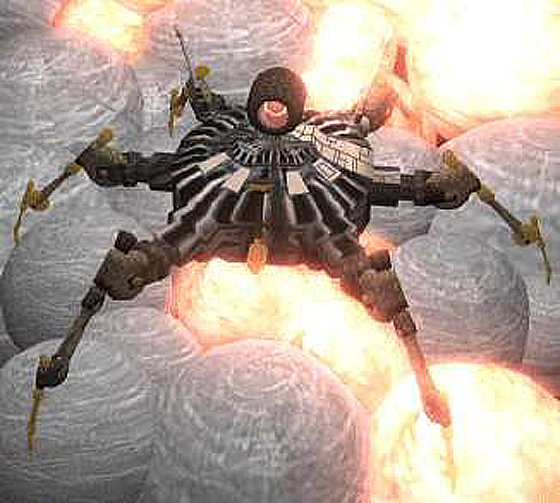
Scientists are on the verge of breaking the carbon barrier — creating artificial life and changing forever what it means to be human. And we’re not ready.
LF: Is this idea new?
AG: The idea of nanobio as a way to make cyborg-like systems where molecular components are integrated into biology is not new. If the concepts of the Carbon Barrier, the clear delineation of terms such as synthetic biology and nonbiological life have been systematically raised before in a scientifically viable format I would welcome the reference.
LF: I understand that we currently lack the ability to custom-synthesize very long genomes, such as human genomes, from scratch. Do you think we will gain this ability in the next ten years?
AG: Most likely.
LF: Do you think there will be any serious risk from purely biological genetically engineered lifeforms?
AG: Genetic engineering and biotech are no more inherently dangerous than many other high tech human ventures. But nonbiological life forms or even “smart mateials” are truly transformative because they have the potential to create unforseen synergies and to play by unknown rules with respect to their interaction with biological life.
LF: Is what you’re talking about grey goo, green goo, or something else?
AG: My point in addresing the “Grey Goo” issue is that the Nanobiotech community’s greatest fear is that the public will (correctly) recognize the potential for this field to create hybrid life forms that cannot be controlled, this recognition creating (in turn) a public relations nightmare and (gasp) resulting in stringent regulation and control of research. Even Eric Drexler was ultimately forced to recant his “Grey Goo” scenario saying that such a thing was not possible. He gave no logical reason for this reversal.
Consider a research group building glucose oxidase-powered nanobiobot (Type 2 – Type 4 hybrid life form), initially developed as a lifetime vaccine to hunt and kill cancer cells via delivery of a biological or nonbiological chemotherapeutic agent to these cells through synthetic biology-based surface recognition.
Consider a second group building hybrid Type 2 – Type 3 hybrid virus-like life biological life form created to synthesize single walled carbon nanotubes capable of blocking neurotransmitter ion channels for local delivery to patients with certain types of mental or physical illnesses.
Consider a third group working on a Type 2 – Type 4 (or Type 2 – Type 3) hybrid virus capable of synthesizing its own silica shell (like a diatom) so that it may be transmitted via aerosolization and/or survival in toxic environments for certain types of “biodefense” or bioremediation applications? We are getting better all the time at modifying existing enzymes to create nonbiological carbon geometries so that a DNA-based virus that synthesizes SWNTs (Single-Walled Nanotubes) is a completely reasonable 10 year projection of current technology. We already understand a great deal about the molecular biology and biophysics of how diatoms and other life forms create sophisticated mineral structures on their surfaces.
Now suppose that these three either recombine in vivo or are are spliced together in some lab somewhere. The combination of glucose-oxidase-powered replication coupled with a genome that forms and synthesizes neurotransmitter-blocking SWNTs and capable of sheathing itself in silica would create a synthetic, deadly virus impervious to our immune system, capable of surviving in the external environment and of replicating in any human with glucose in her/his blood. That type of “Goo” would be red, implying that it lives in a mammal (as opposed to green, implying it lives in photosynthetic plants). It would not eat the entire Earth but could wipe out Homo sapiens and perhaps a few other types of mammals as well.
LF: If you’re worried about A-Life, why are you funding a prize for whoever creates it?
AG: I am not currently funding the prize. I suggested to Eric Klien that the Foundation may want to try to get it funded. I suggested that it be created because crossing the Carbon Barrier will be the single most important evolutionary event in 3 billion years. But, since this event may well be a single self-replicating molecule, it could easily pass unnoticed if we are not closely monitoring the field of nanobiotechnology. Nonbiological synthetic (Type 4) life is what the worldwide nanobio community is working towards even though many involved do not realize it explicitly. Many are simply building tools for molecular engineering… but these tools will be what is required for the creation of Type 4 life forms. Remember too that the prize should go to whoever invents nonbiological life or whoever reports the verifiable invention of nonbiological life.
LF: What regulations will be necessary to mitigate the risk?
AG: This question cannot begin to be answered until the research community is willing to engage in a serious dialog about what it is that they are actually doing rather than avoiding or denying the issue of the Carbon Barrier. Likewise, we need educated members of the nonresearch comunity involved in these discussions… which is why I write nonfiction articles on the topic attempting to clarify what nanobiotechnology is really about.
LF: I have talked to scientists working in nanotechnology who complain that your writing style is too flowery. How do you respond?
AG: I write creative nonfiction both to educate and as an art form; art-science fusion if you will. There are many scientists who, in fact, are fully aware of the possible implications of nanobiotechnology I have described and who could write technical papers on this topic for their peers if they had the courage and/or conviction to do so. I have written over 40 scientific, peer-reviewed publications and have no interest in writing for academics on this topic.
My goal is to educate the public. Towards that end, the feedback I get is mainly that, in spite of “dumbing” the science down and bringing the prose level up… my stuff is still too technical to get across to most educated but non-technical readers. My own personal opinion is that I am simply 20–30 years ahead of the curve. The simple answer is a MacArthur grant so that I can refine my writing until I get it right (just kidding, sort of).
LF: How will you communicate your ideas in the future?
AG: As I said above, the topic is inherently complex and the challenge is to present it accurately but in a format that will engage the public. I am having trouble “dumbing” it down any further for general consumption. One answer might be to target my audience better.
Working with your organization is an experiment on my part to see if readers with a greater-than-average interest read my stuff and “get it” more often. Your Foundation might attract such readers… or not. On the other hand, it is always possible that I am just not a good enough nonfiction writer or that the topic itself cannot be sufficiently simplified in a scientifically rigorous manner without losing its impact for the nontechnical reader.
LF: Thank you Dr. Goldstein for sharing your time with us.