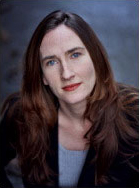
Dr. Wrye Sententia
The article Wanted: Fleeting Moments said
“I’m a collector. Not of stamps, nor bugs, nor of figurines, nor other things. I collect fleeting moments. It’s hard to do. Digital records of my life, souvenir boxes, documented trips, publications, c.v. lines are all fine, but they are a ledger, not a life. I want to enjoy my collection in the same way that it is lived — taken in passing, remembered fitfully, and never embalmed like a taxidermist’s glass-eyed creatures — those expensive, rare, but despairing trophies that are so many dust-collecting relics of life subdued by formaldehyde…I watch for, and snatch at, those once-in-a-life moments: quiet humble ones, softly whispered ones, loud ones, too. My current specimen set contains:
Warm granite, blue sky, words and words, and silence. Crystal clarity settles as we breathe in admiration, appreciation and respect. I know then that we have entered a life-long trip…
Stop.
There was no screaming. There were no tears, nor tears. There was only quiet, deep breathing for him, where he could not yet breathe — in the womb, under water, in the birth tank, in my arms. ‘My baby, my baby, my baby!’”
Wrye Sententia, Ph.D. was the author of this article and is director of the Center for Cognitive Liberty & Ethics (CCLE), a nonprofit research, policy, and public education center working to advance and protect freedom of thought into the 21st century.
As director of the CCLE, Wrye analyzes developing technologies in relation to individual freedoms and human rights and assists educators, policymakers and companies in navigating ethical and legal dilemmas raised by new cognitive technologies and drugs in society at large.
She has guided the CCLE in sponsoring the National Science Foundation’s initiatives aimed at “Converging Technologies for Improving Human Performance” and in other public engagements. In 2002, she provided comments to the appointed President’s Council on Bioethics in Washington D.C., on the topic of cognitive enhancement technologies and in October 2004, debated members of the Council on the democratic values of the US Declaration of Independence in relation to emergent enhancement biotechnologies and human freedom.

October 29, 2004 — Washington D.C. Conference held by the Center for Bioethics & Culture, the Institute on Biotechnology and the Human Future, and the International Center for Technology Assessment. Photo by Christine Peterson.
Wrye has written and spoken extensively on just how the scope of novel technologies will impact human freedom. E.g.: “Euroethical Considerations: Cognitive Liberty & Converging Technologies for Improving Human Cognition”,Annals of the New York Academy of Sciences, Vol. 1013, April 2004. She has taught, published articles, translations, and papers, on the topic of cognitive liberty & neurotechnologies; appeared frequently on radio and, increasingly, on television and regularly provides invited lectures at numerous universities, professional conferences, and events, both in the US and beyond.
Wrye is a 2005–6 Postdoctoral Lecturer, at the University of California, Davis, a 2005–6 fellow with the Institute for Ethics and Emerging Technologies, and serves on the technology ethics advisory board for the Nanoethics Group.
In addition to her nonprofit work on the policy and ethics of freedom of thought in an age of neurotechnology, she currently teaches both for the UC Davis Technocultural Studies Program and the University Writing Program. With Lexington Press, she will publish an academic book that considers cyberpunk science fiction and the impact of novel media, medicine, and technology on freedom of thought.
She authored No Ritalin, No Education!, Prosthetic Perception: Turn on, Tune in, Tune Out (and then hit Replay), Diagramming Sentences of Value: Evolving Human Rights and the Terms of Geoethical Nanotechnology, Neuroethical Considerations: Cognitive Liberty and Converging Technologies for Improving Human Cognition, Brain Fingerprinting: Databodies to Databrains, and Blockbuster Depression: Drug Deals for Drug Makers.
Wrye earned her Ph.D at the University of California, Davis. Her Ph.D. thesis was on cyberpunk science fiction literature, real world cognitive technologies and freedom of thought.
Listen to her talk Neurocops: Policing the Borders of Human Cognition at Transvision 2002. Read her interview with R.U. Sirius. Read the transcript of her appearance with The President’s Council on Bioethics.