Toggle light / dark theme

Third exoplanet detected in the planetary system HD 176986

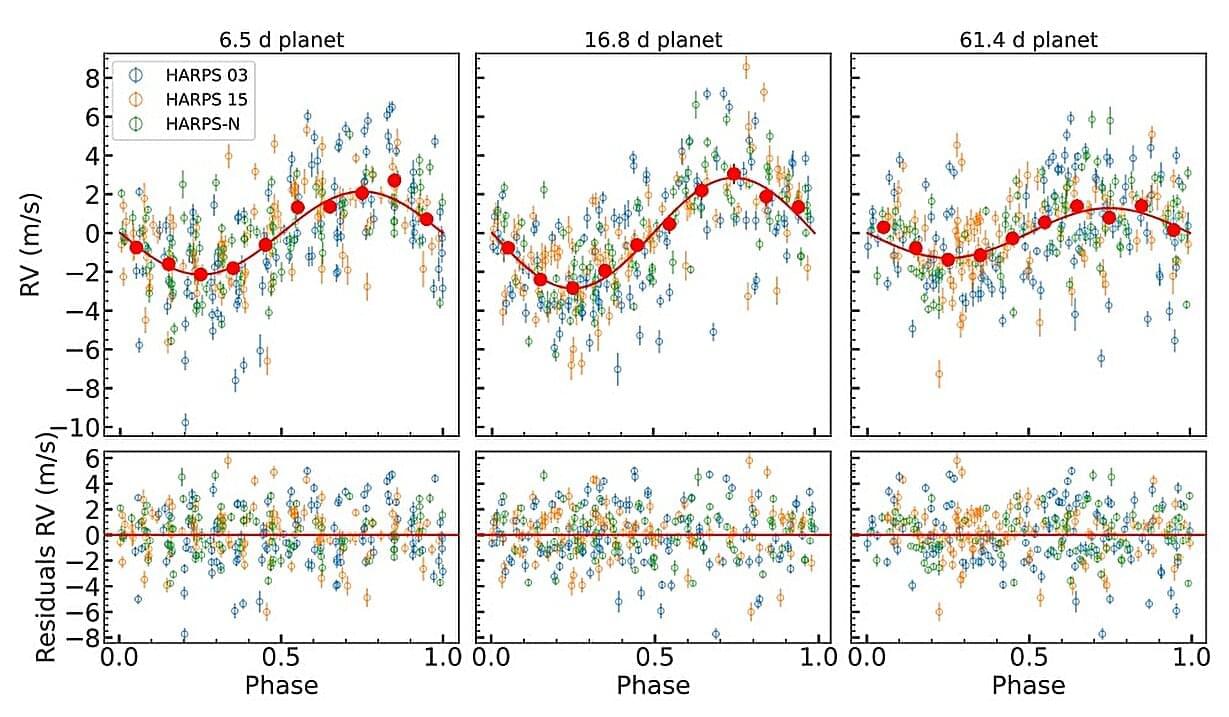
Using HARPS and HARPS-N spectrographs, astronomers have observed a nearby K-type star designated HD 176986, known to host two super-Earth exoplanets. The observations resulted in the discovery of another planet in the system at least several times more massive than Earth. The finding was detailed in a paper published January 28 in the Astronomy & Astrophysics journal.

Could electronic beams in the ionosphere remove space junk?

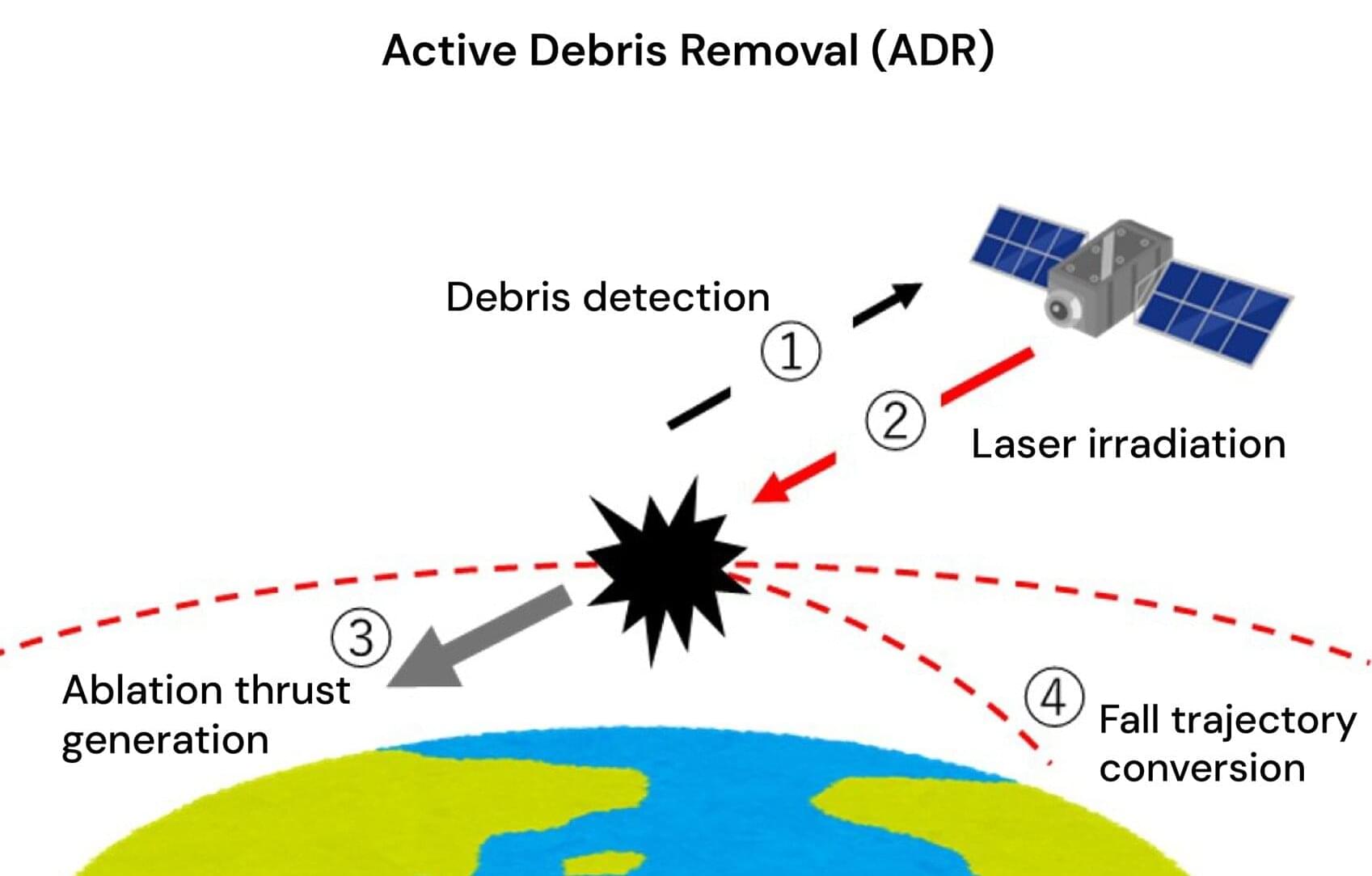
A possible alternative to active debris removal (ADR) by laser is ablative propulsion by a remotely transmitted electron beam (e-beam). The e-beam ablation has been widely used in industries, and it might provide higher overall energy efficiency of an ADR system and a higher momentum-coupling coefficient than laser ablation. However, transmitting an e-beam efficiently through the ionosphere plasma over a long distance (10 m–100 km) and focusing it to enhance its intensity above the ablation threshold of debris materials are new technical challenges that require novel methods of external actions to support the beam transmission.

Therefore, Osaka Metropolitan University researchers conducted a preliminary study of the relevant challenges, divergence, and instabilities of an e-beam in an ionospheric atmosphere, and identified them quantitatively through numerical simulations. Particle-in-cell simulations were performed systematically to clarify the divergence and the instability of an e-beam in an ionospheric plasma.

The major phenomena, divergence and instability, depended on the densities of the e-beam and the atmosphere. The e-beam density was set slightly different from the density of ionospheric plasma in the range from 1010 to 1012 m−3. The e-beam velocity was changed from 106 to 108 m/s, in a nonrelativistic range.

Why NASA Built SLS — And Why It Couldn’t Have Happened Any Other Way

Why NASA Built SLS — And Why It Couldn’t Have Happened Any Other Way.

(https://youtu.be/LRwQqZGascs)


The inside scoop you never heard before.

Tired of toxins in your consumer products?

Home

GoldBacks from Galactic/Green Greg’s affiliate link:

How Big Could a Space Habitat Get?

How big could space habitats really get? From O’Neill cylinders to Ringworlds and Topopolises, we explore the true limits of megastructure scale.

Get Nebula using my link for 50% off an annual subscription: https://go.nebula.tv/isaacarthur.
Watch my exclusive video Chronoengineering: https://nebula.tv/videos/isaacarthur–… Join this channel to get access to perks: / @isaacarthursfia 🛒 SFIA Merchandise: https://isaac-arthur-shop.fourthwall… 🌐 Visit our Website: http://www.isaacarthur.net ❤️ Support us on Patreon: / isaacarthur ⭐ Support us on Subscribestar: https://www.subscribestar.com/isaac-a… 👥 Facebook Group: / 1,583,992,725,237,264 📣 Reddit Community: / isaacarthur 🐦 Follow on Twitter / X: / isaac_a_arthur 💬 SFIA Discord Server: / discord Credits: How Big Could a Space Habitat Get? Written, Produced & Narrated by: Isaac Arthur Editor: Tim Liusko Graphics from Fishy Tree, Jarred Eagley, Jeremy Jozwik, J. Dixon, Ken York, Udo Schroeter Music Courtesy of Chris Zabriskie & Stellardrone Select imagery/video supplied by Getty Images Music by Epidemic Sound: http://nebula.tv/epidemic & Stellardrone Chapters 0:00 Intro 2:03 Basics of Habitat Scaling 9:30 Cylinder & Ring Habitats — Linear and Radial Extremes 11:00 Banks Orbitals 12:42 Ringworlds 16:24 Chrono-Engineering 17:24 The Topopolis 21:03 Planet-Wrapping Habitats 22:55 Matrioshka Shellworlds 26:17Alternative & Exotic Designs.

🚀 Join this channel to get access to perks: / @isaacarthursfia.
🛒 SFIA Merchandise: https://isaac-arthur-shop.fourthwall
🌐 Visit our Website: http://www.isaacarthur.net.

❤️ Support us on Patreon: / isaacarthur.
⭐ Support us on Subscribestar: https://www.subscribestar.com/isaac-a

👥 Facebook Group: / 1583992725237264
📣 Reddit Community: / isaacarthur.
🐦 Follow on Twitter / X: / isaac_a_arthur.
💬 SFIA Discord Server: / discord.

Credits:

Hubble Captures a Wild Stellar Nursery Glowing With Newborn Stars

Hubble captures a dazzling stellar nursery where newborn stars light up and carve their way through glowing clouds in a nearby galaxy.

This striking image from the Hubble Space Telescope offers a fresh perspective on a faraway region where stars are actively forming. The view was captured alongside a recently released image and focuses on a nearby section of the N159 star-forming complex in the Large Magellanic Cloud, located about 160,000 light-years from Earth.

Glowing Gas and Emerging Stars.

View a PDF of the paper titled When Models Manipulate Manifolds: The Geometry of a Counting Task, by Wes Gurnee and 6 other authors

When you look at text, you subconsciously track how much space remains on each line. If you’re writing “Happy Birthday” and “Birthday” won’t fit, your brain automatically moves it to the next line. You don’t calculate this—you *see* it. But AI models don’t have eyes. They receive only sequences of numbers (tokens) and must somehow develop a sense of visual space from scratch.

Inside your brain, “place cells” help you navigate physical space by firing when you’re in specific locations. Remarkably, Claude develops something strikingly similar. The researchers found that the model represents character counts using low-dimensional curved manifolds—mathematical shapes that are discretized by sparse feature families, much like how biological place cells divide space into discrete firing zones.

The researchers validated their findings through causal interventions—essentially “knocking out” specific neurons to see if the model’s counting ability broke in predictable ways. They even discovered visual illusions—carefully crafted character sequences that trick the model’s counting mechanism, much like optical illusions fool human vision.

2. Attention mechanisms are geometric engines: The “attention heads” that power modern AI don’t just connect related words—they perform sophisticated geometric transformations on internal representations.

1. What other “sensory” capabilities have models developed implicitly? Can AI develop senses we don’t have names for?


Language models can perceive visual properties of text despite receiving only sequences of tokens-we mechanistically investigate how Claude 3.5 Haiku accomplishes one such task: linebreaking in fixed-width text. We find that character counts are represented on low-dimensional curved manifolds discretized by sparse feature families, analogous to biological place cells. Accurate predictions emerge from a sequence of geometric transformations: token lengths are accumulated into character count manifolds, attention heads twist these manifolds to estimate distance to the line boundary, and the decision to break the line is enabled by arranging estimates orthogonally to create a linear decision boundary. We validate our findings through causal interventions and discover visual illusions—character sequences that hijack the counting mechanism.
Polar weather on Jupiter and Saturn hints at the planets’ interior details

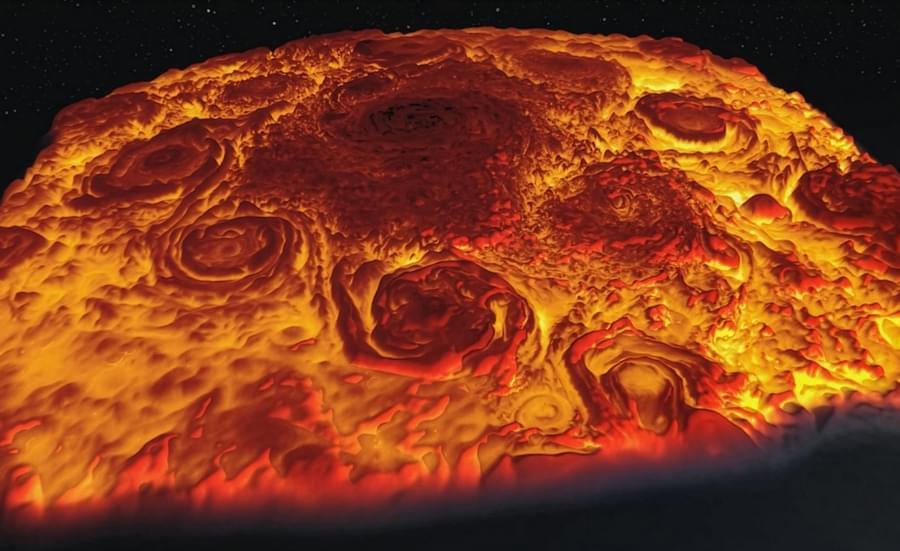
Over the years, passing spacecraft have observed mystifying weather patterns at the poles of Jupiter and Saturn. The two planets host very different types of polar vortices, which are huge atmospheric whirlpools that rotate over a planet’s polar region. On Saturn, a single massive polar vortex appears to cap the north pole in a curiously hexagonal shape, while on Jupiter, a central polar vortex is surrounded by eight smaller vortices, like a pan of swirling cinnamon rolls.

Given that both planets are similar in many ways—they are roughly the same size and made from the same gaseous elements—the stark difference in their polar weather patterns has been a longstanding mystery.

Now, MIT scientists have identified a possible explanation for how the two different systems may have evolved. Their findings could help scientists understand not only the planets’ surface weather patterns, but also what might lie beneath the clouds, deep within their interiors.

/* */