Toggle light / dark theme

How to design a space station: Meet the Seattle company that’s helping define the look of the final frontier

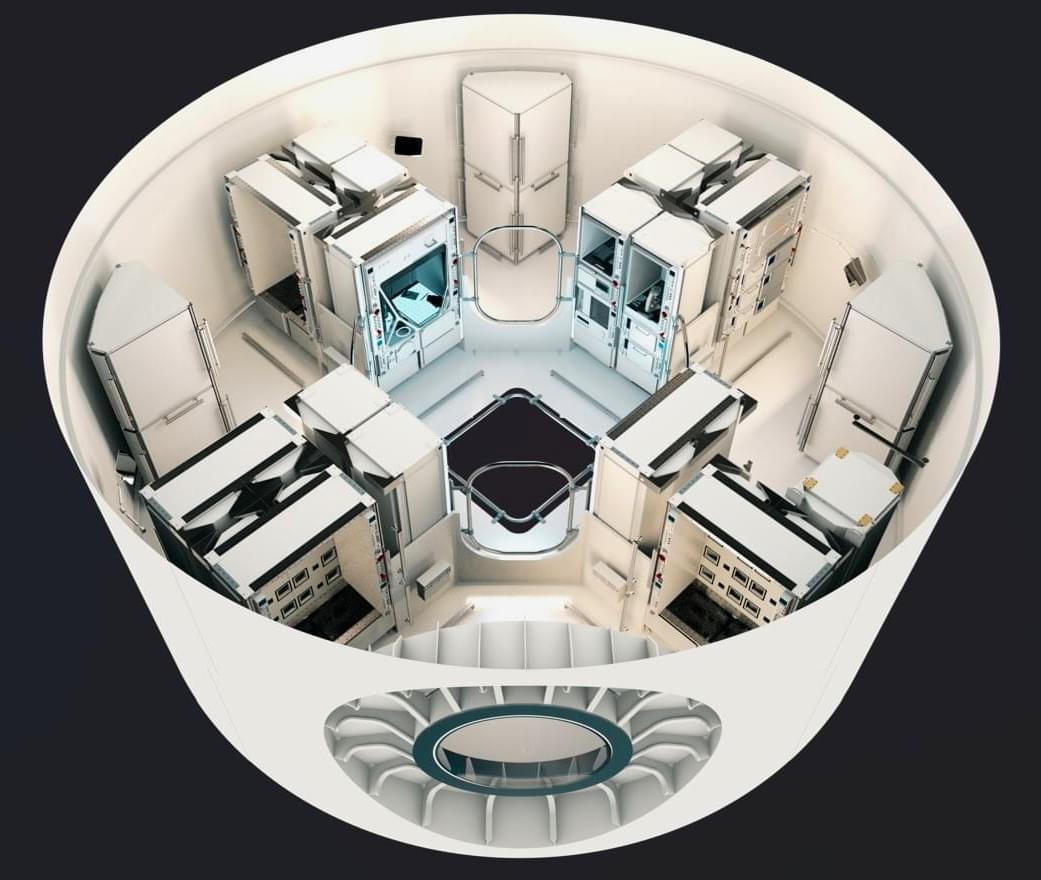
How do you design a living space where there’s no up or down? That’s one of the challenges facing Teague, a Seattle-based design and innovation firm that advises space companies such as Blue Origin, Axiom Space and Voyager Technologies on how to lay out their orbital outposts.

Mike Mahoney, Teague’s senior director of space and defense programs, says the zero-gravity environment is the most interesting element to consider in space station design.

“You can’t put things on surfaces, right? You’re not going to have tables, necessarily, unless you can attach things to them, and they could be on any surface,” he told GeekWire. “So, directionality is a big factor. And knowing that opens up new opportunities. … You could have, let’s say, two scientists working in different orientations in the same area.”
Wormhole Stableways — Constructing and Navigating Artificial Shortcuts Through Space

Could we build wormholes and travel the galaxy? Exploring stable wormholes, spacetime shortcuts, and the future of interstellar civilization.

Get Nebula using my link for 50% off an annual subscription: https://go.nebula.tv/isaacarthur.
Watch my exclusive video The Future of Interstellar Communication: https://nebula.tv/videos/isaacarthur–… out Joe Scott’s Oldest & Newest: https://nebula.tv/videos/joescott-old… 🚀 Join this channel to get access to perks: / @isaacarthursfia 🛒 SFIA Merchandise: https://isaac-arthur-shop.fourthwall… 🌐 Visit our Website: http://www.isaacarthur.net ❤️ Support us on Patreon: / isaacarthur ⭐ Support us on Subscribestar: https://www.subscribestar.com/isaac-a… 👥 Facebook Group: / 1,583,992,725,237,264 📣 Reddit Community: / isaacarthur 🐦 Follow on Twitter / X: / isaac_a_arthur 💬 SFIA Discord Server: / discord Credits: Wormhole Stableways – Constructing and Navigating Artificial Shortcuts Through Space Written, Produced & Narrated by: Isaac Arthur Select imagery/video supplied by Getty Images Chapters 0:00 Intro 1:38 What Is a Wormhole? 5:21 Could Wormholes Exist Naturally? 8:49 What Keeps a Wormhole Open? 12:08 Can We Build an Artificial Wormhole? 16:05 How Would You Travel Through One? 20:56 So Where Are We? 25:14 Civilization across the Stableways 30:58 Nebula 32:10 Bridges to Eternity.
Check out Joe Scott’s Oldest & Newest: https://nebula.tv/videos/joescott-old

🚀 Join this channel to get access to perks: / @isaacarthursfia.
🛒 SFIA Merchandise: https://isaac-arthur-shop.fourthwall
🌐 Visit our Website: http://www.isaacarthur.net.
❤️ Support us on Patreon: / isaacarthur.
⭐ Support us on Subscribestar: https://www.subscribestar.com/isaac-a

👥 Facebook Group: / 1583992725237264
📣 Reddit Community: / isaacarthur.
🐦 Follow on Twitter / X: / isaac_a_arthur.
💬 SFIA Discord Server: / discord.
Credits:
Wormhole Stableways – Constructing and Navigating Artificial Shortcuts Through Space.
Written, Produced & Narrated by:
Isaac Arthur.
Select imagery/video supplied by Getty Images.

Chapters.
0:00 Intro.
1:38 What Is a Wormhole?
5:21 Could Wormholes Exist Naturally?
8:49 What Keeps a Wormhole Open?
12:08 Can We Build an Artificial Wormhole?
16:05 How Would You Travel Through One?
20:56 So Where Are We?
25:14 Civilization across the Stableways.
30:58 Nebula.
32:10 Bridges to Eternity.

High-entropy garnet crystal enables enhanced 2.8 μm mid-infrared laser performance

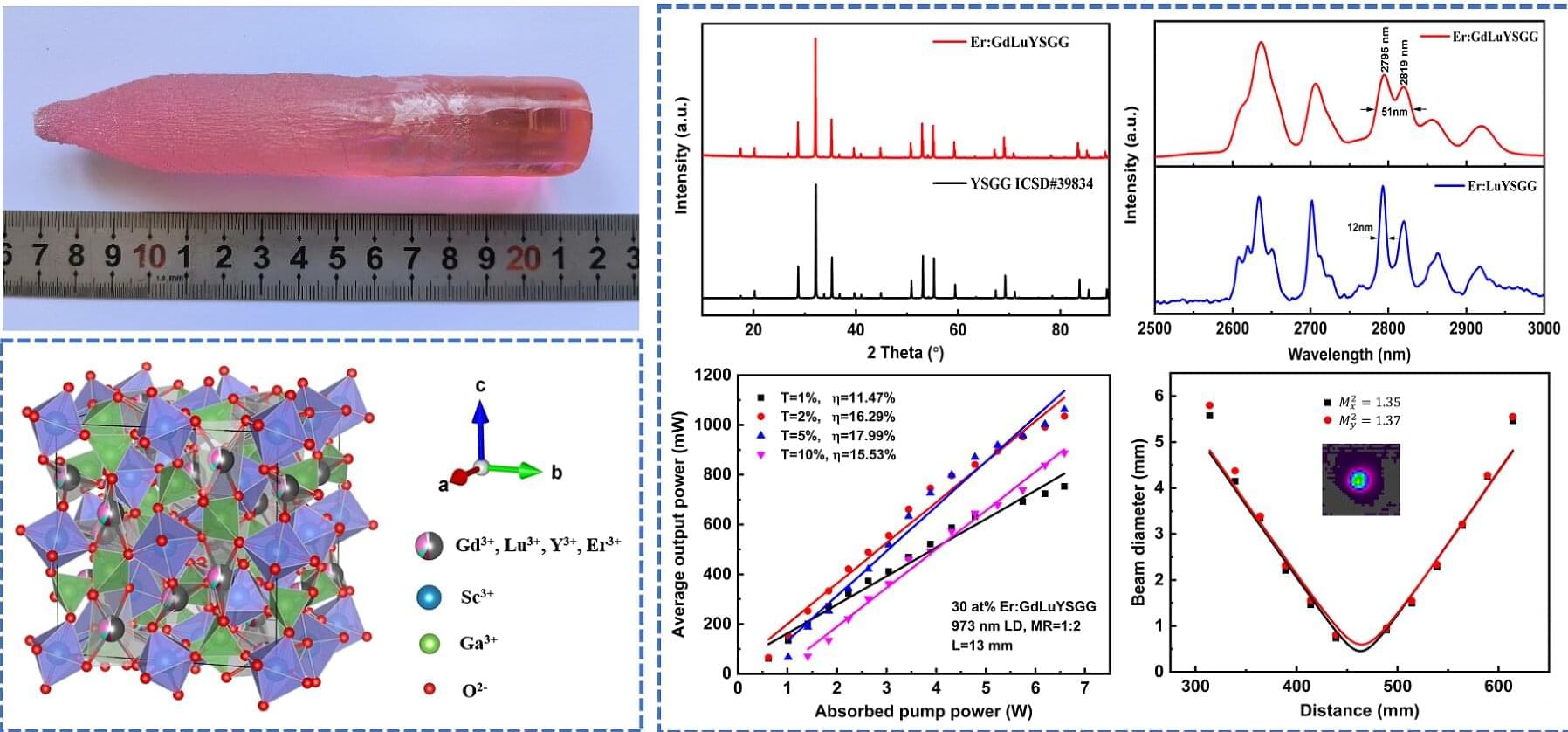
Recently, a research team from the Hefei Institutes of Physical Science of the Chinese Academy of Sciences successfully grew a high-entropy garnet-structured oxide crystal and achieved enhanced laser performance at the 2.8 μm wavelength band. By introducing a high-entropy design into a garnet crystal system, the team obtained a wide emission band near 2.8 μm and continuous-wave laser output with improved average power and beam quality, demonstrating the material’s strong potential as a high-performance gain medium for mid-infrared ultrashort-pulse lasers.

The results are published in Crystal Growth & Design.

Mid-infrared ultrashort-pulse lasers around 2.8 μm are of great interest for applications such as space communication and planetary exploration. However, existing laser crystals operating in this wavelength range often suffer from narrow emission bandwidths, low efficiency, or insufficient radiation resistance, making it difficult to meet the demands of efficient and stable laser operation in harsh space radiation environments.

Mars Base

To become an Interplanetary Species we need to colonize another planet, and Mars will be our first target. To establish a base there, and a future settlement, we need to get their first, so we will also examine the Aldrin Cycler, a type of spacecraft that may make traveling to other worlds far easier.

Visit our sponsor, Brilliant: https://brilliant.org/IsaacArthur/

National Space Society Roadmap:
https://space.nss.org/nss-roadmap-to–… this channel to get access to perks: / @isaacarthursfia Visit our Website: http://www.isaacarthur.net Join Nebula: https://go.nebula.tv/isaacarthur Support us on Patreon: / isaacarthur Support us on Subscribestar: https://www.subscribestar.com/isaac-a… Facebook Group: / 1,583,992,725,237,264 Reddit: / isaacarthur Twitter: / isaac_a_arthur on Twitter and RT our future content. SFIA Discord Server: / discord version: / mars-base-narration-only Credits: Becoming an Interplanetary Species: Mars Base Science & Futurism with Isaac Arthur Episode 261; October 22, 2020 Written, Produced & Narrated by Isaac Arthur Written by: Isaac Arthur Editors: Jerry Guern Keith Blockus Matthew Acker Cover Art: Jakub Grygier https://www.artstation.com/jakub_grygier Graphics: Jeremy Jozwik https://www.artstation.com/zeuxis_of_… Sam McNamara Sergio Botero https://www.artstation.com/sboterod?f… Tristan 3D Music Sergey Cheremisninov, “Sirius” https://www.s-cheremisinov.com Reign Pagaran, “Distant Voyager” Aerium, “Fifth Star of Aldebaran” / @officialaerium Denny Schneidemesser, “Across the Universe” & “Luminous Rays” / denny-schneidemesser.
Join this channel to get access to perks:
/ @isaacarthursfia.
Visit our Website: http://www.isaacarthur.net.
Join Nebula: https://go.nebula.tv/isaacarthur.
Support us on Patreon: / isaacarthur.
Support us on Subscribestar: https://www.subscribestar.com/isaac-a
Facebook Group: / 1583992725237264
Reddit: / isaacarthur.
Twitter: / isaac_a_arthur on Twitter and RT our future content.
SFIA Discord Server: / discord version: / mars-base-narration-only.

Credits:
Becoming an Interplanetary Species: Mars Base.
Science & Futurism with Isaac Arthur.
Episode 261; October 22, 2020
Written, Produced & Narrated by Isaac Arthur.

Written by:
Isaac Arthur.

Editors:

One-of-a-kind ‘plasma tunnel’ recreates extreme conditions spacecraft face upon reentry

Picture a spacecraft returning to Earth after a long journey. The vehicle slams into the planet’s atmosphere at roughly 17,000 miles per hour. A shockwave erupts. Molecules in the air are ripped apart, forming a plasma—a gas made of charged particles that can reach tens of thousands of degrees Fahrenheit, many times hotter than the surface of the sun.

The sight is spectacular to behold, but it’s also dangerous, said Hisham Ali, assistant professor in the Ann and H.J. Smead Department of Aerospace Engineering Sciences.

The Columbia disaster is a tragic example. On Feb. 1, 2003, as the space shuttle reentered Earth’s atmosphere, plasma flooded into the vehicle through a defect in its shield of protective tiles. The shuttle disintegrated, and seven crewmembers, including CU Boulder alumna Kalpna Chawla, died.

/* */