New research shows that brain tissue stiffness helps regulate chemical signals during development.

Is there something that it is like to be an electron? That sounds implausible. Yet Galen Strawson believes this is the best explanation of how things are.
Specifically, Galen offers his view on physicalistic panpsychism (though there are non-physicalistic panpsychisms as well). He argues something like this, it seems to me:
First, Galen assumes (very plausibly) that experiential phenomena are real phenomena, opposed to illusory. Now:
1. If radical emergentism is true, then experiential phenomena emerges from wholly and utterly non-experiential phenomena.
2. But experiential phenomena cannot emerge from wholly and utterly non-experiential pheneomena.
3. So radical emergentism is false. [1, 2]
4. If radical emergentism is false, then experiential phenomena must already exist in some sense and to some extent as a feature of physical stuff to give rise to experiential phenomena in an intelligible way.
5. So experiential phenomena must already exist in some sense and to some extent as a feature of physical stuff to give rise to experiential phenomena in an intelligible way. [3, 4]
In other words, consciousness has been a feature of the universe since the Big Bang.
For sustained and scholarly treatment of panpsychism, see Galen Strawson’s paper, \.
More than a century ago, Pavlov trained his dog to associate the sound of a bell with food. Ever since, scientists have assumed the dog learned this through repetition. The more times the dog heard the bell and then got fed, the better it learned that the sound meant food would soon follow.
Now, scientists at UC San Francisco are upending this 100-year-old assumption about associative learning. The new theory asserts that it depends less on how many times something happens and more on how much time passes between rewards.
“It turns out that the time between these cue-reward pairings helps the brain determine how much to learn from that experience,” said Vijay Mohan K. Namboobidiri, Ph.D., an associate professor of Neurology and senior author of the study, published in Nature Neuroscience.
Benfey et al. find that norepinephrine shifts the visual response selectivity of optic tectal neurons in the Xenopus tadpole to favor threatening loom stimuli over more neutral, randomly drifting dots. Mechanistically, norepinephrine induces radial astrocyte activation and glial release of ATP/adenosine, resulting in reduced excitatory neurotransmission and selectivity shift.
A new electronic implant system can help lab-grown pancreatic cells mature and function properly, potentially providing a basis for novel, cell-based therapies for diabetes. The approach, developed by researchers at the Perelman School of Medicine at the University of Pennsylvania and the School of Engineering and Applied Sciences at Harvard University, incorporates an ultrathin mesh of conductive wires into growing pancreatic tissue, according to a study published in Science.
“The words ‘bionic,’ ‘cybernetic,’ ‘cyborg,’ all of those apply to the device we’ve created,” said Juan Alvarez, Ph.D., an assistant professor of Cell and Developmental Biology. While these terms may sound futuristic, he noted this approach is already in use in the form of deep brain stimulation, which treats neurological conditions.
“What we’re doing is like deep stimulation for the pancreas. Just like pacemakers help the heart keep rhythm, controlled electrical pulses can help pancreatic cells develop and function the way they’re supposed to,” he said.
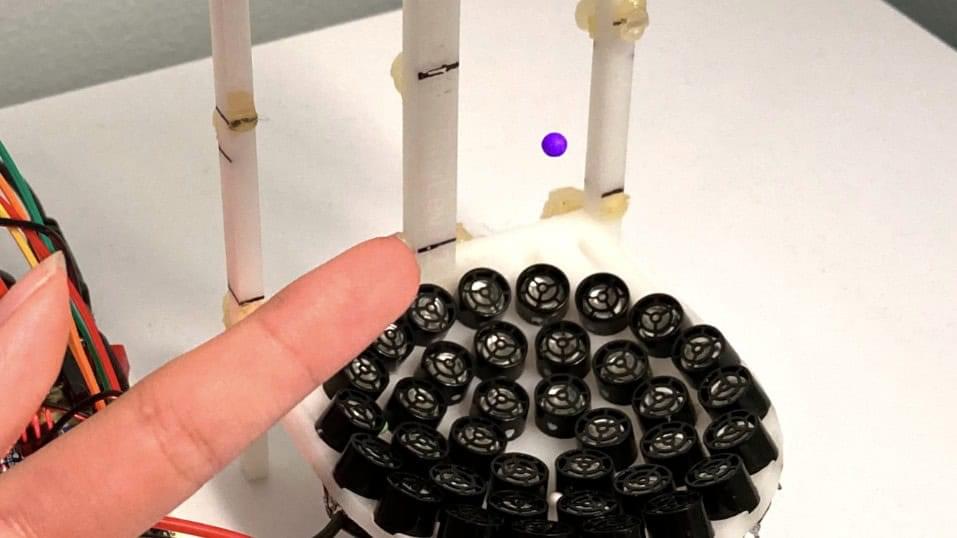
From the article:
‘The researchers have filed a patent application for the use of the system to measure particle masses with microgram-scale precision from the oscillation frequency. Beyond this, they hope the phenomenon will offer insights into emergent periodic phenomena across timescales in nature: “Your neurons fire at kilohertz, but the pacemaker in your heart hopefully goes about once per second,” explains Grier.’
System could shed light on emergent periodic phenomena in biological systems.
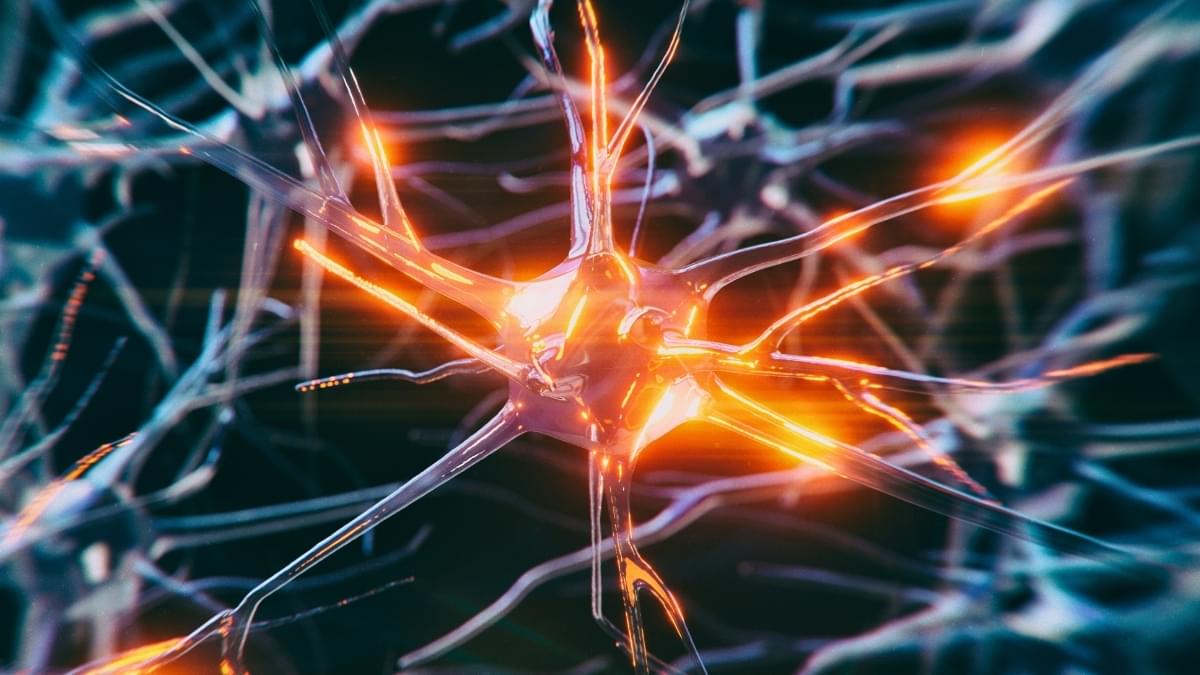
Some brain cells can resist the toxic processes associated with Alzheimer’s disease and other forms of dementia. Scientists have now identified the “cellular hazmat team” that keeps neurons healthy.
Neurodegenerative diseases like dementia are characterized by proteins that aggregate in the brain and kill neurons. Tau proteins are one of the main culprits, but they’re not always villains.
In their functional state, they help to stabilize brain structures and facilitate nutrient transport. But misfolded tau proteins clump together, and a higher degree of clumping indicates more advanced neurodegenerative diseases.
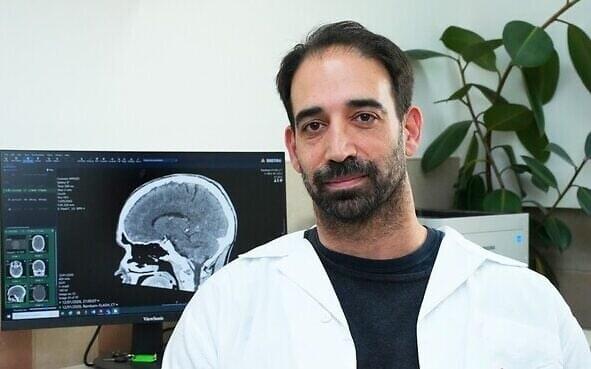

“Working in strict secrecy, a government scientist in Norway built a machine capable of emitting powerful pulses of microwave energy and, in an effort to prove such devices are harmless to humans, in 2024 tested it on himself. He suffered neurological symptoms similar to those of ”Havana syndrome,” the unexplained malady that has struck hundreds of U.S. spies and diplomats around the world.
The bizarre story, described by four people familiar with the events, is the latest wrinkle in the decade-long quest to find the causes of Havana syndrome, whose sufferers experience long-lasting effects including cognitive challenges, dizziness and nausea. The U.S. government calls the events Anomalous Health Incidents (AHIs).
The secret test in Norway has not been previously reported. The Norwegian government told the CIA about the results, two of the people said, prompting at least two visits in 2024 to Norway by Pentagon and White House officials.
The CIA investigated a Norwegian government experiment with a pulsed-energy machine in which a researcher built and tested a ”Havana syndrome” device on himself.