Toggle light / dark theme

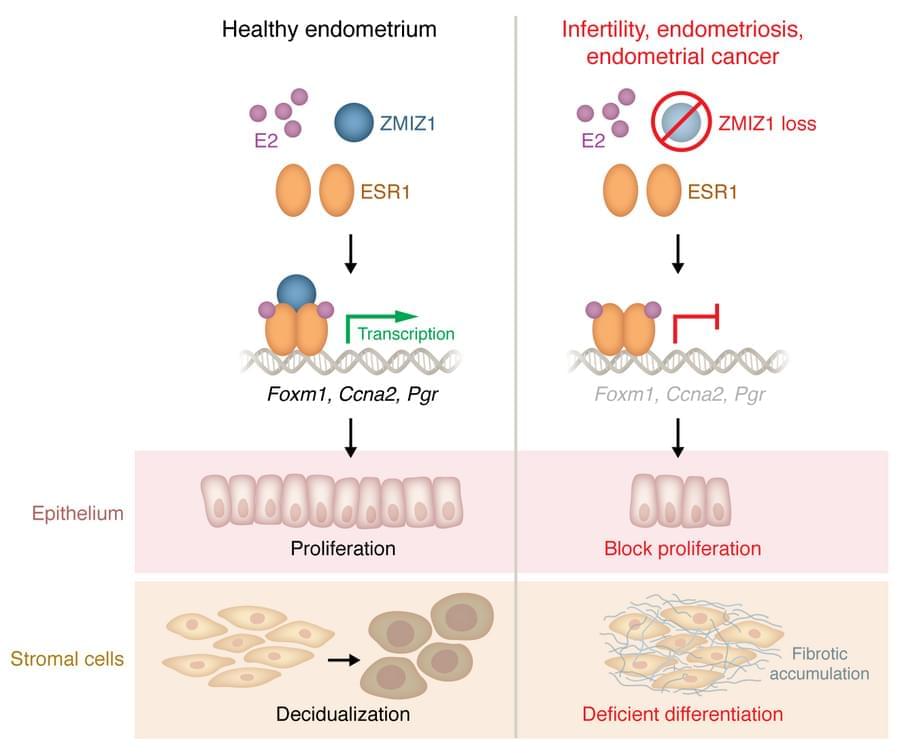
Abstract: ZMIZ1 and estrogen receptor α form an essential partnership in endometrial biology:

This Commentary by Md Saidur Rahman, Kyeong A. So & Jae-Wook Jeong discusses Sylvia C. Hewitt et al.: https://doi.org/10.1172/JCI193212


1Department of Obstetrics, Gynecology & Women’s Health, University of Missouri School of Medicine, Columbia, Missouri, USA.

2Department of Obstetrics and Gynecology, Konkuk University School of Medicine, Seoul, Republic of Korea.

Address correspondence to: Jae-Wook Jeong, 1,030 Hitt Street, NextGen Precision Health Building, Columbia, Missouri 65,211, USA. Phone: 573.884.1882; Email: [email protected].

Tiny optical modulator could enable giant future quantum computers

Researchers have made a major advance in quantum computing with a new device that is nearly 100 times smaller than the diameter of a human hair.

Published in the journal Nature Communications, the breakthrough optical phase modulators could help unlock much larger quantum computers by enabling efficient control of lasers required to operate thousands or even millions of qubits—the basic units of quantum information.

Critically, the team of scientists have developed these devices using scalable manufacturing, avoiding complex, custom builds in favor of those used to make the same technology behind processors already found in computers, phones, vehicles, home appliances—virtually everything powered by electricity (even toasters).

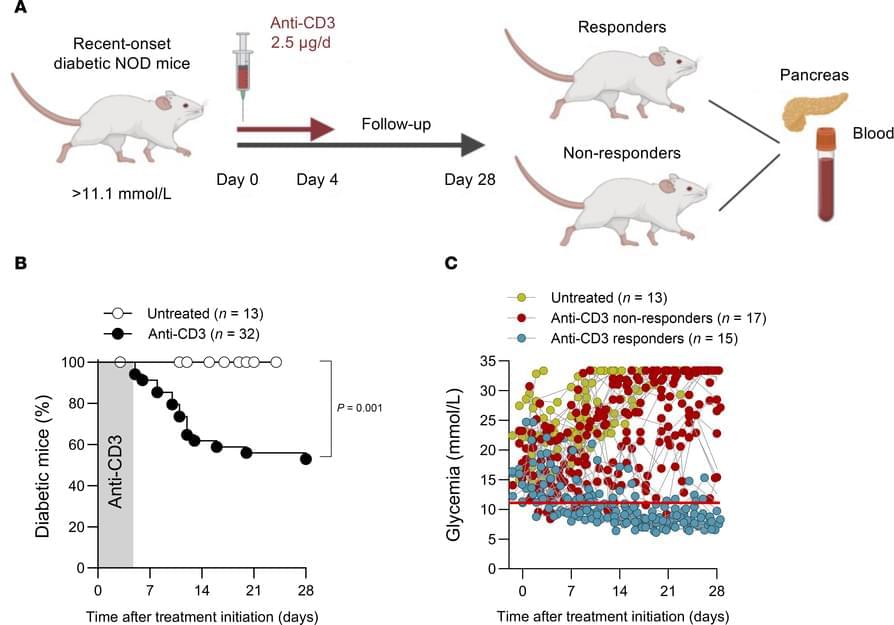
Abstract: The antibody Teplizumab can delay type 1 diabetes, but therapeutic responses are heterogeneous

Here, Conny Gysemans & team find variable patient responses align with specific immune gene signatures, offering a tool to predict treatment success or resistance.


Address correspondence to: Conny Gysemans, Leuven Diabetes Lab, Clinical and Experimental Endocrinology (CEE), CHROMETA, KU Leuven, Leuven, Belgium. Phone: 32.16.377454; Email: [email protected].

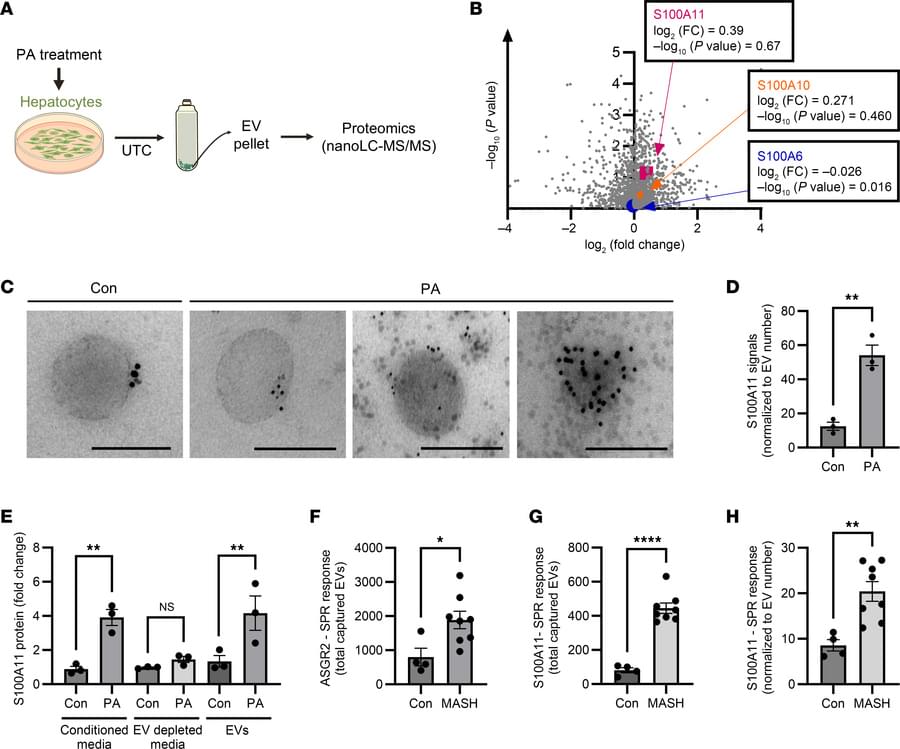
Abstract: The mechanistic basis of chronic liver disease is still only partially understood

Harmeet Malhi & team discover ER-stress mediated S100A11 upregulation drives progression of fatty liver disease, revealing a new target for future treatments:

The figure shows reduction within the high-fat,-fructose, and-cholesterol,-lipotoxicity-influenced enhancer (FFC-LIE) mouse groups compared with FFC-scramble controls.


Address correspondence to: Harmeet Malhi, Division of Gastroenterology and Hepatology, Mayo Clinic, 200 First Street SW, Rochester, Minnesota 55,905, USA. Phone: 507.284.0686; Email: [email protected].

Reconfigurable platform slows lights for on-chip photonic engineering

Integrated circuits are the brains behind modern electronic devices like computers or smart phones. Traditionally, these circuits—also known as chips—rely on electricity to process data. In recent years, scientists have turned their attention to photonic chips, which perform similar tasks using light instead of electricity to improve speed and energy efficiency.

What If You Could Have a Real-Life Tamagotchi but with Bacteria?

The Tamagotchi craze started during the 1990s, with the original electronic toys. Years before our smartphone obsession, Tamagotchis were pixelated pets you carried around, often on a keychain. You had tiny rubber buttons and a miniature screen to feed, clean, and take care of your Tamagotchi. If you failed, you returned to a tiny digital tombstone.

In recent years, Tamagotchis have made an unlikely comeback. But now, a team of students at Northeastern University want to build something much more real.

SquidKid looks like a whimsical cartoon squid, but it’s actually a “bioreactor,” essentially a biological life support system. Inside it, floating in a special “broth”, are millions of real, living, glowing bacteria. The students who designed it are blunt.

/* */