Toggle light / dark theme

New 3D method maps Paleolithic engravings at submillimeter resolution

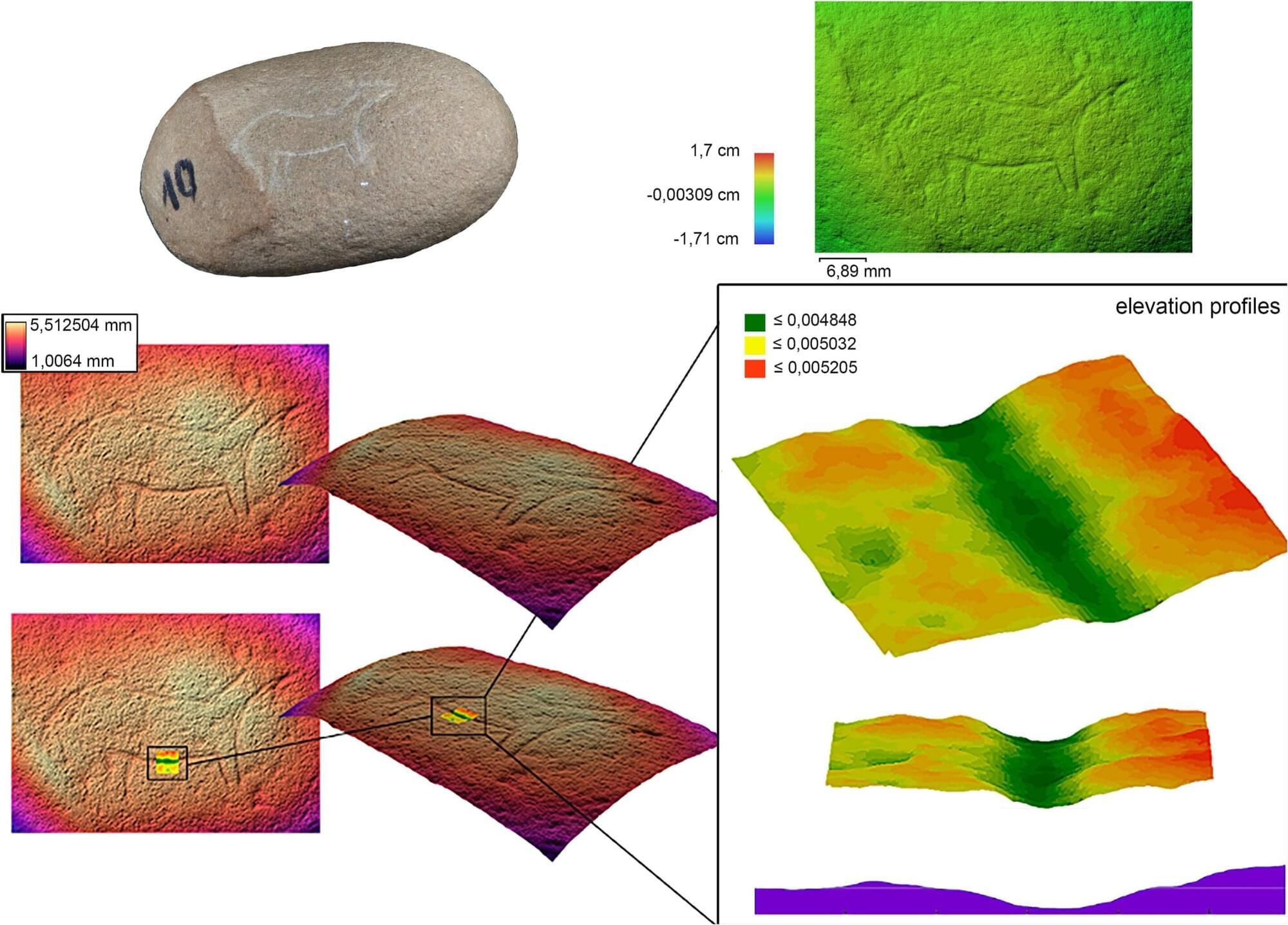
A team of archaeologists from the Universitat Jaume I, the University of Barcelona, and the Catalan Institution for Research and Advanced Studies (ICREA) has developed a new methodology that allows for a much more detailed, precise, and objective analysis of Late Paleolithic portable art pieces. Thanks to this study, the research team was able to review several previously published pieces from Matutano Cave (Vilafamés), a reference site in the Iberian Mediterranean, with greater accuracy and demonstrate that some of the marks previously interpreted as artistic motifs are not anthropic engravings but natural surface reliefs.

Late Paleolithic art is usually characterized by very fine engravings, barely visible to the naked eye, often affected by taphonomic alterations, surface irregularities, and unclear morphologies, which complicates their identification and interpretation. This new methodology allows for a more precise analysis of the remains using photogrammetry and microtopographic analysis techniques.

The results are published in the Journal of Archaeological Science: Reports.
Scientists just mapped the brain architecture that underlies human intelligence

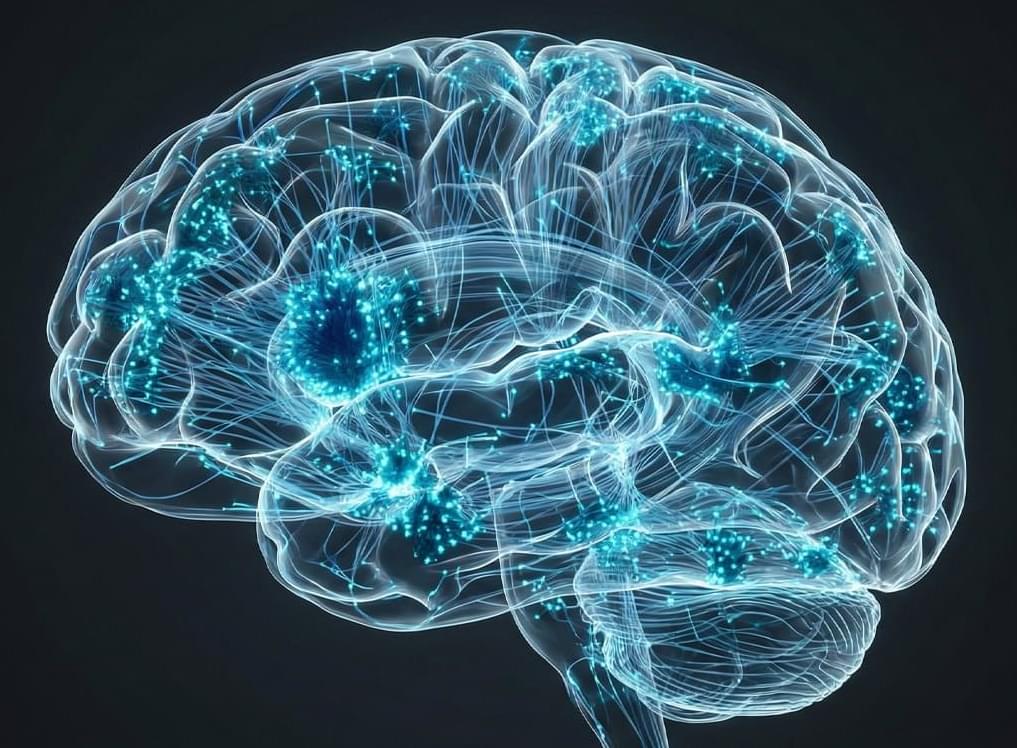
For decades, researchers have attempted to pinpoint the specific areas of the brain responsible for human intelligence. A new analysis suggests that general intelligence involves the coordination of the entire brain rather than the superior function of any single region. By mapping the connections within the human brain, or connectome, scientists found that distinct patterns of global communication predict cognitive ability.

The research indicates that intelligent thought relies on a system-wide architecture optimized for efficiency and flexibility. These findings were published in the journal Nature Communications.

General intelligence represents the capacity to reason, learn, and solve problems across a variety of different contexts. In the past, theories often attributed this capacity to specific networks, such as the areas in the frontal and parietal lobes involved in attention and working memory. While these regions are involved in cognitive tasks, newer perspectives suggest they are part of a larger story.

‘Discovery learning’ AI tool predicts battery cycle life with just a few days’ data

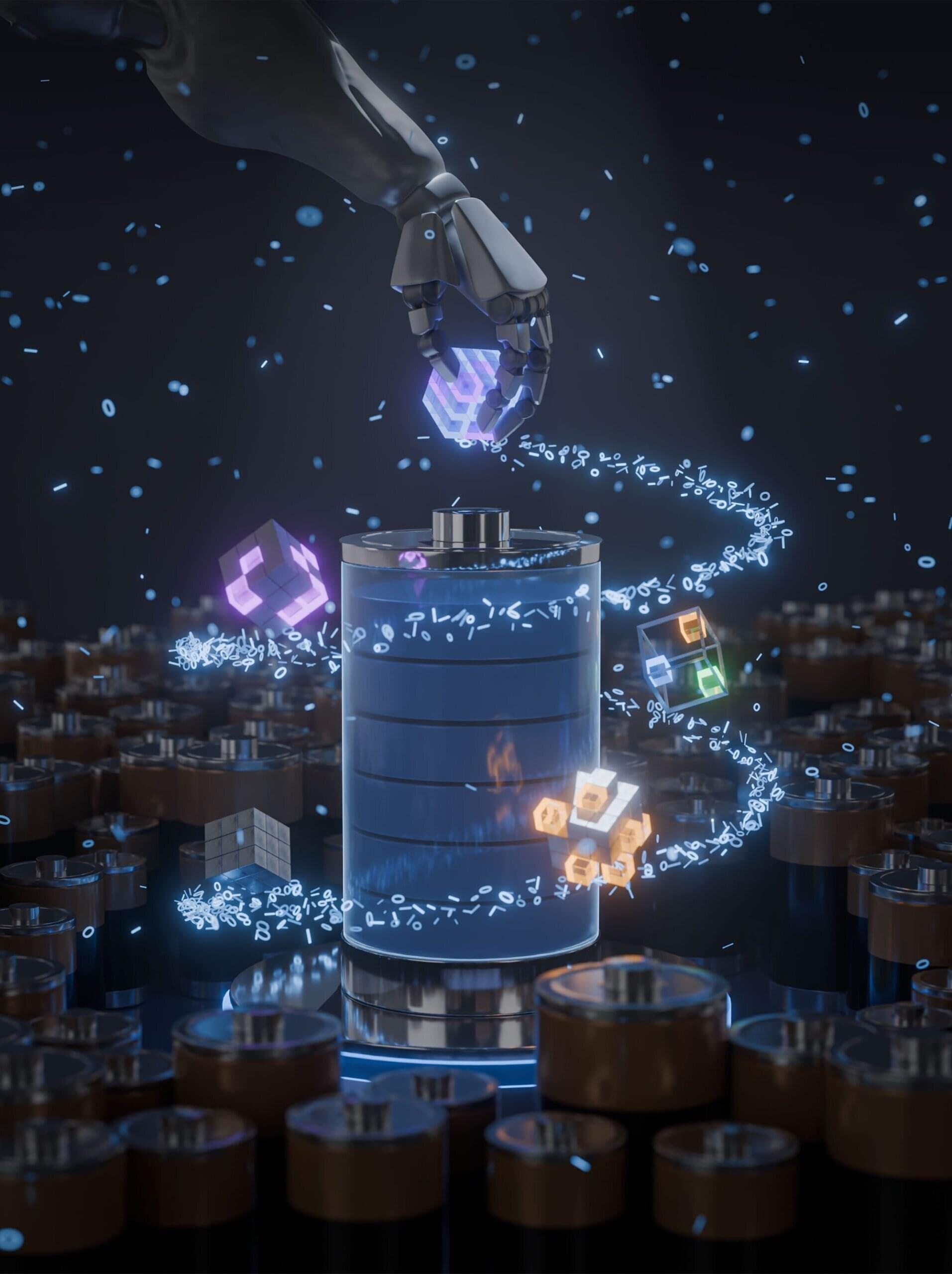
An agentic AI tool for battery researchers harnesses data from previous battery designs to predict the cycle life of new battery concepts. With information from just 50 cycles, the tool—developed at University of Michigan Engineering—can predict how many charge-discharge cycles the battery can undergo before its capacity drops below 90% of its design capacity.

This could save months to years of testing, depending on the conditions of cycling experiments, as well as substantial electrical power during battery prototyping and testing. The team estimates that the cycle lives of new battery designs could be predicted with just 5% of the energy and 2% of the time required by conventional testing.

“When we learn from the historical battery designs, we leverage physics-based features to construct a generalizable mapping between early-stage tests and cycle life,” said Ziyou Song, U-M assistant professor of electrical and computer engineering and corresponding author of the study in Nature. “We can minimize experimental efforts and achieve accurate prediction performance for new battery designs.”

X-rays from SLAC’s synchrotron reveal star maps in a centuries-old manuscript

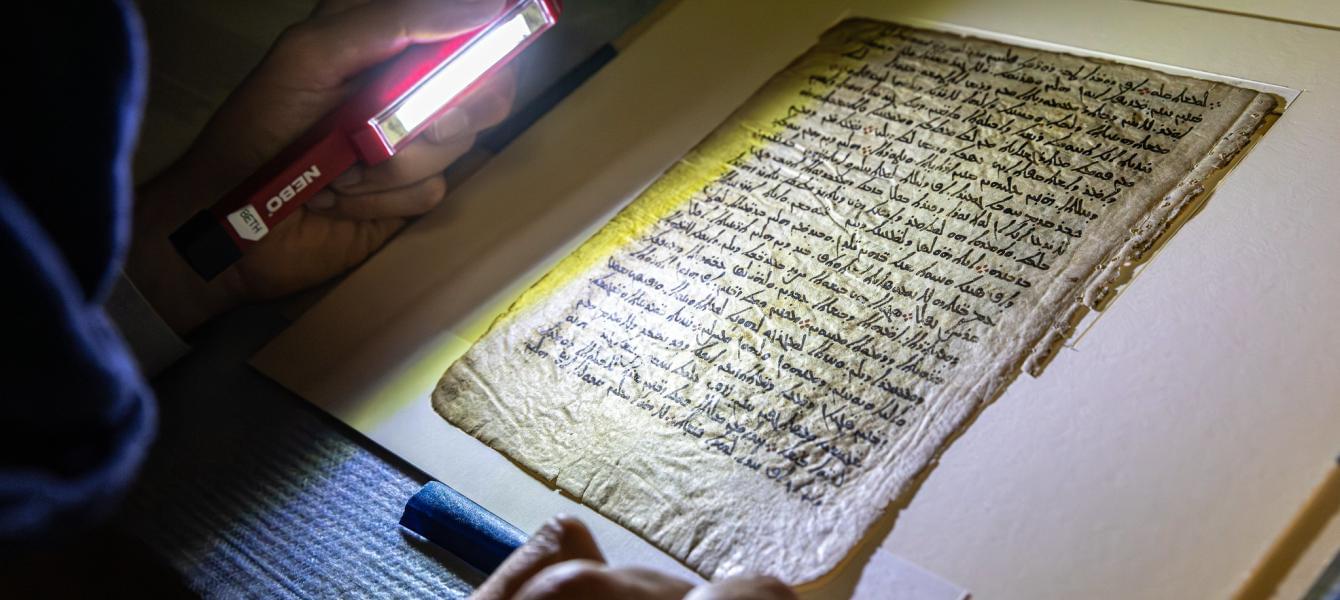
Pages from the Codex Climaci Rescriptus palimpsest from the Museum of the Bible in Washington, DC, were brought to the Stanford Synchrotron Radiation Lightsource to recover erased astronomical text, especially fragments from Hipparchus’ star catalog.

Using data to reduce subjectivity in landslide susceptibility mapping

In recent years, numerous landslides on hillsides in urban and rural areas have underscored that understanding and predicting these phenomena is more than an academic curiosity—it is a human necessity. When unstable slopes give way after intense rainfall, the consequences can be devastating, with both human and material losses. These recurring tragedies led us to a simple yet powerful question: Can we build landslide susceptibility maps that are more objective, transparent, and useful for local authorities and residents?

The answer led us to compare two susceptibility analysis methods: the traditional Analytical Hierarchy Process (AHP) and its statistical version, the Gaussian AHP. After months of multidisciplinary work, we found that the Gaussian AHP, which relies on data rather than subjective judgments, better identifies critical areas in a more balanced manner and is consistent with the landslide patterns observed in the field. We share here our journey and the lessons we learned. Our findings are published in Scientific Reports.

Traditional AHP is a decision-support technique widely used in geosciences and urban planning. It relies on pairwise comparisons of factors such as slope, soil type, and distance to rivers or roads to assign relative weights based on expert opinion. One advantage is that it allows the incorporation of accumulated experience; a disadvantage is the subjectivity and the effort required when many factors are involved. In our case, we worked with 16 physical and environmental variables that influence slope instability—from terrain morphometry to land cover and proximity to rivers.

New 3D map of the sun’s magnetic interior could improve predictions of disruptive solar flares

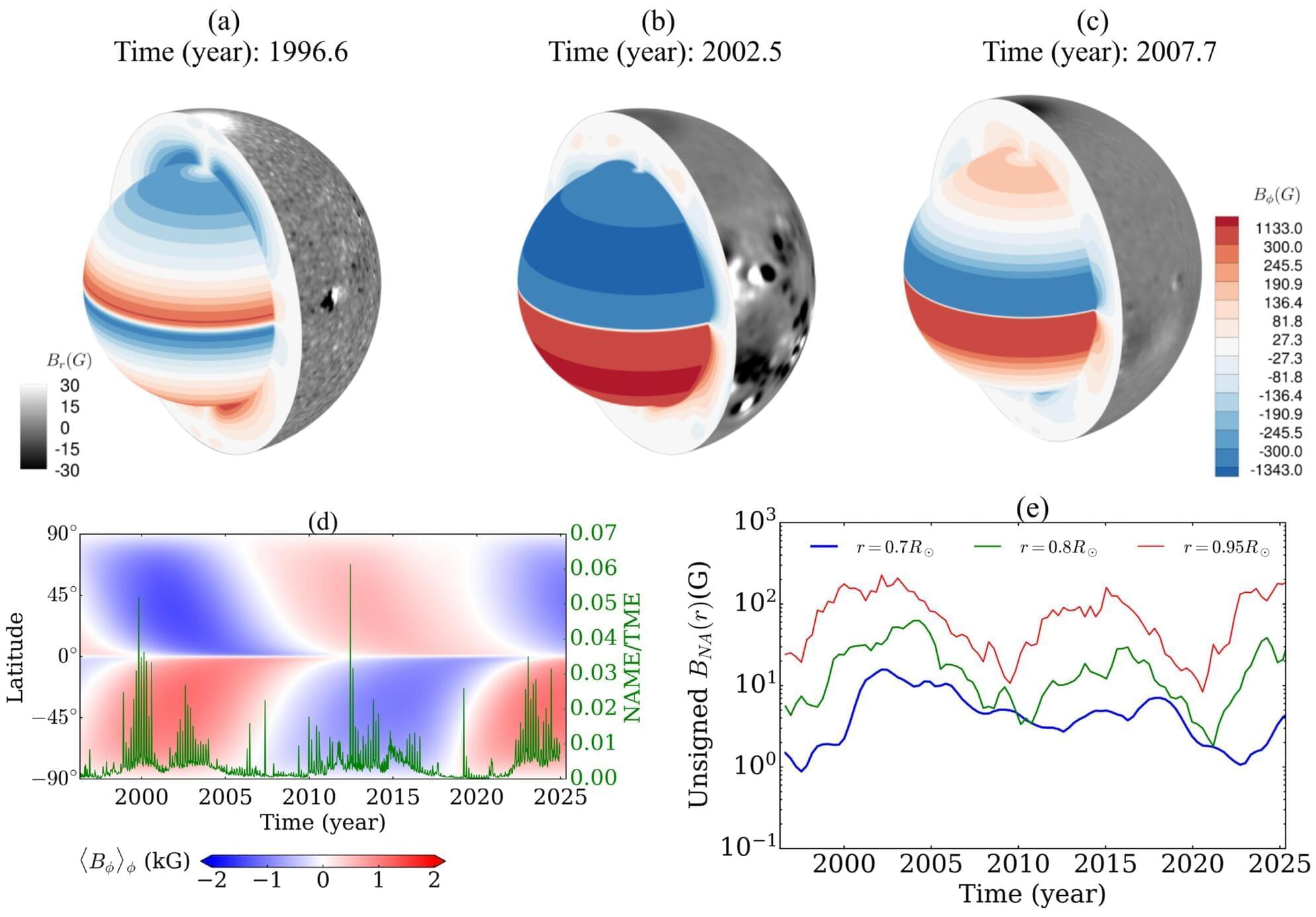
For the first time, scientists have used satellite data to create a 3D map of the sun’s interior magnetic field, the fundamental driver of solar activity. The research, published in The Astrophysical Journal Letters, should enable more accurate predictions of solar cycles and space weather that affects satellites and power grids.

The sun is more than just a fiery hot ball of hydrogen and helium gas. It is a giant magnetic star. Beneath the surface is a magnetic layer that is responsible for everything from the dark spots we see on its face to violent flares that erupt into space. Because of the disruption caused by solar storms, we need to know what is going on inside. We can’t directly observe the interior, so to date we have relied on models that depend on simplified assumptions. But these can be inaccurate.

To get a better idea of what is going on inside the sun, researchers from India fed 30 years of daily magnetic maps from satellites (from 1996 to 2025) into a sophisticated 3D model of the solar dynamo, the physical process that generates the sun’s magnetic field. By using this real-world data, they could track how magnetic fields move deep beneath the surface, where satellites cannot penetrate.

The world’s longest underwater high-speed train is now in progress, set to link two continents beneath the sea

On a foggy morning off the coast of Finland, the sea looks perfectly ordinary. A few fishing boats, a cargo ship on the horizon, the low hum of engines and gulls complaining overhead. Yet under that flat grey surface, survey vessels are tracing invisible lines, mapping the seabed for something that sounds like science fiction: a high‑speed train that will dive under the Baltic and emerge on another continent.

On deck, an engineer in a neon jacket points to the radar screen like someone tracing the outline of a new city. He talks about boring through rock, laying tracks where only fish and submarines have passed. His words hang in the cold air.

Soon, a train will cross here faster than most people cross a city.

Mapping ‘figure 8’ Fermi surfaces to pinpoint future chiral conductors

One of the biggest problems facing modern microelectronics is that computer chips can no longer be made arbitrarily smaller and more efficient. Materials used to date, such as copper, are reaching their limits because their resistivity increases dramatically when they become too small. Chiral materials could provide a solution here. These materials behave like left and right hands: they look almost identical and are mirror images of each other, but cannot be made to match.

“It is assumed that the resistivity in some chiral materials remains constant or even decreases as the chiral material becomes smaller. That is why we are working on using electronic chirality to develop materials for a new generation of microchips that are faster, more energy-efficient and more robust than today’s technologies,” says Professor Niels Schröter from the Institute of Physics at MLU. Until now, however, it has been difficult to produce thin layers of these materials without the left-and right-handed areas canceling each other out in their effects.

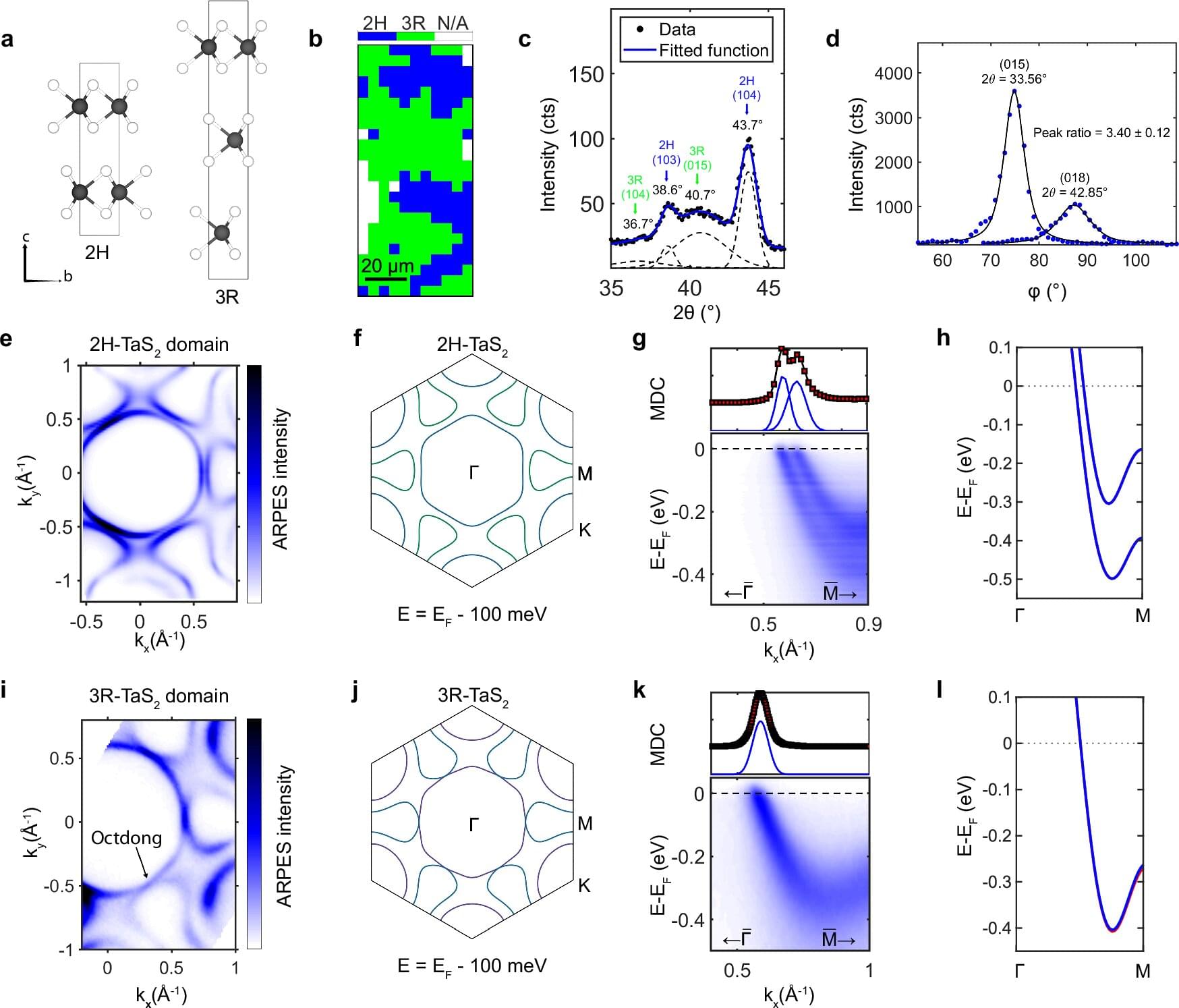
This is precisely where the new study, in which the Max Planck Institute for Microstructure Physics in Halle was also involved, comes in. “For the first time, we have found materials that are not yet chiral themselves. However, they have the potential to be converted into electronically chiral materials with only a single-handedness through targeted distortion. These achiral materials can serve as so-called parent materials for engineering chiral conductors with reduced resistivity,” explains Schröter.

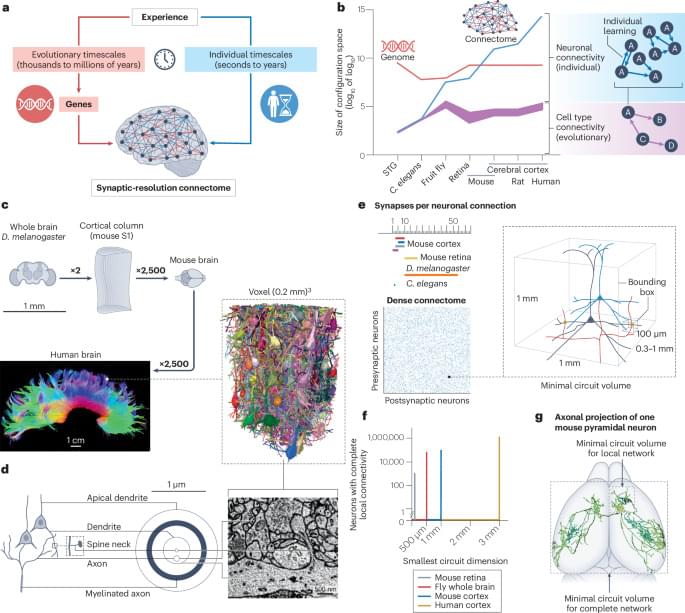
Synaptic-resolution connectomics: towards large brains and connectomic screening

Connectomics has delivered on its promise to map neuronal circuits at scale and at synaptic resolution. In this Review, Helmstaedter describes recent methodological achievements and remaining challenges in synaptic-resolution connectomics while synthesizing expanding connectomic mapping ambitions that include resolving local circuits of larger brains and screening of connectomes.

/* */