Toggle light / dark theme

What a zinc gradient in dentin could mean for fillings and tooth health

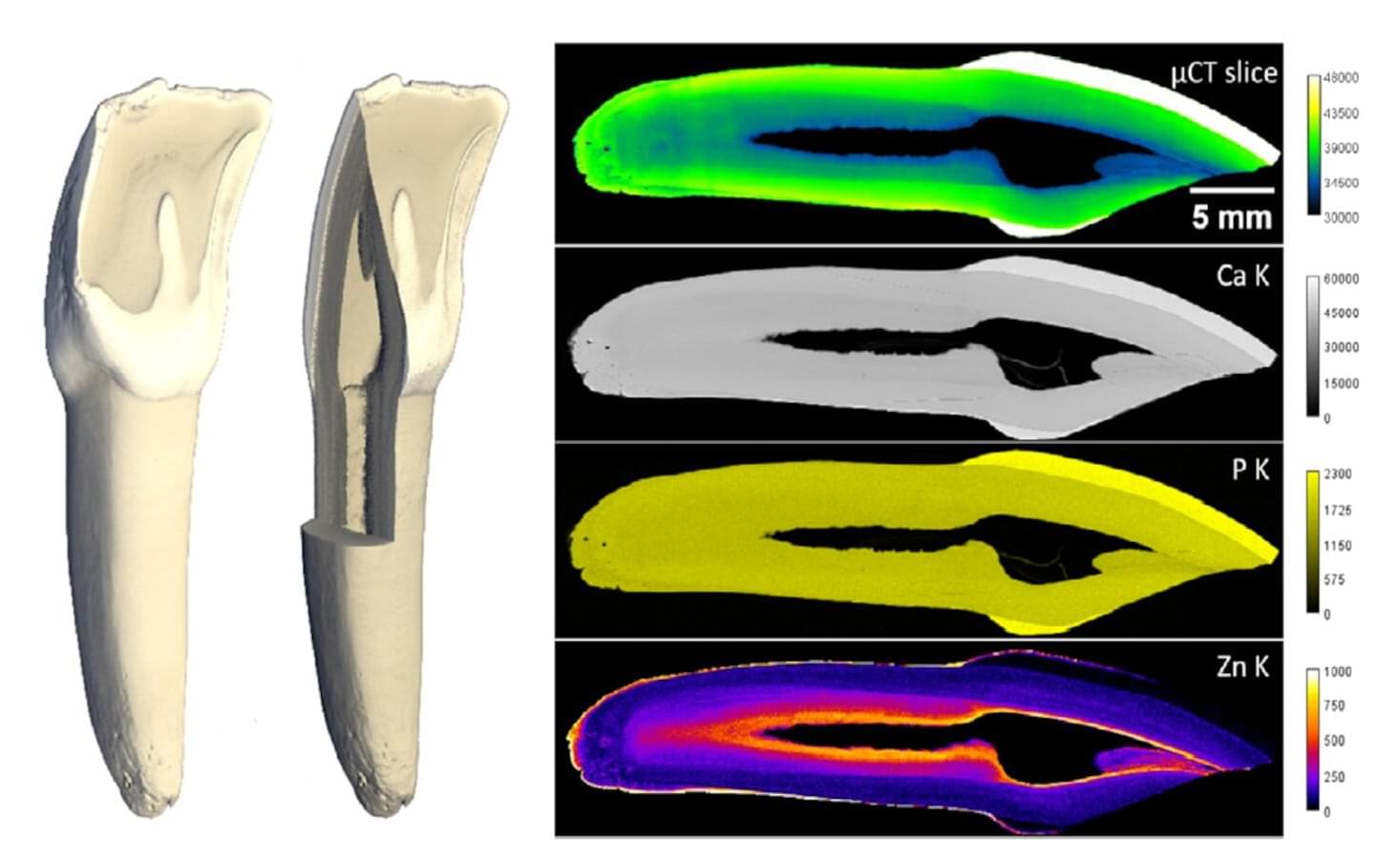
Teeth are composites of mineral and protein, with a bulk of bony dentin that is highly porous. This structure allows teeth to be both strong and sensitive. Besides calcium and phosphate, teeth contain trace elements such as zinc. Using complementary microscopy imaging techniques, a team from Charité Berlin, TU Berlin and HZB has quantified the distribution of natural zinc along and across teeth in 3 dimensions. The team found that, as porosity in dentin increases towards the pulp, zinc concentration increases 5~10 fold. These results help to understand the influence of widely-used zinc-containing biomaterials (e.g. filling) and could inspire improvements in dental medicine.

The paper is published in the journal VIEW.

Teeth have a complex structure: the dental pulp with the nerves is surrounded by dentin, a porous bony material, covered externally by enamel in the mouth and cementum in the roots. Although dentin is criss-crossed by countless micrometer-sized dentin tubules, teeth can withstand decades of cyclic, repeated forces. The density of the dentinal tubules increases towards the pulp, meaning that the dentin becomes increasingly porous towards the inside.
Will probiotics work for you? Models map gut metabolism to predict success

A new study demonstrates that computer models of gut metabolism can predict which probiotics will successfully establish themselves in a person’s gut and how different prebiotics affect production of health-promoting short-chain fatty acids. The findings are published in PLOS Biology by Sean Gibbons of the Institute for Systems Biology, US, and colleagues.

Probiotic and prebiotic supplements show highly variable results across individuals, making it difficult to predict who will benefit from these interventions. This variability comes from complex interactions between introduced probiotics, each person’s existing gut microbiota, and their diet.

In the new work, researchers first tested a metabolic model on data from two previous studies in which participants diagnosed with type 2 diabetes were given a placebo or probiotic/prebiotic mixture designed to improve glucose control and healthy participants were given a placebo or a probiotic treatment designed to treat recurrent Clostridioides difficile infections, respectively.

Grant supports research into how microglia may spread toxic tau in Alzheimer’s

A paper describing Hopp’s upcoming study published on the CureAlz website, titled, “How Do Microglia Contribute to the Spread of Tau Pathology in Alzheimer’s Disease?”, says that while tau aggregates are a defining feature of Alzheimer’s disease and closely track with brain cell loss, memory problems and cognitive decline, much still isn’t known about how it spreads or what role the brain’s immune system plays in the process.

There is evidence, it says, that toxic forms of tau, which have become “misfolded” or dysfunctional, act like a “bad influence.”

“When they encounter nearby healthy tau proteins, they cause them to misfold as well, triggering a chain reaction that spreads from one brain region to another,” according to the paper. “Microglia … are among the first to encounter these toxic tau ‘seeds.’ Normally, microglia protect the brain by clearing debris and helping repair damage. But growing evidence suggests that microglia may also contribute to tau’s spread by engulfing misfolded tau and inadvertently releasing it, thereby amplifying its harmful effects.”


A researcher with the Glenn Biggs Institute for Alzheimer’s and Neurodegenerative Diseases at UT Health San Antonio has received a two-year, $402,500 grant award from the Cure Alzheimer’s Fund to study how microglia, the brain’s resident immune cells, paradoxically might contribute to the spread of toxic forms of tau protein in the disease.

Sarah C. Hopp, PhD, associate professor of pharmacology with the Biggs Institute and the South Texas Alzheimer’s Disease Research Center, along with her lab have been instrumental in uncovering the behavior of microglia. UT Health San Antonio is the academic health center of The University of Texas at San Antonio.

Starting this month, Hopp’s lab will test the hypothesis that microglial uptake of tau is a key mechanism driving its spread through the brain, and that specific molecular pathways determine whether this process protects or harms neurons. The Cure Alzheimer’s Fund, also known as CureAlz, is a nonprofit organization that funds research “with the highest probability of preventing, slowing or reversing Alzheimer’s disease.”

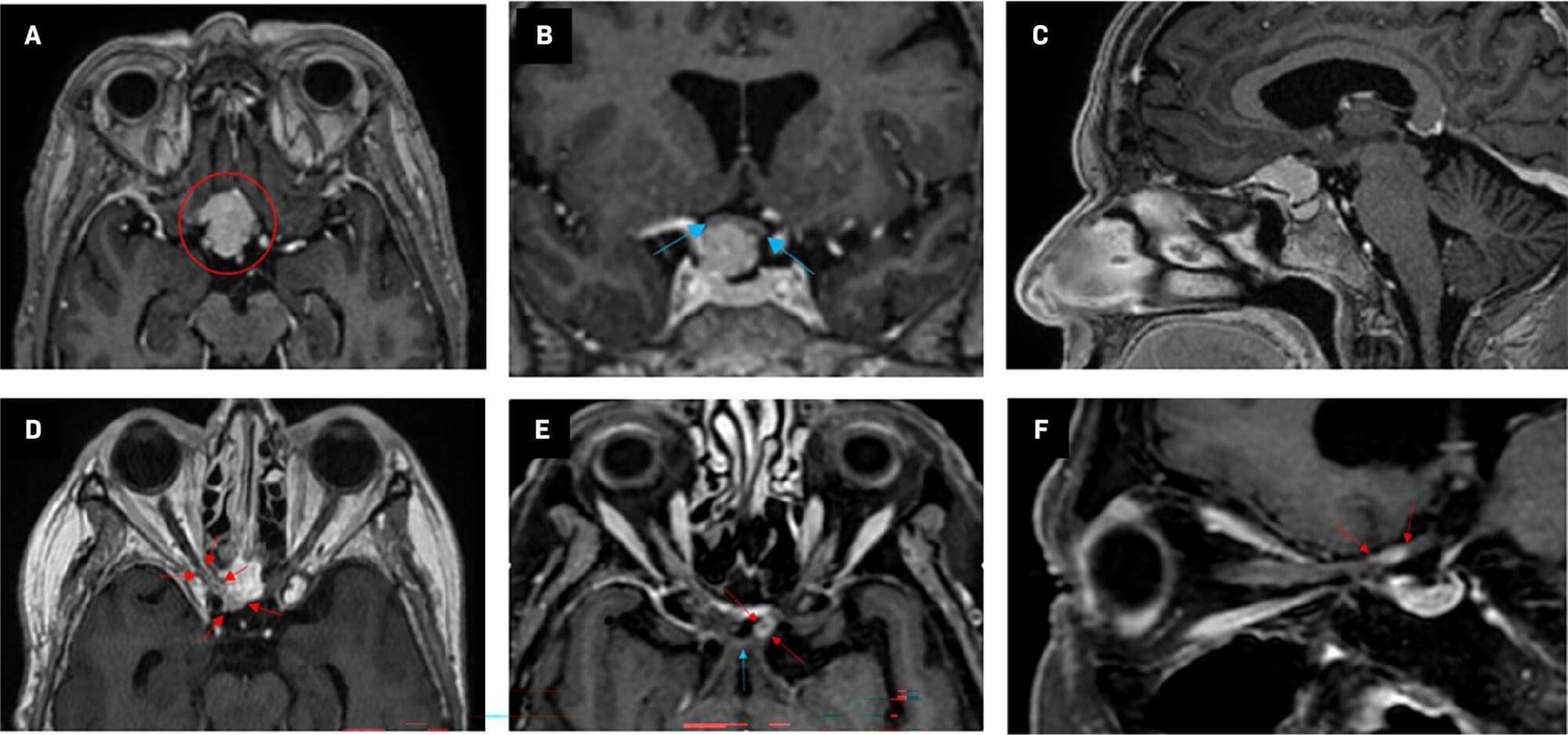
Radiation-Induced Optic Neuropathy Following Radiation Therapy for a Recurrent Tuberculum Sellae Meningioma: A Case Report

A new light-based imaging approach has produced an unprecedented chemical map of the Alzheimer’s brain.

Rice University researchers have produced what they describe as the first full, label-free molecular atlas of an Alzheimer’s brain in an animal model. In simple terms, they created a brain-wide “chemical map” that can help scientists study where the disease appears to take hold and how it spreads over time. Alzheimer’s is also a major public health threat, killing more people than breast cancer and prostate cancer combined.

Instead of focusing only on classic pathology markers, the team examined the brain’s underlying chemistry using a light-based imaging approach paired with machine learning. Their study, published in ACS Applied Materials and Interfaces, shows that Alzheimer’s-linked chemical shifts are patchy across the brain rather than uniform. It also suggests those shifts extend beyond amyloid plaques, the best-known feature of the disease.

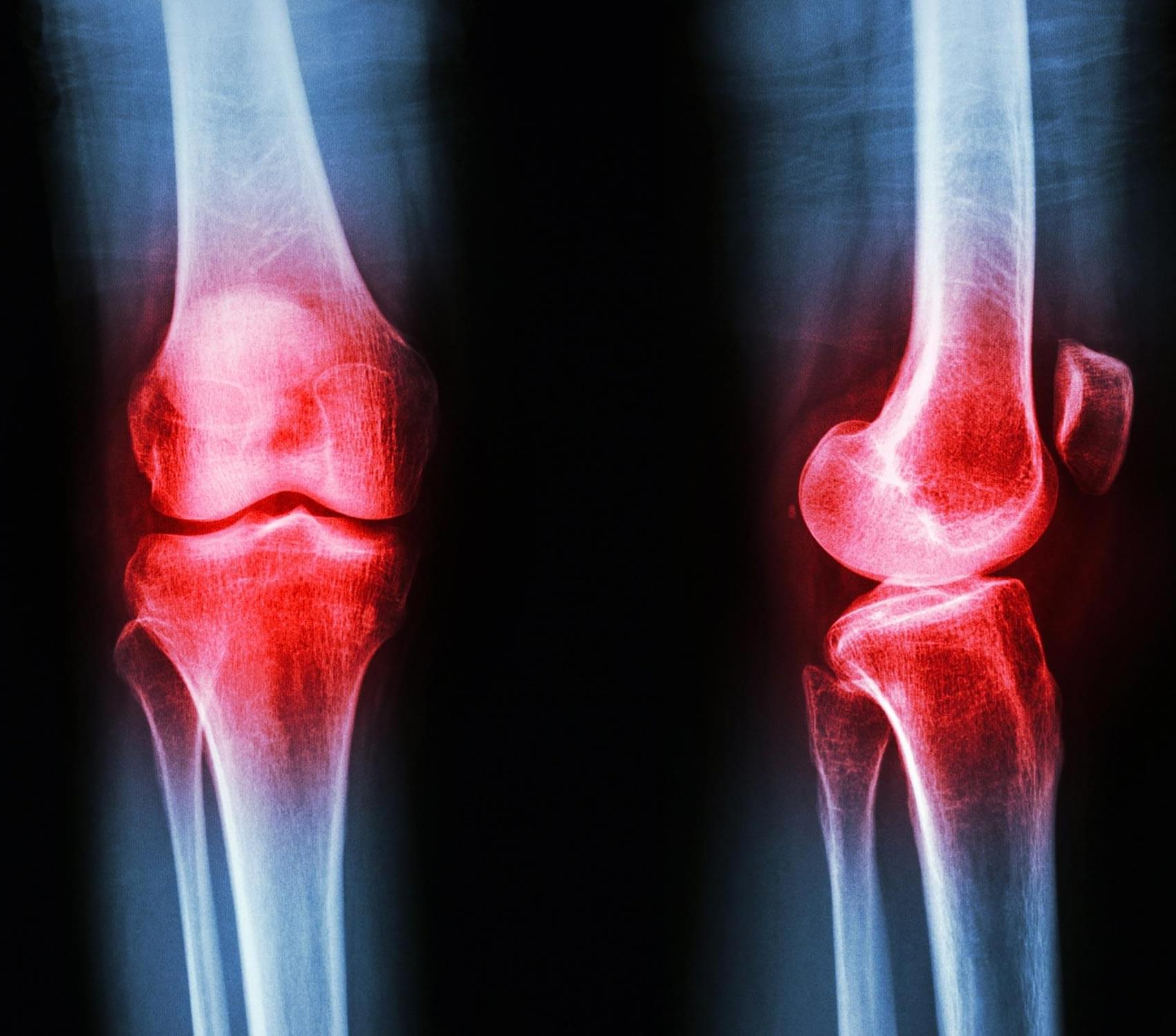
The “Most Effective” Treatment for Osteoarthritis May Be Less Helpful Than Thought

A sweeping review of clinical evidence casts doubt on one of the most commonly prescribed treatments for osteoarthritis. For millions of people living with osteoarthritis, being told to exercise is almost a reflex in medical care. But a new analysis suggests that, when it comes to easing joint pa

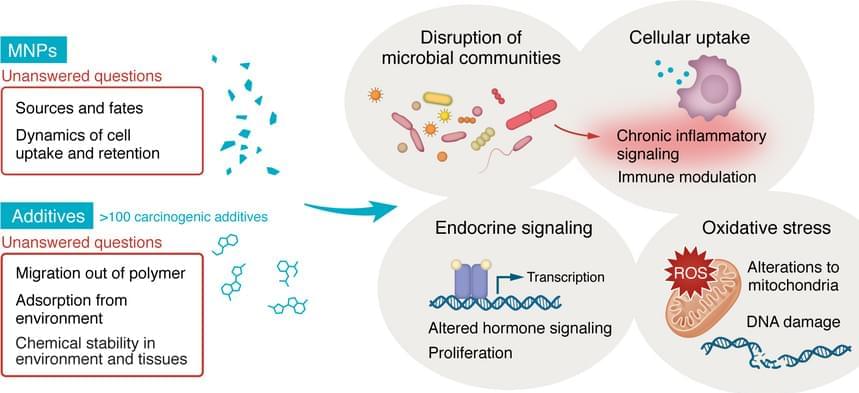
Health impacts of micro- and nanoplastic ingestion

The carcinogenic consequences of the plastic pollution crisis.

This Viewpoint by Jason A. Somarelli, Jason W. Arnold & Andrew B. West discusses the health impacts of micro-and nanoplastic ingestion: microplastics.


Address correspondence to: Jason A. Somarelli, 3,044 Genome Sciences Research Building I, 905 S. Lasalle St., Duke University Medical School, Durham, North Carolina 27,710, USA. Email: [email protected].

Researcher skeptical of ‘Havana syndrome’ tested secret weapon on himself

“Working in strict secrecy, a government scientist in Norway built a machine capable of emitting powerful pulses of microwave energy and, in an effort to prove such devices are harmless to humans, in 2024 tested it on himself. He suffered neurological symptoms similar to those of ”Havana syndrome,” the unexplained malady that has struck hundreds of U.S. spies and diplomats around the world.

The bizarre story, described by four people familiar with the events, is the latest wrinkle in the decade-long quest to find the causes of Havana syndrome, whose sufferers experience long-lasting effects including cognitive challenges, dizziness and nausea. The U.S. government calls the events Anomalous Health Incidents (AHIs).

The secret test in Norway has not been previously reported. The Norwegian government told the CIA about the results, two of the people said, prompting at least two visits in 2024 to Norway by Pentagon and White House officials.


The CIA investigated a Norwegian government experiment with a pulsed-energy machine in which a researcher built and tested a ”Havana syndrome” device on himself.

Blood test ‘clocks’ can predict when Alzheimer’s symptoms will start

Researchers at Washington University School of Medicine in St. Louis have developed a method to predict when someone is likely to develop symptoms of Alzheimer’s disease using a single blood test. In a study published in Nature Medicine, the researchers demonstrated that their models predicted the onset of Alzheimer’s symptoms within a margin of three to four years.

This method could have implications both for clinical trials developing preventive Alzheimer’s treatments and for eventually identifying individuals likely to benefit from these treatments.

More than seven million Americans live with Alzheimer’s disease, with health and long-term care costs for Alzheimer’s and other forms of dementia projected to reach nearly $400 billion in 2025, according to the Alzheimer’s Association. This massive public health burden currently has no cure, but predictive models could help efforts to develop treatments that prevent or slow the onset of Alzheimer’s symptoms.

Scientists find a mechanism showing how exercise protects the brain

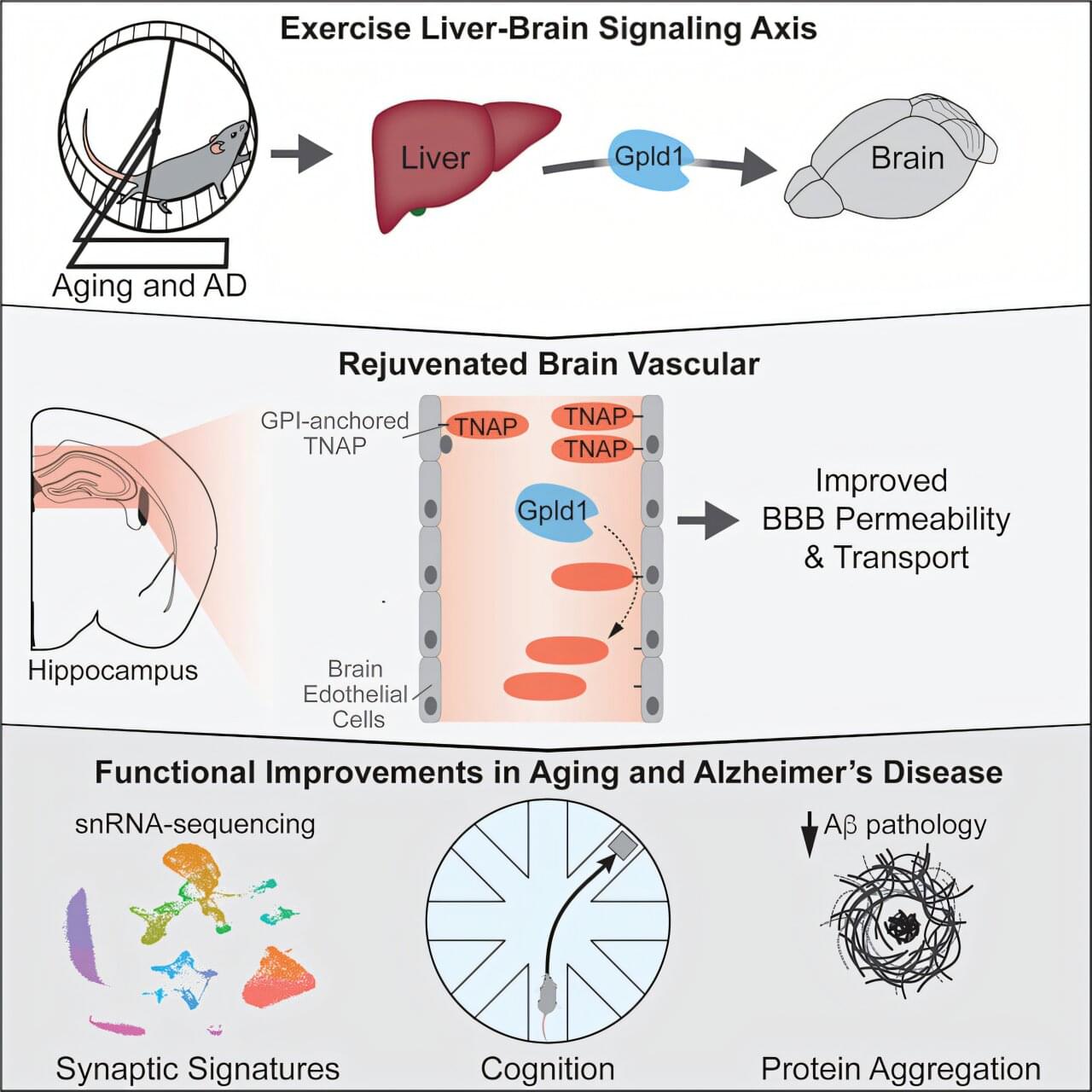
Researchers at UC San Francisco have discovered a mechanism that could explain how exercise improves cognition by shoring up the brain’s protective barrier. With age, the network of blood vessels—called the blood–brain barrier—gets leaky, letting harmful compounds enter the brain. This causes inflammation, which is associated with cognitive decline and is seen in conditions like Alzheimer’s disease. The research is published in the journal Cell.

Six years ago, the team identified a brain-rejuvenating enzyme called GPLD1 that mice produced in their livers when they exercised. But they couldn’t understand how it worked, because it cannot get into the brain.

The new study answers that question. Researchers discovered that GPLD1 was working through another protein called TNAP. As the mice age, the cells that form the blood-brain barrier accumulate TNAP, which makes it leaky. But when mice exercise, their livers produce GPLD1. It travels to the vessels that surround the brain and trims TNAP off the cells.

/* */