Toggle light / dark theme

Terahertz spectroscopy finds nitrogen can lengthen GaAs-like LO phonon decay

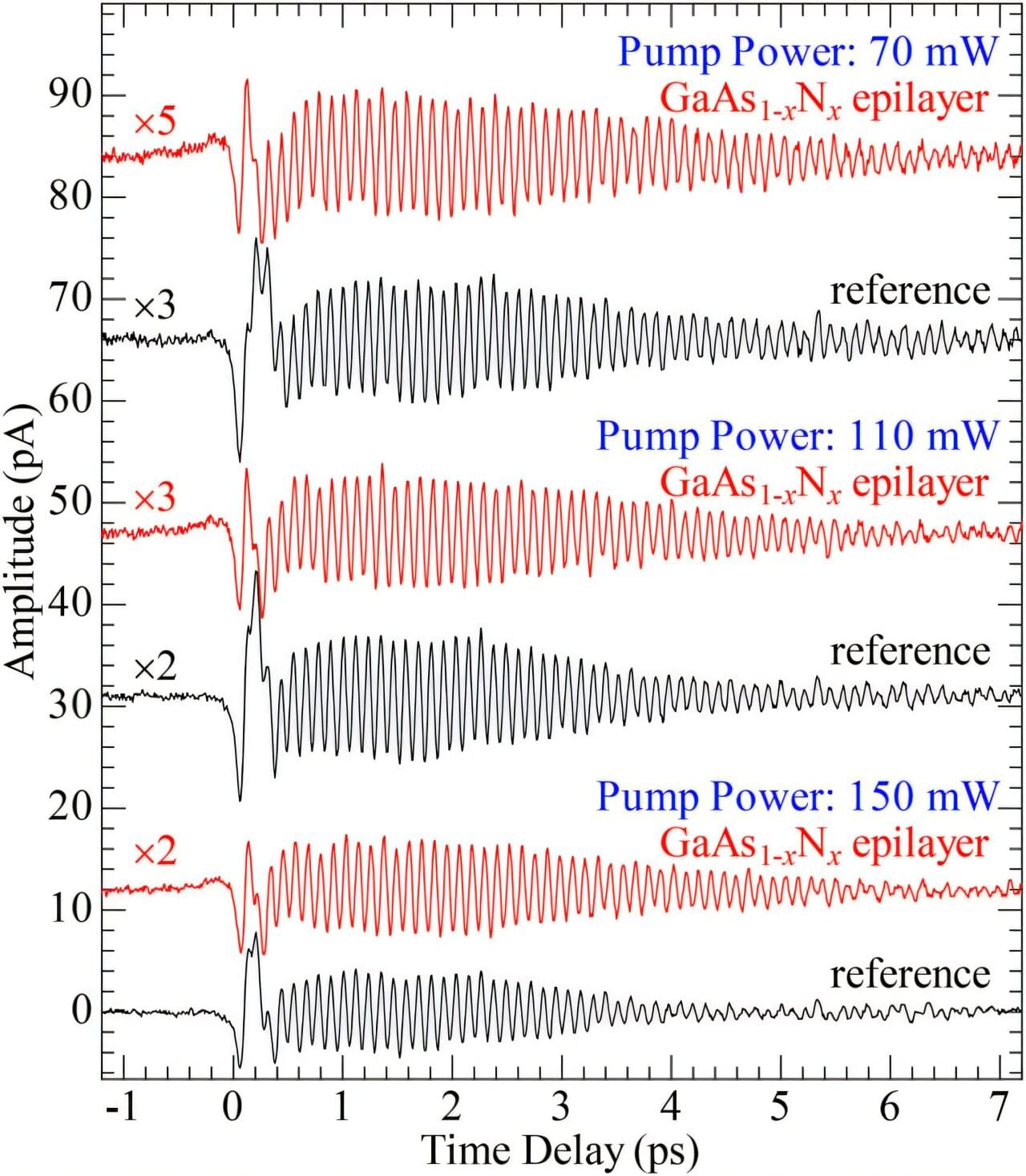
An Osaka Metropolitan University-led research team investigated the decay time of coherent longitudinal optical (LO) phonons both in a GaAs1−x Nx epilayer and in a GaAs single crystal to clarify the effects of dilute nitridation.

The team observed in terahertz time-domain spectroscopy that the terahertz electromagnetic waves, which are emitted from the coherent GaAs-like LO phonons, have a relatively long decay time in a GaAs1−x Nx epilayer in comparison with the terahertz waves from the coherent GaAs LO phonons in a semi-insulating GaAs single crystal.

This implies that alloy effects (mixed crystal effects) on the phonon Raman band broadening, which have a possibility of leading to the short decay time, hardly govern the decay time even in the present GaAs1−x Nx epilayer sample.


An inducible multiciliated cell line resolves proteome dynamics and identifies CDK7 as a conserved regulator

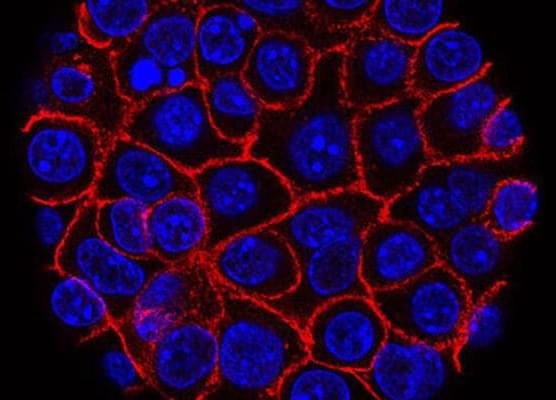
Camille Boutin, Laurent Kodjabachian et al. describe an inducible multiciliated cell line well suited for advanced microscopy and proteomic approaches. The study provides a detailed proteomic profiling of MCC during their differentiation.


Boutin et al., describe an inducible multiciliated cell line well suited for advanced microscopy and proteomic approaches. The study provides a detailed pr.

Immunotherapy plus chemotherapy before surgery shows promise for pancreatic cancer

A new UCLA investigator-initiated study has found that adding immunotherapy to standard chemotherapy before surgery is safe and shows promise for some patients with borderline-resectable pancreatic cancer, a disease that has historically been difficult to treat.

The findings, published in Nature Communications, show that while the combination did not produce a clear survival advantage for most patients, a notable subset experienced unusually deep and durable responses. It also helped some patients live long enough to reach surgery, shrank tumors and produced encouraging survival outcomes.

The study also revealed immune changes that may limit how well immunotherapy works in pancreatic cancer, offering important clues for how future treatment strategies could be refined to further improve patient outcomes.

/* */