Toggle light / dark theme

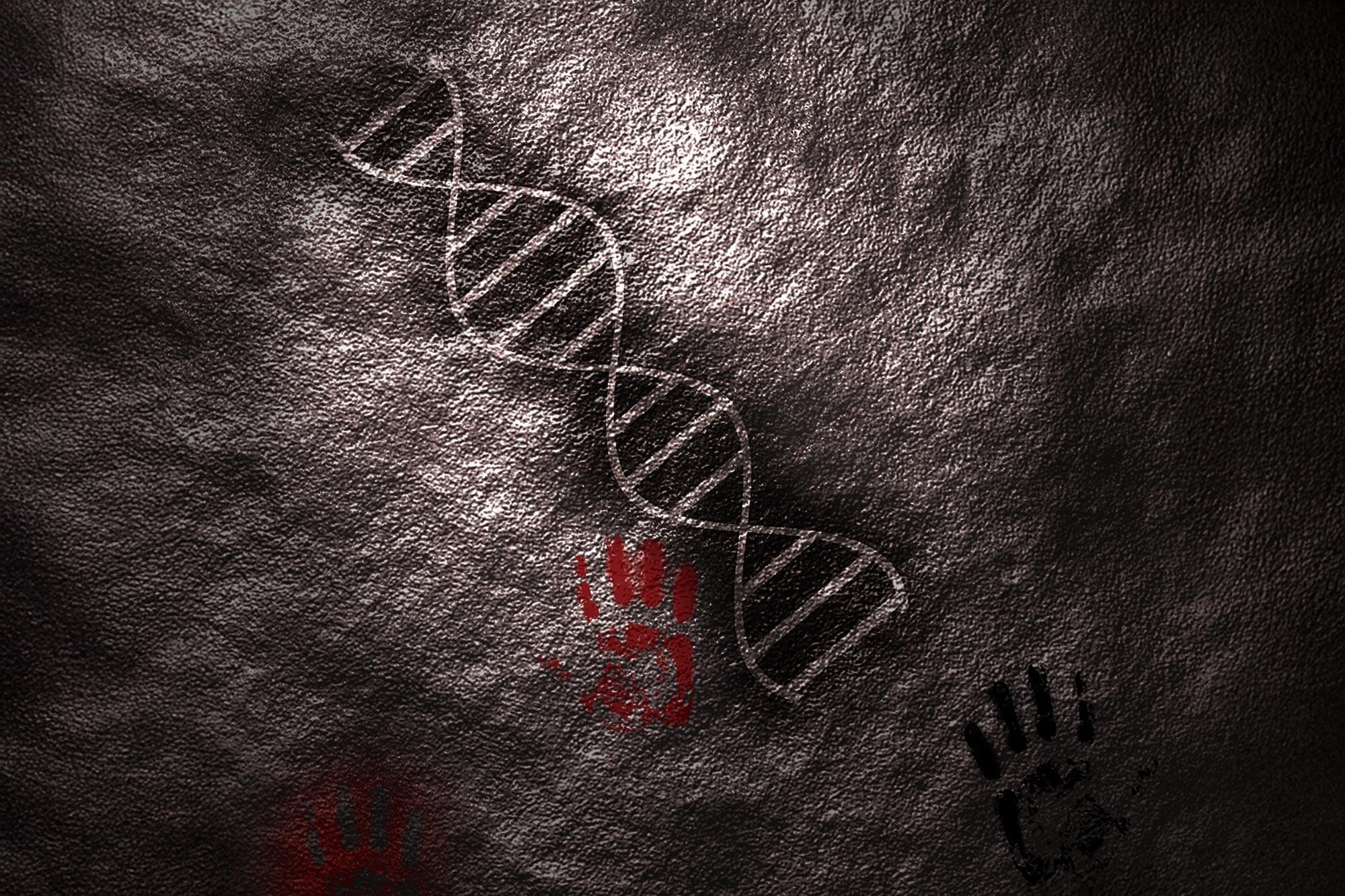
An agentic system for rare disease diagnosis with traceable reasoning

DeepRare—a multi-agent system for rare disease differential diagnosis decision support powered by large language models, integrating specialized tools and up-to-date knowledge sources—has the potential to reduce healthcare disparities in rare disease diagnosis.

Associations of Lifetime Cognitive Enrichment With Incident Alzheimer Disease Dementia, Cognitive Aging, and Cognitive Resilience

Study results suggest that cognitive health in later life is in part the product of lifetime exposure to cognitive enrichment.


Background and Objectives.

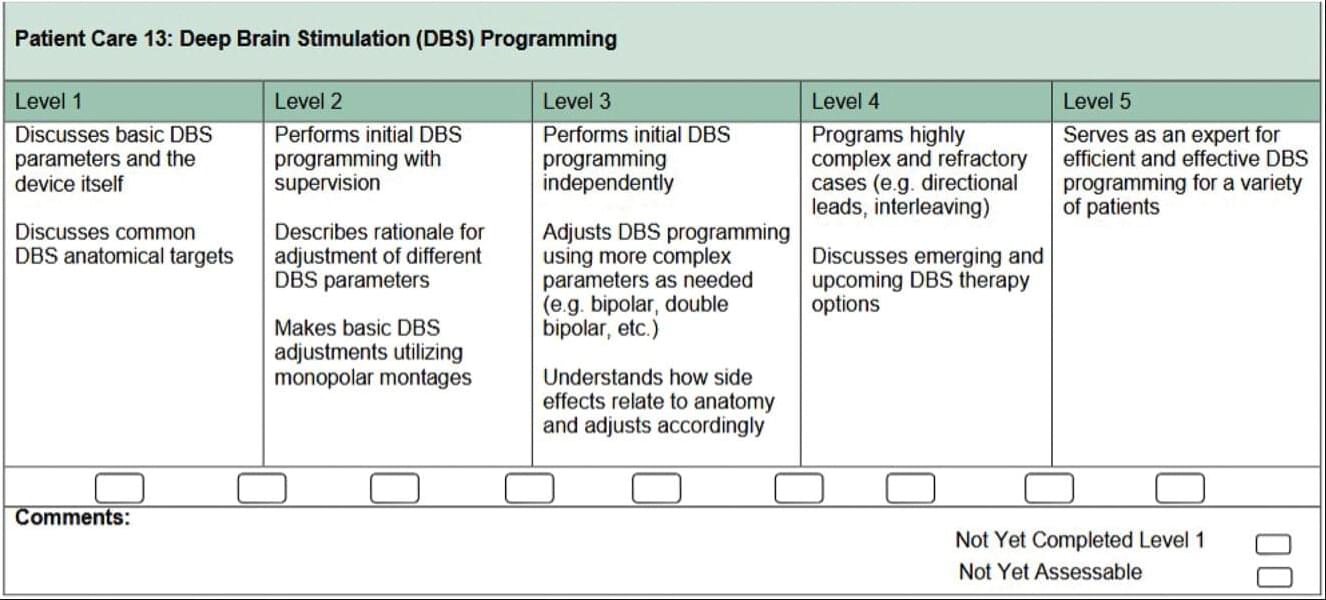
A Reflection on Movement Disorders Fellowship Training in Deep Brain Stimulation: Past and Future

A Reflection on Movement Disorders —Fellowship Training in Deep Brain Stimulation: Past and Future.


Deep brain stimulation (DBS) has been an integral part of movement disorders care for decades. However, differences exist in techniques for surgical implantation of DBS and clinician experience with DBS systems, including use of new software, programming approaches, and postsurgical management of patients. DBS technologies have been rapidly advancing, and indications for DBS are increasing, including for psychiatric symptoms and epilepsy. The heterogeneity in the scope and utility of DBS is perhaps mirrored in education and training, despite efforts to develop competency measures for trainees. These advancements in DBS and the varying opportunities offered at each fellowship contribute to challenges for program directors to establish and implement consistent expectations. Similar challenges have been observed in other fields using neuromodulation.

Scientists reverse muscle aging in mice and discover a surprising catch

A UCLA study in mice reveals that aging muscle stem cells accumulate a protein that slows repair but boosts survival. This protein, NDRG1, acts like a brake, preventing cells from activating quickly after injury. When researchers blocked it in older mice, muscle healing sped up dramatically — but stem cells became less resilient over time. The work suggests aging may reflect a survival trade-off rather than straightforward decline.

‘Off the shelf’ immunotherapy could get a lift from gene-edited natural killer cells

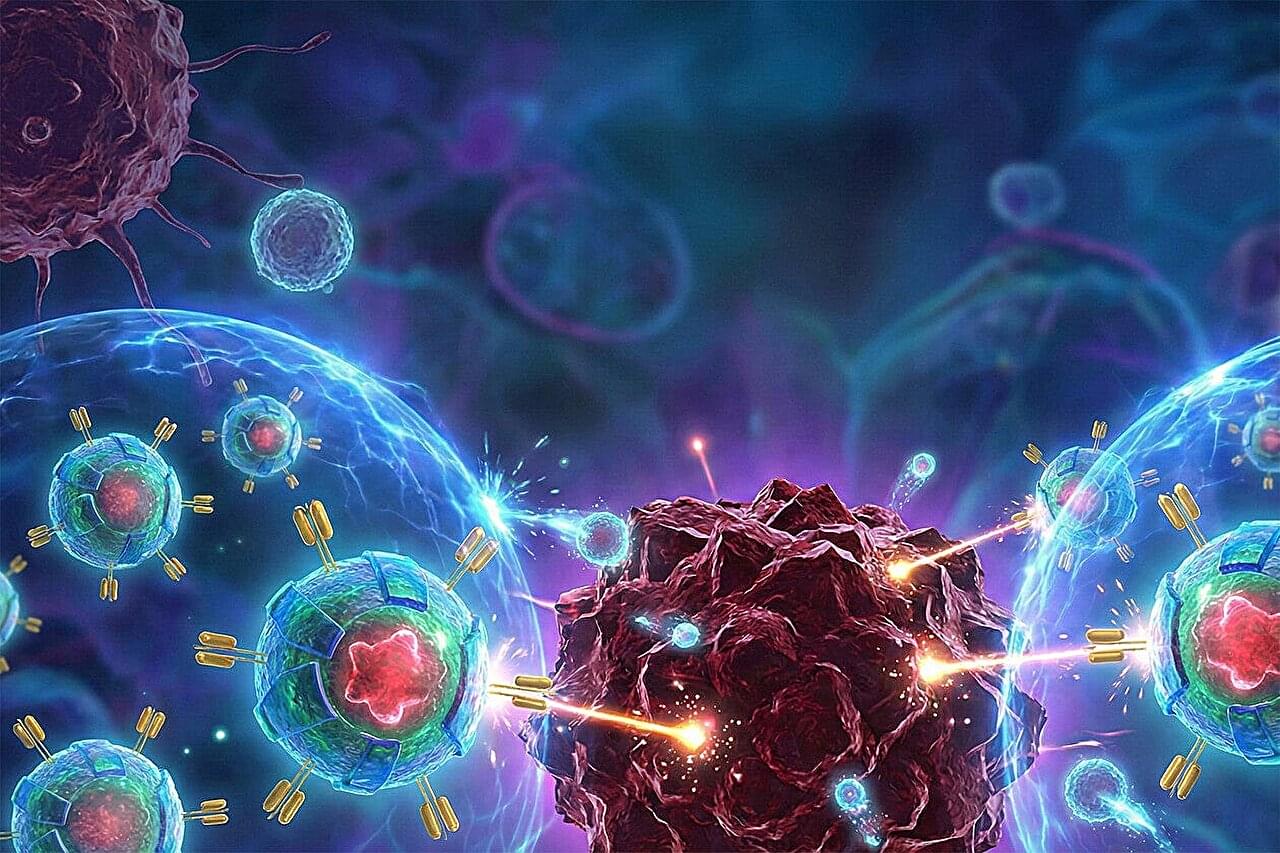
Since scientists first discovered that human immune cells could be modified to become cancer-fighting agents, they’ve been trying to engineer a cell that’s effective against solid tumors, which account for the vast majority of cancer cases. In a key advance in meeting this “holy grail challenge” in the field of cancer cell therapy, a team of Yale scientists led by geneticist Sidi Chen has revealed how immune cells can be “boosted” to target and eradicate solid tumors.

The field of cell therapy began to revolutionize cancer treatment several decades ago, when researchers pioneered the use of therapeutic cells. In this process, immune cells are removed from a patient, modified so that they can better fight cancer, and then reintroduced into the patient’s body.

Two major streams of this therapy exist: CAR-NK cell therapy, which uses a patient’s natural killer (NK) cells, and CAR-T cell therapy, which uses a patient’s T cells. In both cases, scientists genetically modify the cells to express Chimeric Antigen Receptor (CAR), a synthetic receptor that helps immune cells recognize proteins on cancer cells.

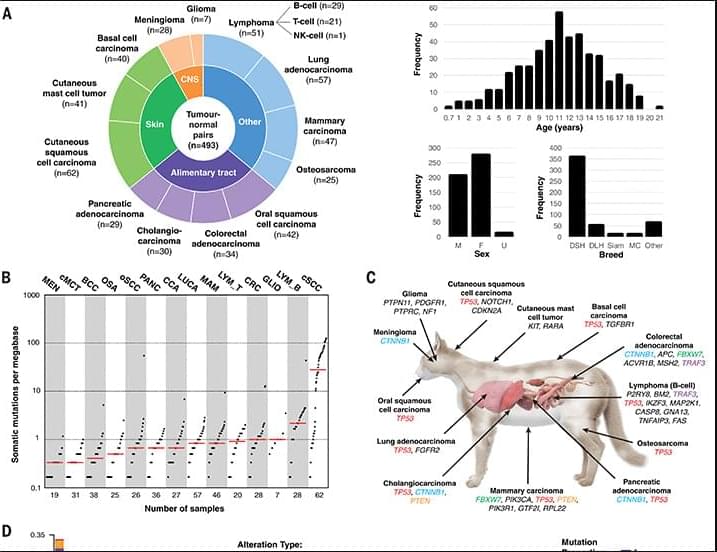
The oncogenome of the domestic cat

Although cancer is a common cause of death in domestic cats, little is known about the range of cancer genes in cat tumors, and how this range might compare with the oncogenome in people.

Now, researchers in Science have sequenced cancer genes in 493 samples from 13 different types of feline cancer and matched healthy control tissue, gaining a clearer picture of the cat oncogenome and comparing the genes to known cancer-causing mutations in humans.


Cancer is a common cause of morbidity and mortality in domestic cats. Because the mutational landscape of domestic cat tumors remains uncharacterized, we performed targeted sequencing of 493 feline tumor–normal tissue pairs from 13 tumor types, focusing on the feline orthologs of ~1000 human cancer genes. TP53 was the most frequently mutated gene, and the most recurrent copy number alterations were loss of PTEN or FAS or gain of MYC. By identifying 31 driver genes, mutational signatures, viral sequences, and tumor-predisposing germline variants, our study provides insight into the domestic cat oncogenome. We demonstrate key similarities with the human oncogenome, confirming the cat as a valuable model for comparative studies, and identify potentially actionable mutations, aligning with a “One Medicine” approach.

/* */