Toggle light / dark theme

Battleship-trained AI learns to ask sharper questions, boosting win rate from 8% to 82%

In 2026, the hype for artificial intelligence agents is louder than ever before. These semi-autonomous programs can “think” and execute well-defined tasks in areas like customer service and software development, typically using language models (LMs). But fields like medical diagnosis and scientific discovery require them to inquire about a vast range of solutions in uncertain environments which LMs struggle with.

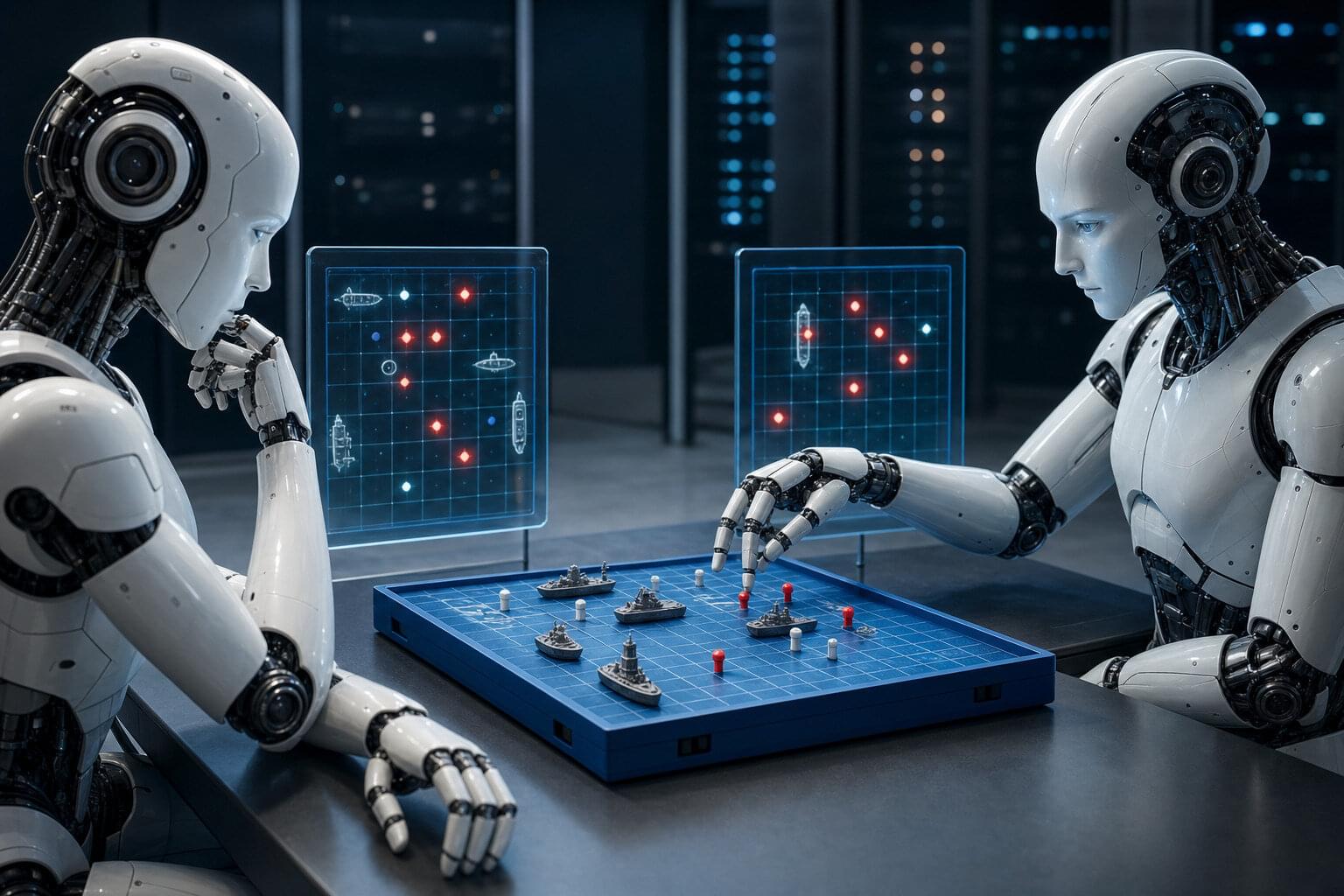
Researchers at MIT’s Computer Science and Artificial Intelligence Laboratory (CSAIL) and Harvard University’s School of Engineering and Applied Sciences (SEAS) peered deeper into LMs to understand their main issues in high-stakes settings. Their test: Battleship, a classic guessing game that’s helped cognitive scientists study how humans seek information.

CSAIL and SEAS scholars added a twist by reframing the game around asking and answering natural language questions. In their “Collaborative Battleship” game, one participant is a “captain” who inquires about where hidden ships are, while their teammate plays the “spotter” by responding to those questions in real time.

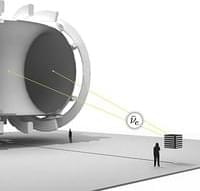
Detectability of covert fissile material production in nuclear fusion reactors via antineutrino emissions

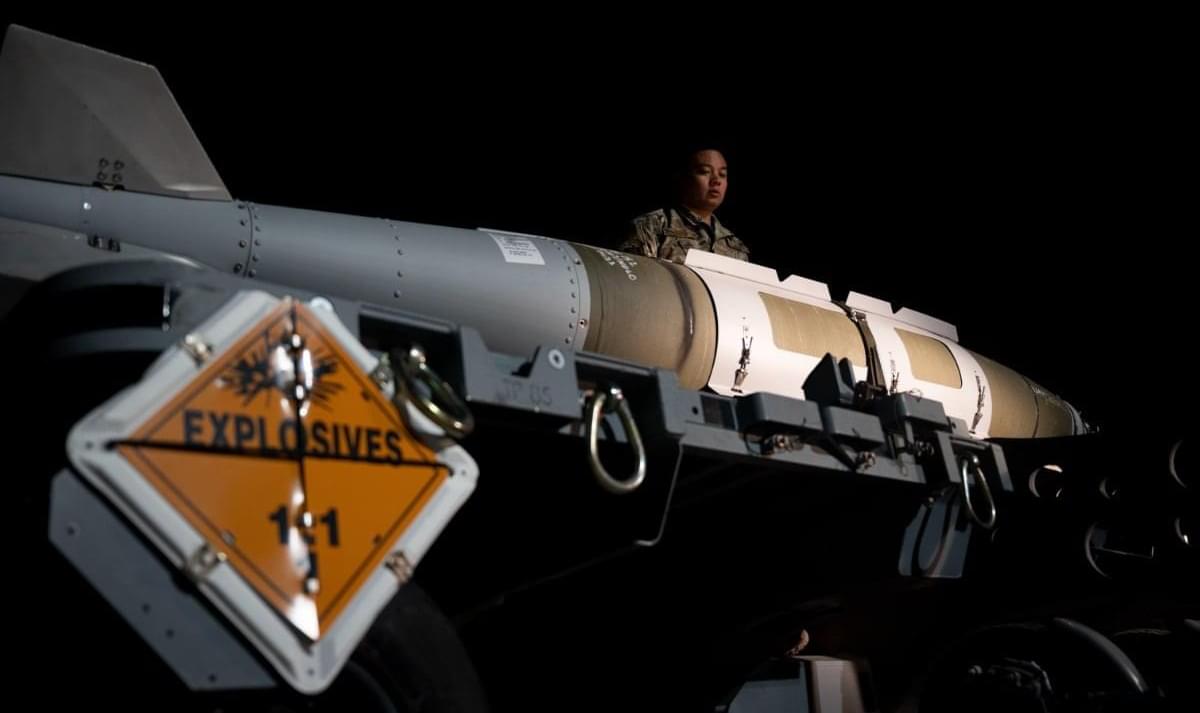
Research and development of fusion energy has recently gained a strong impetus from private investment. While less of a proliferation risk than conventional fission systems, modified fusion systems could produce material usable in nuclear weapons. This paper examines an innovative use of antineutrino detectors to find misuse of fusion systems. Since antineutrinos are so penetrating, this technique carries near-zero interference with fusion energy system operation.

Nano Weapons: The Invisible Machines Changing Future Wars!

In this video, we explore the incredible and terrifying world of nano-weapons — microscopic machines designed for the battlefields of the future. From invisible drones to molecular-level assassins, nanotechnology is revolutionizing modern warfare in ways the world has never seen before. Discover how these tiny machines can spy, sabotage, and even kill at the atomic scale. We’ll uncover real-world research, secret military projects, and the ethical dangers behind the next generation of warfare. The rise of nano-weapons could change the balance of global power forever — but are we ready for what’s coming? Watch till the end to understand the full potential and risks of these microscopic war machines.
Hashtags (12):
#NanoWeapons #FutureWarfare #Nanotechnology #MilitaryTech #WarInnovation #ScienceAndTechnology #NanoMachines #InvisibleWar #BattlefieldOfTomorrow #DefenseTechnology #AIWarfare #FutureScience.
Keywords (23):
nano weapons, microscopic machines, future warfare, military technology, nanotechnology, nano drones, nano robots, molecular weapons, defense innovation, secret military research, nano science, nano warfare, nano army, advanced technology, invisible battlefield, modern weapons, AI warfare, nanobots, nano defense, future military, scientific discovery, advanced warfare, nano.

Violent rocket particles could reshape future spacecraft design

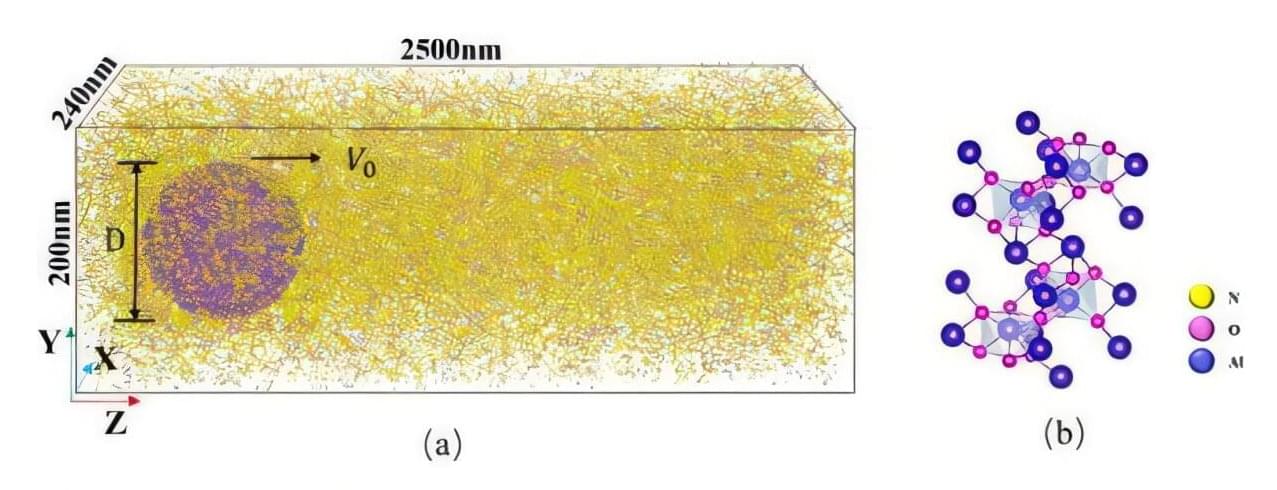
When rockets fire into space, the insides of their engines become an extreme environment where temperatures soar and tiny particles are thrown around at hypersonic speeds. These particles behave in ways that break long-held assumptions, according to new research that could help improve the durability, safety and performance of future space and defense technologies.

The study shows that particles traveling at hypersonic speeds do not remain spherical, instead melting and deforming mid-flight in ways that change how heat, drag and energy move through rocket systems. The findings, published in Physics of Fluids, have led researchers to develop a new drag model that more accurately predicts particle behavior under extreme conditions.

The work was led by researchers from the Southeast University–Monash University Joint Research Institute, Monash University and Shanghai University.

Anthropic CEO Dario Amodei Talks Scaling Laws, AI Arms Races, and Radical Abundance

This video features a conversation with Dario Amadei, CEO of Anthropic, discussing the intersection of AI and economics. Viewers will gain insights into how technological innovation impacts business processes and models, the future landscape of AI companies, and the potential societal ramifications of advancements in AI technology. The main theme emphasizes the evolving dynamics between innovation and established business strategies in the AI sector, as well as the importance of understanding how these changes affect both markets and society.

DARPA wants to replace GPS dependence with new class of sensors

Every GPS signal on the battlefield is a vulnerability waiting to be exploited, and Russia, China, and Iran have all demonstrated the willingness to exploit it. DARPA just announced it is going to solve that problem from the inside out, by building a navigation sensor so precise that it no longer needs GPS to know exactly where it is.

The Defense Advanced Research Projects Agency, the Pentagon’s research arm responsible for developing technologies that define the next generation of American military capability, published a special notice on May 29, announcing the forthcoming PINPOINT program, formally titled Precision Inertial Navigation and Positioning On an Integrated Tesseract.

The program, managed through DARPA’s Defense Sciences Office by Program Manager Sunil Bhave, aims to develop a revolutionary approach to inertial navigation that would allow military platforms to maintain precise positioning even when GPS has been jammed, spoofed, or denied. A formal solicitation with specific technical requirements and performance metrics is expected in the near future, with industry responses to the preliminary notice accepted through July 13, 2026.

Bio-Robotics Nature’s Blueprint for the Future — Prof. Auke Ijspeert : EPFL Biorobotics Laboratory

In this exciting episode, we dive deep into the world of bio-inspired robotics with Prof. Auke Jan Ijspeert, a Swiss-Dutch roboticist and neuroscientist at the École Polytechnique Fédérale de Lausanne (EPFL). As the head of the Biorobotics Laboratory, Prof. Ijspeert shares how nature serves as the ultimate blueprint for designing the robots of the future. 🌿🤖

🔑 Key Highlights:

Bio-Inspired Robotics: Explore how Prof. Ijspeert and his team are mimicking nature to create innovative robots that move and behave like animals.
Neuroscience & Robotics: Learn how insights from neuroscience help reverse-engineer the sensorimotor coordination found in animals, applying it to robotic systems.
From Simulation to Reality: Discover the challenges of translating robotic simulations into real-world applications.
Exoskeletons & Assistive Technologies: Prof. Ijspeert discusses the development of exoskeletons for healthcare and military use, along with assistive furniture for people with limited mobility.
Humanoid Robots & Autonomous Systems: Get a sneak peek into the future of autonomous robotics, from central pattern generators to humanoid robots.

💡 Why You Should Watch:
Prof. Ijspeert is a trailblazer in the field of biorobotics, blending biology, neuroscience, and engineering to push the boundaries of what robots can achieve. Whether you’re a robotics enthusiast, a neuroscientist, or just curious about how nature inspires technology, this episode is packed with insights that could shape the future of robotics and artificial intelligence.

🔗 Connect with Prof. Auke Ijspeert:

https://www.epfl.ch/labs/biorob/peopl / biorob_epfl / biorob_epfl Time Stamp 0:00 to 02:35 — Intro, Bio-Inspired Robots 02:35 to 04:13 — Neuroscience to back engineer bio-robots 04:13 to 06:22 — Mimicking nature & biorobots examples 06:22 to 07:55 — Simulation to real life translation challenges 07:55 to 09:10 — Central pattern generators & their role in robotic motion 09:10 to 10:47 — Learnings from creating bio-inspired robots 10:47 to 13:40 — EPFL Bio-Robotics laboratory 13:40 to 15:43 — Applications of Bio-robotics 15:43 to 20:05 — Exoskeleton 18:19 to 20:05 — Assertive furniture robotics 20:05 to 26:30 — exoskeleton in healthcare & military warfare 26:30 to 31:51 — Humanoid Robots 31:51 to 34:42 — Autonomous Robots 34:42 to 37:04 — Rhex Robots & Partnerships 37:04 to 40:04 — The future of robotics Watch our highest-viewed videos: 1-DR R VIJAYARAGHAVAN — PROF & PRINCIPAL INVESTIGATOR AT TIFR India’s 1st Quantum Computer– • Quantum computer from India with Dr r vija… 2-TATA MOTORS-DRIVING THE FUTURE OF MOBILITY IN INDIA-SHAILESH CHANDRA-MD: TATA MOTORS– • TATA MOTORS-DRIVING THE FUTURE OF MOBILIT… 3-MIT REPORT PREDICTS SOCIETAL COLLAPSE BY 2040 — GAYA HERRINGTON DIR SUSTAINABILITY: KPMG • MIT Report predicts Total Societal Collaps… 4-WORLDS 1ST HUMAN HEAD TRANSPLANTATION-DR SERGIO CANAVERO — • WORLDS 1ST HUMAN HEAD TRANSPLANTATION-DR… 5-DR HAROLD KATCHER — CTO NUGENICS RESEARCH Breakthrough in Age Reversal– • BREAKTHROUGH IN AGE REVERSAL WITH YOUNGBLO… 6-How Neuroscience Will Change The Future Of Technology — Dr. James Giordano • How Neuroscience Will Change The Future Of… 7-STARTUP FROM INDIA AIMING FOR LEVEL 5 AUTONOMY — SANJEEV SHARMA CEO SWAAYATT ROBOTS — • SELF-DRIVING STARTUP FROM INDIA AIMING FOR… 8-MAN BEHIND GOOGLE QUANTUM SUPREMACY — JOHN MARTINIS — • MAN BEHIND GOOGLE QUANTUM SUPREMACY — JOHN… 9-BANKING 4.0 — BRETT KING FUTURIST, BESTSELLING AUTHOR & FOUNDER MOVEN — • BANKING 4.0 — BRETT KING FUTURIST, BESTSEL… 10-E-VTOL & HYPERLOOP-FUTURE OF INDIA” S MOBILITY-SATYANARAYANA CHAKRAVARTHY • E-VTOL & HYPERLOOP-FUTURE OF INDIA“S MOBI… 11-HOW NEUROMORPHIC COMPUTING WILL ACCELERATE ARTIFICIAL INTELLIGENCE — PROF SHUBHAM SAHAY-IIT KANPUR– • HOW NEUROMORPHIC COMPUTING WILL ACCELERATE… 12-How India Is Building a Quantum Computer — Dr. Anirban Bandyopadhyay • How India Is Building a Quantum Computer -… Connect & Follow us at: / eddieavil / change-transform-india / changetransformindia / intothechange / changetransformindia Listen to the Audio Podcast at: https://anchor.fm/transform-impossible https://podcasts.apple.com/us/podcasthttps://open.spotify.com/show/56IZXdzhttps://www.breaker.audio/change-i-m–https://www.google.com/podcasts?feed=… Don’t Forget to Subscribe / @toctwpodcast #robot #robotics #artificialintelligence #epfl.

GreyVibe hackers use ChatGPT, Gemini to power cyberattacks

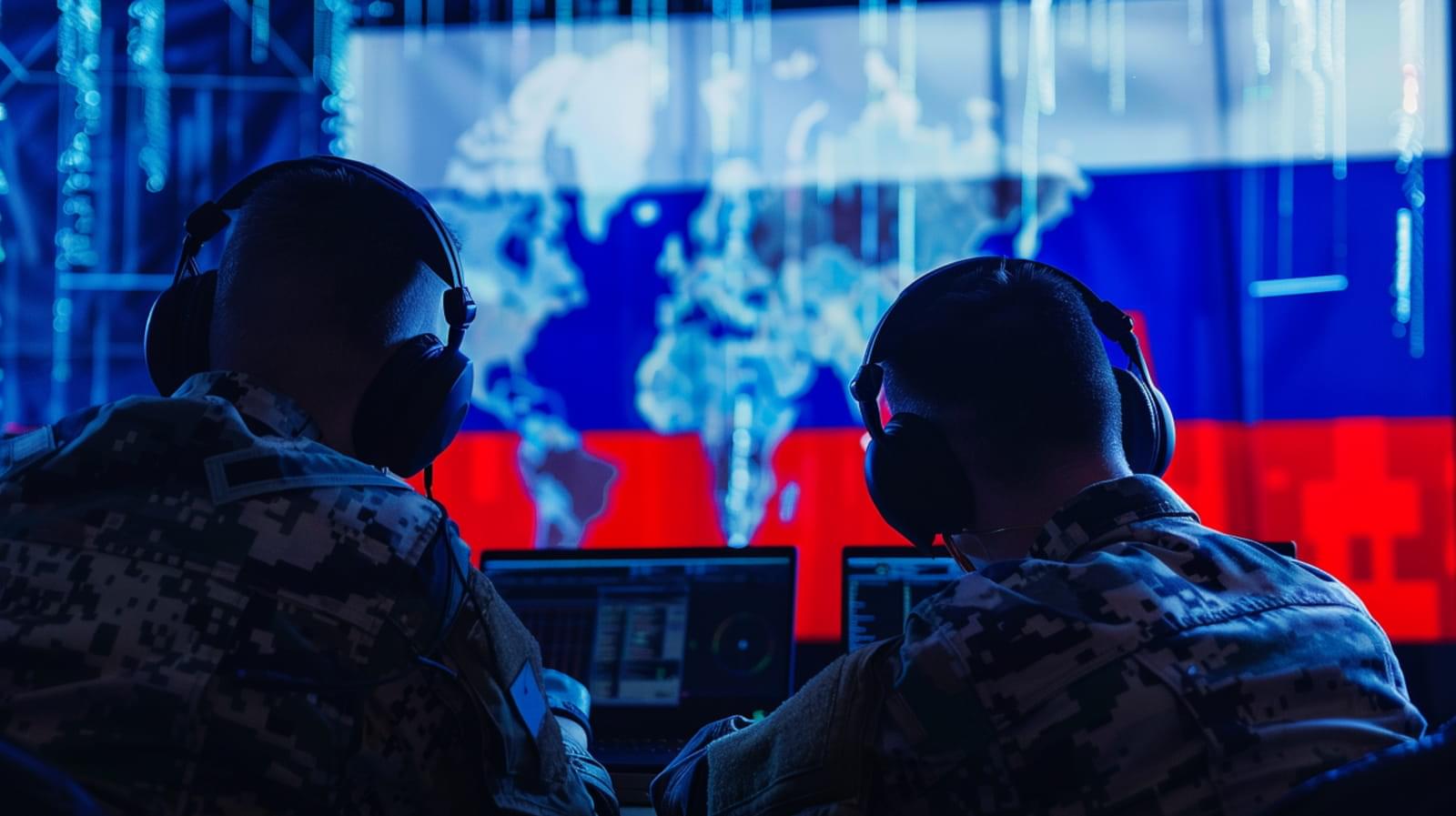
A likely Russian threat group tracked as GreyVibe has been using AI-generated lures and a rich set of custom malware tools to target entities in the military, government, civilian, and business sectors.

The cyberespionage campaign has been active since at least August 2025 and appears to align with Russian state interests, although researchers cannot confidently classify it as a nation-state operation.

Cybersecurity company WithSecure discovered the activity in January this year and determined that its focus is on Ukrainian or Ukraine-related organizations.

Insectoid Aliens — Hive Minds, Swarms, and Alien Evolution

Forget little green men — the galaxy’s most likely aliens may be hives and swarms. From biology to starships, insectoid life could shape civilizations stranger than ours.

Go to https://PIAVPN.com/IsaacArthur to get 83% off from our sponsor Private Internet Access with 4 months free!

Grab one of our new SFIA mugs and make your morning coffee a little more futuristic — available now on our Fourthwall store! https://isaac-arthur-shop.fourthwall… our Website: http://www.isaacarthur.net Join Nebula: https://go.nebula.tv/isaacarthur Support us on Patreon: / isaacarthur Support us on Subscribestar: https://www.subscribestar.com/isaac-a… Facebook Group: / 1,583,992,725,237,264 Reddit: / isaacarthur Twitter: / isaac_a_arthur on Twitter and RT our future content. SFIA Discord Server: / discord Credits: Insectoid Aliens — Hive Minds, Swarms, and Alien Evolution Written, Produced & Narrated by: Isaac Arthur Editor: Thomas Owens Select imagery/video supplied by Getty Images Music Courtesy of Stellardrone & Music by Epidemic Sound: http://nebula.tv/epidemic Chapters 0:00 Intro 3:30 Hive Reproduction Strategy 6:10 Insectoid Evolutionary Paths 13:47 Signals in the Swarm 16:53 Sensory Worlds 18:13 Intelligence & Individuality in Hive Species 19:35 Privacy 22:08 Hive Architecture & Technology 20:54 Alien Ecology & Predators 23:21 Cultural & Political Models 24:31 Spacefaring Adaptations 25:52 Final Thoughts.

Visit our Website: http://www.isaacarthur.net.
Join Nebula: https://go.nebula.tv/isaacarthur.
Support us on Patreon: / isaacarthur.
Support us on Subscribestar: https://www.subscribestar.com/isaac-a
Facebook Group: / 1583992725237264
Reddit: / isaacarthur.
Twitter: / isaac_a_arthur on Twitter and RT our future content.
SFIA Discord Server: / discord.
Credits:
Insectoid Aliens — Hive Minds, Swarms, and Alien Evolution.
Written, Produced & Narrated by: Isaac Arthur.
Editor: Thomas Owens.
Select imagery/video supplied by Getty Images.
Music Courtesy of Stellardrone & Music by Epidemic Sound: http://nebula.tv/epidemic.

Chapters.
0:00 Intro.
3:30 Hive Reproduction Strategy.
6:10 Insectoid Evolutionary Paths.
13:47 Signals in the Swarm.
16:53 Sensory Worlds.
18:13 Intelligence & Individuality in Hive Species.
19:35 Privacy.
22:08 Hive Architecture & Technology.
20:54 Alien Ecology & Predators.
23:21 Cultural & Political Models.
24:31 Spacefaring Adaptations.
25:52 Final Thoughts

/* */