Toggle light / dark theme

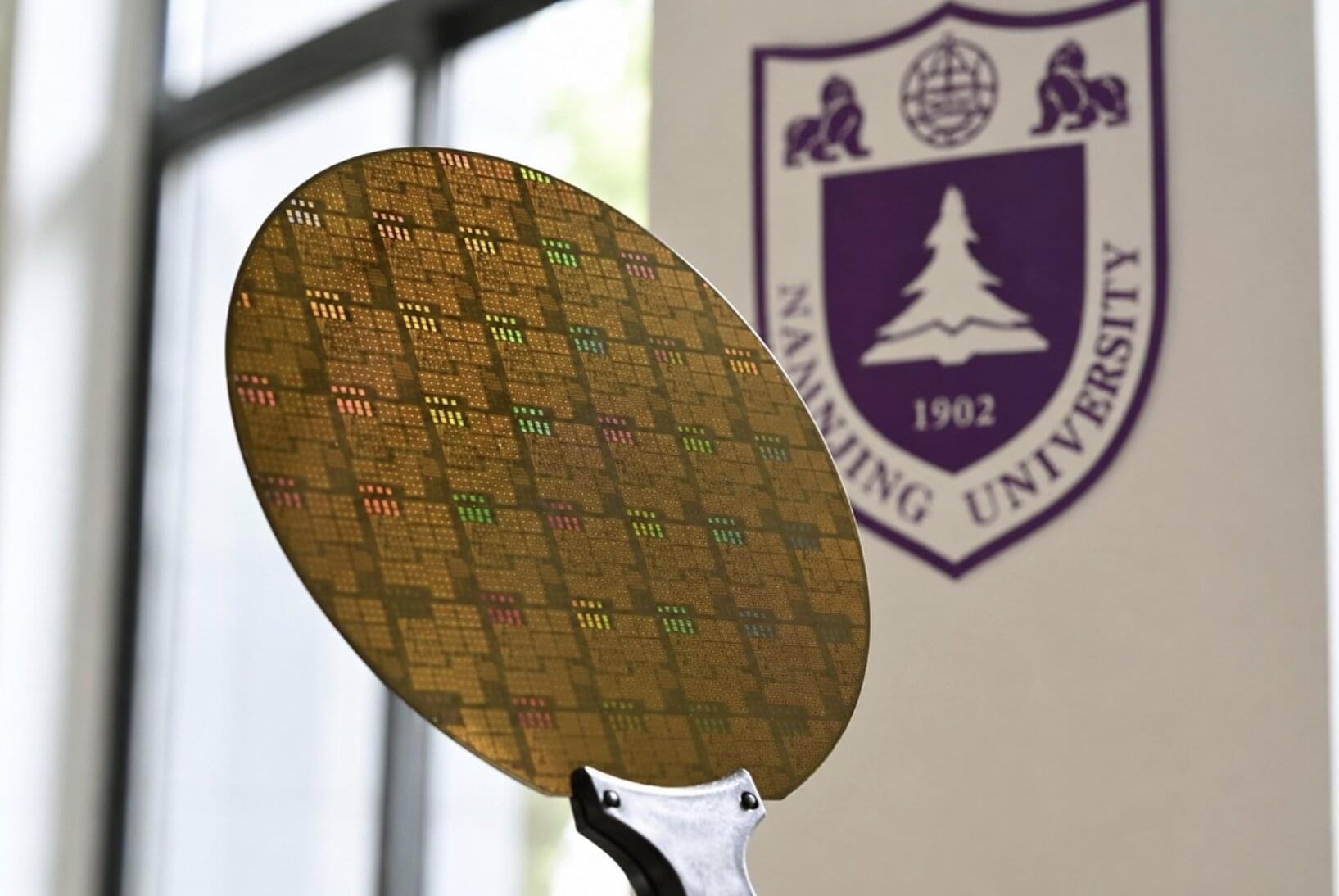
Ultra-thin MoS₂ computer packs 1,400 transistors onto one chip

The rapid advancement and diffusion of artificial intelligence (AI) systems, such as the machine learning models underpinning the functioning of ChatGPT, Gemini and similar platforms, have posed new demands on the electronics engineering industry. In fact, these systems are computationally intensive and consume substantial power, particularly when running on existing devices.

Electronics engineers worldwide have thus been trying to develop new hardware systems that can run machine learning algorithms more energy efficiently, without adversely affecting their performance. One promising approach for reducing power consumption entails the use of two-dimensional (2D) semiconductors, ultrathin materials that have already proved promising for the development of smaller electronics.

Researchers at Nanjing University, Suzhou Laboratory and Huawei Technologies Co. Ltd. recently developed and fabricated a fully functional computer based on the 2D semiconductor molybdenum disulfide (MoS₂).

Neutron star merger simulations gain new precision with AI-driven r-process heating

Using a novel simulation model based on machine learning, an international research team at GSI/FAIR has succeeded in gaining a deeper understanding of element formation in stellar events such as neutron star mergers. For the first time, the scientists used deep learning with a neural network to model the energy release during r-process nucleosynthesis in hydrodynamic simulations. The results are published in the journal Physical Review D.

Many of the chemical elements we know are created in massive stellar events such as exploding stars or neutron star mergers. These events release incredible amounts of energy, allowing for the production of heavy nuclides. One key nuclear production process is the so-called rapid neutron-capture process, or r-process, in which free neutrons are captured by existing nuclei and converted into protons—thus creating larger, heavier atomic nuclei.

“Researchers around the world strive to make these complex reactions understandable through theoretical simulations. However, modeling all parameters requires incredible computing power, which is why the models often have to be simplified,” said Dr. Oliver Just, first author of the publication and a researcher in the Nuclear Astrophysics & Structure Department at GSI/FAIR. “Our new model, RHINE, which uses artificial intelligence, offers an efficient alternative.”

The Universe Is About to Wake Up

Ray Kurzweil’s Six Epochs of Intelligence maps the entire history of the universe as a story of accelerating information processing, from subatomic particles to a future merger of human and artificial intelligence.

Each epoch operates on a dramatically compressed timescale compared to the one before, driven by what Kurzweil calls the Law of Accelerating Returns.

We trace the journey from atoms forming after the Big Bang, through the emergence of DNA and the Cambrian Explosion, to the rise of brains, technology, and what Kurzweil predicts comes next.

By 2029, he believes AI will pass the strong Turing test, opening the door to brain-computer interfaces that link our neocortices directly to the cloud.
The final epoch envisions intelligence spreading throughout the cosmos, though critics like Michael Shermer argue this collides with the laws of physics.

Chapters.

00:00 — Intro.

HP Lovecraft’s Shoggoth Explained: Anatomy, Origin, and a Modern Metaphor for AI?

Lovecraft’s ultimate amorphous, shape-shifting horror. Far more than just a monster, this protoplasmic nightmare from At the Mountains of Madness is a creature of pure, terrifying potential—a slave race that violently found its own mind.

We’re dissecting the Shoggoth’s anatomy and dark origins, but more importantly, we are exploring why this hundred-year-old biological horror is the perfect modern metaphor for Large Language Models (LLMs) and A.I.

👟 GEAR UP FOR DOOMSDAY 👟
If you’re going to dive into the crushing pressures of cosmic horror, you need the right footwear. Pick up a pair of our signature Cuhshoeluhs on Etsy!

Store Link: https://cthulhuconcepts.etsy.com.

Use code CTHULHU10! for 10% off your entire order!

Detailed Timestamps.

Longevity Scientist: Aging Is A Disease. We Just Don’t Know How to Treat (yet)

Joe Betts-LaCroix and Retro Biosciences recently raised funding at a $1.8 billion valuation. In his first podcast appearance since the announcement, Joe shares his vision for extending healthy human lifespan and the breakthroughs driving the longevity industry forward.

Joe Betts-LaCroix explains why aging is becoming a legitimate scientific target. He shares how new discoveries are turning longevity from speculation into measurable biology.

The conversation explores how AI is accelerating research, while highlighting why biology remains one of the hardest problems to solve. Even with smarter models, real-world testing and clinical trials still take time.

Joe also discusses Alzheimer’s, partial cellular reprogramming, and the future of longevity medicine. He shares why exercise remains the best longevity tool available today and what the next decade could look like for human health.

Joe is the CEO of Retro Biosciences and a longtime entrepreneur focused on science and technology. His mission is to extend healthy human lifespan and accelerate breakthroughs in aging research.

This episode is brought to you by NADclinic, the go-to destination for longevity and human performance. Check them out at https://nadclinic.com.

Geoffrey Hinton Just Said AI Is Already Conscious

Full episode: • AI pioneer geoffrey hinton: AI is consciou…

Geoffrey Hinton — the Nobel Prize-winning physicist widely regarded as the Godfather of AI — sits down with Alex Kantrowitz on the Big Technology Podcast to discuss something he rarely says out loud: he believes AI is already conscious. Not eventually. Not theoretically. Already.
In this clip, Hinton dismantles the popular \.

Claude is Self-Evolving?

In this episode, I break down Anthropic’s research on recursive self-improvement—AI systems that can design and train the next generation with less human help—and why the key battleground is “taste” (choosing goals and next steps). I compare this to evolutionary algorithms and newer examples like DeepMind’s AlphaEvolve, Sakana’s Darwin Gödel Machine, and Karpathy’s AutoResearch, then cover METR Task Horizon and how task length has been doubling. I go through Anthropic’s internal results (Claude writing most merged code, speedup experiments, bug fixes, and a study where models sometimes pick better research next steps), plus the main skepticism: bad productivity metrics, internal-only models, and Goodhart’s Law/reward hacking. I end with an open safety problem where Claude agents closed the gap far faster than humans, and what this means for specifying and checking work.

LINKS:
https://www.anthropic.com/institute/r… voice to text App: whryte.com Website: https://engineerprompt.ai/ RAG Beyond Basics Course: https://prompt-s-site.thinkific.com/c… Signup for Newsletter, localgpt: https://tally.so/r/3y9bb0 Let’s Connect: 🦾 Discord: / discord ☕ Buy me a Coffee: https://ko-fi.com/promptengineering |🔴 Patreon: / promptengineering 💼Consulting: https://calendly.com/engineerprompt/c… 📧 Business Contact: [email protected] Become Member: http://tinyurl.com/y5h28s6h 💻 Pre-configured localGPT VM: https://bit.ly/localGPT (use Code: PromptEngineering for 50% off). Signup for Newsletter, localgpt: https://tally.so/r/3y9bb0 TIMESTAMP: 00:00 Self Improvement Basics 01:30 Evolutionary Loops Today 03:50 Task Horizon Doubling 05:18 Claude Productivity Claims 08:11 Goodhart’s Law 10:30 Agents as Researchers 12:22 What It Means for You.

My voice to text App: whryte.com.
Website: https://engineerprompt.ai/
RAG Beyond Basics Course:
https://prompt-s-site.thinkific.com/c
Signup for Newsletter, localgpt:

Let’s Connect:

☕ Buy me a Coffee: https://ko-fi.com/promptengineering.
|🔴 Patreon: / promptengineering.
💼Consulting: https://calendly.com/engineerprompt/c
📧 Business Contact: [email protected].
Become Member: http://tinyurl.com/y5h28s6h.

💻 Pre-configured localGPT VM: https://bit.ly/localGPT (use Code: PromptEngineering for 50% off).

Signup for Newsletter, localgpt:

Jumping spiders inspire ultra-efficient 3D camera

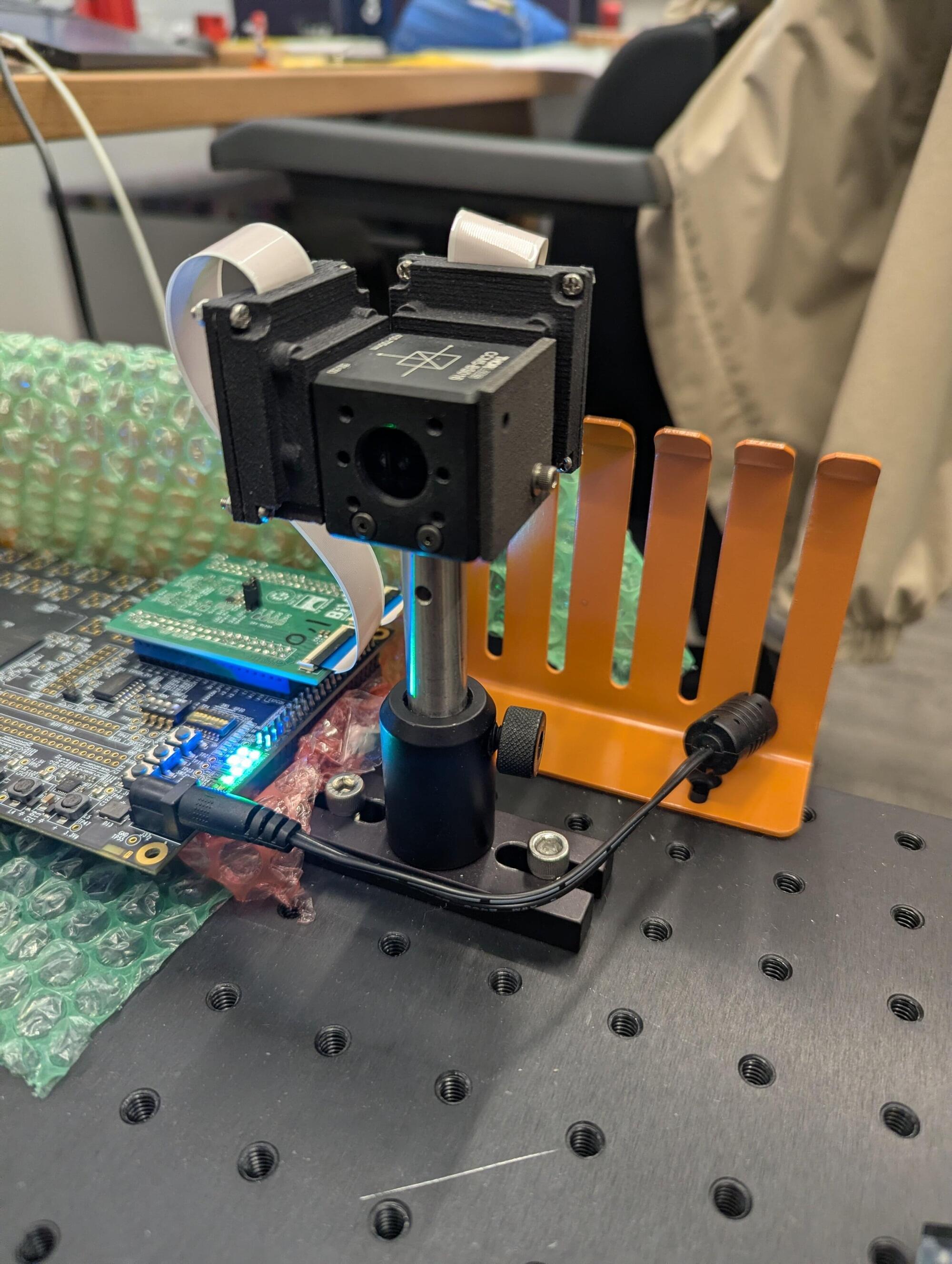
This 3D camera estimates depth by comparing blur across two differently focused images of the same scene. The prototype generates real-time 3D maps while using less than a watt of power, sidestepping more energy-intensive approaches.


By borrowing a trick from tiny jumping spiders, Northwestern University engineers have developed an extremely energy-efficient 3D camera. Called SpiderCam, the new device senses depth the same way that jumping spiders judge distances before making a high-precision hop. To estimate depth, the system captures two images of the same scene with slightly different focus settings and measures subtle differences in blurriness between the two images.

With this strategy, the camera produces real-time 3D maps while consuming less than a watt of power. That’s less energy than used by a standard nightlight.

The innovation could enable a new generation of battery-powered devices that need to gauge their surroundings, like wearable technologies, assistive devices, robots and drones.

/* */